Dantadhavanaliterally, the cleansing of the teethoccupies a clear and dignified place in the Hindu way of life as a daily discipline that serves both hygiene and sanctity. Framed within saucha (purity) and dinacharya (daily routine), this practice ties bodily cleanliness to mental composure and ritual readiness. Classical Hindu sources consistently present personal hygiene as foundational to well-being and to the serene, attentive mind required for worship, study, and ethical conduct.
Textual references to dantadhavana appear across the Dharmashastra corpus and the Grihya Sutras, and receive practical elaboration in the Smritis and household ritual manuals. These sources treat morning purification as a prerequisite for prayer, learning, and domestic rites, underscoring that cleanliness of person and surroundings contributes to peace of mind and social harmony. Within this framework, the cleansing of the mouth is not a trivial preface to the day but a structured act that aligns health with dharma.
Ayurveda systematizes dantadhavana within dinacharya. Classical treatises such as the Charaka Samhita and the Sushruta Samhita describe oral care alongside related practicesgandusha and kavala (therapeutic holds and gargles), and jihva-nirlekhana (tongue scraping). The oral cavity is viewed as a gateway that influences digestion, breath, and systemic balance; thus, its care is linked to reducing kapha-related stagnation, preserving the senses, and supporting cognitive clarity in the early hours of the day.
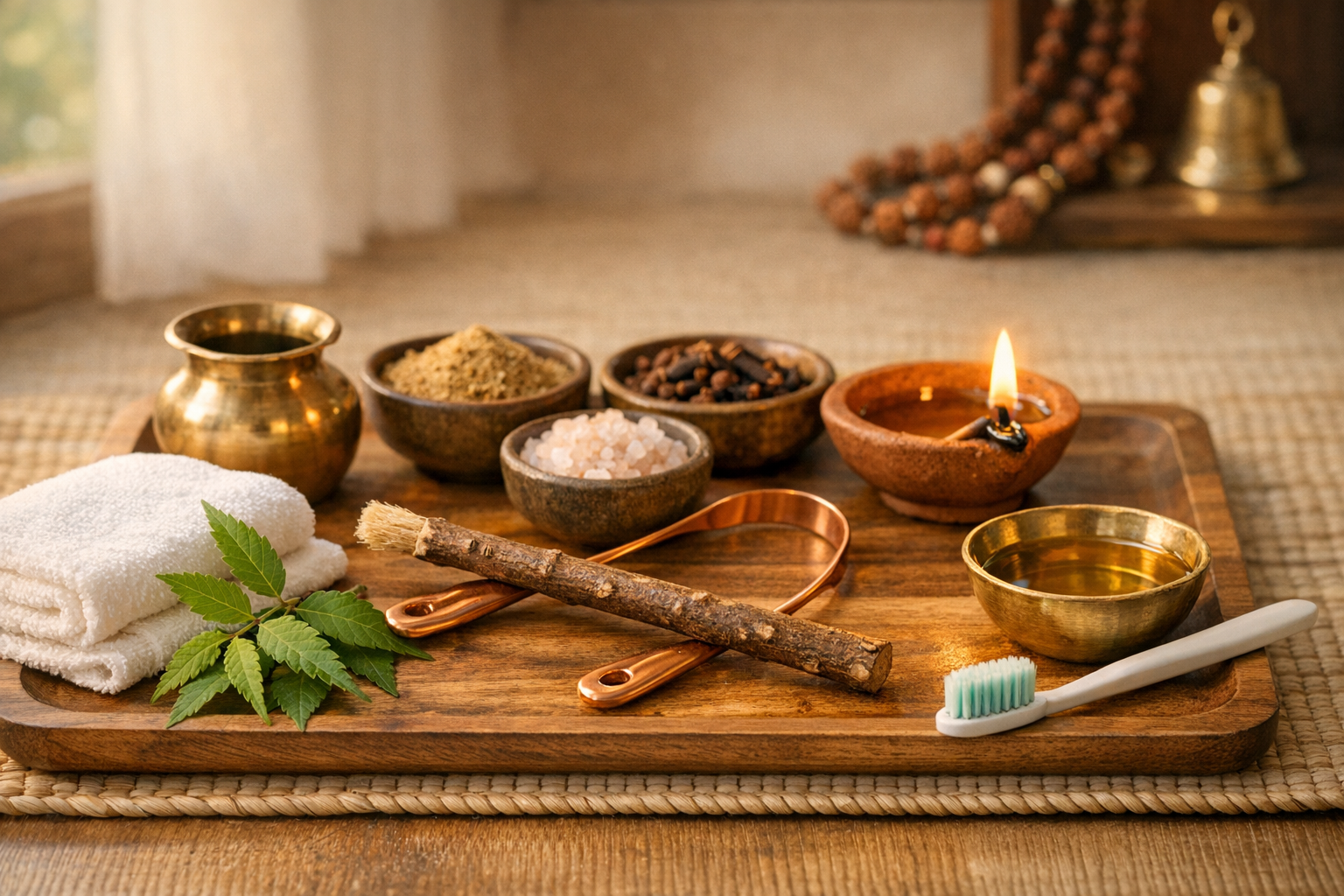
Materials traditionally recommended for dantadhavana include fresh, medicinal twigs (danta-kashtha) selected for their astringent, bitter, or mildly pungent qualities. Common choices across regions have included neem (Azadirachta indica), khadira (Acacia catechu), pilu (Salvadora persica), babul (Vachellia nilotica), and karanja (Pongamia pinnata). These twigs, known widely as datun, are shaped by chewing one end into fine fibers to create a natural brush that is firm yet gentle on the gums. The emphasis in the texts is on freshness, moderation, and avoiding irritant or overly harsh plant saps.
Methodologically, dantadhavana is unhurried and attentive. The fibrous end of the twig is used to sweep the teeth and gum margins with gentle, vertical strokes, taking care not to abrade the enamel or traumatize soft tissue. After thorough cleaning and rinsing with water, the spent twig is discreetly discarded in a clean placean early model of biodegradable, low-waste personal care. The overall tone is one of respect: for the body, for the materials drawn from nature, and for the shared spaces in which the morning routine unfolds.
Herbal tooth powders (dantamanjana) represent another classical modality. Formulations have featured pulverized neem bark or leaves, triphala (a blend of amalaki, haritaki, and bibhitaki), clove, and rock salt in varying proportions depending on need and tolerance. Ayurveda complements brushing with gandusha and kavalaholding or swishing warm sesame oil or decoctionsaimed at softening oral tissues, drawing out impurities, and refreshing the breath. Contemporary studies suggest that oil-based swishing can reduce halitosis and plaque indices; within a dharmic context, these practices are further valued for cultivating steadiness and mindful breathing.
Tongue scraping (jihva-nirlekhana) is presented as integral rather than optional. Traditionally performed with a smooth scraper of copper, silver, or other non-reactive metals, it removes coatings that Ayurveda associates with ama (metabolic residue). Modern dental research supports its role in reducing volatile sulfur compounds and improving breath quality. As with the tooth stick, the emphasis is on gentle, consistent movements and clean, dedicated implements.
Timing and ambience matter. Many manuals situate dantadhavana in the quiet of dawn so that cleanliness prepares the practitioner for meditation, japa, and early study. The stillness of the morning invites slow, rhythmic breath and an undistracted mind; families often recall the faint scent of neem or the calm, orderly sequence from washing hands to brushing, rinsing, and proceeding to prayer. The result is a felt link between bodily freshness and emotional equanimity.
Hindu texts consistently connect personal hygiene with environmental consideration. Spitting is to be managed discreetly and away from sacred spaces and water sources; rinsing is done without polluting communal areas; and used materials are placed in appropriate spots. These details, though small, express a civility and ecological mindfulness embedded in dharma: the body is honored, nature is not burdened unnecessarily, and fellow beings are respected through shared cleanliness.
Resonances are clear across the broader dharmic family. Early Buddhist Vinaya literature permits and even encourages the use of a tooth stick (dantakaṭṭha) as part of monastic discipline; Jain achara emphasizes meticulous daily cleanliness pursued with non-violence and gentleness; Sikh practice likewise regards personal hygiene as part of disciplined living before Nitnem and seva. While vocabularies differ, all uphold a harmony between bodily care, clarity of mind, and readiness for spiritual work. This shared ethic strengthens the sense of a common civilizational understanding of health and sanctity.
Regional customs vary while preserving the core. In some areas, families favor the daily datun; elsewhere, herbal tooth powders are common, and in contemporary urban settings, soft-bristled brushes and standardized pastes are blended with traditional adjuncts like oil swishing or tongue scraping. Across these expressions runs an enduring thread: dantadhavana is more than techniqueit is a cultural habitus that teaches gentleness, order, and attention.
Integrating traditional guidance with modern dentistry is straightforward and prudent. A soft-bristle brush with fluoride toothpaste can be used twice daily, with the morning routine enriched by Ayurvedic adjuncts (such as gentle tongue scraping and periodic gandusha) when suitable. Interdental cleaning (floss or interdental brushes) improves periodontal outcomes, and routine dental examinations ensure that personalized advice refines daily practice. The principle is not replacement but intelligent synthesis: honoring Vedic and Dharmashastra insights while applying evidence-based oral care.
A practical sequence emerges that is faithful to both tradition and science: wash hands and set a calm intention; perform dantadhavana (via a clean twig or soft brush) with careful strokes along teeth and gum lines; rinse thoroughly; scrape the tongue gently; use a brief warm water rinse; optionally complete a short session of oil holding or swishing; and proceed to prayer, study, or work with the buoyancy of cleanliness and collected breath.
Caution and personalization belong to the tradition just as surely as its rules of thumb. Individuals with sensitive gums, enamel erosion, active periodontal disease, or specific medical conditions should favor very soft implements and follow professional guidance. Those allergic to certain botanicals should avoid the corresponding twigs or powders. In all cases, gentle technique, clean tools, and attentiveness to the body’s signals are emphasizedan approach that echoes Ayurveda’s insistence on matching practice to constitution and context.
Seen in full, dantadhavana illustrates how Hinduism aligns health with ritual life, and how the seemingly ordinary act of tooth cleaning can sustain mental clarity and social courtesy. It expresses a compact between body and mind, person and environment, and individual practice and communal well-being. In dialogue with the related insights of Buddhism, Jainism, and Sikhism, this daily ritual becomes a shared dharmic signature: precise, compassionate, sustainable, and quietly transformative.
Inspired by this post on Hindu Blog.