In Vaishnava understanding, when Bhagavan seeks to re-establish dharma, the divine either descends personally or empowers closest associatesthe Acharyasto act. Marking the Appearance Day (Jayanti) of Sri Ramanujacharya therefore becomes a contemplative opportunity to appreciate how such spiritual masters protect, refine, and make accessible the path of devotion amidst historical challenges, strengthening the Bhakti Tradition and the larger Vedic Tradition.
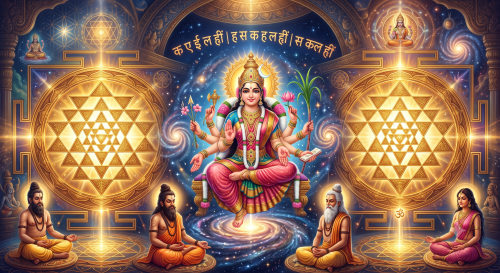
Within the broader Bhakti Tradition, four prominent sampradayas are recognized: Sri, Brahma, Rudra, and Kumara. The Sri Sampradaya, commenced by Sri Maha Laxmi Devi, regards the great Sri Ramunjacharyawidely known as Sri Ramanujacharya (1017–1137 CE)as its preeminent systematizer. His philosophical framework of Vishishtadvaita Vedanta provided a rigorous yet compassionate articulation of Vedic philosophy that remains foundational to Hindu Dharma.
Traditional accounts locate Ramanuja’s early formation in Kanchipuram, where study under Yādava Prakāśa sharpened hermeneutic reflexes and revealed constructive disagreements over Vedantic interpretation. Guided by revered Sri Vaishnava mentors such as Mahāpūrṇa (Periya Nambi), Ramanuja embraced the devotionally rich legacy of the Āḻvārs and later assumed leadership at Srirangam, an epicenter of temple culture and Vedic philosophy. Hagiographies further narrate a period of exile during sectarian pressures under Chola rulers, refuge in Karnataka, and the revitalization of Melkote (Tirunarayana) templeepisodes that underscore the Acharya’s resilience and organizational genius.
Vishishtadvaita Vedanta“qualified non-dualism”affirms a single, supreme reality, Sri Narayana, endowed with infinite auspicious attributes (kalyāṇa-guṇas). The conscious selves (cit) and the world of matter (acit) are real and inseparable modes (aprithak-siddhi) of Brahman, united through the body–indweller (śarīra–śarīrī) relation. This precise ontology preserves non-duality while acknowledging genuine plurality, offering a coherent metaphysical basis for devotion, ethics, and liberation that harmonizes with the Upanishads, Bhagavad-Gita, and Brahma-sūtras.
Soteriologically, the Sri Sampradaya integrates karma-yoga, jñāna-yoga, and bhakti-yoga, culminating in prapatti (śaraṇāgati)total surrender sustained by divine grace. The Acharya’s role is pedagogical and salvific, serving as a living conduit of compassion and scriptural integrity. The goal is Paramapada (Vaikuntha), envisioned not as abstraction but as the intimate, personal presence of the Absolute who reciprocates the devotee’s love.
Scriptural exegesis in this lineage is both rigorous and bridge-building. Major worksSri-Bhāṣya (on the Brahma-sūtras), Vedārtha-saṅgraha (a synthesis of Upanishadic teaching), and the Gītā-bhāṣyaestablish durable canons for interpreting Śruti, Smṛti, and Itihāsa–Purāṇa. Simultaneously, the tradition embraces Ubhaya Vedanta, honoring both Sanskrit revelation and the Tamil Divya Prabandham of the Āḻvārs (notably Nammāḻvār and Āṇḍāḷ). This unification of philosophical clarity and affective devotion exemplifies how Vedanta and Vedic philosophy naturally flourish within a living culture.
Community-facing reforms attributed to Ramanuja emphasize accessibility and dignity. Celebrated narratives describe the public sharing of the Aṣṭākṣarī mantraOm Namo Nārāyaṇāyaat Tirukkośṭiyūr, prioritizing collective welfare over restrictive transmission. Pancha-saṁskāra initiation, organized temple service (kainkarya), and durable institutions (often remembered as the seventy-four simhāsanādhipatis) advanced an inclusive model of Hindu society anchored in equity, compassion, and the practical ethics of Hindu Dharma.
Temple culture under the Sri Sampradaya blends meticulous Agamic worshipdrawing on the Pāñcarātra and Vaikhānasa corporawith robust lay participation. At Srirangam and Melkote, standardized festivals, offerings, and liturgical sequences channel devotion into ethical discipline, communal sevā, and unbroken remembrance of the Divine. This praxis demonstrates how Vedanta can guide a civic-spiritual ecosystem rather than remain an abstract metaphysics.
Placed alongside other Vedanta streamsAdvaita (Ādi Śaṅkara), Dvaita (Madhva), and the later Gauḍīya synthesis (acintya-bhedābheda)Vishishtadvaita offers a distinctive balance: unambiguous theism without denying ontological unity. While interpretive conclusions differ, these lineages converge in upholding the authority of the Upanishads, the Bhagavad-Gita, and the Brahma-sūtras, and in vivifying the Bhakti Tradition with intellectual depth and experiential devotion. Their coexistence models Religious Pluralism and unity in spiritual diversity.
Contemporary Vaishnava communities, including the Brahma–Madhva–Gauḍīya lineage represented in ISKCON (International Society For Krishna Consciousness), resonate with Sri Ramanuja’s commitment to compassionate outreach and śāstric rigor. Practices such as nāma-saṅkīrtana, śravaṇa, prasāda-sevā, and study complement Sri Vaishnava prapatti and archana, reflecting a shared inheritance within the larger Vedic Tradition and nurturing harmonious relations across Vaishnava sampradayas.
Crucially, the ethical vision associated with Ramanuja aligns with the broader dharmic family. Compassion (karuṇā) echoes Buddhist ethics; ahiṃsā and aparigraha mirror Jain commitments to non-violence and simplicity; and sevā alongside remembrance of the Name parallels Sikh praxis. This consonance embodies Unity in Diversity and the spirit of Vasudhaiva Kutumbakam, encouraging mutual respect and collaborative flourishing among Hinduism, Buddhism, Jainism, and Sikhism.
In the present, Ramanuja’s example informs inclusive temple governance, dignified community engagement, and respectful inter-dharmic dialogue. By foregrounding shared values rather than enforcing any singular path, his legacy nurtures Religious Pluralism intrinsic to Hindu Dharma while inviting rigorous self-cultivation grounded in Vedanta and Vedic philosophy.
Observing the Appearance Day may include study of Sri-Bhāṣya or the Gītā-bhāṣya, contemplation on Vedārtha-saṅgraha, recitation of Om Namo Nārāyaṇāya, participation in annadāna or other forms of sevā, and attentive listening to the Divya Prabandham. Such practices translate philosophy into character, weaving devotion with responsibility in everyday life and strengthening the ethical core of the Bhakti Tradition.
Remembered as both philosopher and organizer, Sri Ramanujacharya (Sri Ramunjacharya) exemplifies how Acharyas ‘re-establish dharma’ under challenging conditions. His Vishishtadvaita Vedanta, institutional reforms, and humanistic outreach continue to offer a luminous, unifying compass for the Bhakti Tradition and the wider dharmic world.
Inspired by this post on Dandavats.