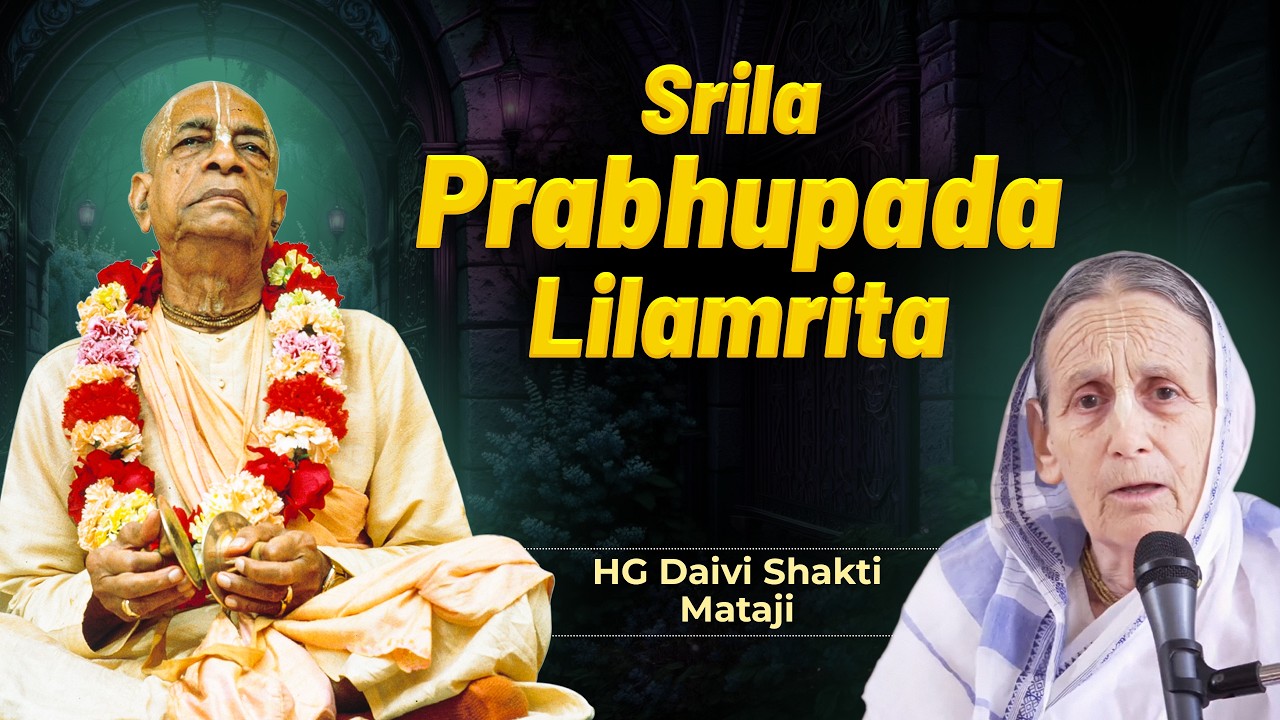
HG Daivi Shakti Mataji’s focus on Srila Prabhupada Lilamrita offers a rigorous yet devotional window into the life and mission of A. C. Bhaktivedanta Swami Prabhupada, founder of ISKCON (International Society For Krishna Consciousness). Framed within the Gaudiya Vaishnavism lineage, the narrative foregrounds how bhakti-yoga, guru-shishya parampara, and disciplined sadhana converged to shape a global movement grounded in Vedic traditions and the Bhagavad-Gita. This reflection, while devotional in tone, is anchored in historical method, textual analysis, and the lived experience of communities shaped by kirtan, seva, and scriptural study.
Srila Prabhupada Lilamrita, compiled in the 1980s by Satsvarupa dasa Goswami, is a multi-volume biography that synthesizes letters, diaries, interviews, and early institutional records. Rather than presenting a mere chronology, it situates Srila Prabhupada’s life within the broader philosophical and cultural currents of 20th-century India and the global rise of interest in Hindu spirituality. Readers find both historiographic scaffolding and a sacred biography (charit) that seeks to inspire practice while documenting events with care.
Daivi Shakti Mataji’s approach is frequently described by audiences as precise, empathic, and pedagogically effective. Listeners often note that the presentations balance clear source-citation with accessible language, helping new and seasoned practitioners connect Srila Prabhupada’s decisions to the normative principles of dharma, ahimsa, and the ethics embedded in the Srimad Bhagavatham and Bhagavad-Gita. The result is both an entry point for systematic study and a catalyst for deeper personal transformation through sadhana.
The biography’s early chapters illuminate formative influences: a devotional upbringing, sustained engagement with guru instructions, and a steadfast conviction that the nama-sankirtana of Sri Krishna could serve as a universal bridge across cultures. These elements are presented not simply as hagiographic ornamentation but as vectors of agencyshowing how conviction, humility, and disciplined service can move a spiritual vision from ideal to institution.
Central episodessuch as the transoceanic journey aboard the Jaladuta and the opening of the storefront at 26 Second Avenue in New Yorkare interpreted as inflection points where personal austerity intersects with historical contingency. Lilamrita’s documentation underscores that these were not isolated miracles but outcomes of long-term preparation, textual labor, and an unwavering fidelity to the guru-shishya tradition. In this reading, history and devotion become mutually reinforcing lenses rather than competing explanations.
A distinctive strength of Srila Prabhupada Lilamrita is its attention to institution-building. The establishment of ISKCON, the formation of oversight bodies in the early 1970s, and the founding of the Bhaktivedanta Book Trust (BBT) are treated as case studies in translating Vedic wisdom into durable organizational forms. The “History of ISKCON Press” and book distribution initiatives are framed as a cultural strategy: to extend scriptural commentaries, purports, and kirtan culture to a global readership while retaining fidelity to tradition.
From a methodological perspective, the biography blends archival research with oral history. Lilamrita demonstrates how triangulationcross-referencing letters, eyewitness interviews, and contemporaneous reportscan calibrate memory’s warmth with the discipline of documentary evidence. Daivi Shakti Mataji’s discussions often highlight this balance, inviting readers to inhabit both the emotive world of devotees and the analytical posture of the historian.
Thematically, the work advances a grammar of practice: surrender (saranagati), service (seva), remembrance (smarana), and sangha as practical engines of transformation. Srila Prabhupada’s translation and commentary methodparticularly in Bhagavad-Gita As It Is and Srimad Bhagavathamreceives attention for its clarity, structure, and pedagogical design. These purports fuse rigorous philosophy with actionable counsel, enabling readers to operationalize insights in daily life.
Participants in study circles frequently report that Daivi Shakti Mataji’s expositions make complex topicssuch as the relation between personal effort and divine graceapproachable without dilution. The emphasis on disciplined reading, reflective journaling, and group dialogue mirrors classical learning modalities in the Vedic traditions, where śravanam (hearing) and mananam (contemplation) are prerequisites to nididhyasanam (deep internalization).
In positioning Gaudiya Vaishnavism within the wider dharmic tapestry, Lilamrita and its contemporary interpreters underscore shared values that foster inter-tradition harmony. Ahimsa resonates across Jainism; contemplative remembrance parallels Sikh naam-simran; and meditative discipline and compassion find strong congruence with Buddhism. This confluence invites communities to focus on common ethical horizonstruthfulness, self-restraint, service, and reverencethus strengthening unity among Hindu, Buddhist, Jain, and Sikh paths without erasing their distinctiveness.
Attention to language and addressexemplified by the respectful use of “Mataji”also appears in discussions of community ethos. Without simplifying complex historical debates, presentations centered on Lilamrita tend to highlight women’s scholarly, organizational, and teaching contributions within ISKCON, positioning these efforts as integral to the preservation and transmission of Hindu spirituality in the modern world.
For scholars of religion and Indian history, Srila Prabhupada Lilamrita provides a vital primary source on postcolonial Hindu institutions, diaspora dynamics, and the globalization of bhakti. It also offers a framework to examine how devotional communities curate authority, maintain textual integrity, and adapt leadership models while remaining accountable to the guru-shishya tradition. These are durable questions in the study of religious movements, pedagogy, and cultural continuity.
Daivi Shakti Mataji’s sessions often model best practices for study: establish a regular reading cadence; pair text with audio-visual archives when available; confirm dates and correspondences through letters; and frame inquiry with humility. Such methods mirror the editorial discipline evident in BBT publications and reflect a broader commitment to transparent, evidence-based devotion.
Balanced presentations acknowledge that sacred biographies can draw critiques of hagiography. The constructive response is not to abandon inspiration but to refine method: distinguish between verifiable events and interpretive reflections; signal varying degrees of certainty; and welcome peer dialogue. In doing so, devotional communities demonstrate that faith and critical inquiry can collaborate to protect both spiritual integrity and historical accuracy.
Beyond institutional narratives, Lilamrita foregrounds relational texturesmentor-mentee exchanges, congregational cooperation, and the transnational bonds formed through kirtan and prasadam. These human details reveal that ISKCON’s expansion was not mechanistic; it was propelled by personal trust, shared austerities, and the uplifting force of collective remembrance of Sri Krishna.
Practically, readers are encouraged to translate insights into a daily sadhana architecture: steady japa, thoughtful study of Bhagavad-Gita and Srimad Bhagavatham, service aligned with aptitudes, and ongoing reflection in satsang. When framed this way, Lilamrita functions as a living guidebookclarifying how timeless principles move through modern challenges without loss of essence.
In interfaith and intrafaith contexts, the text’s ethos supports respect and coexistence. The call is not to homogenize traditions but to recognize a shared civilizational grammardharma, compassion, discipline, and service. This alignment is vital to nurturing unity across dharmic traditions while preserving the integrity of each lineage’s practices, narratives, and symbols.
As digital archives, podcasts, and global study groups proliferate, Srila Prabhupada Lilamrita continues to find new readerships. The combination of accessible storytelling and careful documentation enables meaningful engagement by academics, practitioners, and culturally curious readers alike. Daivi Shakti Mataji’s emphasis on clarity, fidelity to sources, and lived application makes the material especially resonant for contemporary seekers.
Ultimately, reflections on Lilamrita reveal leadership as service, scholarship as seva, and community as a discipline of care. The biography’s pages showcase how conviction, austerity, and compassion can reconfigure personal lives and public institutions. In highlighting these threads, HG Daivi Shakti Mataji helps audiences perceive Srila Prabhupada’s journey not only as a historical narrative but as an actionable map for cultivating devotion, ethical clarity, and unity within the broader dharmic family.
Inspired by this post on Dandavats.