
Guru yoga, in its classical and contemporary forms, places the relationship between student and spiritual mentor at the center of transformative practice. In this account, the discipline is not treated as abstract devotion, sentimental admiration, or passive obedience. It appears instead as a rigorous training in attention, service, trust, projection, humility, and embodied awareness. The setting is Kyoto during the Gion Matsuri, one of Japan’s most enduring religious and cultural festivals, where a student accompanies Catherine Sensei and encounters the practical, emotional, and philosophical demands of following a living teacher.
The narrative begins with a simple but penetrating inquiry: what does the mind follow? In ordinary life, attention is pulled toward work, relationships, appetite, irritation, anxiety, self-image, and memory. In Dharma practice, attention may be trained to follow a teacher’s mindstream, not as personality worship, but as a disciplined study of how awakening expresses itself through conduct, speech, timing, form, and relational intelligence. Such training belongs to the wider guru-shishya tradition shared across Dharmic civilizations, including Hinduism, Buddhism, Jainism, and Sikhism, where transmission is understood not merely as information but as living example.

For nearly two decades, the student had been connected to a Dharma lineage in which Qapel, formerly Doug Sensei, functioned as the principal teacher. Over time, Catherine Sensei emerged as a formal teacher and became a central spiritual mentor. The shift was gradual, personal, and demanding. It required a reconfiguration of trust, especially because the student’s deepest assumptions about spiritual authority had been shaped by male teachers, male exemplars, and a wider religious history in which men have often been publicly recognized as the primary bearers of authority.
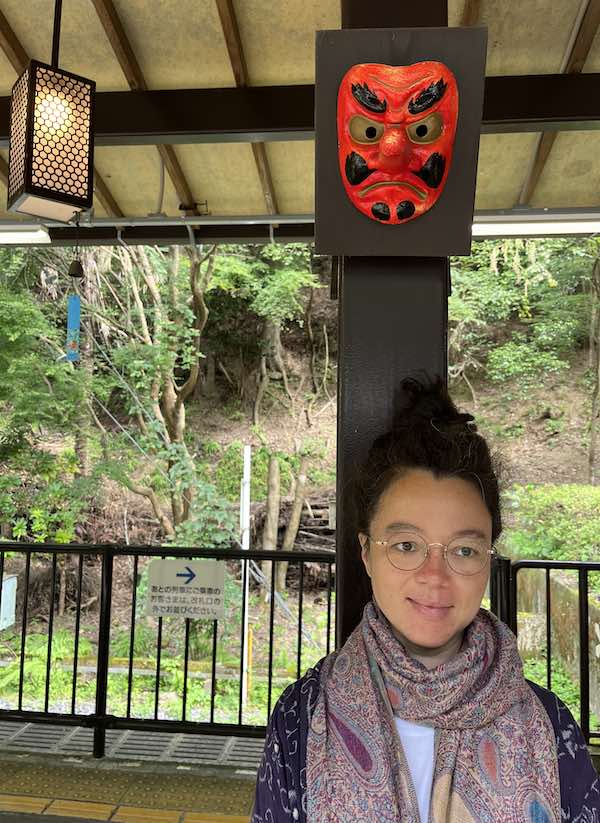
The journey to Japan becomes an experiential study of modern guru yoga under female spiritual leadership. In July 2023, the student travels from Clear Sky in Canada to Kyoto to serve as Catherine Sensei’s attendant during the Gion Matsuri. Catherine Sensei had researched and written about the festival for many years, and the trip offered a rare opportunity to witness how spiritual practice, cultural preservation, scholarship, and community participation meet in lived form.
The Gion Matsuri itself provides a powerful historical frame. Its origins are traditionally traced to 869, a period associated with epidemic disease and ritual efforts to pacify destructive forces, protect the community, and cultivate conditions for health. In this sense, the festival is not merely an aesthetic event or tourist spectacle. It is a living ritual ecology in which disease, protection, community discipline, ancestral memory, and sacred responsibility are woven into public life. The festival demonstrates how religious culture can preserve continuity while adapting to changing historical conditions.
Upon arriving in Japan, the student meets Catherine Sensei at the Tokyo airport, and the two immediately board the Shinkansen to Kyoto. The transition is swift: from international travel to festival documentation, from fatigue to alertness, from private intention to public service. Catherine Sensei is described as focused and energetic from the outset, already oriented toward the work of research, teaching, filming, and relationship-building. This becomes the first lesson of the trip: spiritual practice is not separate from precision, preparation, stamina, and responsiveness.
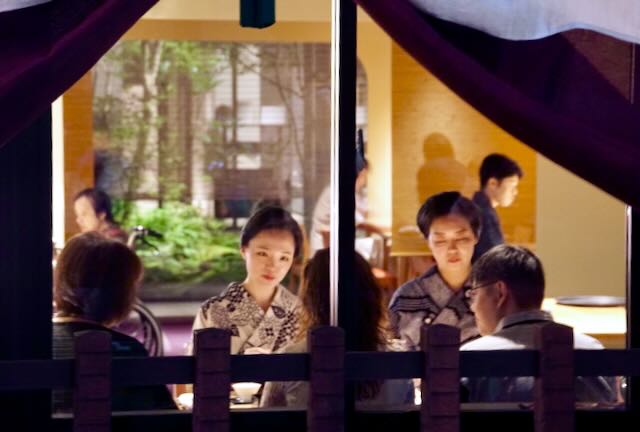
Their accommodation in Kyoto is a traditional machiya, with tatami rooms, wooden textures, and sliding paper doors. The physical environment intensifies the training. Thin walls make ordinary movements audible; low ceilings and compact spaces demand bodily awareness; morning routines require restraint and care. The student wakes at 6 a.m., aware of Catherine Sensei meditating, stretching, preparing, and moving through the day with disciplined intention. Even the act of washing, dressing, packing camera equipment, and leaving on time becomes part of the practice.
Service to a teacher is presented here as an applied discipline of concentration. The student must learn to be sharper with time management, equipment, clothing, speech, and schedule. This sharpness is not mere efficiency. It is a form of mindfulness directed toward another person’s work and well-being. In the guru-shishya relationship, service becomes a mirror: one sees where attention drifts, where self-concern intrudes, where assumptions replace actual listening, and where devotion must mature into competent support.
Kyoto’s streets become a field of embodied practice. The heat, humidity, cicadas, morning quiet, narrow roads, and traditional storefronts create an atmosphere in which perception is sharpened. The student carries camera gear, including a striking baby-pink camera bag that challenges an older identity shaped by black clothing, punk aesthetics, and resistance to convention. Clothing becomes part of the training because form matters. In Japanese cultural settings, presentation is not superficial; it communicates respect, coherence, and sensitivity to social context.
This attention to form has broader significance for Dharmic practice. Across Hindu, Buddhist, Jain, and Sikh traditions, external forms such as posture, dress, ritual sequence, food discipline, and modes of address are not empty formalities when rightly understood. They train the body-mind to participate in values larger than personal preference. The student’s movement from habitual self-presentation into greater refinement is therefore not a loss of authenticity but an expansion of capacity.
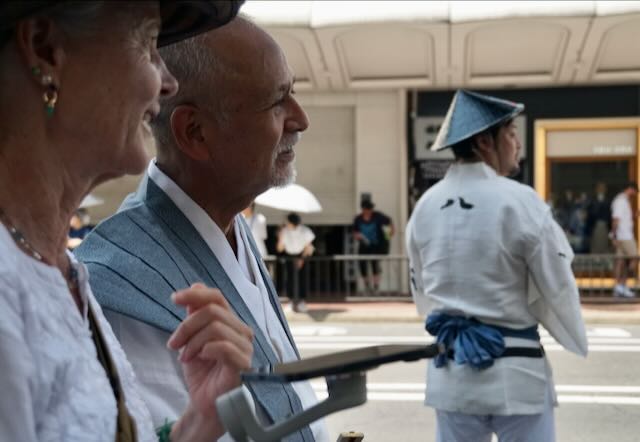
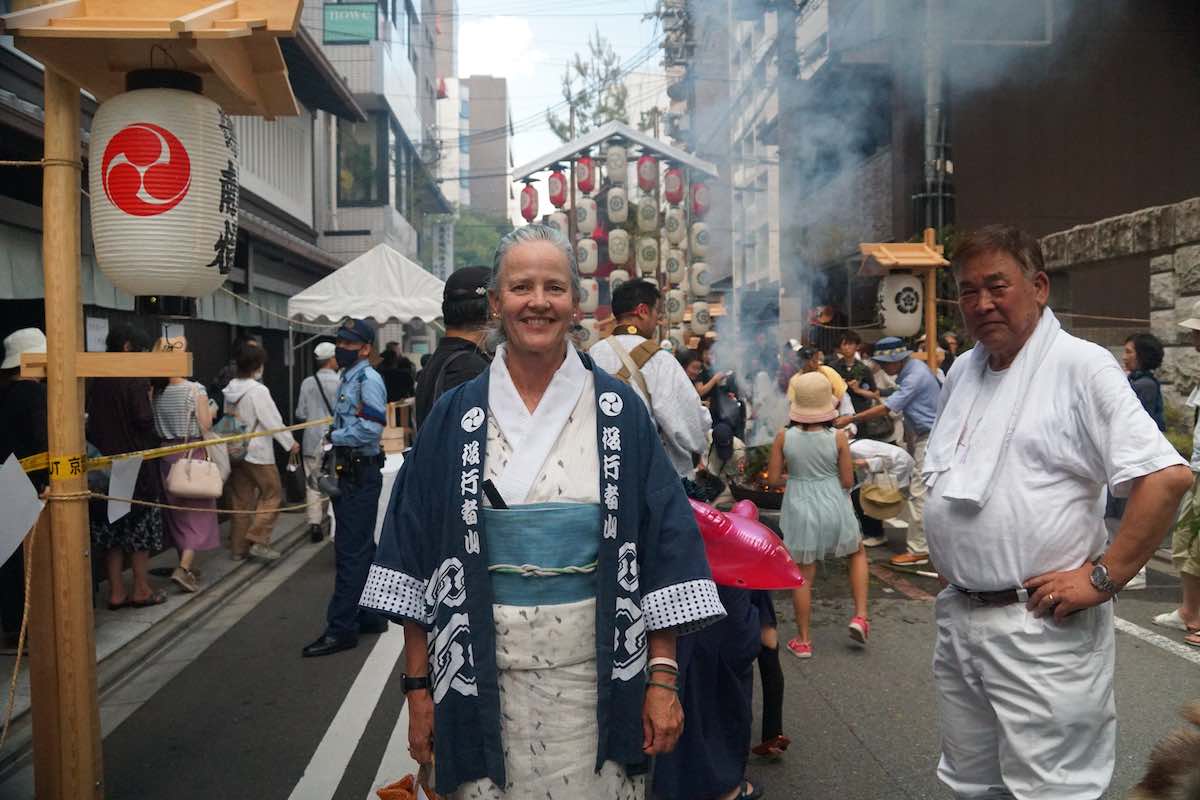
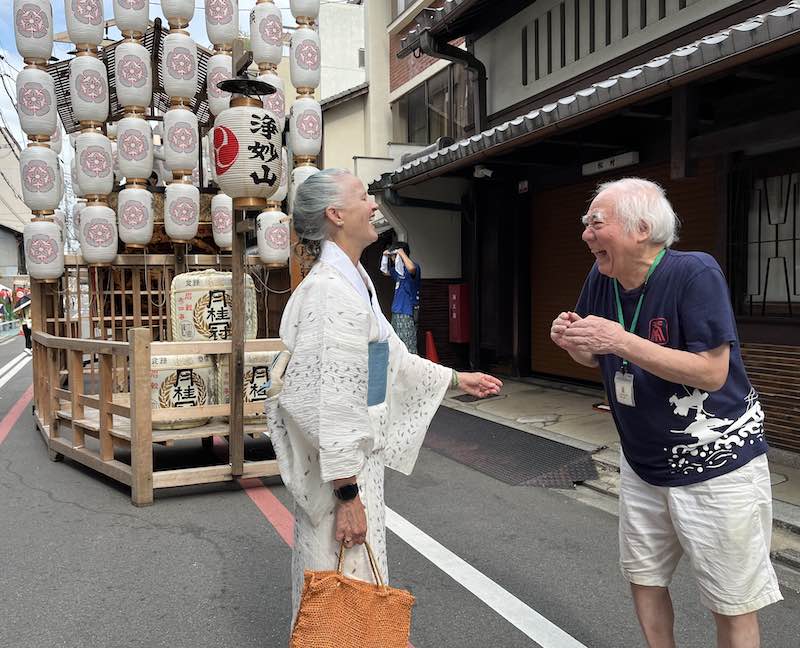
At the Gion Matsuri floats, known as yamaboko, the student observes communities assembling large wooden structures using handmade ropes and inherited techniques. These floats are not simply objects of display. They are repositories of craftsmanship, local identity, religious symbolism, and historical continuity. Men of different ages work together in patterns that have been repeated for centuries, and the annual repetition becomes an embodied archive of cultural memory.
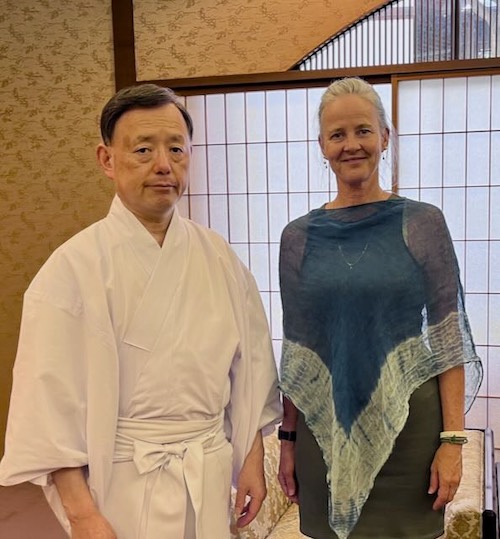
Catherine Sensei’s role at the festival reveals another dimension of spiritual leadership. She greets acquaintances, recognizes community members, explains festival themes, and interprets religious symbolism for the camera. At Hōka Boko, she explains that Hōka refers to Buddhist itinerant monks who wandered the countryside offering spontaneous teachings. Some may have been realized beings; others may have used the appearance of monkhood for livelihood. The float’s theme, therefore, opens a nuanced window into the social and spiritual ambiguity of religious life.
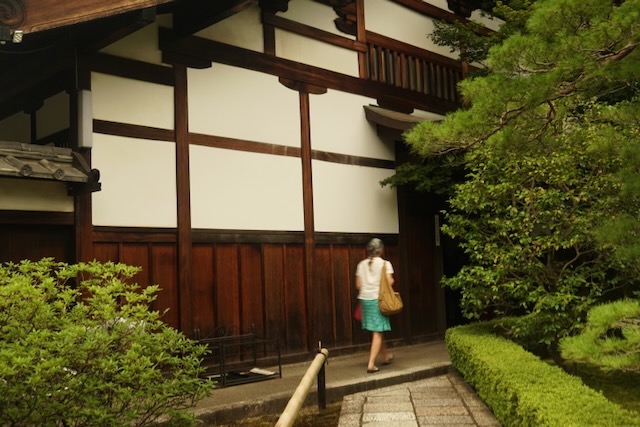
The student’s task is technical and devotional at once: place the microphone properly, frame the shot, monitor sound, remain unobtrusive, and avoid forcing the teacher to repeat herself. Camera work becomes karma yoga, a disciplined action performed in service of Dharma communication. The nervousness of the moment is important because it shows that service is not romantic. It includes the fear of failure, the burden of responsibility, and the humility of learning through real consequences.
The floats also display treasures preserved across centuries, including tapestries, carved objects, and ritual ornaments. Some were historically supported by the wealth of kimono merchants, while modern conservation may depend on contemporary tools such as crowdfunding. This continuity and adaptation are central to cultural heritage. Traditions survive not by remaining frozen, but by renewing their material, financial, and social conditions without severing their spiritual roots.
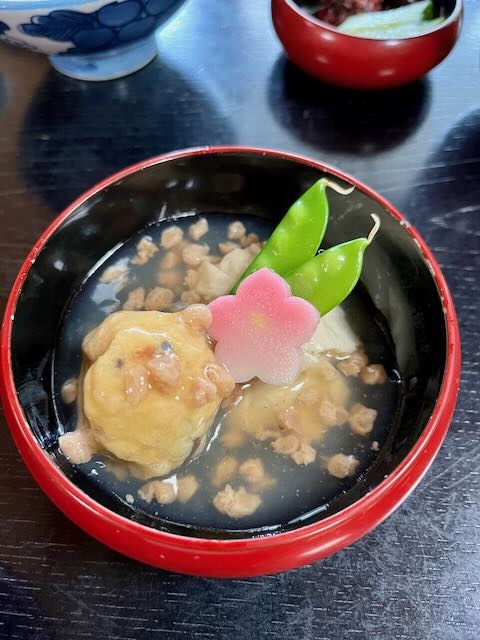
After long morning sessions in the heat, breakfast becomes another form of meditation. The student learns to eat slowly, observe awkwardness, notice the impulse to fill silence with speech, and attend simultaneously to taste, texture, bodily sensation, and the presence of the teacher. This kind of mindful eating is not isolated wellness practice. It is part of a broader Dharma discipline in which every ordinary action can reveal attachment, aversion, embarrassment, generosity, and awareness.
Yet the relationship with a spiritual teacher also exposes unresolved pain. The student’s history with Catherine Sensei includes moments of feeling misunderstood, judged, or treated harshly. In mature Dharma practice, such reactions are not dismissed as merely personal drama, nor are they automatically accepted as objective truth. They are investigated as part of the body-mind’s conditioning. The teacher becomes a mirror in which old wounds, defenses, projections, and patterns of aggression or appeasement become visible.
A seemingly ordinary grocery trip becomes the catalyst for deeper insight. The student goes shopping with the intention of buying good organic food and preparing future meals, but returns much later than expected while Catherine Sensei is hungry and waiting. The teacher points out that the student became absorbed in the idea of providing an ideal dinner and lost contact with the immediate need in front of her. The event exposes a subtle but common distortion: self-image as helpfulness can replace actual care.
This is one of the most technically important moments in the account. Spiritual service cannot be reduced to intention. It must be tested by attention to concrete reality. A person may sincerely wish to serve and still fail to notice hunger, timing, fatigue, or practical need. The Dharma lesson is not that intention is meaningless, but that intention must be disciplined by presence. Compassion becomes reliable only when it is joined with perception.

The conversation that follows opens older relational pain. Catherine Sensei asks whether the student understands the impact of her actions on others. The student acknowledges being hurt and also recognizes having caused hurt. The silence that follows is not empty; it becomes a space in which defensive structures soften. Tears arise, the chest aches, and a long-standing pattern begins to move. The student sees that constant self-protection, appeasement, and fear of attack have shaped the relationship more than previously admitted.
From this point, the account turns toward a more analytic examination of projection, especially in relation to women in spiritual authority. The student recognizes that Catherine Sensei occupies a difficult position. A teacher may see the student’s pattern clearly and attempt to point it out, while the student sees the teacher through memory, fear, family conditioning, cultural bias, and prior wounds. This is the hall of mirrors in which guru yoga often unfolds.

The issue becomes especially complex when the teacher is a woman. Even sincere practitioners may carry unconscious gender bias. The student reflects on early conditioning, family patterns, maternal authority, and physiological responses to women who lead, correct, or challenge. Such responses are not unique to Buddhism; they arise across spiritual communities when inherited social patterns meet the demand for surrender, discipline, and trust.
The account’s treatment of gender must be understood carefully. It does not reject male teachers, nor does it romanticize female teachers. Instead, it argues for greater awareness of how spiritual authority is filtered through history, family, culture, and the nervous system. In many Buddhist contexts, as in many religious histories, publicly celebrated exemplars have often been men. This shaped the student’s early assumptions about mastery, meditation, and legitimacy. Recognizing this bias becomes part of spiritual purification.
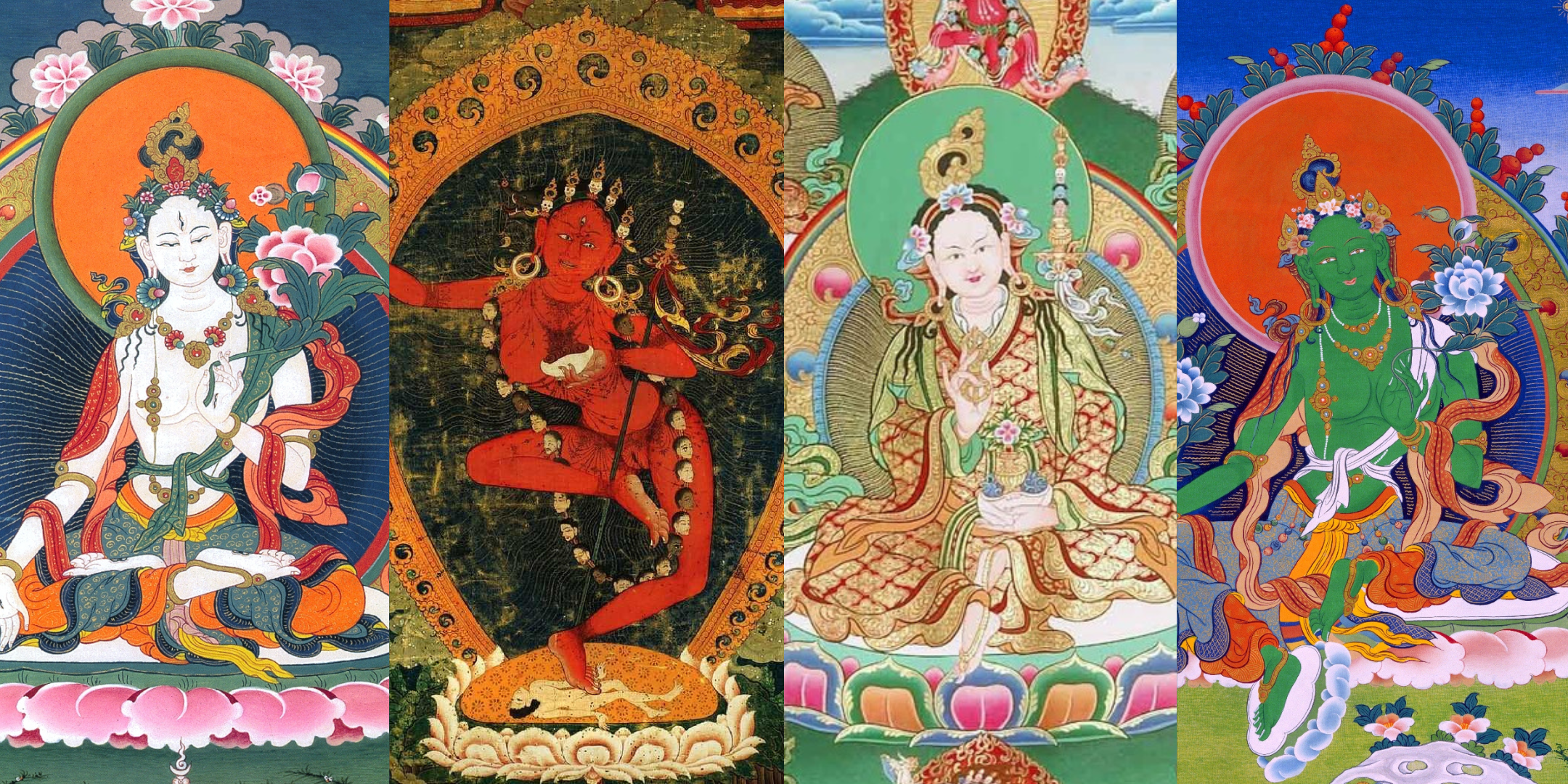
Dharmic unity requires this kind of honest examination. Hinduism preserves profound reverence for the guru, for Devi, for Shakti, and for women saints such as Akka Mahadevi and Andal. Buddhism includes women practitioners, nuns, dakinis, and female teachers who have carried transmission despite institutional limitations. Jainism and Sikhism also preserve teachings on discipline, liberation, equality, service, and spiritual courage. A mature inter-Dharmic understanding must honor both the greatness of inherited traditions and the need to examine social patterns that obscure women’s spiritual authority.
The student’s insight is therefore not merely personal confession. It becomes a case study in how bias operates beneath conscious belief. One may identify as progressive, feminist, spiritual, or open-minded and still carry deep reactions toward women in leadership. Meditation can reveal these reactions somatically: tightness in the gut, pain near the heart, fear in the shoulder blade, numbness, anger, shame, or childlike negotiation with authority. The body becomes an archaeological site where old conditioning is stored.
In this context, guru yoga is not a doctrine of submission to personality. It is a method for seeing the mechanisms of selfhood. The teacher’s presence activates the student’s hidden patterns; the student’s task is to observe, confess, repair, and continue practicing. This is why the tradition places such importance on trust. Without trust, every correction appears as attack. With immature trust, devotion can become dependency. With mature trust, the student can receive challenge without abandoning discernment, dignity, or responsibility.
The account also acknowledges that teachers are human. Spiritual mentorship is not portrayed as flawless omniscience. Teachers may make mistakes, students may misunderstand, and relationships may pass through painful ambiguity. The crucial question is whether the relationship supports awakening, ethical development, compassion, and increased clarity. The Zen saying, often expressed as falling down and standing up again, captures this resilient orientation. Practice continues through imperfection.
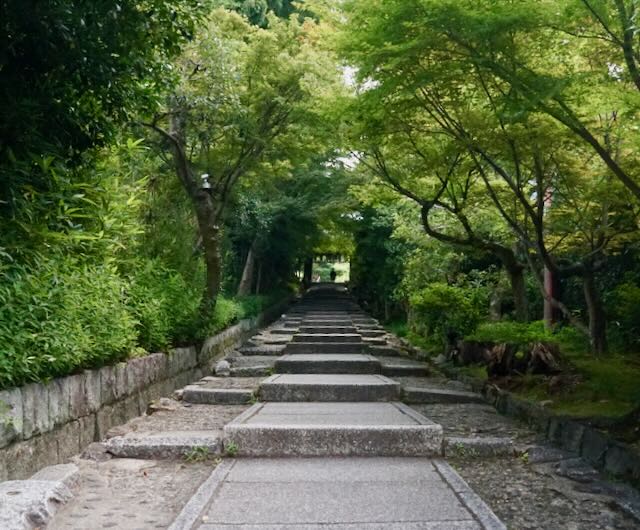
After the emotional storm, the narrative moves to Daitokuji, Kyoto’s historic Rinzai Zen monastery. Catherine Sensei takes the student there after a morning of filming. The visit links contemporary practice to the deep heritage of Zen and Chan, including figures such as Ikkyū. The atmosphere of the monastery shifts the account from relational confrontation to contemplative absorption. The student follows Catherine Sensei through cedar gates, broad walkways, and temple spaces where centuries of practice have accumulated in form.
At Zuihoin, a sub-temple built in 1535, the student meets an abbot known to Catherine Sensei. The encounter includes tea, conversation, and the intimacy of inherited ritual culture. The student worries about etiquette, formal posture, and the possibility of embarrassment, but the tea gathering proves informal and warm. This contrast between anxious expectation and relaxed human presence is itself instructive. Tradition is exacting, but it is also alive; it can hold discipline and ease together.
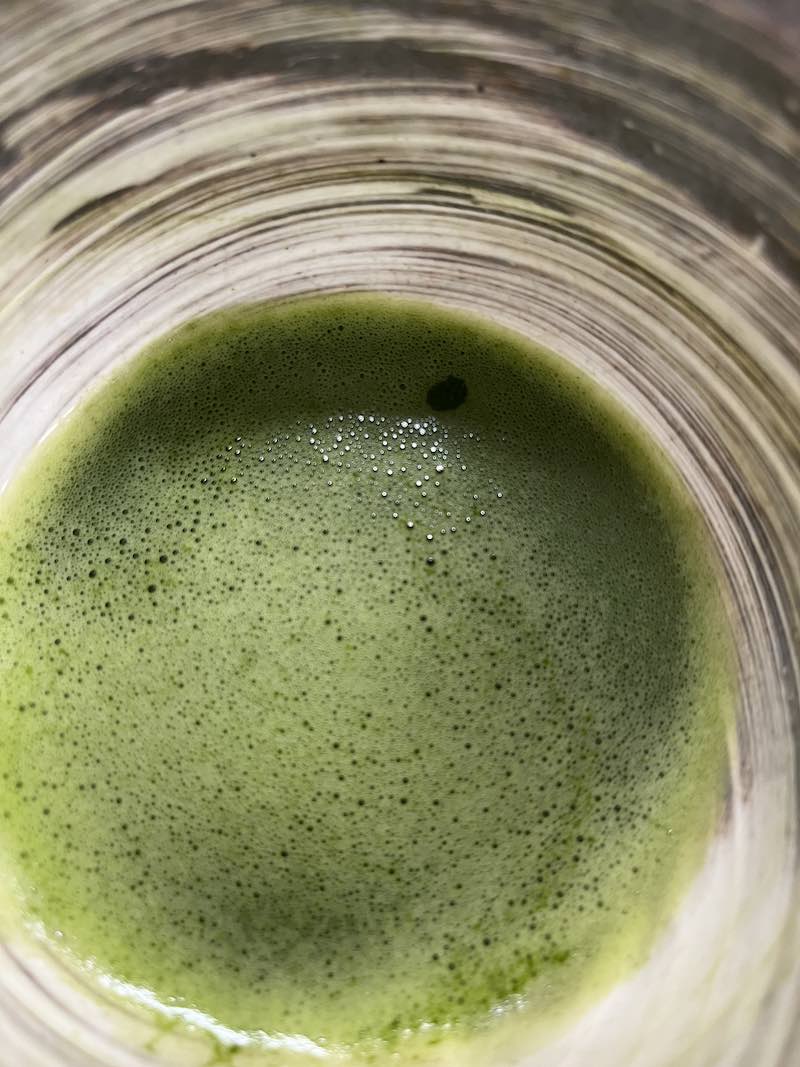
The matcha is served in Shigaraki ceramics, associated with one of Japan’s six ancient kilns. The bowls carry rough texture and elemental force, making the act of drinking feel connected to earth, clay, fire, and time. The sweet bean dessert and fermented black soybeans deepen the sensory field. Taste becomes part of transmission. The student is not merely learning ideas about Zen; she is being educated through posture, silence, flavor, ceramic weight, social grace, and the teacher’s familiarity with the place.
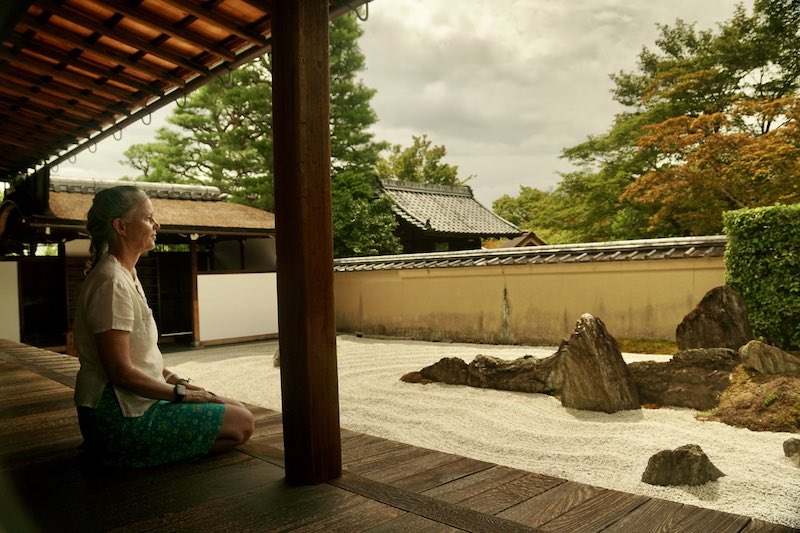
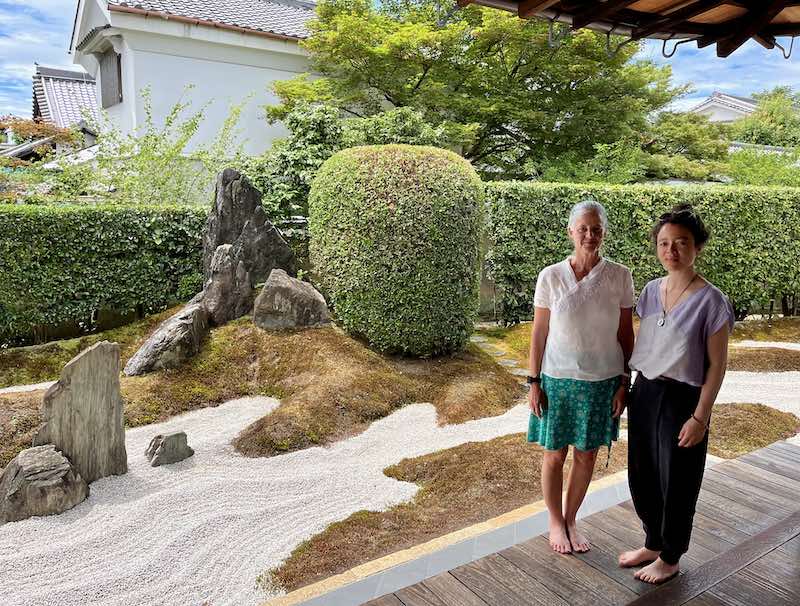
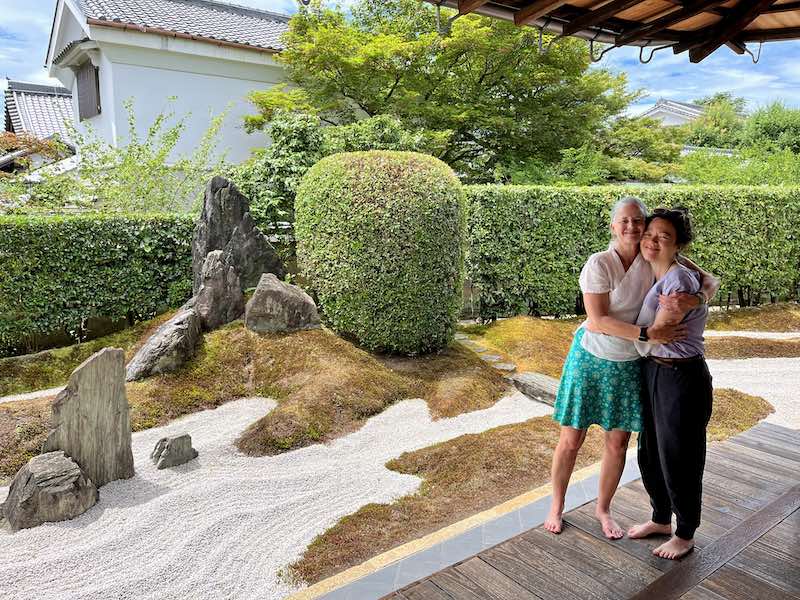
The visit culminates at the Zuihoin Zen garden. Grey pebbles are raked into oceanic movement around moss-covered rocks. The student experiences the garden not as decoration but as living form. The pebbles seem to move; the sea becomes audible; the distinction between observer and observed softens. Such moments reveal why form matters in contemplative traditions. A garden, when shaped by disciplined perception and centuries of care, can function as scripture without words.
In the meditation hall, ancient ink paintings on washi paper evoke the presence of practitioners, painters, caretakers, monks, and ancestors who dedicated themselves to awakening. The student weeps, not from sentimentality alone, but from contact with continuity. What is cared for can carry through time. This is a central insight for cultural preservation and spiritual practice alike. A temple, a festival, a lineage, a mantra, a discipline, or a relationship survives when generations give attention, labor, reverence, and repair.
The final insight of the account concerns transmission. When the teacher’s steadiness allows the student’s guarded heart to soften, experience opens beyond analysis. The student feels flooded by life, gratitude, history, compassion, and the presence of Dharma ancestors. This is described as the oceanic heart. In academic terms, one might call it an affective and embodied recognition of lineage. In spiritual terms, it is guru yoga: the awakened qualities of the teacher, the lineage, and the student’s own deeper nature meeting in direct experience.
The broader lesson is relevant beyond one Buddhist setting. Spiritual growth requires more than inspiration. It requires disciplined attention, ethical repair, cultural humility, gender awareness, service, and the willingness to be seen. The guru-shishya relationship, when rooted in Dharma rather than personality cult, becomes a transformative container in which the student’s projections are revealed and compassion becomes practical. In Kyoto, amid Gion Matsuri floats, machiya rooms, tea bowls, temple gardens, and difficult conversations, modern guru yoga appears as both ancient and immediate: a path of surrender, discernment, service, and awakening.
Inspired by this post on Planet Dharma.







Leave a Reply
You must be logged in to post a comment.