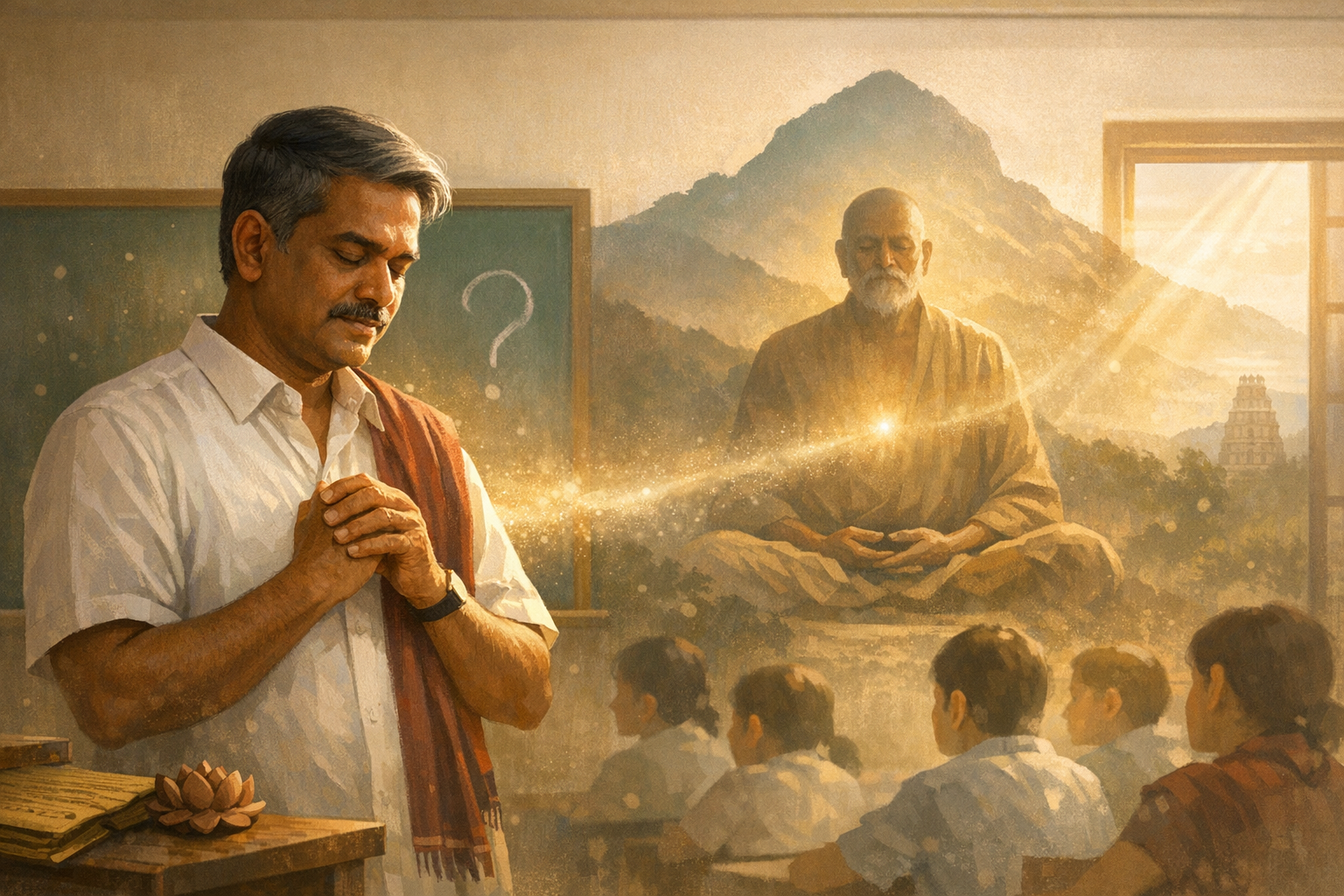
In the 1980s at Hindu Higher Secondary School, Triplicane, a cohort of devoted teachersamong them Raoji, Iyengarji, and Iyerjisustained an atmosphere where learning extended beyond textbooks into living values. Within that setting, a respected Tamil teacher known as Mr. Raoji shared a formative recollection: an encounter with Bhagavan Sri Ramana Maharshi that quietly reshaped his understanding of knowledge, duty, and inner freedom. This account, while personal, offers a window into the enduring power of the guru–shishya relationship within contemporary education.
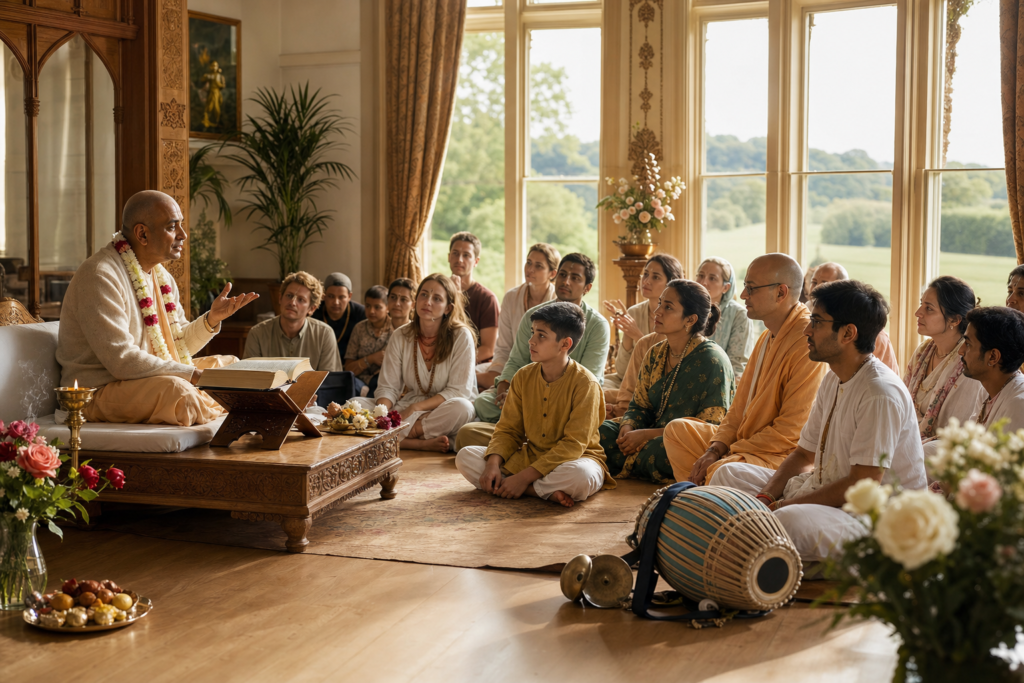
Positioned at the confluence of tradition and modernity, the school embodied the classical ethos of the guru guiding the shishya in both letters and life. For students, the teachers were more than instructors; they were exemplars of dharmic living whose personal narratives carried ethical and spiritual instruction. In this light, the memory of darshanlistening in silence, observing without agitation, and returning repeatedly to the sense of “I”assumed the character of a living pedagogy.
According to Mr. Raoji’s recollection, the most striking feature of meeting Ramana Maharshi was not discourse but stillness. In that presence, words seemed ancillary to understanding. The teacher described a pervasive calm, a clarity that did not compel assent yet naturally dissolved restlessness. Though dates and incidental details recede with time, the lasting impression was a direct invitation to examine the root of experiencethe sense of “I.”
Historically, Ramana Maharshi (1879–1950) is recognized for articulating a direct approach to Self-knowledge within the broad stream of Advaita Vedanta. Following a profound awakening as a teenager, he settled at Arunachala (Tiruvannamalai), where Sri Ramanasramam grew around his presence. While visitors came from many backgrounds, his central guidance remained consistent: trace the “I”-sense to its source, abide as pure awareness, and allow the superstructure of thought to resolve in its ground.
Technically, this inquiryoften called self-inquiry or atma-vicharaturns attention from objects of awareness to the subject: the felt “I.” When thoughts arise, the instruction is to ask, “Who is the ‘I’ to whom this thought appears?” Rather than seeking a verbal answer, attention returns to the immediate sense of being. As the mind’s movements settle, the “I”-thought (aham-vritti) thins, revealing the background presence that is self-luminous and unobjectified. The practice does not negate everyday responsibilities; it reframes them from the standpoint of clarity rather than compulsion.
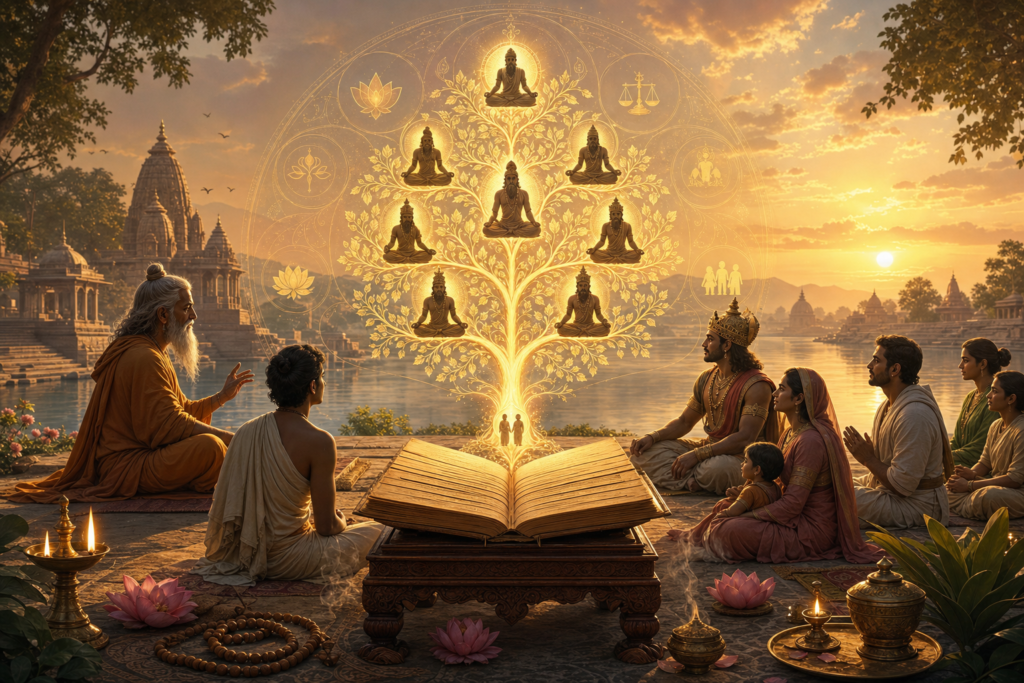
Philosophically, this aligns with core Advaita Vedanta intuitions found in the Upanishads: the Self is not an object among objects, and negation of what is not-Self (neti, neti) prepares insight into what does not come and go. Ramana’s articulation is method-centric: instead of analyzing consciousness conceptually, it operationalizes inquiry so that attention collapses into its source. The emphasis is on direct verificationan experiential rigor continuous with Vedantic tradition yet accessible without elaborate ritual prerequisites.
Silence (mauna) in this context is not absence but saturated presence. In descriptive terms, communicative silence functions as a pedagogical medium: it quiets reactivity, heightens receptive attention, and opens a non-discursive pathway to understanding. As Mr. Raoji conveyed, the stillness around Ramana Maharshi was instructive in itself; it reoriented the usual habit of seeking answers outward and kindled confidence in interior discovery.
That pedagogical effect did not remain confined to the ashram; it flowed back into the classroom. For a teacher tasked with forming minds and hearts, the discipline of inward steadiness became an ethical resource. Lessons in Tamil literature and culture could be offered with greater equanimity; guidance to students could be less reactive and more compassionate. In this way, a single contemplative encounter matured into a sustained educational practice.
Importantly, the inquiry into Self resonates across dharmic traditions. In Buddhism, sustained attention and insight (sati and vipassana) examine mental processes to loosen reification, paralleling the Advaitic deconstruction of the ego-sense. Jainism emphasizes introspection, ethical restraint, and purification (as in pratikraman), which refine awareness and reduce karmic accretions. Sikhism’s remembrance of the Divine Name (naam simran) nurtures continuous God-centered awareness. While doctrinal formulations differ, the shared trajectorystabilizing attention, softening egoic fixation, and realizing an undivided ground of beingsupports unity in spiritual diversity without collapsing distinct paths.
This plural affirmation harmonizes with the Hindu concept of Ishtahonoring forms and methods suitable to individual naturewhile maintaining fidelity to the universal aim of liberation (moksha). Ramana Maharshi’s openness to seekers from varied backgrounds exemplified this inclusivity: a method both simple and profound, transmitted without sectarian insistence. Such an approach strengthens societal cohesion by affirming that multiple authentic avenues can converge upon a common experiential truth.
From a historical-critical viewpoint, personal testimonies like Mr. Raoji’s deserve respectful yet discerning attention. Memory selects and shapes; hagiography embellishes; yet recurring motifs across independent accountspotent silence, a direct method of inquiry, ethical gentlenessform a consistent profile that corroborates the essence of the teaching. The value of such narratives lies not in cataloging minutiae but in illuminating how a teaching takes root in lived practice.
For contemporary practitioners, a practical orientation can be framed without prescriptiveness. Establish a quiet moment in the day; allow attention to rest on the bare sense of being; when thoughts proliferate, gently ask, “Who is the one aware of this thought?” Return to the felt “I.” In daily life, when reactivity surges, pause and re-orient to awareness before responding. Over time, this cultivates stability, discernment, and compassion, qualities prized across dharmic ethics.
In an age of fragmentation and incessant stimulus, the legacy transmitted through a Triplicane classroomequanimity grounded in Self-knowledgeretains urgent relevance. It invites a shift from information overload to contemplative intelligence, from identity as agitation to identity as awareness. Students who received such mentoring were offered not only subject mastery but a compass for navigating complexity without losing inner poise.
The narrative of a teacher’s meeting with Ramana Maharshi thus functions on multiple levels: as a cultural memory of Chennai’s educational milieu; as a concise introduction to Advaita Vedanta’s method of self-inquiry; and as an exemplar of inter-traditional harmony within the broader dharmic family. It affirms that silence can instruct, inquiry can liberate, and grace can flow through the ordinary channels of school and home.
Ultimately, what endures is the integration of insight with action. Whether one approaches through Advaita’s self-inquiry, Buddhist mindfulness, Jain introspection, or Sikh remembrance, the ethical fruitsclarity, compassion, and responsibilitystrengthen both individual well-being and communal solidarity. In honoring such memories and methods, a shared civilizational wisdom is renewed, and the path to inner freedom remains open to all.
Inspired by this post on Hindu Pad.