Baisakhi (Vaisakhi) 2026 will be observed on April 14 across India. Rooted in the agrarian rhythms of Punjab and aligned with the solar calendar, this festival holds a pre-eminent place in Sikh tradition as the Sikh New Year and as Khalsa Sajna Diwas. It also coincides with Mesha Sankranti, the sidereal solar ingress into Mesha (Aries), which inaugurates new-year observances across several Indian regions. The convergence of harvest gratitude, spiritual renewal, and calendrical precision makes Vaisakhi one of the most consequential dates in the 2026 festival calendar.
Calendrically, Vaisakhi is anchored to the Sun’s nirayana (sidereal) transit into Mesha, known as Mesha Sankranti. In 2026 this falls on April 14 in India, aligning Vaisakhi with the first day of the solar month Vaishakha in North Indian reckoning. Within Sikh calendrical usage, 1 Vaisakh is fixed to April 14 in the Solar Nanakshahi framework, widely observed as the Sikh New Year and the day of Khalsa’s creation. Some communities also recognize 1 Chet (March 14) as Nanakshahi New Year; nevertheless, 1 Vaisakh on April 14 retains singular prominence due to its historical and pan-regional solar significance. This dual awareness preserves both historical fidelity and communal unity, in the spirit of Sarbat da bhala.
Historically, Vaisakhi memorializes the epochal events of 1699 at Anandpur Sahib, when Guru Gobind Singh initiated the Panj Pyare and founded the Khalsa Panth through khande di pahul (Amrit Sanchar). The Khalsa disciplinesymbolized by the five K’s (Kesh, Kangha, Kara, Kachera, Kirpan)affirmed equality, courage, self-restraint, and service. This formative moment transformed Sikh social and spiritual life, enshrining principles of dignity, shared responsibility, and fearless ethical action. Commemorating this history on April 14, 2026, communities revisit the Khalsa ideal as a living guide for modern civic virtue and interfaith harmony.
In Punjab and neighboring regions, Baisakhi is also a harvest festival marking the culmination of the rabi season, particularly the wheat harvest. The golden fields, celebratory Bhangra and Giddha, and communal fairs (melas) reflect gratitude for agricultural abundance. This agrarian heart of Vaisakhi resonates with the ethic of kirat karo (honest work) and vand chhako (share what one has), linking rural livelihoods with the spiritual practice of generosity and social care.
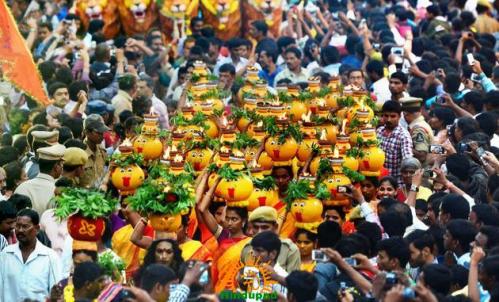
Religious observances on Vaisakhi 2026 will center in gurdwaras with kirtan, Ardas, and the culmination of Akhand Path. Many gurdwaras conduct Nishan Sahib seva (flag-hoisting and renewal), while large Nagar Kirtan processions, led by the Panj Pyare, bring sacred hymns, gatka martial displays, and community service to the streets. Amrit Sanchar ceremonies invite Sikhs to embrace or reaffirm the Khalsa discipline. Langar remains a universal touchstonefree, inclusive meals that embody equality and service without distinction.
Because Vaisakhi is synchronized with Mesha Sankranti, it also intersects with multiple regional New Year festivals in the Indian cultural sphere. In Tamil Nadu, Puthandu marks the advent of the Chithirai month; in Kerala, Vishu begins the Medam month with the auspicious Vishu Kani; in Assam, Rongali Bihu (Bohag Bihu) ushers in the agricultural and social new year; in Odisha, Maha Vishuva Sankranti (Pana Sankranti) blends solar transition rites with charitable and devotional practices. These harmonized observances underscore shared Indic calendrical logic despite linguistic and regional diversity.
This shared solar new-year window also fosters solidarity across dharmic traditions. While Vaisakhi is foremost a Sikh milestone, Buddhists and Jains within India often participate in regionally rooted solar new-year customs, and Theravada communities across South and Southeast Asia observe analogous mid-April new-year practices. The result is a tapestry of celebrations that affirm pluralism, mutual respect, and the common aspiration for ethical living in the year ahead.
The Sikh diaspora amplifies Vaisakhi’s global profile. Major processions and community gatherings are expected in cities with significant Sikh populations, including Surrey and Vancouver in Canada; Southall and Birmingham in the United Kingdom; and New York City and California hubs in the United States. These events blend kirtan, langar, cultural performances, and public service initiatives, reinforcing Vaisakhi as both spiritual observance and civic contribution. Local observance dates may shift slightly with time zones, but the focal day for 2026 aligns with April 14 in India.
Astronomically, Mesha Sankranti is defined by the Sun’s entry into sidereal Aries, computed with an ayanamsa (commonly Lahiri) that accounts for precession. This sidereal basis distinguishes Indian solar calendars from the tropical (equinox-based) Gregorian framework. Most ritual traditions prefer observance on the day whose sunrise follows the Sankranti moment, ensuring that the entire day partakes of the new solar month’s merit (punya-kala). This is why Baisakhi 2026 consolidates on April 14 in India even if astronomical transit nuances vary by longitude and local sunrise.
For households and communities preparing for Baisakhi 2026, customary practices include early morning ishnaan, Nitnem, participation in kirtan and Ardas, and engagement in sewawhether through langar, blood donation drives, cleanliness campaigns, or educational support. Families often visit gurdwaras, share festive meals, and join Nagar Kirtan. In agrarian settings, prayers of thanksgiving for a safe and bountiful harvest naturally accompany the day’s joy.
Terminology varies across regions and languages: Vaisakhi and Baisakhi are interchangeable forms; Vaishakha is the Sanskritized name of the month; and the wider solar milestone is Mesha Sankranti. Despite orthographic differences, the core meanings remain coherentushering in a new solar month and year, giving thanks for harvests, and renewing an ethical commitment to community and truth. These shared meanings invite inclusive participation and mutual appreciation among Hindu, Sikh, Buddhist, and Jain communities.
In sum, Baisakhi (Vaisakhi) 2026 on April 14 brings together Sikh New Year, Khalsa remembrance, harvest celebrations in Punjab, and India’s solar new-year traditions such as Puthandu, Vishu, Rongali Bihu, and Maha Vishuva Sankranti. The day’s spiritual arcgratitude, resolve, seva, and unityresonates across dharmic paths. Observing Vaisakhi with knowledge of its calendrical precision and historical depth enriches the festival’s experience and strengthens bonds within and across communities.
Inspired by this post on Hindu Pad.