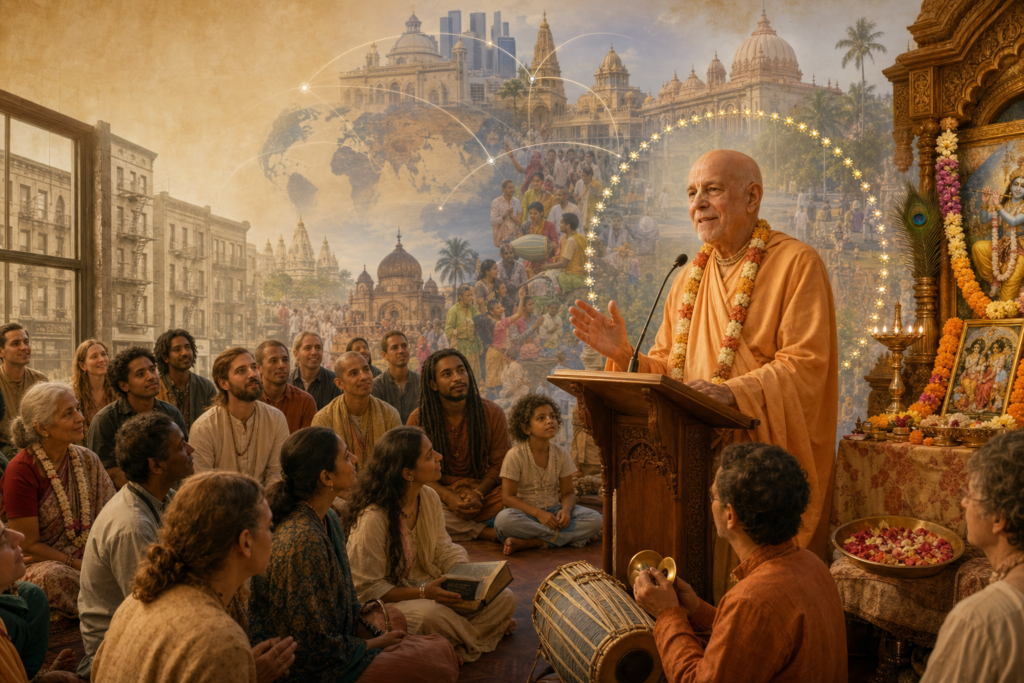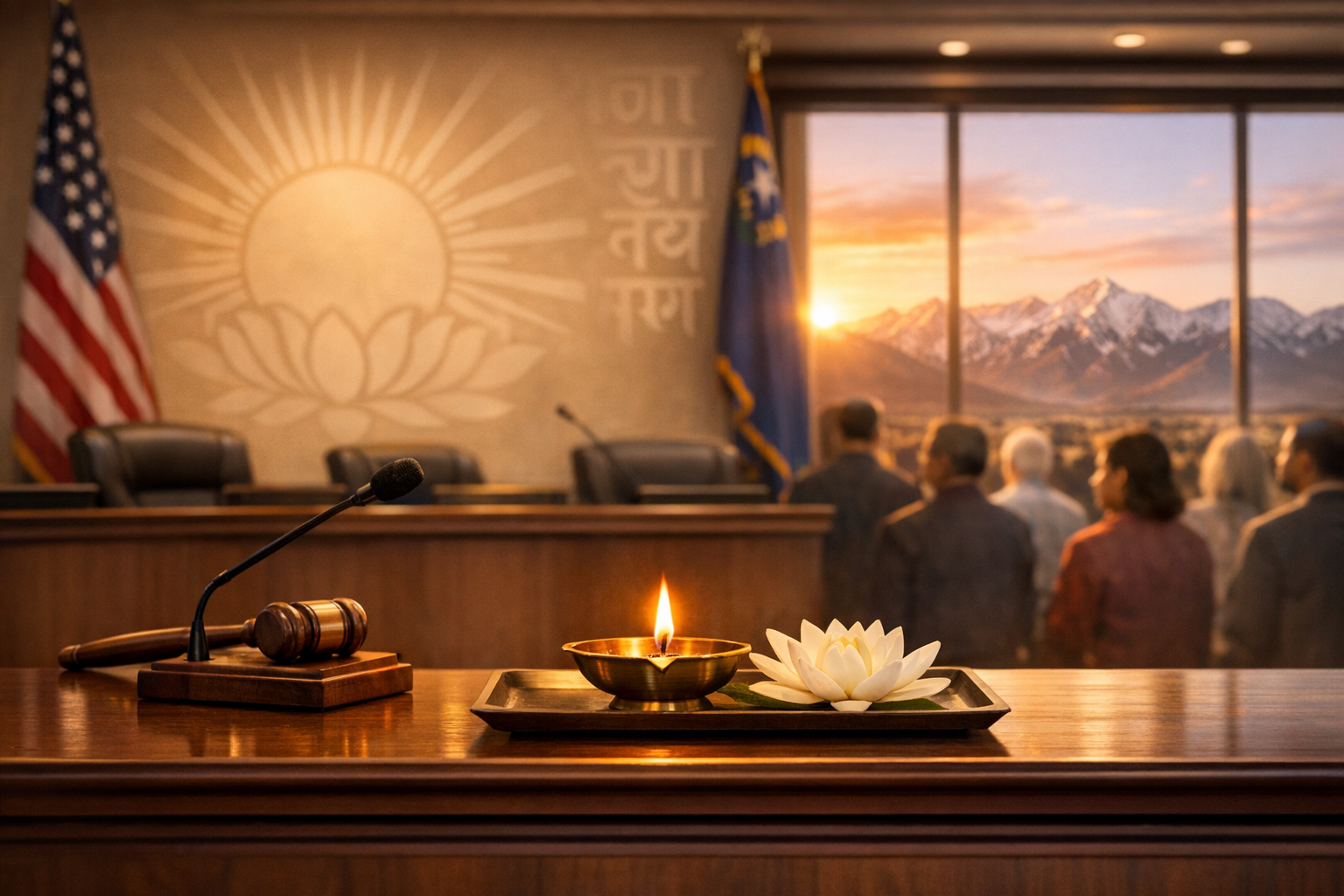
On 26 May 2026, the Elko City Council in Nevada will open its meeting with Hindu prayers for the first time, inaugurating the civic day with Sanskrit invocations drawn from the world’s oldest extant scriptures. The ceremonyled by distinguished Hindu statesman Rajan Zedwill center the Gayatri Mantra alongside other carefully selected Vedic and Upanishadic verses, creating a reflective, non-proselytizing moment of contemplation in a public institution. This development represents a landmark for civic inclusivity in northeastern Nevada and a visible affirmation of religious diversity in American public life.
In legislative and municipal settings across the United States, brief opening invocations function as solemn, values-oriented reflections that commend wisdom, compassion, and ethical governance to elected officials and the community. The inclusion of Hindu prayers in Elko aligns with longstanding constitutional guidance that permits non-coercive, rotating, and neutral legislative invocations (see Marsh v. Chambers, 1983; Town of Greece v. Galloway, 2014). Within this framework, the presence of Sanskrit mantras underscores both freedom of conscience and the shared civic aspiration to seek collective well-being without privileging or marginalizing any tradition.
Rajan Zed, widely recognized for advancing interfaith understanding and for offering invocations before numerous governmental bodies in the United States, typically emphasizes universal themes: the pursuit of wisdom (vidyā), the welfare of all (sarvabhūta-hita), and peace (śānti). Such invocations prioritize clarity, brevity, and intelligibility for all attendees regardless of background, frequently pairing the original Sanskrit with a succinct English translation to ensure accessibility.
At the heart of this occasion stands the Gayatri Mantra (Ṛgveda 3.62.10), a revered Vedic hymn composed in the gāyatrī chandas (meter of three octosyllabic lines, totaling 24 syllables). The commonly recited form is: “oṃ bhūr bhuvaḥ svaḥ | tat savitur vareṇyaṃ | bhargo devasya dhīmahi | dhiyo yo naḥ pracodayāt.” Semantically, the hymn invokes Savitṛ, the vivifying solar principle, in a universal appeal: “We meditate upon the divine effulgence of the adorable source of all; may that radiance illumine and guide our intellects.” By invoking the refinement of understanding (dhī), the prayer speaks to the inner faculty of judgment central to just and compassionate governance.
Other Sanskrit selections in civic invocations often include śānti mantras and concise ethical prayers that foreground peace, clarity, and collective well-being. Illustrative examples frequently used in public interfaith settings include “asato mā sadgamaya | tamaso mā jyotirgamaya | mṛtyor mā amṛtaṃ gamaya | oṃ śāntiḥ śāntiḥ śāntiḥ” (Bṛhadāraṇyaka Upaniṣad 1.3.28) and “sarve bhavantu sukhinaḥ | sarve santu nirāmayāḥ | sarve bhadrāṇi paśyantu | mā kaścid duḥkha-bhāg bhavet.” These concise verses are distinguished by their universal scopeseeking truth over untruth, light over darkness, and freedom from suffering for all beingsrendering them particularly apt for a plural, civic context. The specific selection for Elko will be at the officiant’s discretion, with attention to brevity and thematic clarity.
From a technical perspective, the Gayatri Mantra exemplifies the classical Vedic synthesis of sound, meter, and meaning. In formal Vedic recitation, phonetic precision and pitch contours (udātta, anudātta, svarita) support a distinctive oral science that has preserved the texts through millennia. In civic settings, a simplified melodic cadence is often adopted to retain solemnity and intelligibility while honoring the sonic integrity of the original. The structureopening syllable (oṃ), core verse (tāṭ savitur …), and concise peace closure (oṃ śāntiḥ)yields an invocation that can be delivered in roughly one minute with a brief English paraphrase, meeting common time and accessibility norms for public meetings.
Beyond philology, the mantras’ experiential dimension is notable. The Sanskrit syllables are traditionally regarded as vibrational carriers of meaning (śabda-brahman), designed to calm, focus, and elevate attentionprecisely the contemplative posture that benefits deliberative civic activity. Attendees frequently describe the collective silence and the soft cadence of “oṃ śāntiḥ śāntiḥ śāntiḥ” as akin to a shared, steadying breath before complex public business, making the ethos of peace palpable in the room.
The Elko invocation also resonates with the common ethical core shared across the dharmic traditionsHinduism, Buddhism, Jainism, and Sikhismwhose communities increasingly engage American public life. Foundational Buddhist loving-kindness (mettā) practices, the Jain Namokar Mantra’s nonsectarian reverence for the spiritually accomplished, and the Sikh Mool Mantar’s declaration of the One Reality each underscore unity, compassion, and moral clarity. By welcoming Vedic hymns into a civic forum, Elko symbolically acknowledges this broader dharmic heritage of non-harm (ahiṃsā), truth (satya), and service (seva), reinforcing a message of solidarity among these closely related wisdom traditions.
Best practices in legislative invocations emphasize inclusivity and non-compulsion. Attendees are free to participate silently, to listen respectfully, or to observe without engagement. In many venues, brief contextual remarks and a plain-English rendering accompany any Sanskrit recitation, bridging cultural and linguistic gaps. A neutral, educational presentationwithout proselytizing or disparagementensures that the moment remains a shared ethical reflection rather than a sectarian exercise.
For those interested in the textual background, the Gayatri Mantra is drawn from the Ṛgveda, while the widely recited śānti verses are preserved in the Upanishads, the philosophical culmination of the Vedic corpus. These texts articulate perennial themes central to public ethics: disciplined intellect (dhī), self-restraint (dama), empathy (dayā), and peace (śānti). Their civic relevance is direct: public decision-making benefits when deliberations are anchored in clarity, humility, and the sincere aspiration to secure the welfare of all constituents.
The significance of this first-time Hindu invocation at the Elko City Council extends beyond the day’s agenda. Such moments often catalyze constructive dialogue, classroom interest, and library programming around the Vedas, Upanishads, and the dharmic traditions more broadly. In diverse American communities, this kind of visible inclusion helps normalize a respectful curiosity about different paths while affirming a common civic space in which multiple spiritual heritages can be seen, heard, and valued on equal terms.
As Elko marks this historic first, the tone of the invocationmeditative, concise, and universalwill speak to values that are as ancient as they are contemporary. By allowing timeless Vedic wisdom to frame a modern council meeting, the city underscores that quiet reflection and ethical aspiration are not private luxuries but public virtues. In that spirit, the gentle cadence of the Gayatri Mantra and allied śānti verses will offer a moment of stillness that dignifies debate, steadies judgment, and affirms the shared pursuit of the common good.
Inspired by this post on Hindu Pad.