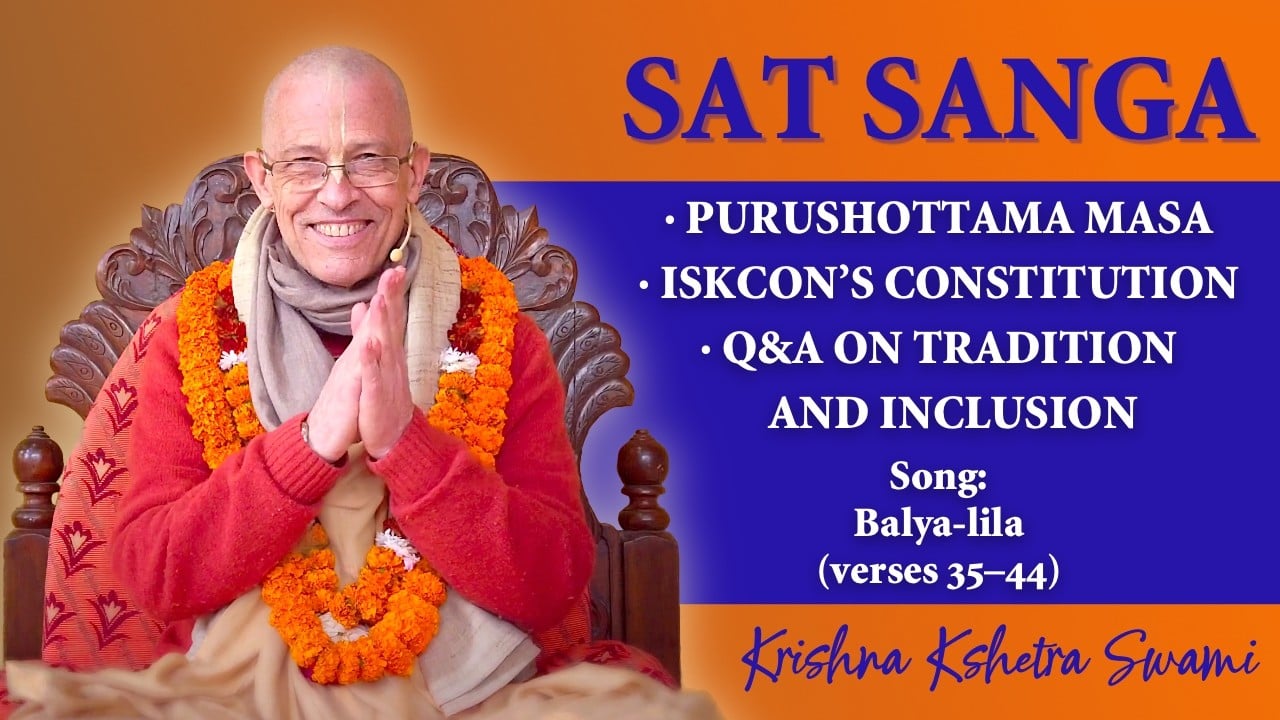
On 16 May 2026, a Sat Sanga with HH Krishna Kshetra Swami offered a timely and penetrating exploration of Tradition, Inclusion, and Purushottama Masa, with additional reflections on ISKCON’s evolving constitutional framework, the practical wisdom of “Try to chant and be happy,” an in-depth Q&A on inclusive practice within tradition, and the devotional singing of Balya-lila (verses 35–44), from Srila Locana Dasa Thakura’s. The session wove scriptural insight, community experience, and calendrical precision into a coherent guide for contemporary spiritual life grounded in Sanatana Dharma.
Sat sangaspiritual association centered on hearing, chanting, and thoughtful dialoguehas long been recognized as a catalyst for transformation across dharmic lineages. In the Vaishnava tradition, its scriptural foundations are captured in Srimad-Bhagavatam’s emphasis on assembly-based kirtana and reflection; in Jain and Hindu streams, it aligns with satsang and pravachana; in Buddhism, with communal Dhamma discussion; and in Sikh tradition, with sangat and kirtan. Participants consistently report that such association clarifies philosophical understanding, strengthens ethical resolve, and cultivates shared purpose without eroding the distinctiveness of each path.
Purushottama Masa, known in calendrical science as Adhika Masa, is the intercalary lunar month introduced periodically to synchronize the lunar year with the solar cycle. Because a lunar year is approximately 10.875 days shorter than the solar year, the difference accumulates to roughly one lunar month every 32 to 33 months; the Hindu lunisolar system resolves this by inserting an additional month when a lunar month passes without a solar ingress (saṅkrānti). Vaishnava tradition honors this intercalation by dedicating it to PurushottamaSri Krishna, the Supreme Personelevating the month from a technical correction to a profound devotional opportunity. In 2026, this intercalation appears as Adhik Jyeshta Maas 2026, aligning practice and calendar with particular resonance for bhakti observances.
The theological inflection of Purushottama Masa emphasizes intensified śravaṇa (hearing), kīrtana (chanting), japa (meditation on the holy name), and vrata (vows), with special encouragement to study Bhagavad-Gita and Srimad-Bhagavatam. Gaudiya Vaishnava sources extol the month as especially efficacious for deepening sambandha (relational knowledge of the Divine), abhidheya (the process of devotion), and prayojana (the goal of prema-bhakti). The ethos is not transactional asceticism but bhakti-centered alignment: householders, students, and monastics alike are invited to elevate ordinary routinesdarśana, tulasi worship, prasada discipline, and mindful sevainto conscious offerings.
While “Purushottama Masa” is Vaishnava in nomenclature, the underlying calendrical logic of intercalation is shared across Indic lunisolar traditions. This common scientific substratum undergirds diverse but convergent practices: Hindu and Jain communities often intensify vrata and scriptural recitation during special months, Buddhist communities maintain seasonal monastic observances such as Vassa with heightened communal study and meditation, and Sikh communities center lived remembrance through naam-simran and kirtan throughout the year. The shared aspirationpurifying intention, stabilizing attention, and serving all beingsreinforces a unifying dharmic vision without flattening doctrinal distinctives.
Discussion on ISKCON’s Constitution situated governance within dharma-based accountability. Srila Prabhupada’s “Seven Purposes of ISKCON,” the GBC’s global stewardship, and the principle of śāstra–guru–sādhu furnish doctrinal anchors. A maturing constitution aims to codify mission fidelity, pastoral care, standards for sādhanā and education, temple governance with due process, transparent financial stewardship, and culturally sensitive outreach that honors local customs while preserving Vaishnava siddhānta. Such a framework serves both spiritual integrity and legal clarity, helping communities navigate contemporary plural societies with confidence and humility.
Inclusion was articulated not as a concession to modernity but as an organic expression of dharma’s universality. Three complementary layers emerged as a practical hermeneutic: immutable siddhānta (core theological truths), regulative maryādā (time-tested practices that guide healthy community life), and loka-saṁskṛti (variable cultural forms through which devotion is expressed). This scaffold helps communities welcome seekers across cultures and life-stageswomen and men, youth and elders, lay and monasticwhile maintaining doctrinal coherence. It likewise nurtures inter-dharmic respect among Hindus, Buddhists, Jains, and Sikhs by affirming shared ethical commitments and contemplative aims.
The counsel to “Try to chant and be happy” was treated as both a theological imperative and a practical methodology. The mahāmantraHare Krishna Hare Krishna, Krishna Krishna Hare Hare, Hare Rama Hare Rama, Rama Rama Hare Harefunctions as a focused-attention practice (japa) and an affect-rich communal practice (kīrtana). Contemporary contemplative science correlates steady mantra repetition with markers of attentional stabilization and stress reduction, while the bhakti tradition frames the same practice as relational, heart-opening remembrance (smaraṇa). The synthesis of subjective testimony and emerging research encourages steady, low-friction daily engagement over sporadic intensity.
Participants frequently report a relatable arc: initial restlessness softens into rhythmic breath-mantra synchrony; scattered thought-streams consolidate; and a gentle uplift in mood coexists with clearer ethical resolve. Many also find that small, verifiable commitmentsfixed japa counts, consistent study windows, digital minimalism during sacred hours, and cultivating quiet gratitude after kīrtanacompound into appreciable change over the Purushottama month. These lived experiences, while personal, are intelligible within the bhakti model of incremental purification (anartha-nivṛtti) leading to steadiness (niṣṭhā) and taste (ruci).
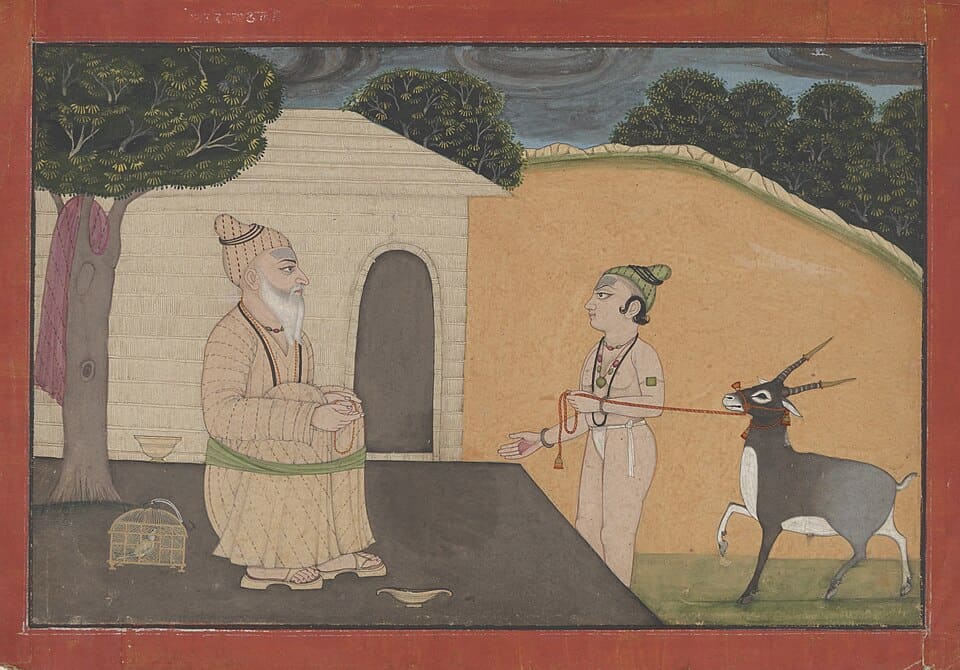
Musically, the session’s Balya-lila (verses 35–44), from Srila Locana Dasa Thakura’s, invited contemplation of Sri Caitanya’s childhood pastimes. In Gaudiya aesthetic theory (rasa), sacred song bridges philosophical content and affective insight, enabling practitioners to “know through taste.” Locana Dasa Thakura’s devotional poetics historically function as portable theologymemorable, singable, and thus transmissible across generations and languages. Here, music underwrites inclusion: a child’s laughter, a mother’s tenderness, and a neighbor’s wonder become shared touchstones that unite diverse listeners in a single devotional mood.
The Q&A distilled recurrent concerns about tradition and inclusion. One frequent question asked whether inclusion dilutes orthodoxy. The response clarified that inclusion properly understood is a discipline of hospitality, not doctrinal drift: it invites broad participation while preserving the contours of sādhanā and theology. Another question examined how to navigate multiple devotional preferences (ishta) within one community. The Indic principle of ishta-devatā legitimizes personal orientationKrishna, Rama, Shiva, Devi, or the formless Absolutewhile encouraging mutual reverence; this underwrites unity in spiritual diversity and reduces factionalism.
Inter-dharmic queries surfaced naturally: How can Hindus, Buddhists, Jains, and Sikhs collaborate without erasing differences? The dharmic answer emphasizes shared groundnon-harm, truthful speech, disciplined consumption, contemplative remembrance, and servicewhile honoring distinct revelatory sources and practices. Joint service projects, shared musical offerings, reciprocal festival greetings, and scholarly exchange deepen solidarity. Such gestures enact Vasudhaiva Kutumbakam as social reality, demonstrating that principled plurality is not a weakness but a civilizational strength.
For Purushottama Masa itself, practical emphasis fell on sustainable commitments: attend regular sat sanga; steady one’s japa with a compassionate schedule; integrate Bhagavad-Gita reading with short reflective notes; observe Ekadashi mindfully; and make small, relational offerings at hometulasi worship, prasada sharing, and a few minutes of family kīrtana. Each action is modest; their cumulative effect, however, is transformative, especially when held within a supportive community and measured with honest self-review.
In sum, the May 2026 Sat Sanga modeled a dharma-rooted, research-aware, and compassion-forward approach to spiritual life. The calendrical precision of Adhik Masa met the ethical clarity of inclusive community-building; the immediacy of chanting met the depth of scriptural study; and devotional song bridged intellect and heart. As these strands intertwined, a coherent picture emerged: living tradition can be both faithful and welcoming, rigorous and kind, particular and spaciousan embodiment of Sanatana Dharma capable of nourishing all four dharmic families while honoring their unique grace.
Inspired by this post on Dandavats.