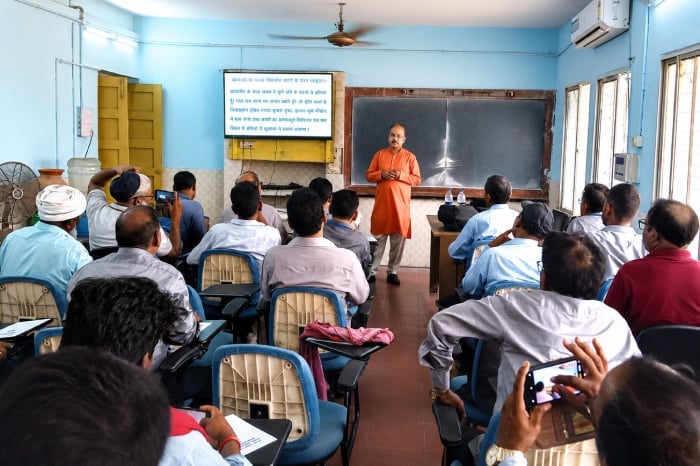
Dr. Sahota has received a CSA honour, a distinction that recognises outstanding leadership in agronomy. Honouring outstanding leadership in agronomy, the recognition underscores years of work aligning scientific rigor with practical solutions for farmers, environmental stewardship, and resilient food systems in Canada and beyond.
CSAcommonly understood as the Canadian Society of Agronomyacknowledges individuals whose research, extension, teaching, and professional service measurably advance crop and soil science. While the formal award citation is not reproduced here, such honours typically reflect contributions that improve agronomic knowledge, mentor future scientists and advisors, and strengthen the bridge between laboratories, policy arenas, and farm fields.
In contemporary agriculture, leadership means integrating system-level agronomy with sustainability science. It requires balancing productivity with profitability and planetary boundaries, improving soil health, elevating nutrient-use efficiency, and safeguarding biodiversity while maintaining stable yields under climate variability. That integrative approach has become central to Canadian agriculture, where diverse agroecological zones demand context-specific, evidence-based management.
Systems agronomy provides the foundation. Multi-year rotations that incorporate cereals, oilseeds, and pulses enhance nitrogen cycling, disrupt pest and disease cycles, and improve water- and nutrient-use efficiency. Designing and interpreting such rotations relies on robust experimental methods, mixed-effects modeling, and meta-analytic synthesis so that results are transferable across soil types, climate regimes, and management intensities.
Soil health remains the keystone. Practices that protect aggregate stability, increase soil organic carbon, and support microbial diversity are evaluated with metrics such as particulate organic matter, potentially mineralizable nitrogen, permanganate oxidizable carbon, infiltration capacity, and bulk density. The 4R nutrient stewardship frameworkapplying the right source at the right rate, time, and placeoptimizes agronomic efficiency (AE), partial factor productivity (PFP), and recovery efficiency (RE) for nitrogen and phosphorus, while lowering nitrous oxide emissions and minimizing losses to air and water.
Nutrient stewardship is closely linked to water quality outcomes. In regions affected by tile drainage, dissolved phosphorus losses are mitigated through stratification management, subsurface placement, controlled drainage, riparian buffers, and edge‑of‑field wetlands. Phosphorus indices and field‑scale mass balances connect on-farm practices to watershed objectives, ensuring that yield gains do not come at the expense of downstream ecosystems.
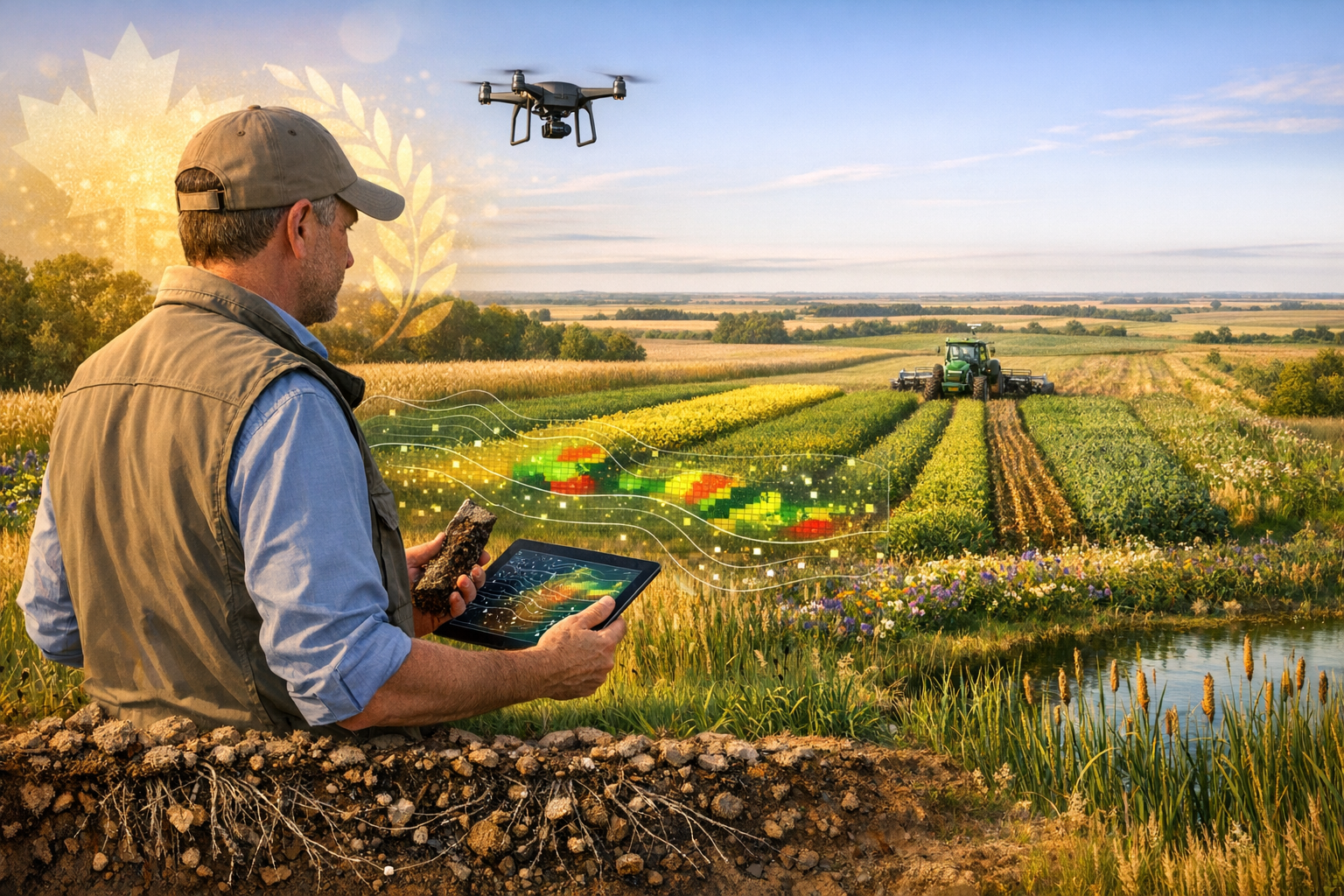
Precision agriculture operationalizes variability. Geospatial soil and yield data, proximal sensing, and satellite or UAV-derived vegetation indices inform variable-rate seeding and fertilization. On-farm replicated strip trials and Bayesian or machine-learning analytics convert noisy field data into decision-ready insights, improving nitrogen rate prescriptions, enhancing stand establishment, and reducing input costs without compromising productivity.
Climate-resilient cropping systems integrate cultivar selection, phenology management, and risk-aware scheduling with practices such as reduced tillage, residue retention, cover crops, interseeding, and living mulches. In short growing seasons, species choice and termination timing are calibrated to avoid water competition while protecting soil, moderating temperature extremes, and buffering against drought and short-duration heat stress.
Integrated pest management (IPM) remains indispensable. Threshold-based scouting, degree‑day modeling, diversified modes of action, competitive crop canopies, harvest weed-seed control, and strategic mechanical interventions reduce resistance pressure while sustaining efficacy. Habitat strips and refuge design can enhance beneficial insect populations, contributing to biologically based suppression.
Biodiversity conservation and ecosystem services are embedded in leading agronomic programs. Rotational diversity, pollinator-friendly margins, and soil biological indicators acknowledge that plant–microbe–insect interactions influence nutrient cycling, disease suppression, and long-term yield stability. Mycorrhizal symbioses and root exudate dynamics, once peripheral in agronomy, now inform practical guidance on crop choice and residue management.
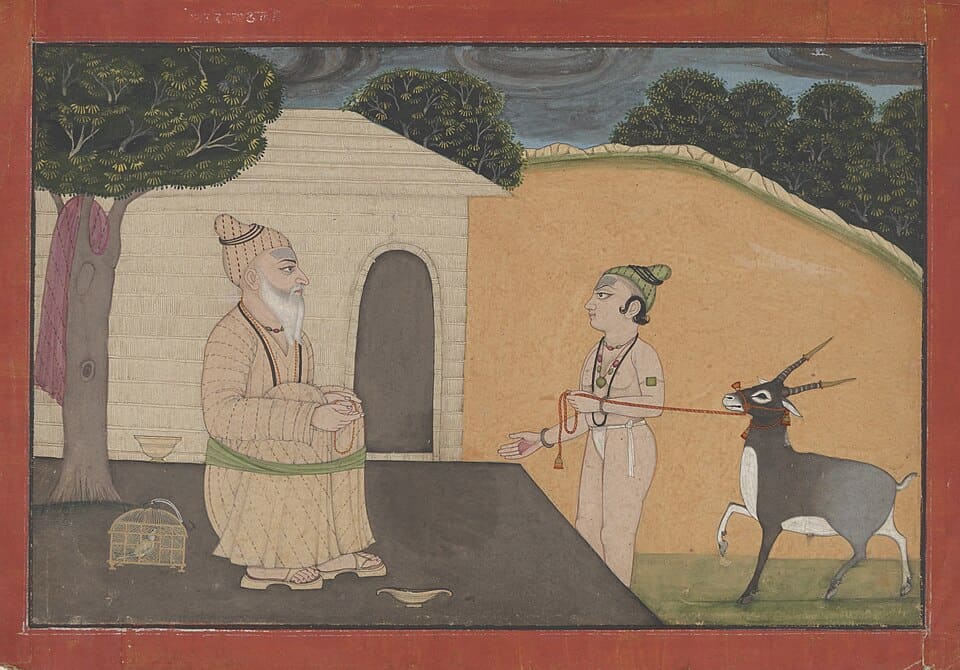
Leadership in agronomy is also measured by knowledge translation and transfer. Field days, living-lab collaborations, peer-to-peer learning, and co-designed research ensure that innovations are adopted and adapted. Mentorship cultivates the next generation of agronomists and farm advisors, echoing the spirit of the Guru–Shishya relationship while remaining inclusive and evidence-based.
Policy and practice converge at the farm gate. Environmental farm plans, cost‑share programs for beneficial management practices, and emerging carbon markets depend on credible measurement, reporting, and verification (MRV). Life‑cycle assessment and whole‑farm nutrient budgets connect agronomic decisions to broader sustainability targets, supporting transparent, risk-aware farm business management.
Ethical stewardship traditions across Hinduism, Buddhism, Jainism, and Sikhism emphasize responsibility toward living systems. Concepts such as Ahimsa and Seva align with soil and water conservation, farmer well‑being, and community resilienceprinciples that strengthen societal support for sustainable agriculture without privileging any single path and while honoring unity in diversity.
Impact is best demonstrated through outcomes: higher input-use efficiency, improved net returns, reduced greenhouse‑gas intensity, and fewer nutrient losses to water bodies, alongside safer workplaces and stronger rural communities. These metrics, routinely tracked in leading agronomy programs, translate scientific advances into durable benefits for producers and the public.
Looking ahead, the discipline is moving toward genotype × environment × management analytics, digital agronomy platforms, interoperable and FAIR data, and open, reproducible research spanning long-term experiments and on‑farm networks. Such integration positions Canadian agronomy to deliver climate‑ready, biodiversity‑positive, and economically robust production systems.
The CSA honour for Dr. Sahota therefore represents more than personal recognition; it signals what modern agronomy can achieve when scientific excellence, farmer partnership, and public interest align. It affirms a shared commitment to food security, environmental stewardship, and intergenerational knowledgefoundations on which resilient agricultural futures are built.
Inspired by this post on SikhNet – News.