Access to original documents remains the first and most indispensable condition of rigorous historical research. Those who rescue state papers, letters, and treaties from decay and dispersion do more than safeguard manuscripts; they sustain a living archive that empowers present and future scholars to reconstruct the past with fidelity.
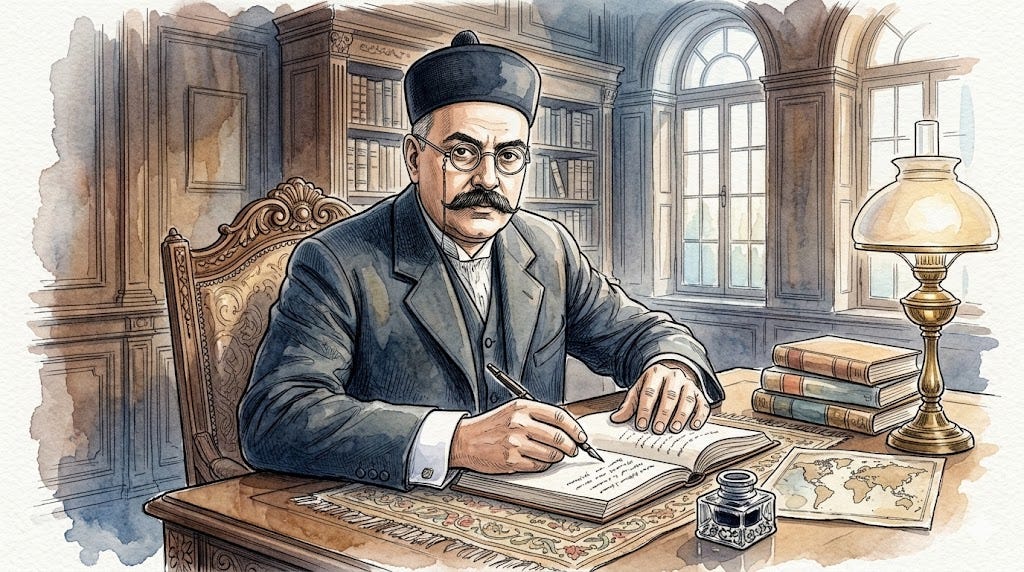
Among such guardians of primary sources, D. B. Parasnis of Satara occupies a singular place in Maratha history. As Acharya Jadunath Sarkar observed in his tribute, Parasnis’s life was quiet, disciplined, and almost ascetic in public profile, yet wholly animated by one unwavering aim: to collect, preserve, and publish records central to the Maratha Empire. His death on 31 March 1926, at the age of fifty-five, deprived Indian historiography of a tireless editor whose work benefits generations of researchers.
Born on 27 November 1870 into an ancient Maratha Brahman family, Dattatreya, the son of Balawant Parasnis, studied up to Matriculation at the Satara High School. Even as a schoolboy he ventured beyond prescribed textbooks, immersing himself in the lives of historical personages, particularly those of his native land. His literary inclination surfaced early: he founded and edited a monthly magazine that drew appreciative notice from seasoned men of letters.
After leaving school, he launched the vernacular periodical Maharashtra Kokil. His archival calling matured with the publication of the monthly Bharatvarsha in 1898. Although it ran only two years, the twenty-four issues became a repository of rare original records and analytically sound reconstructions of Maratha history. Nine years later, in 1908, he inaugurated Itihas Sangraha, a still more ambitious historical magazine that ran for seven years before arrears curtailed it. Across these ventures, Parasnis built a platform for primary sources that might otherwise have vanished.
Parasnis also worked for a long period under the broad guidance of M. G. Ranade, indexing and excerpting records from the Peshwas’ Daftar preserved in the Land Alienation Office, Poona (Pune). The Daftarmuch of it written in Modi scriptcontains diaries, despatches, orders, kaifiyats, sanads, and other state papers critical for reconstructing Maratha governance and diplomacy. Some compilations he prepared appeared under more prominent names of the day; later, he issued selections in his own name.
Among these independent volumes were Selections from the Peshwas’ Diariescovering Shahu and Balaji Baji Rao (in two volumes)and Decisions from Shahu’s and Peshwas’ Daftars. He also released Sanads and Letters; Kaifiyats, Yadis, etc.; Treaties, Agreements, and Sanads; Life and Letters of Brahmendra Swami; The Royal House of Tanjore; and Historical Papers relating to the Gwalior State (three volumes, privately circulated). Collectively, these editions widened scholarly access to primary sources dispersed across families, regional seats of power, and decaying repositories.
Several of these document types require brief technical clarification. A sanad is a formal charter or deed, often conferring rights or privileges, typically bearing seals, signatories, and attestations crucial for provenance. A kaifiyat is a narrative account or local register that supplies context and chronology, while a yadi generally denotes a list or memorandum that can be vital for reconstructing administrative sequences. Diaries and decisions from the Peshwas’ Daftar anchor events to specific dates and offices, enabling cross-verification with despatches, farmans, and court correspondence. By transcribing and publishing such material, often from Modi and occasionally Persian and Marathi hands, Parasnis strengthened the source base for Indian historiography.
His English monographsMahableshwar (1916), Sangli State (1917), Poona in Bygone Days (1921), and Panhala (1923)were primarily presentation volumes and did not significantly shape the field. The three-volume History of the Maratha People bears the name of Mr. C. V. Kincaid alongside Parasnis; the acknowledged composition was Kincaid’s, while Parasnis supplied materials. This division of labor underscores his preferred and enduring role as an archival editor whose curatorial rigor amplified the reach of other historians.
It was, however, through his Marathi publications that Parasnis forged a lasting legacy. The Life of the Rani of Jhansi (1894) and The Marathas in Bundelkhand were followed by Brahmendra Swami’s life and lettersan indispensable source for the reign of Baji Rao Iand the Life of Baija Bai of Gwalior, among other studies. These works exemplify how biographical narratives can be grounded in, and illuminated by, careful documentary editing.
His periodicals became regular conduits for state papers of surpassing value. In Bharatvarsha, he published the substantial Letters, Memorials, etc. (Patren Yadi bagaire) contributed by Kashinath N. Sane. Under his own editorship in Itihas Sangraha, he issued two voluminous collections of despatches sent to Poona by the Peshwa’s agent at the court of Ahilyabai Holkar, and two further volumes of letters dispatched by the Maratha envoys (vakil) at the Mughal court in Delhi. Smaller compilations followed from the Peshwa’s agents posted at Calcutta, Seringapatam, Jaipur, Jodhpur, and other centersmapping an information network that reveals the breadth of Maratha diplomacy and administrative oversight.
These publications also restore the larger geography of the Maratha Empire’s information order: Poona as the nodal point; Delhi, Malwa, and the Deccan as theaters of constant negotiation; and eastern and southern polities as strategic horizons. By presenting despatches and letters in sequence, Parasnis allowed historians to reconstruct communication cycles, intelligence flows, and decision-making rhythms with greater chronological accuracy.
Historical context deepens the achievement. Nana Fadnavis, the de facto head of Maratha statecraft for many years, kept a favored country seat at the quiet village of Menauli. During his ascendancy, numerous despatches and foreign department papers were taken there, such that critical sections of the Peshwas’ Record Office effectively lay outside Poona. After Nana’s downfall and death, family fortunes collapsed, and the records suffered neglect, dispersal, and lossan attrition that, within two generations, placed much beyond recovery. Even stray recollectionssuch as the rescue, many decades ago, of a portrait of Mastani attributed to a French artistsuggest the scale and fragility of what once existed.

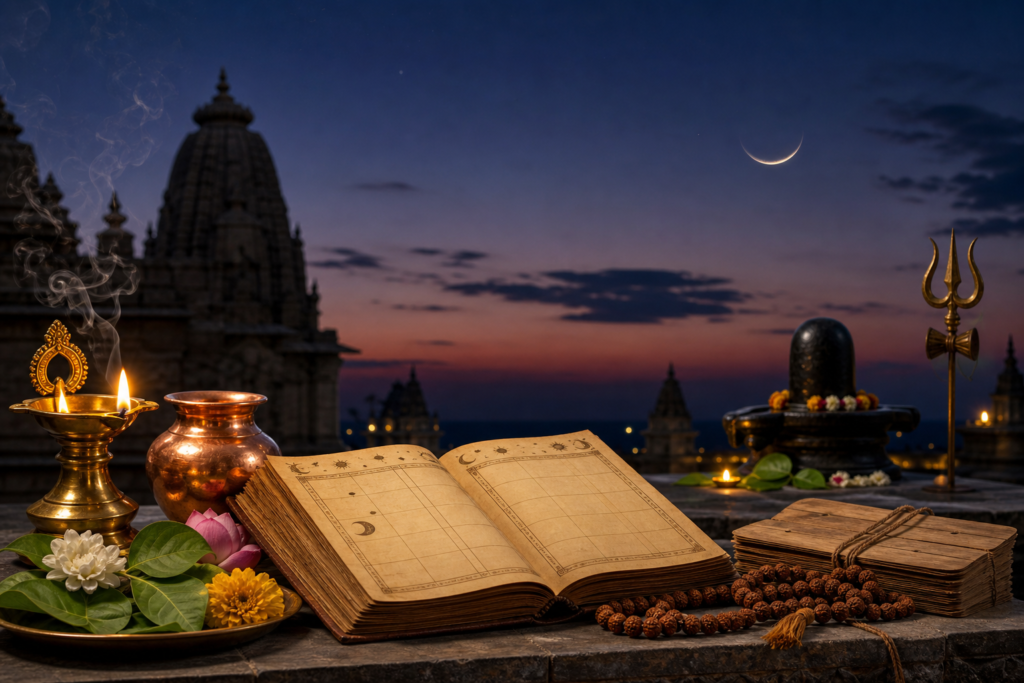
It was precisely here, at the turn of the nineteenth to the twentieth century, that Parasnis intervened with urgency. He sought out what remained, negotiated access with custodians, and set to work with the unglamorous but vital labors of selection, transcription, annotation, and publication. The result was not simply a set of books, but a stabilizing foundation for Maratha history rooted in primary sources accessible to a wider scholarly community.
Parallel forces imperiled the archives of the Satara Rajas, the heirs to the house of Shivaji. Reduced under Lord Dalhousie’s annexationist policy to the status of landholders or pensioners, they witnessed the sale and scattering of historical papers, paintings, artifacts, and relics accumulated over nearly two centuries. What had once been a palace treasury of memory began to ebb away into private hands and auction rooms.
During the mid-eighteenth century, when the Marathas shaped North Indian politics, the Mughal Emperor, high nobles, and Hindu Rajahs frequently presented objects of art and learning to the Chhatrapati or the PeshwaIndo-Saracenic and Rajput paintings, finely illuminated Sanskrit manuscripts, decorated swords, and ceremonial curios. Many of these reached the Satara palace, only to drift out in the last two decades of the nineteenth century. Against this tide of loss, Parasnis’s publications served as intellectual salvage operationspreserving text even when object and context were dissolving.
Methodologically, his editorial practice can be read as a careful equilibrium between fidelity to originals and the creation of modern research tools. He worked across Modi-script Marathi, Nagari-script Marathi, and, as necessary, Persian-derived materials. His editionsby their very existenceencourage cross-referencing between diaries, decisions, despatches, and sanads, while their ordering and indices enable verification against parallel holdings and later compilations. In this manner, archival editing becomes an interpretive act that still preserves the primacy of the source.
The technical challenges were considerable. Dating documents required reconciling tithi-based entries with Gregorian calendars; variant orthographies demanded consistent normalization without erasing historical peculiarities; seals, watermarks, and endorsements needed to be recorded to establish provenance. Such details are more than apparatus; they constitute the evidentiary backbone of Indian historiography, especially for the eighteenth and early nineteenth centuries.
Even the scope of the materialdespatches from Malwa under Ahilyabai Holkar’s court, vakil letters from Delhi, and exchanges from Calcutta to Seringapatamreveals the Maratha Empire’s administrative reach, diplomatic agility, and fiscal-military concerns. Parasnis’s editorial program thus opens windows onto the circulation of intelligence, the conduct of diplomacy, and the everyday operation of rajadharma within changing regional balances.
Acharya Jadunath Sarkar’s nuanced judgmentthat Parasnis was more of a collector-editor than a full-fledged narrative historianshould be read as a statement of role, not of rank. Narrative history rests on the bedrock of accessible, verified primary sources. In this sense, the collector-editor is the enabler of historical truth, the quiet architect of scholarly confidence, and the indispensable partner of interpretive synthesis.
There is also a civilizational dimension to this labor. Preserving court records, temple endowments, monastic grants, and letters across regions strengthens a shared dharmic memory that binds Hindu, Buddhist, Jain, and Sikh traditions. These archives reveal intertwined patronage networks, scholarly exchanges, pilgrimage ecologies, and ethical vocabularies that traversed political frontiers. By safeguarding such materials, work like Parasnis’s helps nourish unity-in-diversity across India’s dharmic families.
The present offers opportunities to carry this legacy forward. Digitization, high-resolution imaging, and open scholarly platforms can extend access to Peshwas’ Daftar selections, sanads, kaifiyats, and vakil despatches, while standardized metadata and careful transliteration from Modi script ensure searchability and citation integrity. Partnerships among cultural heritage institutions, community custodians, and researchers can accelerate the recovery and responsible curation of dispersed holdings.
Ultimately, D. B. Parasnis stands as an unsung guardian of Maratha archivesa figure whose quiet devotion transformed brittle paper into durable knowledge. Acharya Jadunath Sarkar’s salute acknowledges more than personal diligence; it recognizes a methodology and an ethic. Through the steady work of collection, verification, and publication, Parasnis made Maratha historyindeed Indian historymore tangible, testable, and teachable, advancing a scholarly inheritance that continues to guide historical research and strengthen civilizational continuity.
Inspired by this post on Dharma Dispatch.