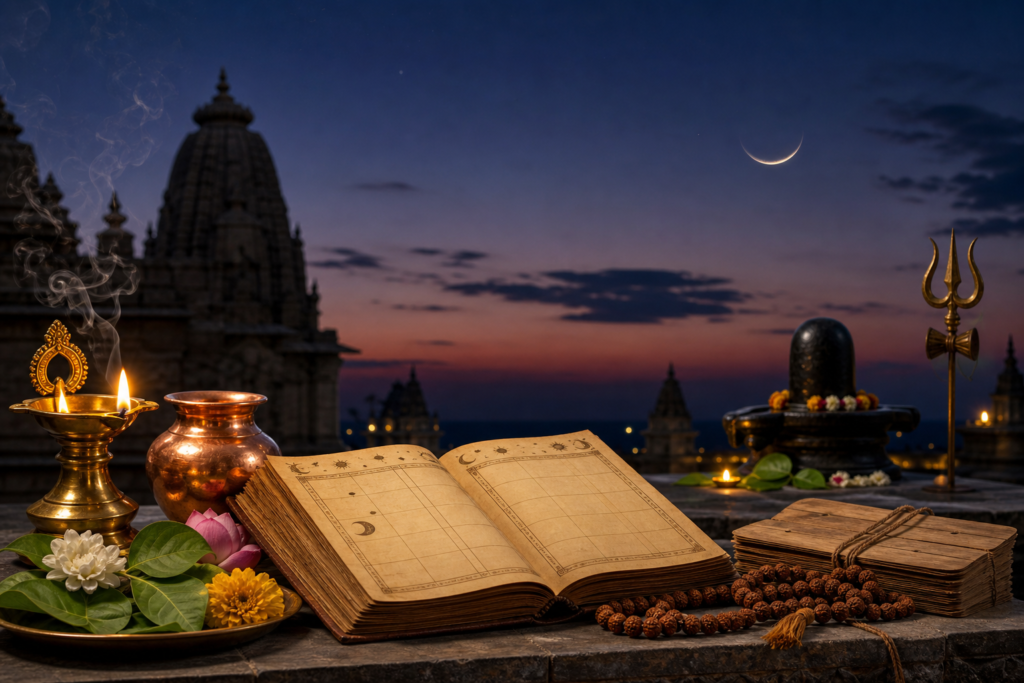
In South Asian dharmic ethics, dānasacred givingis acclaimed as a supreme religious duty. Within Hinduism, the act becomes uniquely luminous when the object is the Shaligram stone: the Śāligrāma-śilā revered as a self-manifest form of Viṣṇu. Puranic literature portrays the gift of a Shaligram as a generator of boundless puṇya, while simultaneously insisting that such a stone must never be sold. Understanding why the Shaligram is to be gifted rather than traded illuminates core ideas about dharma, reverence, and the non-commodification of the sacred shared across Hinduism, Buddhism, Jainism, and Sikhism.
What is a Shaligram stone? Geologically, it is a naturally occurring fossil (commonly ammonite) found in the bed and banks of the Kali Gandaki (Gandaki) River region associated with Muktinath in present-day Nepal. The spiral and chakra-like markings are not carved; they emerge from natural processes over vast spans of time. Theologically, the Śāligrāma-śilā is venerated in Vaiṣṇava traditions as a svayambhū mūrtian aniconic manifestation of Viṣṇu whose presence does not depend upon human consecration. The convergence of deep time (geology) and deep meaning (scripture) is central to its sanctity.
Puranic sources articulate both the spiritual potency of the Shaligram and the ethics of how it must circulate. Sections often termed Śāligrāma-māhātmya within the Skanda Purāṇa, alongside passages in the Padma Purāṇa and other Purāṇas, exalt Śāligrāma worship as especially meritorious. These texts consistently associate the dāna of a Shaligram with extraordinary puṇya, framing the gift as an offering that aligns the giver’s disposition with divine will and sustains a lineage of worship in the recipient’s home.
Equally emphatic in the dharma corpus is the prohibition against sale. Dharmaśāstra and Purāṇa literature censure devatā-vikrayathe sale of that which belongs to the deityincluding icons, sacred stones, and objects reserved for ritual use. While formulations vary, the normative principle is consistent: the divine is not a commodity. The Shaligram, regarded as Viṣṇu’s own presence, may be received as prasad or gifted as dāna but not bought or sold. This ethics reflects a view that sacred relationship is grounded in seva (service) and śraddhā (devout trust), not in market exchange.
From a dharmic standpoint, the ban on sale safeguards a crucial metaphysical distinction: a deity is not owned; a deity is served. Custodianship of a Śāligrāma-śilā thus resembles trusteeship (niyoga) more than possession. To price or profit from a presence considered svayambhū is to invert the proper order of means and endsplacing material gain above spiritual accountability. The prohibition, therefore, is not punitive formalism but a protective boundary designed to preserve reverence, purity of intention, and the integrity of worship.
This non-commodifying stance resonates across the broader dharmic family. In Buddhism, the virtue of dāna-pāramitā emphasizes generosity untainted by transactional motive; in Jainism, dāna works in concert with aparigraha (non-possessiveness) to loosen attachment; in Sikhism, seva and dasvandh reflect disciplined giving and service to the sacred without expectation of return. The Shaligram ethic thus embodies a pan-dharmic insight: where the sacred is involved, relationshipnot purchaseis the rightful medium.
Why, then, is gifting a Shaligram considered so meritorious? First, dāna is transformative: it refines the giver’s inner disposition toward humility, responsibility, and compassion. Second, the gift inaugurates or strengthens a living lineage of daily worship (nitya-pūjā) in the recipient household. Third, the gift binds community through a moral economy of careelders, teachers, and families transmit the divine presence not as an object but as a sacred trust.
Traditionally suitable occasions for gifting a Shaligram include Ekādaśī, Akṣaya Tṛtīyā, Kartika Purnima, Guru Purnima, and life-cycle milestones such as marriage, housewarming, or the beginning of a new familial altar. On these days, dāna is believed to magnify puṇya owing to auspicious cosmic rhythms described in the Purāṇas and ritual calendars (panchāṅga).
Equally important is discernment in choosing the recipient. Classical guidance and living custom converge on a simple criterion: the Shaligram should pass to one who sincerely intends to maintain regular worship or, at minimum, will uphold the dignity and purity due to a svayambhū mūrti. Elders, mentors, or family preceptors often play a role in recognizing such readiness, ensuring that the gift does not become ornamental or neglected.
Receiving a Shaligram carries clear responsibilities. The custodian commits to steadiness (niyama) in worship appropriate to capacity and tradition. Daily pūjā is ideal; if that is not feasible, a consistent weekly rhythm with genuine focus is preferable to irregular excess. The essence is sincerity, cleanliness, and reverencequalities emphasized repeatedly in the Puranas and across ācāra (customary) literature.
A concise outline of traditional worship may guide new custodians. Cleanliness of space and person precedes worship; a lamp (dīpa) is lit and a simple sankalpa (statement of intention) is made. The stone is bathed with clean water and, where customary, with Pañcāmṛta (a mixture typically of milk, curd, ghee, honey, and sugar), then gently dried with a dedicated cloth. Tulasi leaves are offered with devotionTulasi being inseparable from Vaiṣṇava worship. Recitations may include Om Namo Nārāyaṇāya, the Vishnu Sahasranāma, or hymns from the Bhagavad-Gītā and Bhāgavata Purāṇa, followed by naivedya (a pure, sattvic food offering) and ārati.
In Vaiṣṇava praxis, the Śāligrāma-śilā is widely held not to require prāṇa-pratiṣṭhā (ritual animation) because it is considered inherently enlivened as a svayambhū presence. This distinctive status is reflected in the unbroken household traditions in regions surrounding the Gandaki and across the subcontinent, where the Shaligram has been worshipped for centuries as a living center of the altar.
The question of acquisition naturally arises. The dharmic position is clear: avoid purchase or trade. Practical reasons reinforce the scriptural mandate. First, commodification invites counterfeitsstones artificially carved or chemically treated to mimic chakra markings. Second, market demand can incentivize irresponsible extraction or transport, placing pressure on sensitive riverine ecosystems. Third, once spiritual goods acquire a price, the incentive structures surrounding worship distort from seva to speculation.
Accordingly, the recommended pathways are time-honored: receive a Shaligram as dāna from family elders or preceptors, or as prasad from recognized tirtha contexts in alignment with local regulations and temple norms. In each case, the transmission is embedded in relationship, not in transaction, preserving the ethical contour that dharma prescribes.
Anxieties about “types” of Shaligramclassified by the number or pattern of chakra markingsare best approached with maturity. Traditional texts do describe emblematic features and names associated with specific formations, but devotion, steadiness of practice, and purity of mind far outweigh typological rarity. Seeking a “rare” stone through illicit or commercial means contradicts the very purpose of worship.
Household practice is broad and inclusive. Across India and Nepal, familieswomen and men alikeperform Śāligrāma pūjā as part of daily domestic worship. Regional ācāra differ in detail, but the underlying principles remain constant: cleanliness, Tulasi, lamp, mantra, and offering. In cases where daily worship becomes impossible for extended periods, families commonly entrust the Shaligram to a relative or local temple, ensuring uninterrupted seva.
For those preparing to gift a Shaligram, a simple and dignified rite is customary. The stone is respectfully wrapped in a clean (often yellow or white) cloth and accompanied by Tulasi leaves or a Tulasi sapling, a small lamp, and perhaps a copy of the Vishnu Sahasranāma or Bhagavad-Gītā. In the presence of a lit lamp, giver and recipient share a brief sankalpa, acknowledging the sacred responsibility of custodianship. The giver refrains from accepting money or “compensation,” aligning the act wholly with dāna.
Common questions can be answered succinctly within this framework. Who may receive? Anyone prepared to uphold respectful worship in good faith. Must one perform elaborate rituals? No; sincerity, cleanliness, and steadiness suffice, with more elaborate forms added as capacity allows. What if travel or circumstances intervene? Temporarily enshrine the Shaligram in a clean, safe place; resume regular worship when able, or arrange trustworthy custodianship. Are women permitted to worship? Yes; household practice across regions affirms shared participation in Śāligrāma pūjā.
From a wider civilizational vantage, the Shaligram ethic aligns with a sustainable cultural and ecological consciousness. Reverence for the Gandaki’s sacred geography, restraint in extraction, and the prioritization of relationship over commerce form a coherent whole. These commitments are not romantic archaisms; they are living strategies for safeguarding the sacred under modern pressures of marketization and mass consumption.
The moral architecture here is elegant. Gifting a Shaligram amplifies dāna, binds families to devotional practice, and honors the theological status of the stone as svayambhū. Refusing to sell the stone prevents the sacred from sliding into commodity logic. The combination preserves both worship’s inner texturehumility, devotion, steadinessand its outer ecologycustodianship, community continuity, and the protection of sacred landscapes.
In sum, the Shaligram is more than an object of devotion; it is a teacher of dharma. It instructs that the most valuable realities are not bought but received, not traded but entrusted, not owned but served. Across Hinduism, and resonant with the values of Buddhism, Jainism, and Sikhism, this understanding nurtures unity: service over possession, generosity over gain, and reverence over reduction. To gift a Shaligram is thus to reaffirm a civilizational covenantwhere sacred presence circulates through love, responsibility, and the quiet power of dāna.
Inspired by this post on Hindu Blog.