
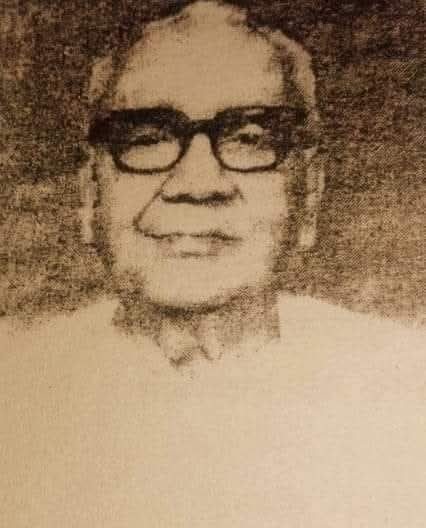
Advocate Monoranjan Dhar occupies a difficult but important place in the political history of Bengal and Bangladesh. His life stretched across nearly the entire twentieth century, from the final decades of British colonial rule to the birth of Bangladesh and the unsettled years that followed independence. Few public figures moved through so many decisive moments: anti-colonial resistance, the Language Movement, the Liberation War of 1971, early diplomacy, constitutional law, and post-independence governance. Yet his name remains far less visible than the scale of his career would suggest.
The central question surrounding Monoranjan Dhar is not simply why he is remembered by some and forgotten by others. It is why a statesman whose public work intersected with so many foundational chapters of Bangladesh never received either the Independence Award or the Ekushey Padak. The Independence Award is Bangladesh’s highest state honour, while the Ekushey Padak is among the country’s most prestigious civilian recognitions. For a figure associated with the anti-British struggle, the Bengali Language Movement, the Mujibnagar Government, and the first years of Bangladesh’s state formation, the absence is historically striking.
Dhar was born on February 21, 1904, in Chatal village near Manikkhali Railway Station in present-day Kishoreganj District. The date itself later acquired deep symbolic meaning in Bangladesh because February 21 became inseparable from the memory of the Language Movement. His birth into colonial Bengal placed him inside a society shaped by imperial administration, intellectual ferment, rural hardship, and a growing nationalist consciousness. The young Dhar came of age when politics was not an abstract profession but a moral and personal risk.
His early political life began in the orbit of revolutionary nationalism. In 1917, while still a teenager, he became associated with the Jugantar movement, a stream of anti-colonial activism influenced by figures such as Aurobindo Ghosh. This was a period when Bengal’s youth were drawn toward multiple forms of resistance, ranging from underground revolutionary activity to mass movements led by national political organisations. Dhar’s later career would show the imprint of both tendencies: the discipline of organised politics and the emotional force of anti-colonial defiance.
In 1921, he participated in Mahatma Gandhi’s Non-Cooperation Movement. That decision linked him to one of the most consequential mass campaigns against British colonial authority in the Indian subcontinent. The movement encouraged students, lawyers, and ordinary citizens to withdraw moral legitimacy from colonial institutions. For Dhar, the experience appears to have been formative because it connected youthful nationalism with public mobilisation, legal consciousness, and the wider struggle for Indian independence.
Education also played a crucial role in shaping his public life. After studying at institutions connected with the intellectual world of Bengal, he earned master’s and law degrees from the University of Calcutta in 1927. Legal training gave him more than a professional identity; it gave him a vocabulary for constitutional questions, civil rights, executive power, and political legitimacy. Those themes would return repeatedly in his later career as a legislator, minister, and legal adviser.
Student politics soon became one of his first formal arenas of leadership. In 1928, he became general secretary of the Bengal Provincial Students’ Association. At that time, student organisations were not merely campus bodies. They were training grounds for nationalist leadership, ideological debate, and organisational discipline. Dhar’s rise in that setting reflected his ability to speak to politically alert young people while maintaining links with broader nationalist currents.
In 1930, he took part in the Chittagong Armoury Raid associated with Masterda Surya Sen. The raid remains one of the most dramatic revolutionary episodes in the history of anti-British movements in Bengal. Its objective was not simply military disruption; it was a symbolic assault on colonial authority. Dhar’s association with that moment placed him within a lineage of Bengali resistance in which personal danger, political idealism, and revolutionary sacrifice were closely intertwined.
By 1938, Dhar had also entered journalism through the weekly newspaper Gan Abhijan. This stage of his career is significant because journalism in colonial Bengal often functioned as a vehicle for political education. Newspapers carried arguments about national identity, rural distress, civil liberties, constitutional change, and the future of self-government. Dhar’s move into publishing suggests that he understood political struggle not only as protest or legislation but also as the shaping of public opinion.
His political activity repeatedly brought him into conflict with British authorities. In 1940, he was arrested after participating with Subhas Chandra Bose in the movement to remove the Holwell Monument in Calcutta. That campaign carried powerful historical symbolism because the monument represented a colonial narrative of power and memory. Dhar’s arrest underlined the extent to which he was willing to challenge imperial commemorations as well as imperial rule itself.
He remained imprisoned until 1946, losing several crucial years of personal freedom during a decisive period in South Asian politics. Yet the year of his release also marked his entry into formal electoral politics. He was elected from the Katiadi constituency as a Congress candidate to the Bengal legislature. This transition from prisoner to elected representative captures one of the defining features of the period: anti-colonial activists were becoming legislators even before the colonial state had fully retreated.
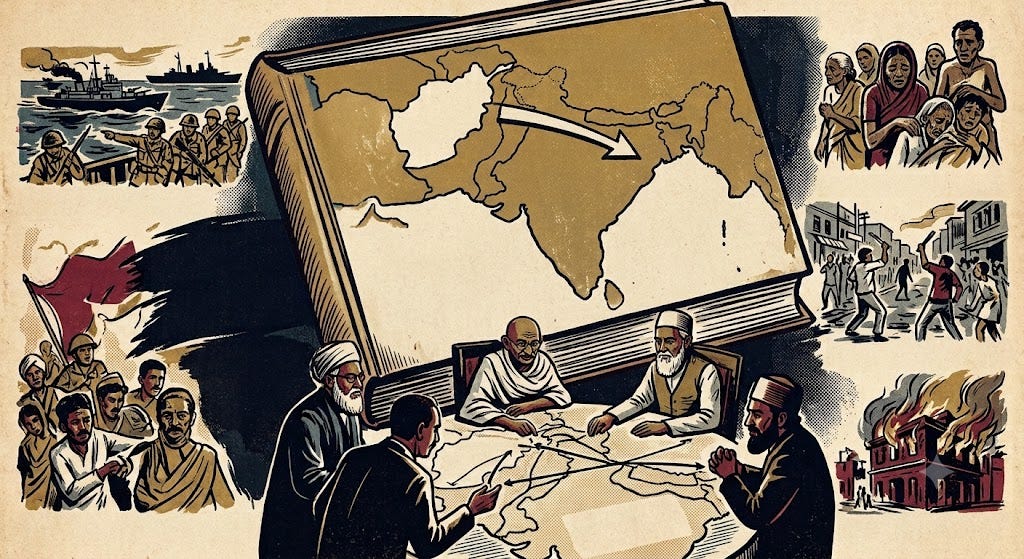
The partition of the Indian subcontinent in 1947 created new political realities and deep human wounds. Dhar remained connected to East Bengal and participated in Mahatma Gandhi’s peace mission in the region. This detail is important because it places him not only in the politics of independence but also in the moral labour of repairing communities after violence and displacement. In a region where identity, faith, language, and territory had become politically charged, peace work required courage of a different kind.
After partition, Dhar became general secretary of the Pakistan National Congress. In the early years of Pakistan, non-Muslim political voices in East Bengal operated within a sensitive and often difficult environment. Dhar’s continued public role showed his commitment to constitutional politics and minority participation in public life. His career offers an important reminder that the history of Bangladesh was shaped by citizens from diverse communities, including Hindus, Muslims, Buddhists, Christians, and others who contributed to public institutions and national debate.
In greater Mymensingh, Dhar came to be counted among influential political figures locally remembered as the "Panch Pandavas." The phrase suggests more than popularity. It indicates that he belonged to a generation of regional leaders who combined electoral politics with social influence, legal knowledge, and community networks. Such leaders often connected rural constituencies to larger national movements, making them essential to the political development of East Bengal.
The Language Movement of 1952 became another defining chapter in Dhar’s life. He joined the movement and was imprisoned for his role. The movement arose from the demand that Bangla receive due recognition as a state language of Pakistan. It later became central to Bangladesh’s national consciousness because it linked language, dignity, cultural rights, and democratic self-expression. Dhar’s imprisonment during this struggle strengthened his claim to a place in the history of linguistic and cultural resistance.
Two years later, in 1954, Dhar was elected to the East Pakistan Assembly. In 1956, he became finance minister of East Pakistan. This appointment reflected a level of administrative trust and political standing that went beyond symbolic representation. Finance was a technical and politically sensitive portfolio, especially in a province where economic inequality, resource distribution, and centralised control from West Pakistan were becoming major points of grievance.
His career during the Pakistan period demonstrates the layered nature of Bengali politics. Dhar was not confined to a single identity as a lawyer, nationalist, minority leader, or regional politician. He moved across all these roles while participating in debates over language, provincial rights, representation, and governance. For students of Bangladesh history, this complexity matters because it resists a simplified account of the country’s political evolution.
The Liberation War of 1971 brought Dhar into one of the most consequential roles of his life. He served as an adviser to the Mujibnagar Government, the provisional government that represented the Bengali struggle for independence during the war. The Mujibnagar Government’s work required political legitimacy, diplomatic coordination, refugee management, military support, and international advocacy. Advisers with long experience in public life were therefore valuable to the survival and credibility of the independence effort.
During this period, Dhar maintained important contacts with Indian political leaders, including Prime Minister Indira Gandhi, West Bengal Chief Minister Siddhartha Shankar Ray, Pranab Mukherjee, and Tripura Chief Minister Sachindra Lal Singh. These connections mattered because the Bangladesh Liberation War was not only a battlefield struggle. It was also a diplomatic campaign, a humanitarian crisis, and a regional geopolitical turning point. Dhar’s experience across Bengal politics, Indian nationalist circles, and East Pakistan’s public life made him a useful intermediary in that environment.

After independence, Dhar was appointed Bangladesh’s first ambassador to Japan in 1972. This appointment deserves close attention. A new country emerging from war needed international recognition, economic relationships, reconstruction support, and diplomatic credibility. Sending Dhar to Japan indicated that the government regarded him as a senior statesman capable of representing Bangladesh at a delicate moment. Bangladesh-Japan relations would later become deeply important for development cooperation, infrastructure, and economic engagement.
In the first parliamentary election of independent Bangladesh in 1973, Dhar was elected unopposed from Katiadi. On March 16, 1973, he became minister of law. The office placed him at the centre of state-building during a period when the country was attempting to convert liberation-era legitimacy into durable institutions. Law, justice, constitutional practice, and parliamentary procedure were not technical afterthoughts; they were central to the construction of the new republic.
Dhar is also credited with playing a significant role in drafting the Special Powers Act of 1974 and the Fourth Amendment to the Constitution. These remain among the most controversial areas of his public record. The Special Powers Act became associated with broad executive authority and preventive detention, while the Fourth Amendment altered the constitutional structure of governance in a major way. Any serious assessment of Dhar must therefore recognise both his foundational contributions and the difficult legal legacy of the measures with which he was associated.
This tension is precisely what makes his historical position so complex. Public memory often prefers either heroic celebration or total rejection, but Dhar’s life does not fit neatly into either category. He was an anti-colonial activist, a language movement participant, a liberation-era adviser, a diplomat, and a law minister. He was also linked to legal and constitutional decisions that later generated serious debate. A mature historical assessment must hold these facts together rather than erase one side to preserve the other.
The assassination of Sheikh Mujibur Rahman on August 15, 1975, cast a long shadow over Bangladesh’s political life and over Dhar’s legacy. Although reportedly in poor health, he joined the government of Khondaker Mostaq Ahmad as law minister and remained in office until November 6, 1975. That association became a source of enduring controversy. For many supporters, it helps explain why his name gradually receded from mainstream national narratives despite decades of service before that moment.
The controversy cannot be ignored, but neither can it be allowed to consume the entire record. Historical judgment requires proportion. Dhar’s later political choices must be evaluated in the context of the violent, unstable, and coercive atmosphere that followed August 1975, while his earlier contributions must be examined on their own evidence. The difficulty lies in resisting both uncritical glorification and selective forgetting.
In 1979, Dhar contested the parliamentary election from Katiadi as an Awami League candidate but was defeated by Bangladesh Nationalist Party candidate Anisuzzaman Khokon. The defeat marked the waning of his active electoral career. By then, Bangladesh had passed through independence, famine, constitutional change, assassination, military influence, and political realignment. Dhar, who had once stood near the centre of several historic transitions, was increasingly becoming a figure of the past.
He spent much of his later life connected to politics, public service, and rural development. This aspect of his career deserves attention because rural development was not separate from his political worldview. Leaders from constituencies such as Katiadi often understood politics through land, education, local institutions, roads, livelihoods, and access to state services. Dhar’s public life was therefore not limited to high constitutional debates; it also extended to the everyday needs of communities outside major urban centres.
Monoranjan Dhar died on June 22, 2000, at his residence in Mymensingh. He was 96. His long life had carried him from the age of empire to the age of post-colonial statehood. Few individuals witnessed, and participated in, so many transformations of Bengal’s political geography. The arc of his life included British India, partition, Pakistan, the Liberation War, and independent Bangladesh.
The absence of the Ekushey Padak and the Independence Award from his record raises a broader question about how nations remember complicated figures. Awards are never only about individual achievement. They also reflect political climate, institutional priorities, public sentiment, archival memory, and the willingness of later generations to revisit difficult biographies. Dhar’s case suggests that recognition can be shaped as much by controversy and silence as by contribution.
There is also a deeper emotional dimension to this question. Readers encountering Dhar’s chronology may feel the unease that often accompanies neglected history. A man who was imprisoned under British rule, joined the Language Movement, advised the Mujibnagar Government, represented Bangladesh abroad, and served as law minister seems, at first glance, an obvious candidate for national recognition. Yet history rarely moves according to simple arithmetic. A lifetime of service can be complicated by a few months of political association, especially when those months follow national trauma.
For Bangladesh, the task is not merely to decide whether Dhar should have received an award. The larger task is to preserve a disciplined and inclusive historical memory. The country’s struggle for independence drew strength from many streams: Bengali linguistic nationalism, anti-colonial politics, democratic aspiration, regional solidarity, rural mobilisation, and the contributions of citizens from multiple religious and cultural backgrounds. Dhar’s life intersects with all of these themes.
His story also speaks to the broader dharmic and South Asian value of remembering service across difference. Bengal’s political history contains Hindus, Muslims, Buddhists, Sikhs, Jains, and others who participated in public life through shared civic commitments. A careful account of Dhar’s life can strengthen that spirit of unity by showing how national histories are enriched, not weakened, when the contributions of diverse communities are acknowledged with fairness.
At the same time, academic honesty requires attention to the legal controversies attached to his name. The Special Powers Act and the Fourth Amendment remain serious subjects for constitutional scholarship. They raise questions about executive authority, civil liberties, parliamentary democracy, emergency politics, and the vulnerability of new states in moments of crisis. Dhar’s association with these measures means that his legacy must be studied through legal history as well as political biography.
That legal dimension makes his career especially relevant for scholars of Bangladesh’s constitutional development. The early republic faced immense pressures: post-war reconstruction, food insecurity, administrative weakness, political factionalism, security concerns, and expectations created by liberation. In such circumstances, governments often reach for stronger legal instruments. The historical question is whether those instruments protect the state without damaging the democratic principles for which the state was created. Dhar’s ministerial record belongs inside that debate.
Monoranjan Dhar’s legacy, therefore, should not be reduced to the absence of awards, even though that absence remains meaningful. He represents a generation of leaders whose careers were shaped by struggle, imprisonment, public office, compromise, and controversy. His life shows how the making of Bangladesh was not a straight line but a series of difficult passages through empire, partition, language rights, war, reconstruction, and political rupture.
More than two decades after his death, the question still lingers: why did a man so closely connected with Bangladesh’s historical milestones never receive one of the nation’s major civilian honours? The answer may lie in the unresolved tension between contribution and controversy. It may also lie in the fragility of public memory, where some names are preserved by institutions while others survive mainly through local remembrance, family testimony, and the efforts of historians.
A fuller remembrance of Advocate Monoranjan Dhar would not require the erasure of criticism. It would require the opposite: a serious, evidence-based engagement with the whole of his life. He was a freedom activist, a lawyer, a legislator, a language movement participant, a liberation-era adviser, a diplomat, a minister, and a contested figure of post-1975 politics. To study him carefully is to study Bangladesh itself in all its idealism, pain, achievement, and contradiction.
Inspired by this post on Hindu Post.





Leave a Reply
You must be logged in to post a comment.