Lakshmi Shora (often spelled Lakshmi Sora) refers to hand-painted clay discs that hold a cherished place in Bengali ritual life. Used primarily during Kojagari Lakshmi Puja and in the Thursday (Gurubaar) worship of Goddess Lakshmi across Bengal, these sacred objects preserve an unbroken thread of household devotion, especially among families with roots in East Bengal (present-day Bangladesh). They stand at the intersection of art, faith, and community, embodying Bengal’s cultural heritage through both history and symbolism.
In form, a Lakshmi Shora is a circular clay disc made by kumars (traditional potters), sun-dried or kiln-fired, and painted with vivid mineral or natural pigments. Its surface often features aniconic or stylized representations associated with the Goddess—lotus petals, the owl (vahana of Lakshmi), grains of paddy, and alpona-inspired motifs—arranged in radiant geometry. The clay’s texture and the painterly brushwork together narrate a craft lineage that has shaped everyday sacred aesthetics in Bengal for generations.
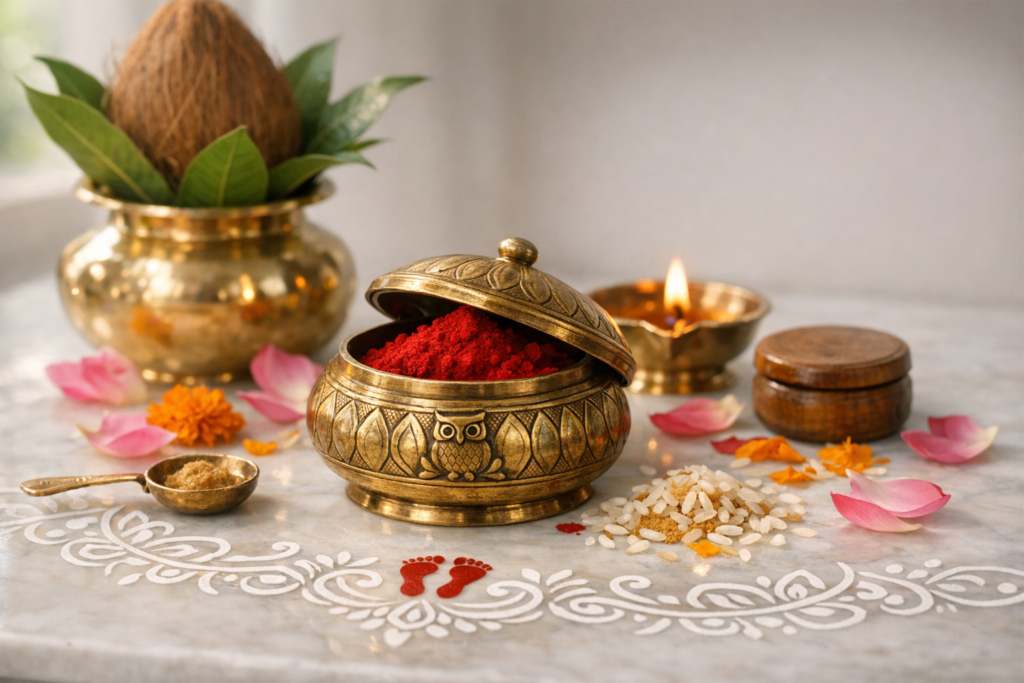
During Kojagari Lakshmi Puja on the full moon of the Ashwin month, the Lakshmi Shora becomes the focal altar of the home. The disc is placed on a low wooden piri, surrounded by rice, paddy, seasonal fruits, and a kalash. Delicate alpona patterns are drawn around it, and Lakshmi Panchali is recited as families maintain a night-long vigil—a custom that echoes the Kojagari ethos of staying awake to invite auspiciousness. In many Bengali households, this night is suffused with intergenerational storytelling, memory, and gratitude for the harvest and home.
Beyond the annual festival, the shora often returns weekly as part of Thursday worship to Lakshmi, supporting a rhythm of vows, simple offerings, and readings from folk narratives of the Goddess. This weekly practice sustains the ethical dimension of prosperity—rooted in diligence, fairness in livelihood, and generosity—ensuring that devotion does not remain episodic but becomes a steady discipline of the household.
The symbolism of the Lakshmi Shora is layered and precise. Clay signifies the nurturing earth and a humility that grounds prosperity in responsibility. The circle speaks to cycles of season and grain, while lotus motifs denote purity and renewal. The owl, Lakshmi’s vehicle, is read in Bengal as a sign of alert wisdom and the ability to safeguard wealth without attachment. Rice sheaves emphasize fertility and community sustenance, and the red-white palette commonly used on shoras marks auspiciousness, clarity, and serene balance. Even the alpona-like flourishes function as protective, auspicious frames for the household deity.
Historically, the practice draws from Bengal’s rich folk-ritual matrix, where artisans across districts—on both sides of the modern border—supplied shoras for local haats (markets) before the festival season. After Partition, families migrating from Jessore, Khulna, and other East Bengal regions carried the tradition into new neighborhoods, sustaining it in Kolkata and beyond. The Lakshmi Shora thus operates as a portable shrine and a cultural anchor, safeguarding memory, place, and identity through craft.
Across the broader dharmic spectrum, the Lakshmi Shora resonates with shared values found in Hinduism, Buddhism, Jainism, and Sikhism: right intention in livelihood, stewardship of resources, service to community, and the ethical circulation of wealth. In this sense, the shora is not only a symbol of household prosperity but also a reminder that abundance is most meaningful when guided by dharma and directed toward collective well-being.
Care and lifecycle practices reflect reverence and sustainability. Many households install a new shora annually during Kojagari Lakshmi Puja and retire the previous disc respectfully—either through visarjan in clean water or by placing it beneath a tree. Renewing the shora each year supports local artisans and keeps the ritual materially simple and ecologically mindful, in keeping with traditional Bengal sensibilities.
Contemporary interest in Lakshmi Shora has grown as urban families and the diaspora seek tangible links to Bengali traditions. Art educators, museums, and cultural forums increasingly reference shoras in discussions of folk art, household ritual practice, and intangible heritage. This renewed attention not only preserves the craft but also offers younger generations a clear, accessible entry point into the history and symbolism of Kojagari Lakshmi Puja.
For those seeking authenticity, hand-painted shoras reveal subtle brushstrokes, layered color work, and regionally inflected motifs. Purchasing directly from kumar para (potter quarters) helps sustain artisan livelihoods and keeps the practice embedded within its community ecology. Involving children in drawing alpona around the shora, arranging grains and fruits, or reading Lakshmi Panchali fosters intergenerational learning and a shared sense of care for cultural heritage.
As a living emblem of Bengal’s devotional world, the Lakshmi Shora endures because it is at once intimate and expansive: a quiet circle of earth that dignifies the everyday while illuminating a timeless ideal of ethical prosperity. Through Kojagari night and Thursday vow alike, it keeps a vigilant light in the home—honoring the Goddess, fortifying communal bonds, and uniting kindred dharmic values in a single, meaningful act of worship.
Inspired by this post on Hindu Blog.