40 ਮੁਕਤੇ – ਬੇਦਾਵੇ ਤੋਂ ਬਖ਼ਸ਼ਿਸ਼ ਤੱਕ ਦੀ ਸਾਖੀ evokes one of the most transformative arcs in Sikh history: the passage from ਬੇਦਾਵਾ (formal disavowal) under siege to ਬਖ਼ਸ਼ਿਸ਼ (grace) at Muktsar Sahib. Centered on the Chali Mukte (Forty Liberated Ones) and Guru Gobind Singh, this episode fuses political crisis, battlefield ingenuity, and spiritual renewal into a single, enduring narrative within Sikh history and the broader Dharmic imagination.
At its heart, the episode explores liberation (ਮੁਕਤੀ) as understood in Sikh tradition—an experiential freedom grounded in the Guru’s kirpa (grace), unwavering ethical courage, and righteous resistance (dharam yudh) when peaceful alternatives are exhausted. The vocabulary of redemption here is not abstract. It is a lived ethic tested by hunger, fear, and duty, and finally sealed by the Guru’s public affirmation of forgiveness and honor.
The historical context begins at Anandpur Sahib in 1704–1705, when Mughal commanders, notably Wazir Khan of Sirhind, in alliance with several hill rajas of the Shivalik region, mounted a prolonged siege. Supply lines were constricted, provisions dwindled, and the garrisoned Khalsa faced mounting pressure. Contemporary Sikh historiography, supported by early texts and later compilations, describes a crucible in which competing imperatives—protecting the sangat, preserving the Panth, and surviving attrition—strained communal morale.
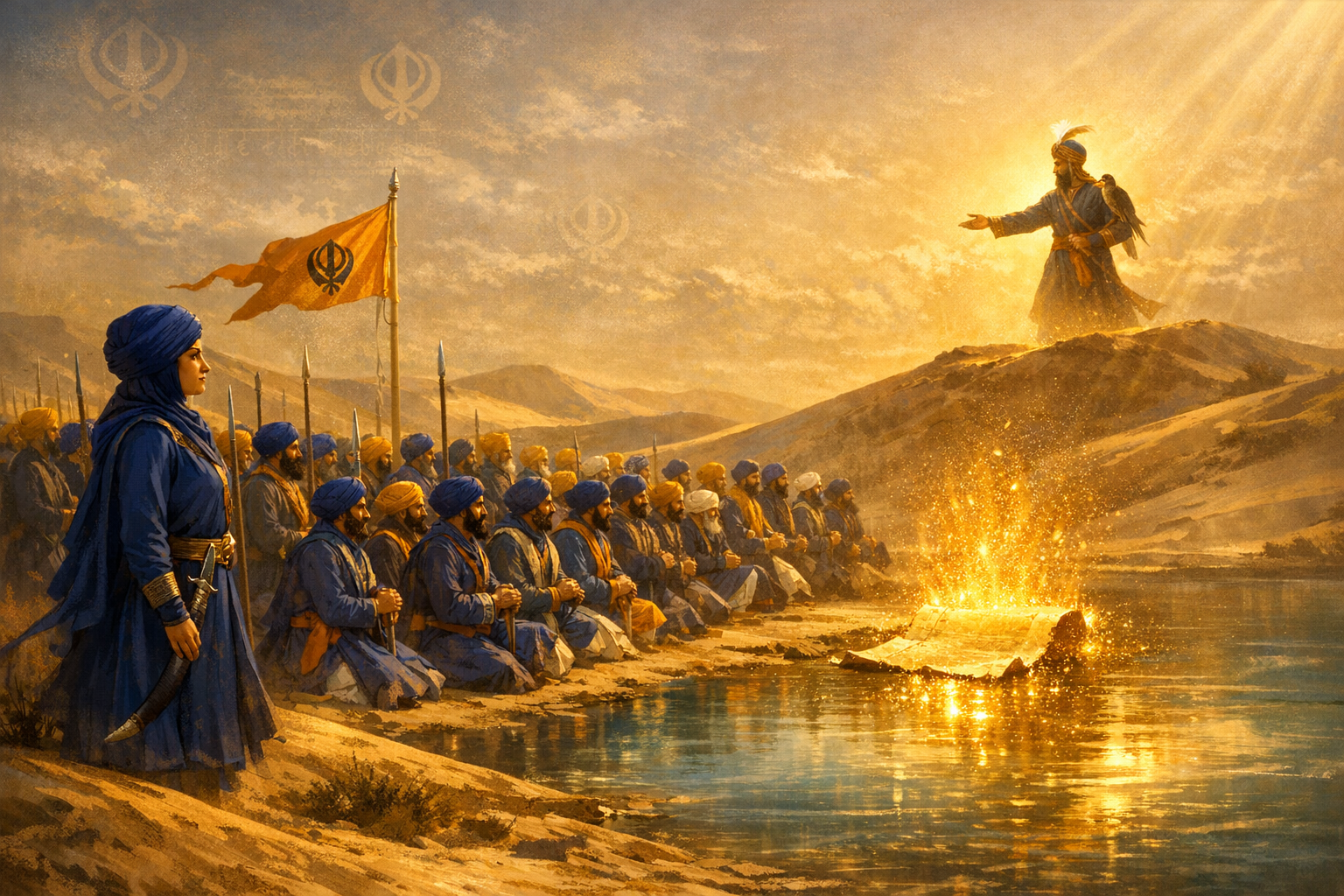
In this extreme duress, forty Sikhs signed a document known as the ਬੇਦਾਵਾ, declaring they no longer considered themselves bound to Guru Gobind Singh. The act was born less of malice than of exhaustion and fear. Notably, Sikh memory preserves that Guru Gobind Singh neither retaliated nor humiliated them. He accepted their autonomy, a response that preserved human dignity even amid betrayal and emphasized volition over forced allegiance—a distinctly Dharmic ethical stance.
As the deserters returned toward their homes in Majha, they encountered Mai Bhago (Bibi Bhag Kaur), a formidable Sikh exemplar renowned for spiritual clarity and kshatra (martial) resolve. Her admonition combined compassion with exacting honesty: valor is proved by steadfastness, not by retreat. Through persuasive counsel, she rekindled their Khalsa spirit and led them back toward the Guru, transforming remorse into active responsibility.
Meanwhile, Guru Gobind Singh maneuvered towards the water-scarce region of Khidrana—later Muktsar—selecting ground with strategic foresight: wind-swept dunes, limited water sources, and exposure that could be turned to advantage. The approaching Mughal detachment, intent on pursuit, entered a theater where the environment itself became a tactical ally of the Khalsa.
The clash at Khidrana unfolded with disciplined resolve. The forty, now recommitted, engaged against superior numbers amid blistering heat remembered in lore as Khidrane di dhoop. Terrain, deception, and determination offset numerical disparity. Oral and textual traditions recall that Mai Bhago fought in the front ranks and survived, while the forty fought to near extinction, expending themselves to blunt the enemy advance and protect the Guru’s column.
In the aftermath, the moral axis of the story pivots on an intimate moment of grace. As one of the wounded—often identified as Bhai Mahan Singh—lay dying, he requested forgiveness and asked that the earlier ਬੇਦਾਵਾ be annulled. Guru Gobind Singh is remembered to have torn the document and proclaimed the fallen as ਮੁਕਤੇ—liberated ones. In that public act, desertion was not erased but redeemed through repentance, valor, and the Guru’s compassionate recognition.
The site came to be known as Muktsar—“the pool of liberation”—and today Muktsar Sahib remains a major locus of Sikh memory. Gurdwaras at the site, including the principal Darbar Sahib, honor the martyrs and Mai Bhago. The Mela Maghi observance annually draws the sangat to commemorate the sacrifice of the Chali Mukte and to reflect upon the inseparability of ethical courage and divine grace in Sikh history.
Sources across Sikh tradition—early compositions such as Sri Gur Sobha, later works including Sri Gur Pratap Suraj Granth, and historical compendia—preserve complementary details while agreeing on the central arc: the journey from ਬੇਦਾਵਾ to ਬਖ਼ਸ਼ਿਸ਼, and the Guru’s bestowal of liberation. Minor variations in names and sequencing exist, as is common in living traditions, but they do not alter the ethical and spiritual core of the narrative.
Ethically, the episode foregrounds three commitments that resonate across Dharmic Traditions. First, repentance is meaningful when coupled with corrective action; Sikh praxis mirrors the Jain discipline of pratikraman (reflect, repent, resolve), the Buddhist perfection of kṣānti (forbearance with moral clarity), and the Hindu ideal of śaraṇāgati (surrender that births renewed duty). Second, compassionate leadership turns moral injury into moral growth; the Guru’s response exemplifies restoration over retribution. Third, liberation is inseparable from responsibility; mukti is not escape from the world but freedom expressed through seva and steadfastness within it.
As social history, the Chali Mukte illuminate how communities under siege can fracture and yet recover integrity. The ਬੇਦਾਵਾ acknowledged the human limits of endurance. The return to Khidrana and the final stand reasserted the Panth’s collective agency. In strategic terms, Muktsar underscores the importance of terrain selection, deception, and morale when facing superior forces—insights still studied in discussions of asymmetric warfare and leadership under pressure.
Mai Bhago’s presence challenges reductive gender narratives. As a warrior-saint, strategist, and moral anchor, she personifies the Khalsa synthesis of devotion and defense. Her role complements Sikh history’s broader pattern of women’s leadership and aligns with the Dharmic valuation of shakti—active, protective energy channelled toward dharma.
From a theological standpoint, the Guru’s declaration of ਮੁਕਤੀ is pivotal. In Sikh thought, grace (nadar) does not nullify action; it elevates it. The Chali Mukte attained a remembered station not merely through battlefield death, but because their repentance, recommitment, and sacrifice aligned with hukam and the Khalsa rehat. Liberation here is ethical-spiritual recognition, not only eschatological promise.
Ritually and culturally, Mela Maghi at Muktsar Sahib integrates remembrance with renewal. Pilgrims gather to honor the martyrs, reflect upon the Guru’s compassion, and internalize the living relevance of the Khalsa ideals—Naam (divine remembrance), Kirat (honest labor), and Vand Chhakna (sharing), held in dynamic balance with the imperative to defend the vulnerable.
For contemporary readers navigating moral failures, institutional fatigue, or crises of conviction, the 40 ਮੁਕਤੇ offer a constructive model: acknowledge error without self-erasure; repair bonds through action; accept grace as empowerment for duty. The Sikh frame thus contributes a unifying Dharmic insight: true courage harmonizes inner transformation with outer responsibility.
Key terms at a glance—ਬੇਦਾਵਾ: a formal statement of disavowal; ਮੁਕਤੇ: those granted liberation; Chali Mukte: the forty Sikhs so honored; Khidrana (Muktsar): the battlefield where the turn from disavowal to grace was consummated; Mela Maghi: the annual commemoration that binds memory to moral purpose.
In sum, the journey from ਬੇਦਾਵਾ to ਬਖ਼ਸ਼ਿਸ਼ at Muktsar Sahib constitutes a high watermark of Sikh history and spirituality. Anchored in the leadership of Guru Gobind Singh, animated by the courage of Mai Bhago, and sealed by the sacrifice of the Chali Mukte, the story integrates the political, martial, and mystical into a single Dharmic testament: liberation flourishes where repentance, responsibility, and grace converge.
Inspired by this post on SikhNet – Children Stories.