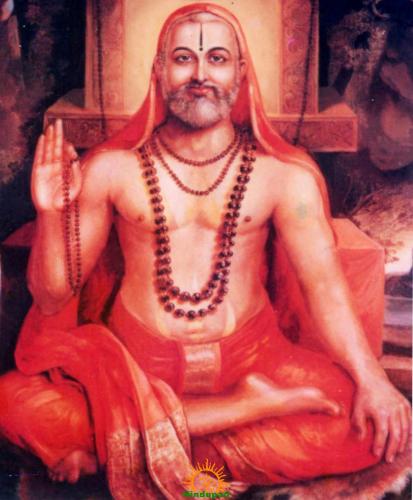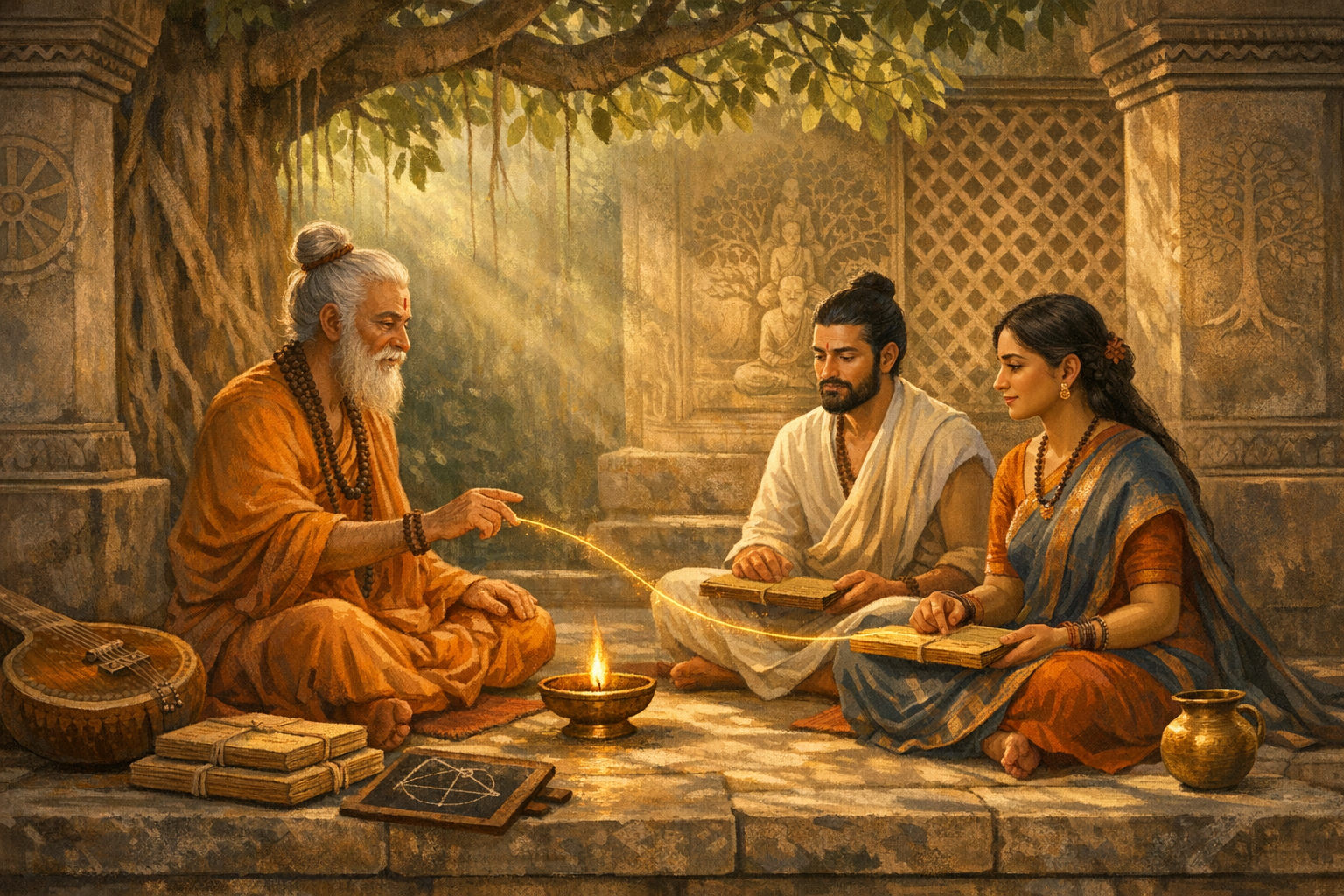
The Guru–Shishya tradition stands as a foundational pillar of ancient Hinduism, a pedagogical and ethical framework that fuses learning with inner transformation. Far beyond the transmission of information, this sacred bond cultivates discernment (viveka), moral clarity (dharma), and the capacity for direct realization (anubhava). As a civilizational institution, it sustained knowledge systems across centuries, nurtured exemplary character, and forged continuity through paramparaliving lineages of practice, insight, and responsibility.
Conceptually, “guru” signifies the dispeller of darkness (gudarkness; ruremover), while “śiṣya” denotes one disciplined for learning and life. The relationship is relational and reciprocal: the guru obligates to teach with integrity and compassion, and the shishya commits to diligence, inquiry, and conduct that honors knowledge. Structured as parampara, it is at once personal and trans-generational, ensuring continuity of both methods and meanings.
Hindu scriptures crystallize the indispensability of mentorship. The Upanishads emphasize qualified guidance for higher knowledge: “तद्विज्ञानार्थं स गुरुमेवाभिगच्छेत् समित्पाणिः श्रोत्रियं ब्रह्मनिष्ठम्॥” (Muṇḍaka Upaniṣad 1.2.12). The Bhagavad Gita encodes the epistemic posture for learning: “तद्विद्धि प्रणिपातेन परिप्रश्नेन सेवया। उपदेक्ष्यन्ति ते ज्ञानं ज्ञानिनस्तत्त्वदर्शिनः॥” (Gita 4.34). Reverence, inquiry, and service form a triadic ethic that keeps the relationship both sacred and intellectually vibrant.
Historically, the gurukula harmonized study and life. Students lived with the teacher, engaging in daily duties, contemplation, and study woven into a single rhythm. Learning occurred in hermitages and households, in cities and forests, underlining that wisdom is not a compartment but a way of being. The brahmacharya ashrama safeguarded attentive learning, regulated senses, and planted habits aligned to dharma and social responsibility.
Classical pedagogy unfolded through the triad of śravaṇa (listening), manana (critical reflection), and nididhyāsana (deep assimilation). These stages map to modern ideas of embodied cognition and metacognition: attentive listening establishes accurate content, reflective analysis secures understanding, and contemplative assimilation integrates insight with character. The outcome sought was not only intellectual mastery but transformation of the learner’s dispositions.
The curriculum spanned revelatory and rational domains. Students engaged with the Veda and Upanishads, the Vedāṅgas (Śikṣāphonetics, Kalparitual method, Vyākaraṇagrammar, Niruktaetymology, Chandasmetre, Jyotiṣaastronomy/astrology), and the śāstrasNyāya (logic), Vaiśeṣika (physics of categories), Sāṃkhya, Yoga, Mīmāṃsā (hermeneutics), and Vedānta. Texts like Panini’s grammar and the Sulba Sūtras in mathematics trained precision and proof-oriented thinking long before standardized examinations existed.
Applied knowledge thrived in this architecture: Ayurveda and Rasashastra in medicine, Arthashastra and Nīti in polity and ethics, Vāstu in architecture, Jyotiṣa in calendrics and observation, and the performing arts via Nāṭyaśāstra and Saṅgīta traditions. Such breadth aligned skills with purpose, integrating livelihood, aesthetics, and spiritual orientation within a single civilizational pedagogy.
Orality was a science in itself. Layered recitationspadapāṭha, kramapāṭha, jaṭā, and ghanapāṭhaengineered redundancy and error correction, preserving phonetic exactness across millennia. Chandas trained breath and attention; antiphonal chanting honed auditory discrimination; and iterative recall strengthened memory networks. Oral methods functioned as both content delivery and cognitive training.
Ethics was not an adjunct but the substrate of learning. Students internalized yama–niyama (restraints and observances), truthfulness (satya), non-harm (ahiṃsā), austerity (tapas), and purity (śauca), and practiced seva (service) as daily discipline. The gurukula’s routinestudy, contemplation, chores, and community engagementencoded the insight that knowledge without character risks becoming cleverness without wisdom.
Rites structured progression. Upanayana initiated the formal learning path with vows to study and serve; samāvartana marked academic completion and entry into household or continued ascetic pursuit. Guru-dakṣiṇā represented reciprocal gratitude and responsibility rather than paymentaffirming that knowledge is sacred trust, not commodity.
Multiple archetypes of the teacher coexisted: the ācārya (systematic instructor), upādhyāya (specialist tutor), kulapati (head of a learning household), and sannyasin-preceptor (spiritual guide). The guru functioned as pedagogue, ethicist, and exemplar, adapting instruction to the śiṣya’s temperament (adhikāra) and stage of life. The relationship balanced rigor with compassion, structure with personalization.
Devotional literature captures the sanctity of this bond: “गुरुर्ब्रह्मा गुरुर्विष्णुः गुरुर्देवो महेश्वरः। गुरुः साक्षात् परं ब्रह्म तस्मै श्रीगुरवे नमः॥” The verse points to pedagogy as theophany: in guiding a student from confusion to clarity, the guru mirrors the cosmic functions of creation, sustenance, and transformation. Reverence in this context honors the transformative power of truth-in-action.
The relational dynamics are deliberate and nuanced. Shraddhā (trust) prevents cynicism; paripraśna (probing inquiry) prevents dogmatism; and seva (service) makes learning reciprocal and embodied. The Gita’s instruction harmonizes humility with critical thought, situating the Guru–Shishya dialogue as both ethically safe and intellectually open.
Tradition also articulates safeguards. Texts valorize teachers who are self-controlled, learned, and benevolent, while recommending that students discern carefully, observe conduct, and test teachings by reason and lived result. This two-way ethicdemanding integrity from the guru and responsibility from the shishyaanticipates modern concerns about consent, boundaries, and accountability.
Women’s voices and leadership appear at decisive junctures. Vedic seers such as Gārgī and Maitreyī debated profound metaphysical questions; medieval and early modern bhakti traditions elevated women saints as guides in devotion and ethics; and contemporary lineages include women gurus across meditation, arts, and learning. The core criterion remains competence and character, not genderan inclusive principle with deep textual and historical resonance.
The spirit of Guru–Shishya resonates across the wider Dharmic family. In Buddhism, the kalyāṇa-mitra (spiritual friend), upajjhāya (preceptor), and ācariya (instructor) guide training in sila, samādhi, and paññā; the day of Guru Purnima broadly aligns with Asalha Puja, marking the Dhammacakka sermon. Jainism venerates the Acharya–Shravaka/Shraavika relationship, emphasizing vows, ahiṃsā, and disciplined inquiry. Sikhism enshrines the Guru ideal through the lineage of ten Gurus and, ultimately, the Guru Granth Sahib and Guru Panth, integrating wisdom with seva and sangat. These interlinked traditions share a commitment to mentorship that shapes conscience, community, and liberation.
In the arts, lineage is the lifeblood of excellence. Gharanas in Hindustani music, paramparas in Carnatic music, Bharatanatyam and Kathak, and classical theatre forms such as Koodiyattam and Yakshagana preserve repertoire, technique, and aesthetics through intimate apprenticeship. Martial systems like kalaripayattu and spiritual yogic lineages similarly transmit both method and ethos, uniting precision with restraint.
Consider a young vocalist who repeats a single svara for months until intonation becomes second nature. The moment of effortless pitch is not merely a technical victory; it is the felt discovery of silence, breath, and attention convergingan experience repeatedly reported by students across disciplines. Such milestones, guided by a vigilant guru, are small illuminations that accumulate into mastery.
From a contemporary lens, the Guru–Shishya model anticipates “cognitive apprenticeship”: situated learning, deliberate practice, expert modeling, and individualized feedback. It also threads ethical formation into competencean alignment modern systems seek through service-learning and character education. Digital platforms can widen access, but the tradition’s insight is clear: presence, accountability, and shared sādhanā give knowledge its moral weight.
Epics and purāṇic narratives illustrate the moral complexity of mentorship. Krishna’s counsel to Arjuna exemplifies how enlightened guidance clarifies duty without coercion. Conversely, the story of Droṇa and the Kauravas invites scrutiny of partiality and its consequences. Such narratives invite learners to distinguish authority grounded in dharma from authority shadowed by personal bias.
Ritual commemoration sustains gratitude and continuity. Guru Purnima honors Bhagavān Veda Vyāsa and, by extension, all teachers who transmit knowledge and virtue. The observance converges with cognate Buddhist commemorations in many regions, underlining a shared Dharmic respect for teaching lineages that illuminate the path from ignorance to insight.
Practical guidelines follow naturally from the tradition. A worthy guru harmonizes scriptural understanding with lived virtue, welcomes sincere questions, and avoids transactional manipulation. A mindful shishya cultivates steadiness, discernment, and service, while vetting teachings by reason, scripture, and transformative effect. Red flags include demands for blind obedience, secrecy that isolates from family and community, or disregard for ethical norms.
Economically, the system historically relied on social reciprocity rather than commodification. Community support, dana, and guru-dakṣiṇā distributed the duty of sustaining learning, preserving access and dignity for both teacher and student. While modern contexts require sustainable models, the principle that knowledge is a trustprotected from undue commercial pressuresremains instructive.
The tradition’s ultimate aim is integral development: clarity of mind, steadiness of heart, skilled hands, and an ethical compass. By shaping both competence and conscience, the Guru–Shishya relationship equips individuals to serve society with humility and excellence. In a plural, rapidly changing world, its pedagogy offers a unifying grammar for Hinduism, Buddhism, Jainism, and Sikhism alikeaffirming that mentorship, rightly practiced, advances inner freedom, social harmony, and a shared civilizational future.
Inspired by this post on Hindu Blog.