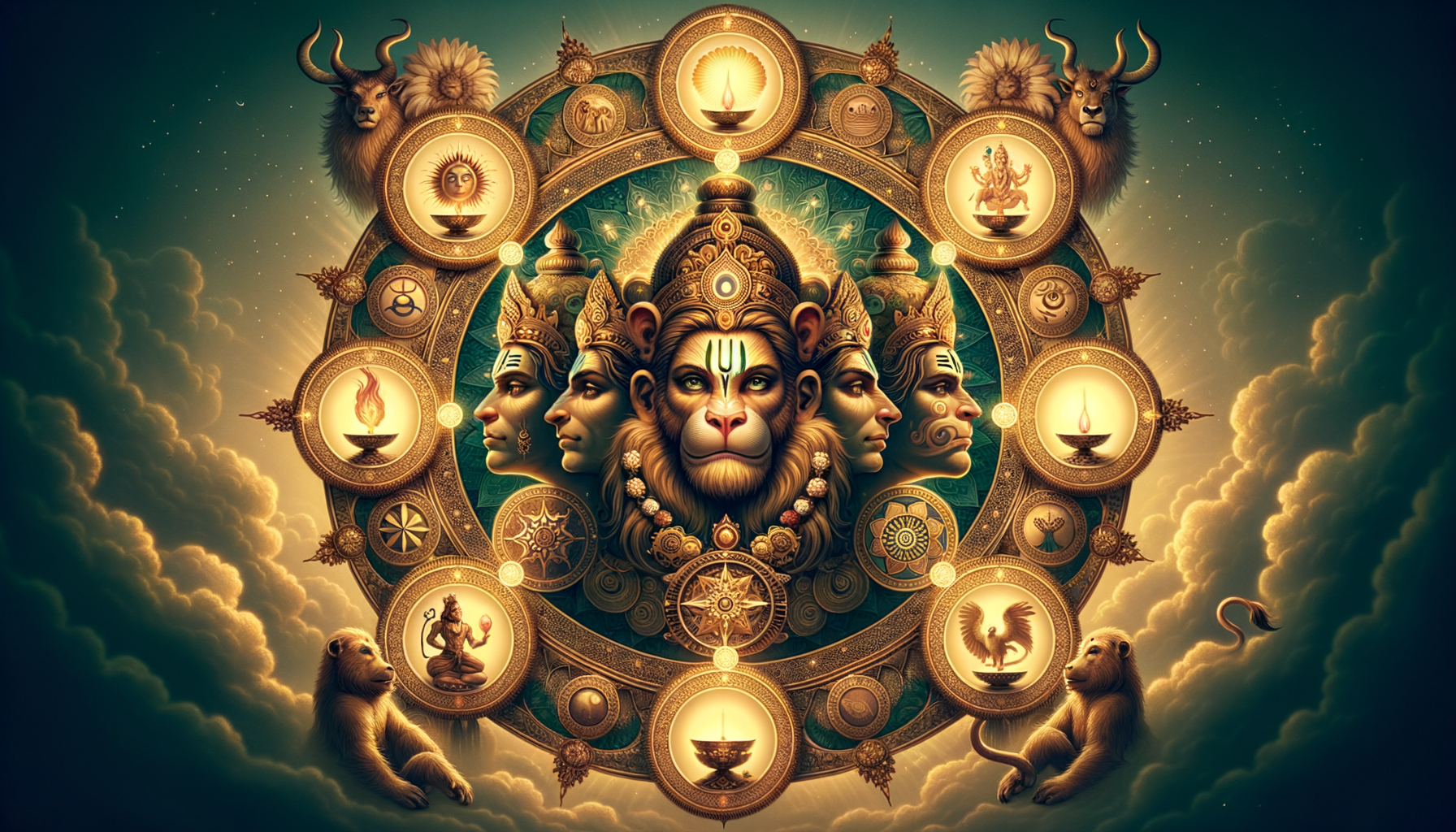
Within Hindu spiritual traditions, Hanuman is revered as an enduring symbol of devotion, courage, and transformative strength. Among the many sacred representations, Panchmukhi Hanumanthe five-faced manifestationencapsulates a richly layered symbolism. This form is understood as a guardian of the five directions, integrating protection, knowledge, steadiness, swiftness, and unwavering devotion into a single, harmonizing image.
Each face of Panchmukhi Hanuman is traditionally aligned with a direction and a distinctive spiritual quality. Facing the east, Hanuman embodies bhakti and inner resolve, channeling prāṇa and disciplined service. To the south, Narasimha signifies fearless protection and the uncompromising defense of dharma in the face of adversity. To the west, Garuda conveys speed, vigilance, and liberation from toxins and obstacles, often invoked for safe journeys and swift relief. To the north, Varaha represents stability, grounding, and upliftment, linking spiritual striving with prosperity and resilience. Upward (ūrdhva), Hayagriva reflects clarity, sacred learning, and luminous knowledgean auspicious current for study, contemplation, and mantra-śāstra.
Beneath the directional correspondences lies a broader Indic framework of fiveness that informs practice and contemplation: the pañca-bhūtas (five elements), pañca-prāṇas (five vital energies), and pañcendriyas (five senses). In daily worship and meditation, Panchmukhi Hanuman can be contemplated as a holistic discipline: anchoring the body (Varaha), purifying the senses and breath (Hanuman and the pañca-prāṇas), sharpening vigilance (Garuda), cultivating courageous truth (Narasimha), and illuminating the intellect (Hayagriva). This approach connects the imagery to lived experienceprotection is not merely external; it is the safeguarding of inner clarity, ethical resolve, and spiritual steadiness.
A widely cherished narrative situates this form within Ramayana traditions: to overcome the subterranean sorcerer Ahiravana (also rendered Mahiravana), Hanuman is said to have assumed a five-faced form to extinguish five lamps set in different directions simultaneously, thereby nullifying the adversary’s power. While details vary across regional tellings, the account strengthens the association of Panchmukhi Hanuman with omnidirectional awareness, coordinated action, and decisive spiritual protection.
In contemporary practice, temples and homes often enshrine Panchmukhi Hanuman to invoke comprehensive well-beingdevotees recite “Om Panchamukha Hanumate Namah” for protection, courage, and guidance. The form’s directional logic naturally complements sacred geography and vastu-inspired orientations, offering a contemplative map that merges space, intention, and ethical action. Many devotees describe a felt sense of reassurance before travel (Garuda), steadiness during uncertainty (Varaha), and renewed focus in study or sādhanā (Hayagriva), while drawing moral strength from Narasimha’s courage and Hanuman’s humility.
The symbolism of five also resonates beyond a single tradition, reflecting a shared Indic sensibility. Directional guardians and mandala cosmology in Buddhism, ethical pentads and disciplined conduct in Jainism, and the celebrated symbolism of the “Panj” in Sikh memory all point to a common language of virtue, service (seva), knowledge, and fearless compassion. Read in this light, Panchmukhi Hanuman becomes a unifying embleman image that honors diversity of paths while affirming a convergent aspiration toward inner strength and collective harmony.
As a spiritual icon and as a practical guide for contemplation, Panchmukhi Hanuman brings together protection, wisdom, and devotion in a form that is at once intimate and expansive. Its enduring appeal lies in this synthesis: five faces, five directions, and one integrating vision that supports ethical living, resilient service, and unity across dharmic traditions.
Inspired by this post on Hindu Blog.