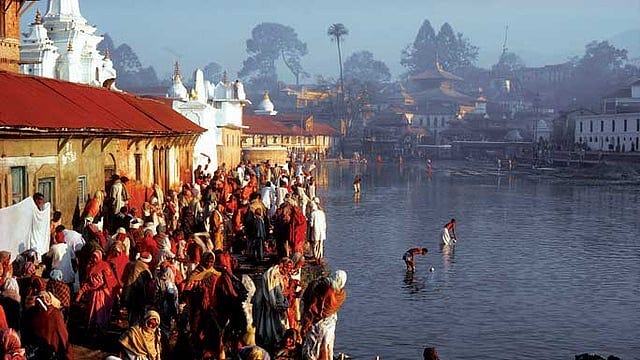
Sanatana Dharma is most fully comprehended when it is lived. Across Bharatavarsha, practitioners have long held that texts and commentaries, however profound, cannot substitute for embodied practicewhere feeling, devotion, and ethical conduct transform knowledge into lived experience. This insight has guided generations who discovered that the kernel of connection to Ganga, Mathura, Palani, Rameshwaram, or Draksharama emerges less from reading and more from direct encounter, worship, and service.
In the post-independence era, the treatment of sacred spaces has often been filtered through the language of development and commerce. The growing tendency to package pilgrimage as “spiritual tourism” risks trivializing sanctity and fragmenting living traditions. A more responsible approach recognizes that temples, tirthas, monasteries, and mathas are not mere destinations; they are living institutions that sustain dharmic life and community well-being across Hindu, Buddhist, Jain, and Sikh lineages.
Colonial-era descriptions frequently framed India as a “subcontinent,” obscuring an indigenous reality: cultural unity has long provided a robust foundation for civilizational coherence. Political boundaries shifted across centuries, yet a deeper oneness endured through common rituals, shared stories, allied artistic canons, and a pan-Indic scholarly ecosystem. This unity remains legible in everyday practice, despite modern pressures.
Veneration of sacred geographyrevered in the Vedas, Smritis, and Puranascontinues in contemporary festivals and pilgrimages. Analytical works, such as Diana Eck’s India: A Sacred Geography, document this phenomenon with academic rigor; lived devotion, however, shows how Darshana, Jnana, and Bhakti fuse with place to nurture belonging, responsibility, and collective memory. The question for the present is stewardship: how to honor, protect, and revitalise this sacred geography for future generations.
Continuity is exemplified by the four mathas attributed to Adi Sankara. These institutions, established in the cardinal directions, maintain enduring patterns of ritual, pedagogy, and succession, and continue to serve as nodes of pilgrimage, learning, and guidance.
Vaakyartha traditionsrigorous philosophical debatesstill animate centers of classical learning across regions. Scholars travel from distant corners, converse through a shared textual universe, and rely on Sanskrit as a link language. This living republic of letters evidences a civilizational method: consensus built through disciplined disagreement and common sources.
The Guru Granth Sahib embodies the pan-Indic reach of sacred insight. It preserves compositions from Sikh Gurus alongside poems and hymns of bhaktas such as Namdev, Ravidas, Kabir, Ramanand, and Mirabai, and speaks of Parabrahman while engaging ideas also found in the Vedas, Puranas, and Smritis. This interwoven canon reflects the dharmic ethos of honoring truth across voices.
Tribal and folk traditions participate in the same continuum. Bastar communities still craft images of Shiva as a fierce archer and of Krishna, affirming a shared symbolic lexicon. At Puri, Lord Jagannatha’s worship retains tribal links; traditional accounts describe a sequence in which a tribal priest and a Brahmin priest both serve the Deity, mirroring India’s capacity to integrate the folk and the classical.
Across the country, countless folk retellings of the Ramayana and the Mahabharata continue to be performed and reimagined. These oral and performative traditions preserve ethical reflection, regional aesthetics, and civilizational memory, while binding communities through common narrative horizons.
Longstanding priestly customs illustrate interregional ties: Namboodiris from Kerala at Badrinath, priests from South Canara historically invited to serve at Pasupathinath in Kathmandu, and Maharashtrian priests at Rameshwaram. Textiles for Deities further dramatize unity across distance: Kamakhya’s sari arriving from Kanchi, and the sari for Goddess Amba in Kolhapur sent from Tirupati during Deepavali.
Kumbh Mela’s orchestration exemplifies calendrical sophistication anchored in the Panchangam. This traditional timekeepingshared across regions and sectshas enabled periodic congregations of extraordinary scale guided by astronomical and ritual rhythms rather than centralized command.
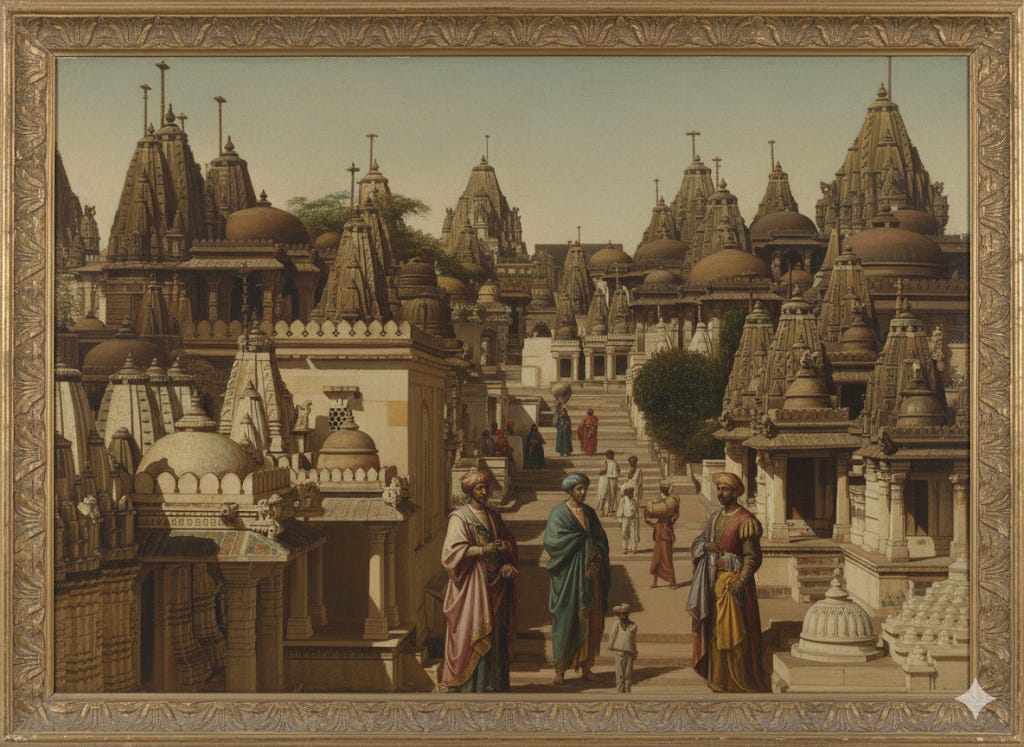
Dharmic unity equally encompasses Buddhist and Jain contributions. Pilgrimage circuits connecting sites such as Bodh Gaya and Sarnath, and Jain centers like Shravanabelagola, demonstrate how sacred geography transcends sectarian lines to form a civilizational network of reverence, learning, and ethical practice.
Patterns of cultural recognition cut across regional identities: people in the north commonly know of Tirupati, and people in the south are familiar with Kashi Vishwanath. Most Indians, regardless of state, recognize the Ramayana, the Mahabharata, and major Puranas; Kalidasa remains a civilizational touchstone. North Indian and Carnatic music share the seven-swara system; a viewer from Andhra Pradesh can immediately recognize an Odissi item on Yashoda and Krishna, testifying to a shared narrative-musical grammar.
Even colloquial idioms and everyday slang often reveal striking equivalences across languages, pointing to a common cultural substrate. Beneath linguistic diversity, metaphors, kinship terms, and expressive cues frequently map onto allied ethical and aesthetic worlds.
Philosophically, a distinctive civilizational habit moves from the particular to the general. Ravana’s death, for example, is read not merely as an individual’s end but as a moment in a cosmic drama. Within this view, absolute evil is denied ontological status; rather, good and evil are understood as relational and instructive, as the story of Hiranyakashyipu and Prahlada elucidates. This hermeneutic nurtures humility, compassion, and the recognition of unity amid difference.
The vidyā paramparāthe Tradition of Knowledgeis cumulative and intergenerational. The surviving corpus in religion (Vedas, epics, Puranas, Dharmashastras and their commentaries) and in secular sciences (from poetics to polity and medicine) is vast by any global measure. Specialized treatisessuch as the Tamboola Manjari on the art of making paanattest to the civilizational commitment to codifying and refining even quotidian arts.
Kailasnath at Ellora further illustrates continuity of vision. Carved monolithically from the living rock over roughly 150 yearsspanning several generations of sthapatis and artisansthe temple represents a synthesis of devotion, engineering, aesthetics, and institutional perseverance. It embodies a civilizational capacity to undertake long-horizon projects anchored in shared purpose.
These sacred bonds are not merely followed; they are liveddaily and quietlyby communities across caste, region, and sect, and across the dharmic traditions of Hinduism, Buddhism, Jainism, and Sikhism. This cultural and civilizational oneness is the ground-note of Bharatavarsha, while the grammar of its preservation lies in nurturing the institutions, arts, and practices that sustain unity.
A story often told captures this civilizational ethic of restraint and shared joy: a child, awed by the Himalayas, asks to take them home. The grandmother replies that they should remain where all can behold them. That sensibilityprotecting the commons of beauty, learning, and sanctityhelped make India for millennia a preeminent center of philosophy, arts, and prosperity.
In this spirit, the civilizational aspiration remains nitya (perpetual), satya (true), and Sanatana (eternal): a living call to safeguard sacred geography, deepen learning, honor many paths to truth, and strengthen the cultural unity that has long bound Bharatavarsha.
Inspired by this post on Dharma Dispatch.