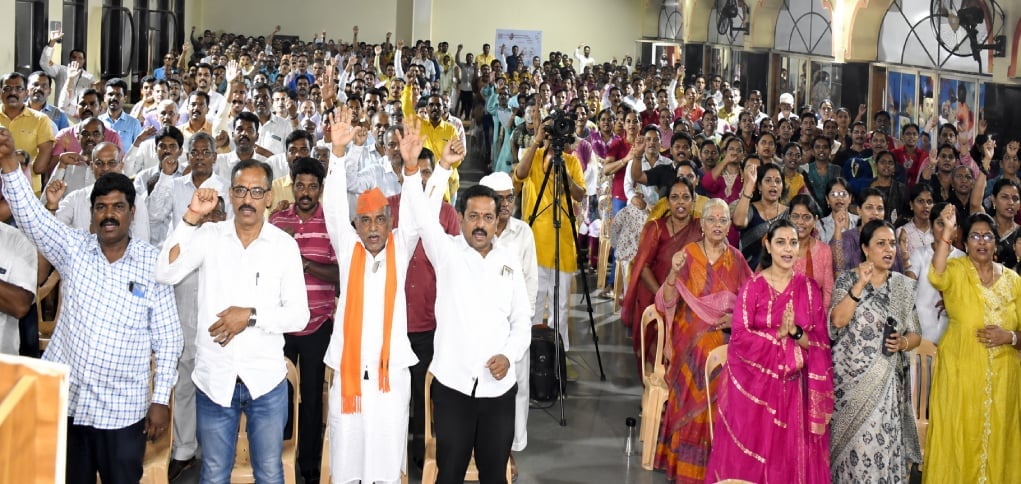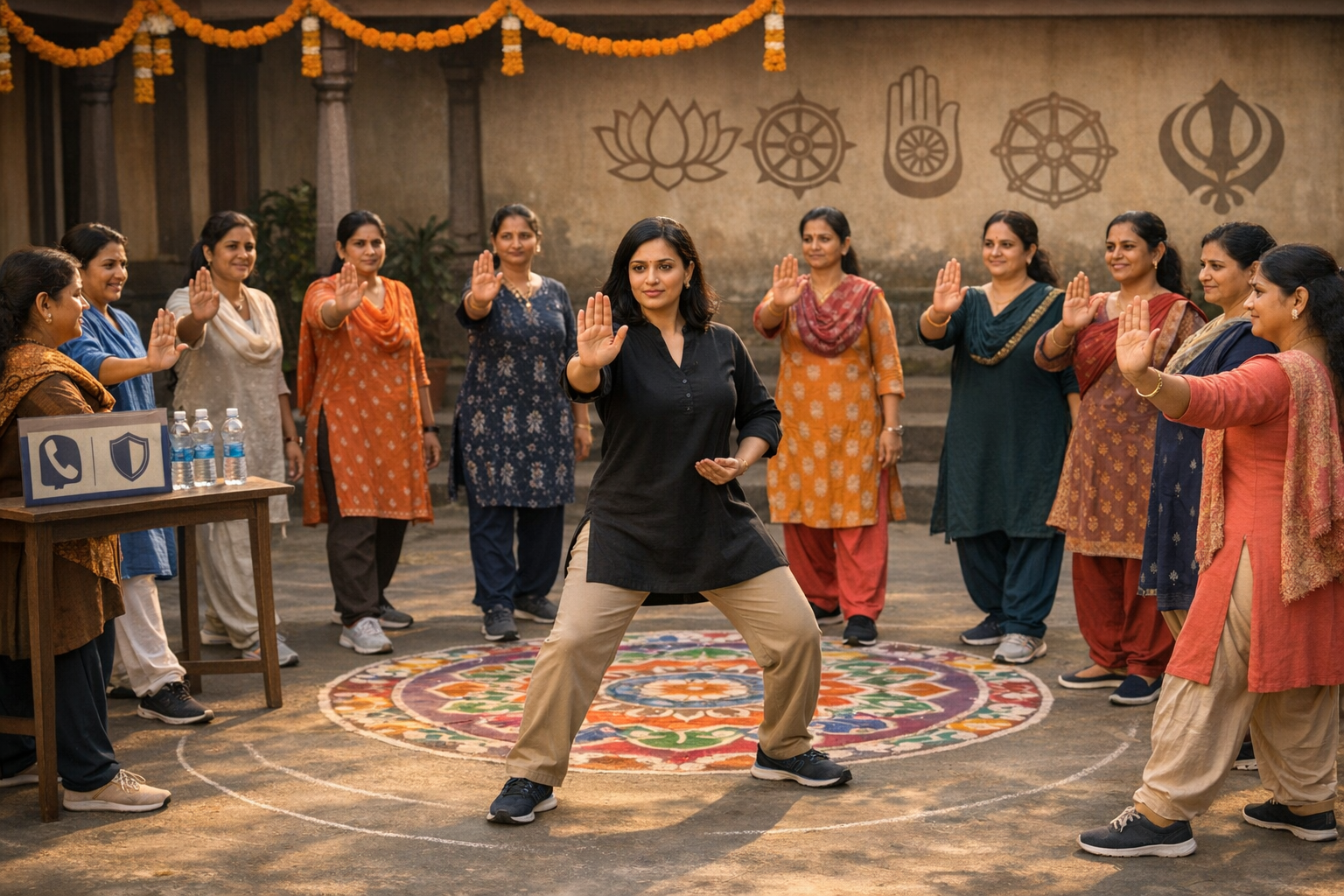
On 7 March in Jalgaon, Maharashtra, a special programme on women’s empowerment titled “Nari Samarthyachi Navi Pahat” will be organised by the Ranragini wing of the Hindu Janajagruti Samiti. Framed around practical safety and cultural rootedness, the initiative seeks to build confidence, cultivate community networks, and strengthen awareness of India’s diverse dharmic heritage among women of all ages.
The programme’s stated aimencouraging women to become aware of self-defence and their cultural heritagealigns with a robust, evidence-informed approach to empowerment: skills that reduce risk and respond to threat are most durable when anchored in values, identity, and social support. In the context of Jalgaon and broader Maharashtra, where community participation and heritage stewardship remain strong, such an integrated model promises both immediate utility and long-term social cohesion.
Self-defence in a community setting is best understood as a continuum: prevention, avoidance, de‑escalation, escape, and, if unavoidable, proportionate physical response. Emphasis on situational awareness and boundary setting often mitigates risk before conflict escalates. Widely cited behavioural frameworks such as the OODA loop (Observe–Orient–Decide–Act) and colour-coded alertness models are frequently adapted in civic trainings to help participants perceive environmental cues, make timely decisions, and act with clarity under stress.
Technical preparation typically prioritises gross-motor, high‑leverage movements that remain accessible under adrenaline stress. Simple stance stability, limb protection, balance recovery, and targeted break‑away techniques (for wrist, clothing, or bag grabs) can be practiced safely without specialist equipment. Verbal strategiesfirm voice, concise commands, and crowd‑engaging calls for helpcomplement movement skills and improve outcomes in real‑world settings.
India’s own martial and movement lineages offer culturally resonant references for confidence and composure. Kalaripayattu develops whole‑body coordination and spatial awareness; Gatka emphasises footwork, timing, and restraint. While “Nari Samarthyachi Navi Pahat” is an empowerment programme rather than a formal martial apprenticeship, drawing inspiration from these traditions can help participants recognise that disciplined self‑protection and ethical conduct have deep roots across dharmic cultures.
Legal literacy is an essential pillar of any self‑defence awareness module. Under the Indian Penal Code (IPC), Sections 96–106 recognise the right of private defence under conditions of necessity, imminence, and proportionality. Understanding where lawful defence begins and endsparticularly the imperative to use minimum necessary force and to prioritise escape when safely possiblehelps participants translate skills into responsible action. Familiarity with local emergency services (e.g., 112) and basic incident documentation practices further supports personal and community safety.
The cultural heritage dimension broadens empowerment beyond immediate risk management to include meaning, identity, and ethical orientation. Across Hindu, Buddhist, Jain, and Sikh traditions, women have exemplified courage, scholarship, compassion, and leadership: figures such as Gargi and Maitreyi in the Vedic discourse, Mahapajapati Gotami in the Buddhist lineage, Chandanbala in Jain narratives, and Mai Bhago in Sikh history illustrate how moral clarity and service (seva) reinforce resilience. Learning these plural histories fosters self‑respect while cultivating solidarity across dharmic paths.
In Maharashtra’s cultural memory, role models such as Jijabai and Tarabai underscore how fortitude, stewardship, and strategic foresight can shape public life. These exemplars complement contemporary skills by reminding participants that personal safety and collective well‑being are interlinked; values like ahimsa, satya, shraddha, and seva provide the ethical framework through which courage is harnessed for the greater good.
Programmes of this kind typically deliver high impact when they integrate trauma‑informed pedagogy, inclusive design, and phased learning. Trauma‑informed facilitation respects varied prior experiences and emphasises consent, choice, and pacing. Inclusive design considers age, mobility, neurodiversity, and language needs, ensuring that women and girls from diverse backgrounds can fully participate. Phased learningbrief concept inputs followed by supervised practice, reflection, and peer feedbackhelps translate knowledge into embodied competence.
Community outcomes are strongest when skills training is paired with network‑building. Peer safety circles, trusted chaperone systems for high‑risk routes or timings, and clearly mapped local resources (police outposts, women’s help desks, healthcare facilities) create distributed resilience. Participants commonly report that belonging to a supportive circle reshapes emotional responsesreplacing isolation and anxiety with confidence, composure, and mutual accountability.
Evaluation can be rigorous yet practical. Pre‑ and post‑programme self‑efficacy scales, scenario‑based assessments of situational awareness, and follow‑up checks on resource utilisation (e.g., helpline familiarity, reporting pathways) provide measurable indicators of progress. Qualitative inputsparticipant reflections on boundary setting, bystander mobilisation, or recovery from fear responsesoffer complementary insight into sustained behavioural change.
Crucially, “Nari Samarthyachi Navi Pahat” is framed not as an isolated workshop but as part of a broader civic ethic that honours unity in diversity within the dharmic family. By foregrounding shared virtues and plural legaciesrather than adversarial narrativesthe initiative nurtures a culture where women’s dignity, safety, and leadership are seen as common responsibilities across Hinduism, Buddhism, Jainism, and Sikhism.
For participants preparing to attend similar community programmes, a few practical considerations often enhance learning: wear comfortable clothing and footwear conducive to movement; bring water and any necessary medical aids; approach sessions with curiosity and a willingness to practice simple drills repeatedly; and, where appropriate, invite family members or peers, as collective learning strengthens safety habits at home and in neighbourhoods.
Overall, the initiative in Jalgaon sets an affirming tone: actionable self‑defence awareness, responsible legal understanding, and pride in living cultural heritage canand shouldadvance together. When communities invest in women’s safety and leadership with cultural sensitivity and technical clarity, they not only reduce risk but also deepen the social capital that sustains harmony, dignity, and progress.
Inspired by this post on Hindu Jagruti Samiti.