
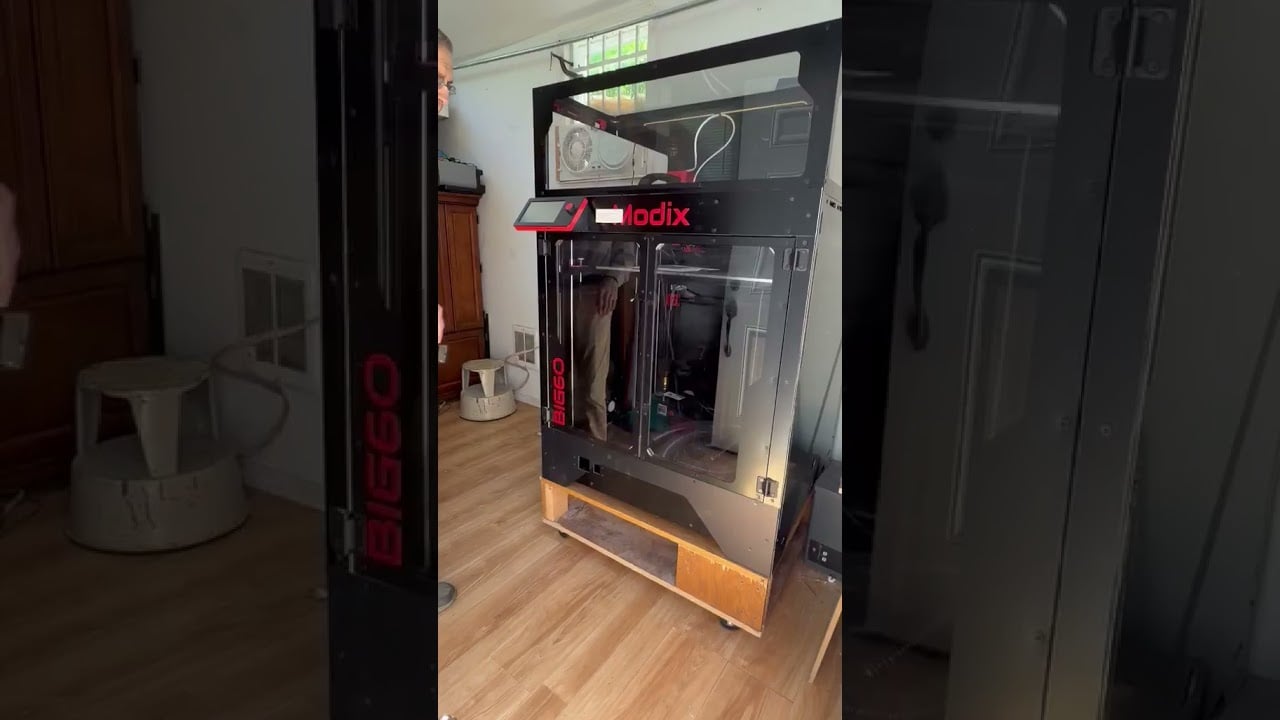
On May 19, 2026, a video walkthrough documented significant water intrusion in the devotional art workshop associated with Locana Prabhu, while also introducing a newly installed 3D printer poised to support preservation-focused production linked to Srila Prabhupada’s legacy. The juxtaposition of flood damage and technological renewal highlights a broader story: resilience under pressure, careful stewardship of sacred heritage, and the thoughtful integration of modern tools into traditional seva.
The impact of water on a working studio spans far beyond visible stains. Capillary action, hygroscopic movement, and prolonged dampness can swell timbers, delaminate plywood and composites, corrode metal hardware, disrupt electrical systems, and foster rapid mold growth. In heritage contextswhere unique plaster positives, silicone molds, drawings, photographs, and paints may coexistwater damage risks both tangible artifacts and the intangible knowledge embedded in jigs, templates, and hand-finished references.
Stabilization begins with safety and triage. Power isolation, moisture mapping, and a clear separation of wet, damp, and unaffected zones reduce cross-contamination. Conservation-grade practice prioritizes a time-bound response: within 24–72 hours, environmental control and controlled airflow are critical to curbing microbial blooms. Documenting conditions with photographs and concise condition reports helps inform decisions and enables transparent communication with collaborators and insurers.
Environmental targets for mixed-use creative studios and heritage storage commonly aim for 45–55% relative humidity (RH) and 18–22°C, with gentle, continuous airflow. Desiccant dehumidifiers, HEPA filtration, and MERV 13 or higher intake filters can stabilize spaces while larger building issues are addressed. Spot data-loggers, leak sensors, and portable infrared thermography help verify drying progress and detect concealed moisture in walls, substrates, and joinery.
Asset triage typically places one-of-a-kind masters, negatives, and original drawings first, followed by master molds and high-quality reference copies. Low-porosity materials (e.g., silicone rubbers) often tolerate careful cleaning and reconditioning; porous materials (e.g., MDF) may require prompt replacement. Where possible, packing wet materials to cold storage can arrest deterioration while decisions are made. A structured salvage listranking items by uniqueness, replaceability, and production criticalitystreamlines effort.
Mold management hinges on time, airflow, and filtration. Porous substrates with established mold colonization generally require removal. On non-porous surfaces, HEPA micro-vacuuming and targeted cleaning with ethanol or isopropyl alcohol may be appropriate; bleach is typically avoided on porous materials. Respiratory protection (N95 or P100), gloves, and eye protection safeguard health, while bag-and-bin protocols and negative-pressure setups reduce spore migration.
Metals and electronics demand rapid attention. Flash rust on tools and fixtures can be gently arrested using corrosion inhibitors after thorough drying. Circuit boards require careful cleaning and slow, complete drying before power-up; conformal coatings may merit future use. Precision equipment benefits from recalibration after thermal and humidity excursions, ensuring accuracy in later manufacturing and finishing processes.
Against this backdrop, the new 3D printer represents a strategic recovery-and-renewal tool. Properly deployed, 3D printing can create accurate prototypes, master patterns, and replacement jigs that speed repairs and enable repeatable, high-fidelity production of devotional elements. For communities engaged in the Hare Krishna Movement and ISKCON (International Society For Krishna Consciousness), this approach supports seva by protecting working knowledge while improving consistency and scalability in service of devotional heritage.
Technology selection should be use-case driven. Fused Filament Fabrication (FFF/FDM) excels for durable, larger parts, shop fixtures, and many master patterns; Stereolithography (SLA) offers superior surface detail for fine ornament and small-scale features; Selective Laser Sintering (SLS) can provide robust, support-free parts for complex geometries. A hybrid workflowusing FDM for strength and SLA for detailoften yields optimal outcomes while controlling cost and lead time.
Material choice matters. PLA and PLA+ are dimensionally stable and user-friendly, suiting many master patterns; PETG offers increased toughness and better moisture tolerance; ABS and ASA permit post-processing (e.g., acetone vapor smoothing) and withstand higher temperatures, though they benefit from enclosure and fume management; engineering resins in SLA deliver exceptional detail but require careful post-cure and UV protection. Desiccant storage, filament dry-boxes, and oven-drying reduce stringing, improve layer adhesion, and raise surface quality.
A robust digital pipeline links scanning, modeling, and fabrication. Photogrammetry or structured-light scanning can capture legacy works; mesh repair, retopology, and decimation retain essential features while optimizing printability. Standard formats (STL/OBJ/PLY) paired with version control and checksums (e.g., SHA-256) protect file integrity. Adopting the 3-2-1 backup principlethree copies, two media types, one offsitesafeguards irreplaceable digital assets.
From printed master to finished devotional element, established craft remains central. Silicone rubber mold-making around printed positives can enable casting in plaster, resin, or metal via investment casting workflows. Surface preparationsanding, filler primer, gesso, and sealersbridges the gap between machine texture and artisanal finish. Archival paints and UV-stable varnishes mitigate light-induced degradation, and reversible conservation-grade adhesives help ensure future serviceability.
Air quality and safety accompany technical gains. Enclosed printers with HEPA and activated-carbon filtration curb ultrafine particles and VOCs, especially for ABS/ASA and photopolymer resins. Smoke detection, fire-resistant printer placement, thermal runaway protection, and disciplined cable management elevate safety. Clear standard operating procedures for PPE, resin handling, solvent use, and waste disposal align technological practice with conservation ethics.
Facility resilience grows from iterative mitigation. Roof membrane inspection, exterior grading, sump pumps with battery backup, floor bunding, and strategically placed leak sensors form a layered defense. A continuity-of-operations plan clarifies incident roles, stabilization targets, and a prioritized salvage list. Periodic drills, equipment maintenance logs, and environmental audits keep readiness high through seasonal cycles.
Importantly, the workshop’s renewal speaks to shared custodianship across dharmic traditions. The same digital preservation and 3D fabrication methodsapplied with humility and consultationcan support Hindu, Buddhist, Jain, and Sikh communities in safeguarding sacred motifs, didactic models, and educational replicas. This approach strengthens unity in diversity, ensuring that tradition and Technology complement each other in the spirit of Devotion and Seva.
Seen in this light, the tour is more than a record of damage; it is a blueprint for adaptive stewardship. By pairing disciplined conservation with carefully chosen 3D printing methods, the workshop can transition from crisis to capabilitypreserving Hindu heritage associated with Srila Prabhupada, fostering shared learning across dharmic communities, and demonstrating how resilient practice carries sacred work forward with integrity.
Inspired by this post on Dandavats.
