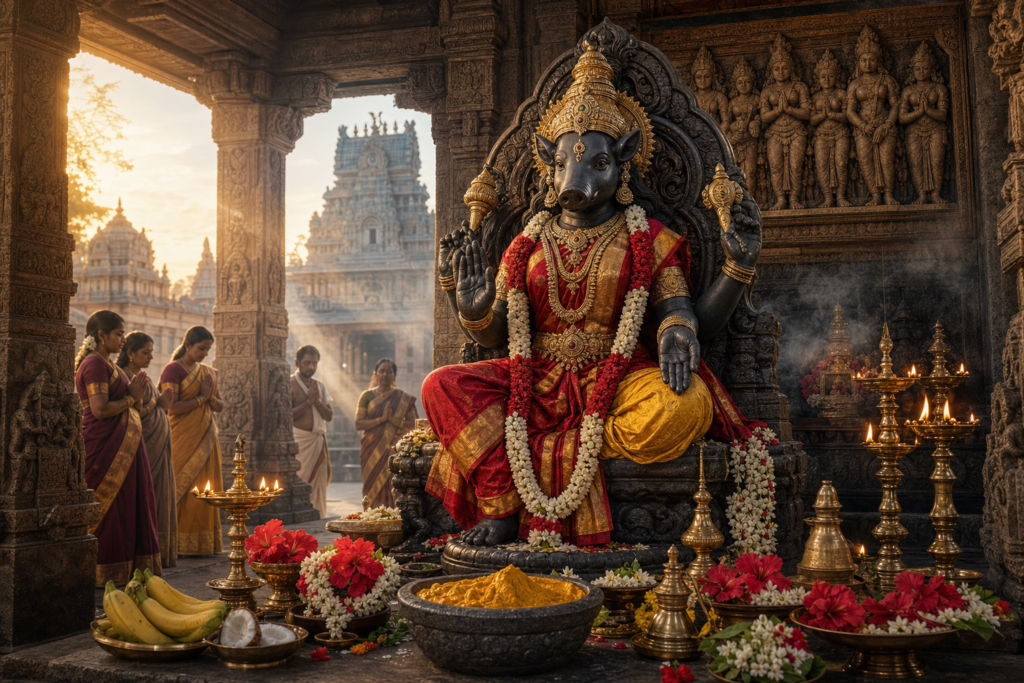
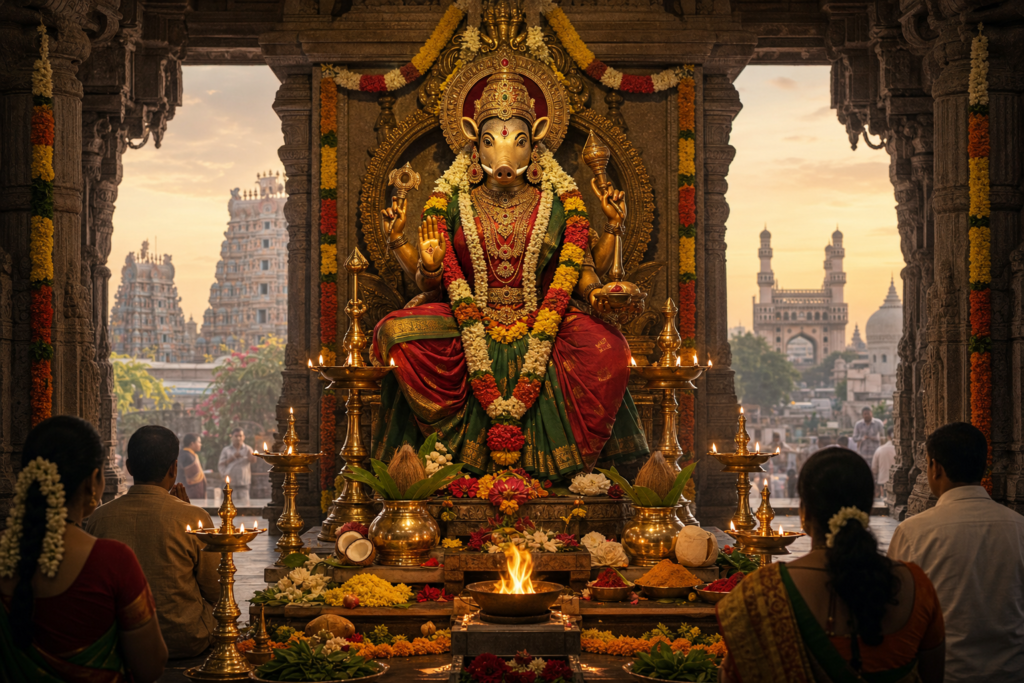
Goddess Jyeshta Lakshmi, honored in Hindu spiritual traditions as the eldest manifestation of Lakshmi, embodies mature prosperity, grounded wisdom, and enduring grace. Her sacred iconography is not merely decorative; it encodes theological insights and ethical guidance that align material well-being with dharma, inviting contemplation and responsible living.
Iconographic references to Jyeshta Lakshmi vary across regions and texts, reflecting the diversity of Hindu Goddess traditions. Many traditions distinguish this auspicious, senior aspect of Lakshmi from depictions of Jyeṣṭhā Devī associated with inauspiciousness. The present discussion focuses on the benevolent, prosperity-bestowing Jyeshta Lakshmi revered in temple worship and household practice, where her symbols teach discernment, stewardship, and inner wealth.
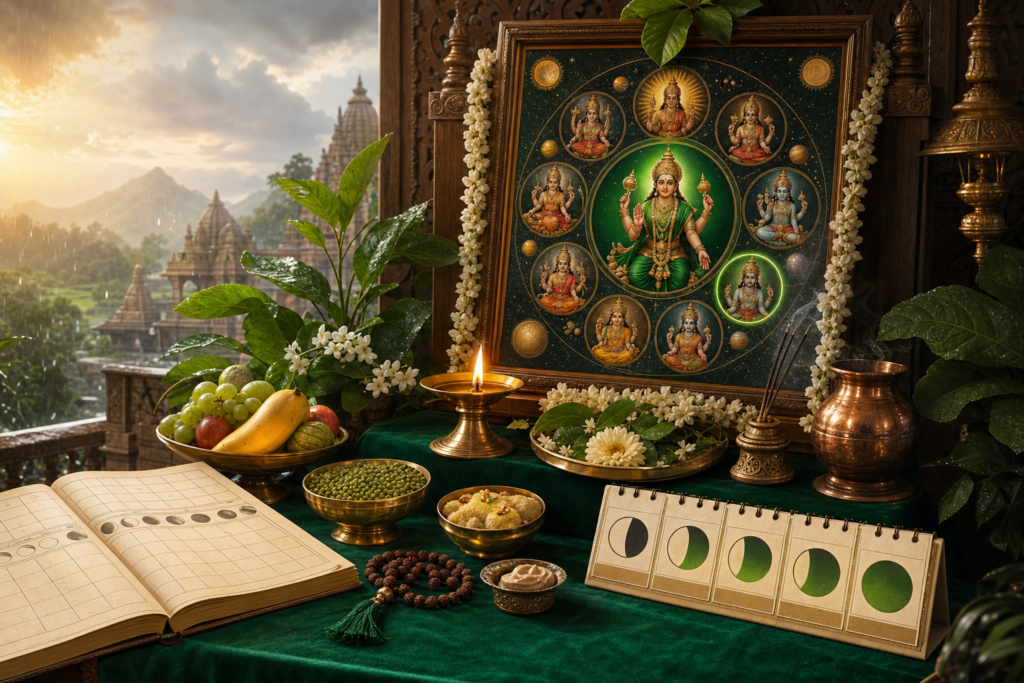
Form and posture typically present Jyeshta Lakshmi seated or standing upon a lotus (padma), a visual theology of purity, self-arising abundance, and clarity amidst life’s turbulence. The lotus seat affirms that true prosperity remains untainted by circumstance, guiding devotees in Hindu way of life to pursue wealth that uplifts society as well as the self.
Arms and attributes vary from two to four. The lotus, held in one or both hands, symbolizes generative power and spiritual refinement. A filled kalasha (pot of grains, water, or coins) represents fertility, continuity, and resource sufficiency. In knowledge-forward depictions, an akṣamālā (rosary) or pustaka (manuscript) appears, integrating prosperity with study and contemplation. In Vaishnava contexts, shankha and chakra may be present by association with Vishnu, emphasizing cosmic order and protection.
Mudrās commonly include abhaya (assurance of fearlessness) and varada (boon-bestowal), communicating security and generosity. These gestures frame prosperity as relational: abundance is safeguarded by fearlessness rooted in dharma and amplified through compassionate giving. The icon thereby unites material wealth with ethical responsibility and social harmony.
Attire and color palettes favor red and gold, signifying śrī (radiant auspiciousness), vitality, and prosperity. A kīrīṭa-mukuṭa (crown) and luminous ornaments denote sovereignty over resources and mastery of desire. In some compositions, elephants flanking the Goddess recall Gaja-Lakshmi themesseasonal rains, royal authority, and communal flourishing under just order.
Associated emblems in domestic worship often include the ulūka (owl), understood as vigilant wisdom and the ability to navigate darkness without delusion. Lamps, grains, and the cow or granary motifs appear in households to sanctify daily livelihood. Such symbols help practitioners align day-to-day decisionsearning, spending, saving, and sharingwith long-term spiritual aims.
Temple placement and household practice emphasize rhythm and reverence. Fridays, Sharad Purnima, and Deepavali highlight Lakshmi worship in many regions, where offerings of flowers, light, and simple fare are coupled with vrata, japa, and mindful charity. Through darśana, devotees cultivate gratitude, restraint, and a steady mind, turning iconography into a method for spiritual discipline.
Resonances across dharmic traditions reinforce shared ethical ideals. In Buddhist art, the lotus symbolizes purity and awakening, while deities such as Vasudhārā parallel abundance tempered by wisdom. Jain traditions celebrate ahiṁsā and disciplined prosperity, fostering ethical wealth through restraint and integrity. Sikh teachings on kirat karni (honest livelihood), vand chhakna (sharing), and seva (service) likewise harmonize prosperity with social responsibility. These convergences underscore unity in diversity across Hinduism, Buddhism, Jainism, and Sikhism.
In lived practice, many devotees report a palpable calm before the murti and a renewed commitment to fairness in trade, transparency in financial dealings, and compassion toward those in need. The image of Jyeshta Lakshmi functions as contemplative pedagogy: when prosperity is sought through right means and shared with discernment, it becomes a vehicle for communal well-being and inner freedom.
A simple contemplation aligns the icon with daily choices: visualizing the lotus steadies the mind; reflecting on the kalasha inspires stewardship; beholding the abhaya and varada mudrās encourages courage and generosity. Over time, these symbols transform habit into sādhanā, guiding the seeker from outer acquisition to inner abundance.
Taken together, the sacred iconography of Goddess Jyeshta Lakshmi offers a complete, practical framework: generate wealth ethically, preserve it wisely, deploy it compassionately, and measure its worth by the uplift it brings to all beings. In honoring this senior aspect of Lakshmi, communities discover that the most enduring prosperity is inseparable from wisdom and shared dignity.
Inspired by this post on Hindu Blog.