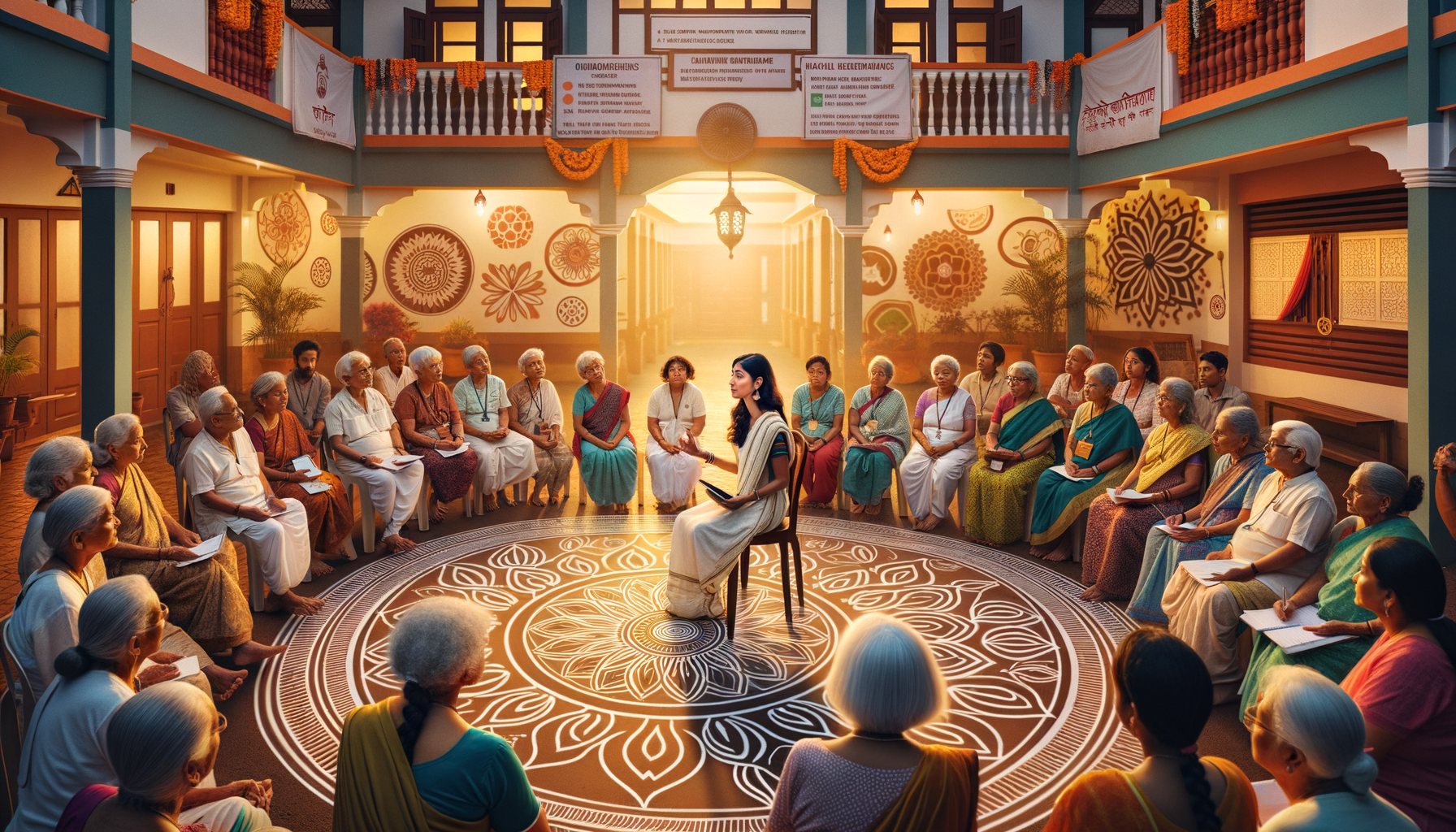
At a programme in Porvorim organised by the Hindu Jagran Manch, Kajal Hindusthani underscored the pivotal role of women in addressing contemporary social and cultural challenges. The intervention framed women’s leadership as essential to strengthening Hindu society and, by extension, the broader dharmic community rooted in shared values of dignity, compassion, and responsibility.
Centred on women’s safety, dignity, and community participation, the event highlighted how inclusive public spaces and robust neighbourhood networks contribute to social cohesion. Emphasis on practical measuressuch as civic awareness, mentorship, and coordinated community engagementaligned with dharmic principles common to Hinduism, Buddhism, Jainism, and Sikhism, including ahimsa, seva, and mutual respect.
Analytically, the focus on women’s leadership addresses three interlinked priorities: building resilient communities, preserving ethical cultural norms, and ensuring intergenerational continuity of values. When women lead community initiatives, volunteer platforms, and local forumswhether tied to temples, monasteries, derasars, or gurdwarasparticipation deepens and collective security improves. These approaches also nurture trust between institutions and citizens, a precondition for durable social harmony.
Participants resonated with the recurring themes of everyday experience: commuting after dusk, caregiving responsibilities, and service-oriented volunteering. The discussion foregrounded relatable, actionable ideasbetter lighting and vigilant community networks, respectful workplace practices, and inclusive cultural programmingthat directly affect safety and dignity. Such measures are known to elevate confidence, widen participation, and reduce social fragmentation.
From a policy and practice perspective, the Porvorim conversation reinforced that women’s empowerment is not merely a moral imperative; it is a strategic pathway to community resilience. Cross-institutional partnerships, transparent local governance, and citizen-led monitoring can translate values into visible outcomes. In this way, public life becomes a shared enterprise where ethical norms are lived, not only proclaimed.
In reframing prevailing narratives, the address situated aspirations often termed “Hindu Rashtra” within an inclusive, dharmic ethos: a socially ethical order that upholds safety, dignity, and participation for all. Seen through this lens, the call is not sectarian but civilizationalinviting unity among Hindu, Buddhist, Jain, and Sikh traditions to collaboratively nurture a compassionate, secure, and engaged society.
Inspired by this post on Hindu Jagruti Samiti.