
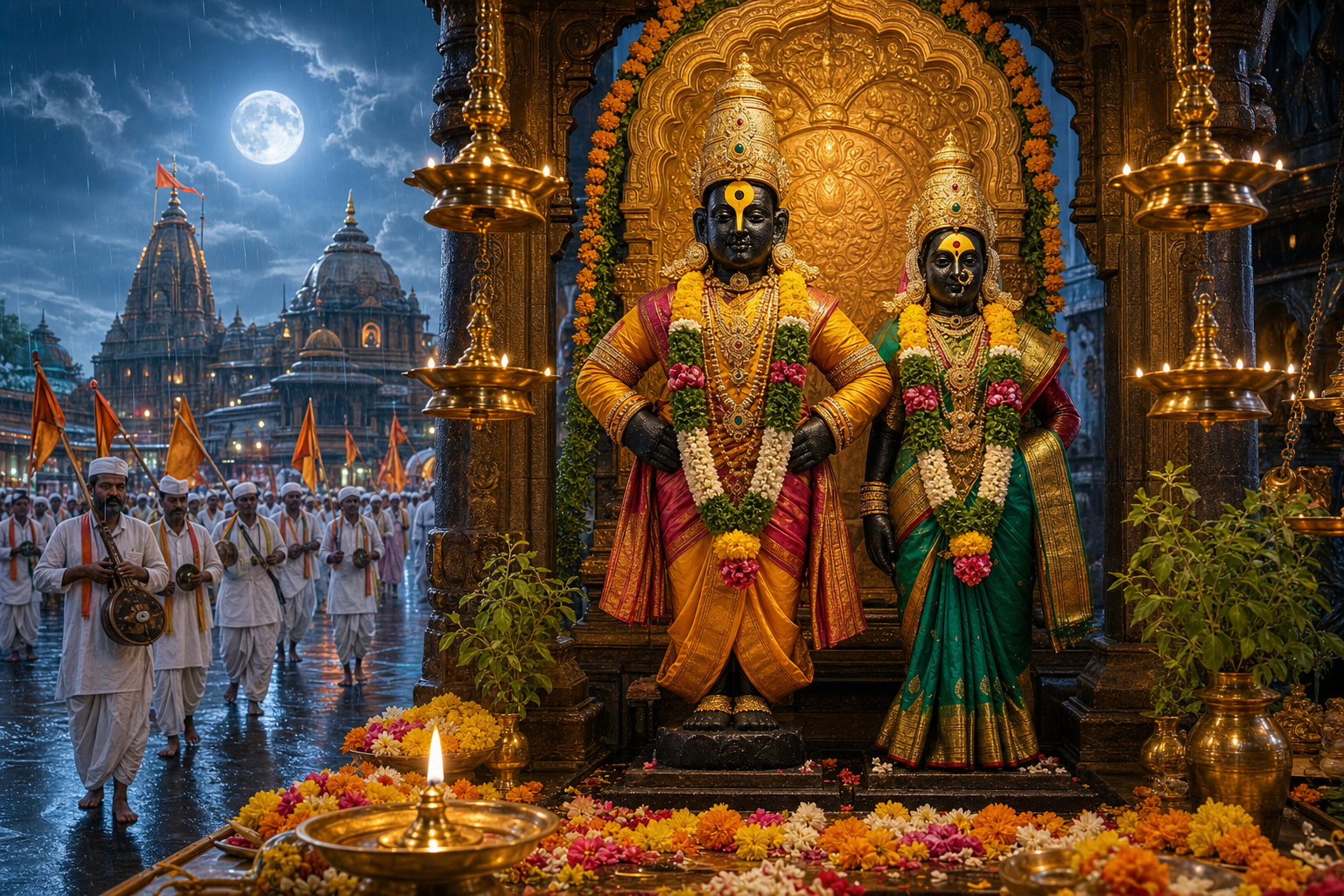
Vitthal Navratri 2026 is observed as a devotional festival dedicated to Bhagvan Vitthal and Ma Rukmini, especially in Vitthal-Rukmai temples across Maharashtra and in communities where the Varkari and Vaishnava bhakti traditions remain vibrant. The supplied temple-calendar notice lists the 2026 observance from 24 July to 29 July, beginning on Shukla Paksha Dashami in the Ashada month and concluding on Ashada Purnima, according to Chandramana Panchangam reckoning. Because Hindu observances are tithi-based rather than fixed by the Gregorian calendar, devotees generally confirm the final dates and ritual timings with their local temple, family panchang, or regional almanac.
The word “Navratri” is often associated with the nine-night worship of Devi in Chaitra or Ashwin, yet regional Hindu practice also preserves shorter and specialized Navratri observances centered on particular deities, sacred places, and temple traditions. Vitthal Navratri belongs to this living regional world of ritual devotion. It is not merely a date on a calendar; it is a concentrated period of darshan, alankara, kirtan, remembrance, and disciplined bhakti around the form of Vitthal, also known as Vithoba, Panduranga, or Vitthala.
Vitthal is revered primarily as a form of Vishnu and Krishna, standing in the familiar posture with hands on the waist, often on a brick, and accompanied by Rakhumai, the affectionate Maharashtrian name for Rukmini. The image is simple, powerful, and deeply intimate. In temples and households, Vitthal is not experienced only as a distant cosmic deity; he is also approached as a patient lord of the people, a companion of saints, a receiver of abhangas, and a presence who accepts devotion offered in humble language and ordinary life.
The geographical and spiritual heart of Vitthal worship is Pandharpur in Maharashtra, where the Shri Vitthal-Rukmini Mandir has shaped the religious imagination of generations. Pandharpur is traditionally praised as “Bhu-Vaikuntha,” the earthly abode of Vishnu. This title expresses a core insight of bhakti: sacred geography is not separate from lived emotion. A pilgrim who enters Pandharpur does not merely visit a monument; the pilgrim steps into a devotional memory carried by saints, singers, farmers, mendicants, families, and countless anonymous devotees.
Vitthal Navratri falls within the broader sacred atmosphere of Ashadha, a lunar month associated with important Vaishnava observances, monsoon-season religious discipline, pilgrimage, and Guru Purnima. Ashadha is especially meaningful in Maharashtra because of the Ashadhi Wari, the great pilgrimage movement toward Pandharpur, and Ashadhi Ekadashi, one of the most important days in the worship of Vithoba. Vitthal Navratri draws strength from this larger devotional season, when the rhythms of rain, travel, chanting, and temple worship converge.
The observance is traditionally described as beginning on Shukla Paksha Dashami and concluding on Ashada Purnima. In technical terms, Shukla Paksha is the bright fortnight of the lunar month, when the moon waxes toward fullness. Dashami is the tenth tithi, while Purnima is the full-moon tithi. The festival therefore moves symbolically from increasing brightness toward lunar fullness, a pattern that lends itself naturally to devotional interpretation: bhakti deepens through repeated remembrance, and the heart becomes more receptive as the days progress.
During Vitthal Navratri, the most visible temple practice is the decoration of Bhagvan Vitthal and Ma Rukmini in different colorful alankaras. Alankara is not merely ornamentation in the decorative sense. In temple ritual, adornment is a theological language. Garments, flowers, jewels, sandal paste, crowns, garlands, and seasonal colors express honor, intimacy, beauty, and the devotee’s desire to serve the divine form with care. Each day’s appearance can renew the devotee’s attention and prevent worship from becoming mechanical.
The emotional power of such alankaras is easy to understand within Indian temple culture. Many devotees remember a festival not through abstract doctrine but through sight, sound, fragrance, and movement: the first glimpse of the deity after the curtain opens, the scent of tulasi and flowers, the ringing of bells, the collective singing of nama, and the quiet moment when the mind settles before Vitthal’s steady gaze. These experiences create continuity between theology and daily life.
The daily ritual pattern of Vitthal worship also helps explain the structure of the festival. Traditional temple worship includes the awakening of the deity, bathing, dressing, offering of food, arati, and the final resting ritual at night. In the Pandharpur tradition, accounts often describe early morning kākaḍāratī, pañcāmṛtapūjā, midday worship, later offerings, and śerāratī. Such rites are not random ceremonies; they treat the deity as a living presence who is awakened, honored, nourished, praised, and gently put to rest.
This ritual humanization of the divine is one of the most tender features of Hindu temple worship. It does not reduce the deity to human limitation. Rather, it allows devotees to enter into a relationship of service. The same person who may struggle with distraction, work pressure, family obligations, or uncertainty can find discipline in preparing an offering, standing in a queue, singing an abhanga, or simply folding the hands before the murti. Vitthal Navratri becomes a structured opportunity to return to inner steadiness.
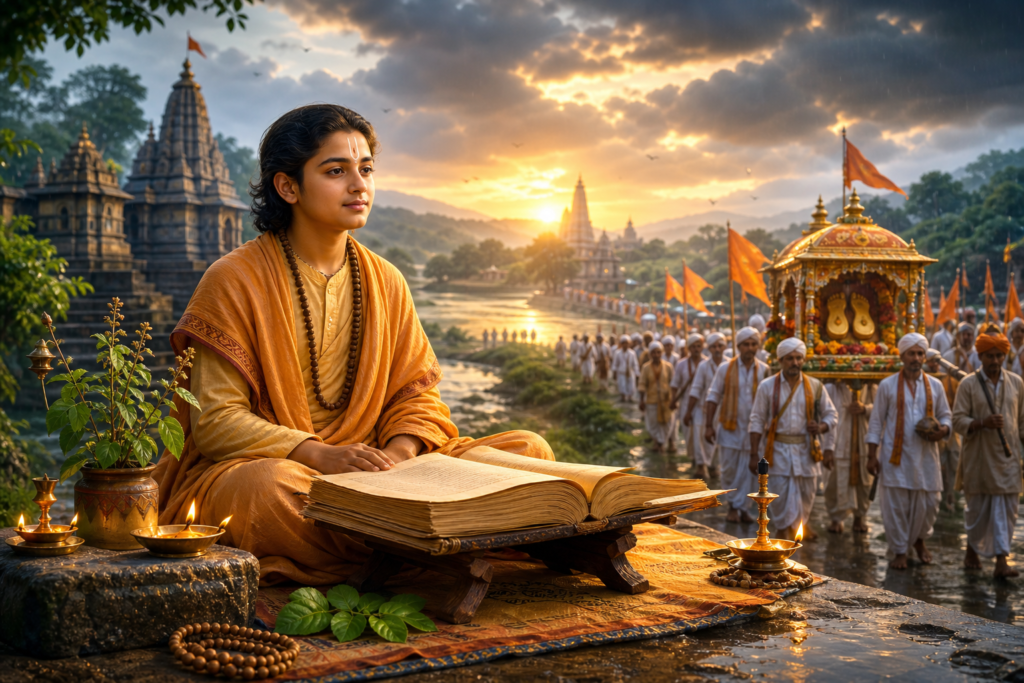
The Varkari tradition gives Vitthal worship its distinctive public and ethical character. Varkari devotion is known for pilgrimage, kirtan, abhangas, humility, community participation, reverence for saints, and the repeated remembrance of the divine name. Sant Dnyaneshwar, Sant Namdev, Sant Tukaram, Sant Chokhamela, Sant Janabai, Sant Kanhopatra, and many others helped shape a devotional culture in which spiritual dignity is not confined to elite learning or social status. The path of Vitthal is therefore both theological and social.
That social dimension matters for a contemporary reading of Vitthal Navratri. The festival points toward unity within Sanatana Dharma and across dharmic traditions by emphasizing devotion, humility, self-discipline, service, and reverence for the sacred. The Varkari memory has long carried an inclusive emotional grammar: farmers, householders, ascetics, women saints, artisan communities, scholars, and ordinary workers all appear in the story of Pandharpur bhakti. This wide devotional embrace supports the broader dharmic principle that spiritual life may be approached through many valid forms of practice.
Vitthal himself has been understood through several connected devotional lenses. In Vaishnava worship, he is associated with Vishnu and Krishna. In regional imagination, he also belongs to the land, language, music, and pilgrimage routes of Maharashtra and Karnataka. His worship has been shared by Varkari devotees in Maharashtra and Haridasa traditions in Karnataka, showing how a deity can become a bridge between languages, regions, and sampradayas without losing local intimacy.
Ma Rukmini, worshipped affectionately as Rakhumai, is central to this devotional world. Her presence balances the festival’s theology by joining the lord of Pandharpur with the compassionate feminine dimension of grace, nourishment, patience, and auspicious household life. In many temples, devotees seek darshan of both Vitthal and Rakhumai, recognizing the divine couple as a source of protection, emotional refuge, and spiritual completeness.
The connection with Ashada Purnima also gives Vitthal Navratri a broader contemplative frame. Ashada Purnima is widely associated with Guru Purnima, the honoring of gurus, teachers, and lineages of wisdom. Even when local calendars and ritual emphases differ, the full moon of Ashadha carries the theme of gratitude to those who guide the seeker from confusion toward clarity. In a Vitthal-centered setting, this naturally recalls the poet-saints whose abhangas became living guidance for generations.
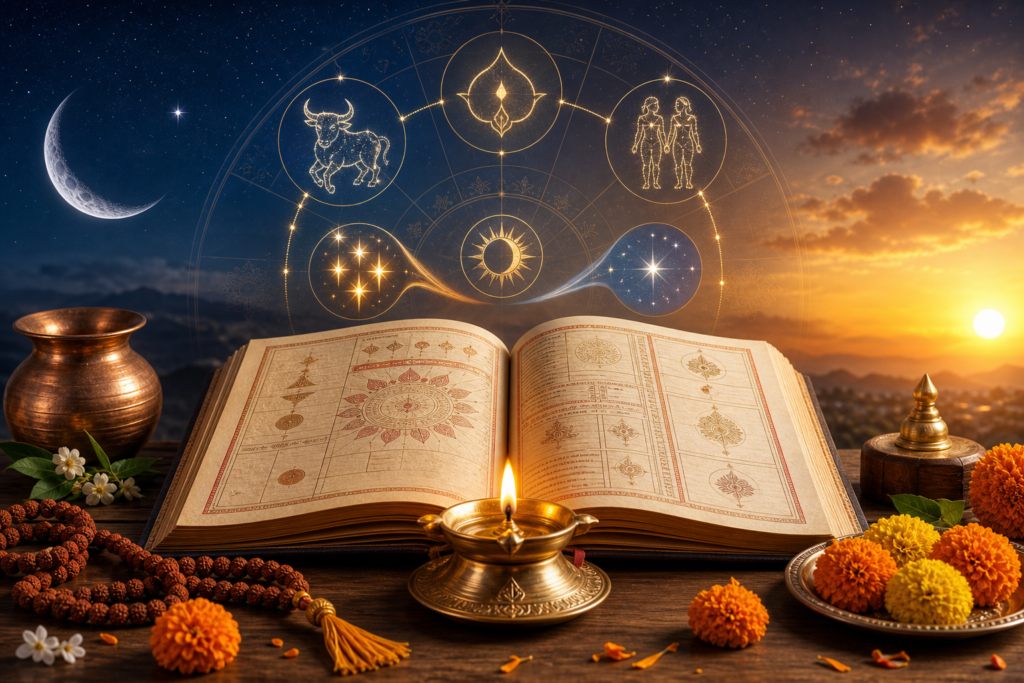
From a technical calendar perspective, devotees should remember that a tithi does not always match a civil sunrise-to-midnight day. A tithi is calculated from the angular relationship between the sun and moon, and it may begin or end at any time of day. This is why festival dates may appear differently across regions, panchang traditions, and temple schedules. For Vitthal Navratri 2026, the listed range of 24 July to 29 July should therefore be treated as the published observance window, while local ritual timing should be verified before planning vrata, travel, or temple participation.
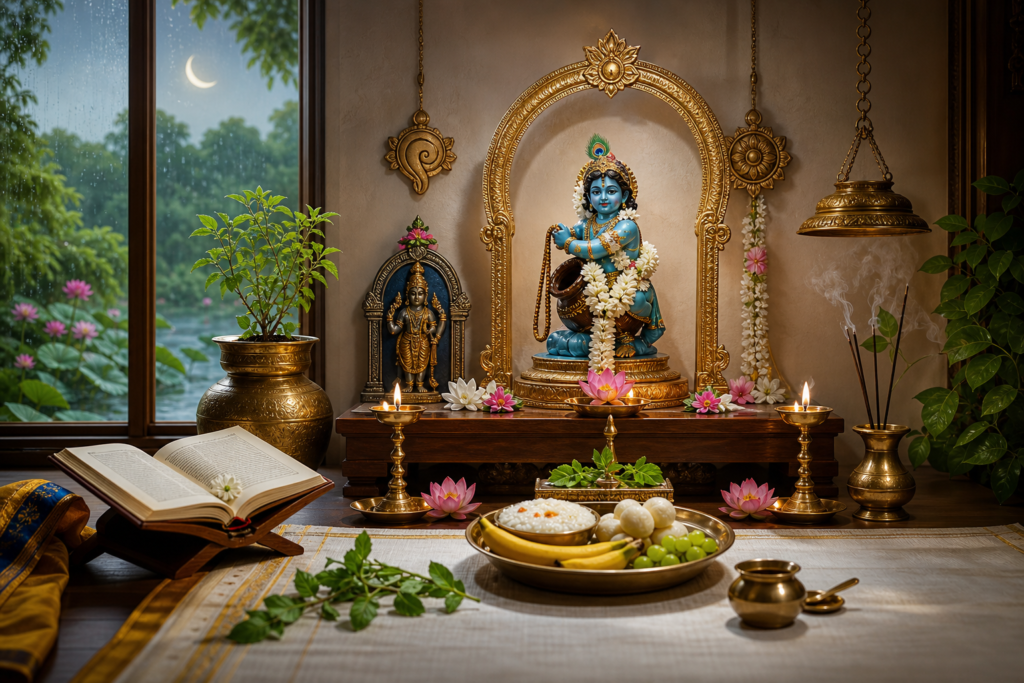
The practical observance of Vitthal Navratri may include temple visits, darshan of daily alankaras, offering tulasi, participation in arati, listening to or singing abhangas, reading about the saints of Maharashtra, observing simplicity in food, engaging in japa of the divine name, and practicing seva. Many households may not perform elaborate rituals, but the festival remains meaningful when approached with sincerity. A small lamp, a clean place of worship, remembrance of Vitthal-Rakhumai, and ethical conduct can make the observance spiritually grounded.
For families, Vitthal Navratri can become a gentle teaching moment. Children can learn why Pandharpur is sacred, why devotees walk in Wari, why saints composed abhangas in Marathi, why tulasi is dear to Vishnu, and why devotion is not limited to formal Sanskrit recitation. Such learning strengthens cultural continuity without turning religion into mere information. It allows the next generation to encounter dharma through story, music, discipline, and affection.
The festival also has relevance for people living outside Maharashtra. In diaspora communities and urban settings, many devotees experience festivals through compressed schedules, weekend temple programs, online calendars, and family-level observances. Vitthal Navratri can still be honored by setting aside time for nama-smarana, reading abhangas in translation, supporting temple seva, or reflecting on the values represented by the Varkari path: humility, equality before the divine, disciplined pilgrimage, and remembrance amid ordinary responsibilities.
At its deepest level, Vitthal Navratri is a festival of relational devotion. It asks the devotee to move from occasional remembrance to repeated attention. It gathers the body through ritual, the voice through chanting, the mind through stories of saints, and the heart through darshan. This integration is the reason such regional observances remain culturally resilient. They do not survive only because dates are printed in a calendar; they survive because people continue to find meaning, solace, and identity in them.
Vitthal Navratri 2026 should therefore be understood as more than a short temple festival. It is a window into Maharashtra’s bhakti heritage, Pandharpur’s sacred geography, the theology of Vitthal-Rakhumai, and the larger dharmic idea that devotion can be at once disciplined, beautiful, communal, and deeply personal. Whether observed in a major temple, a small shrine, or a household prayer space, the festival invites devotees to stand inwardly before Vitthal with steadiness, gratitude, and a renewed commitment to dharma.
Inspired by this post on Hindu Pad.


Leave a Reply
You must be logged in to post a comment.