14 April 2026 marks Pana Sankranti (also known as Maha Visuva Sankranti, Odia New Year, and Meru Sankranti), the first day of ‘Baisakh’ in the Odia solar calendar. It coincides with Mesha Sankramana, the Sun’s ingress into Aries in the sidereal zodiac used by the Hindu calendar. Across Odisha, communities greet the solar year with water-centered rites, temple worship, and the sharing of the seasonal beverage ‘Pana’, which lends the festival its enduring name and its distinctive ethos of cooling, care, and compassion.
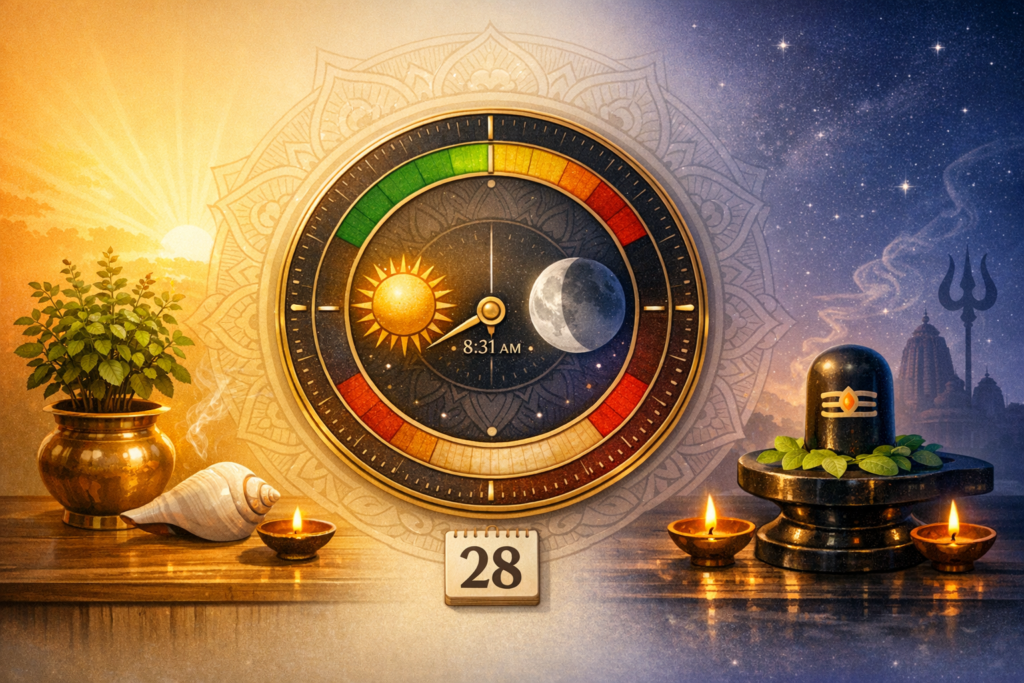
Indian time-reckoning employs two coordinated frameworks. In the solar system, a month is counted from ‘Sankranti’ to ‘Sankranti’ (each solar ingress into a new rashi). In the lunar system, a month is counted from ‘Purnima’ to ‘Purnima’. Pana Sankranti is therefore explicitly a solar New Year for Odisha, inaugurating ‘Baisakh’ even as day-to-day religious observance continues to follow lunar ‘tithi’ for fasts, festivals, and temple schedules.
Astronomically, Mesha Sankramana occurs at the precise instant the nirayana (sidereal) Sun reaches 0° of Aries. Traditional panchangs calculate this using Surya Siddhanta-style models and an ayanamsha offset (commonly Lahiri), while modern drik computations confirm the moment with contemporary ephemerides. Although the tropical equinox falls in March, the sidereal offset places the Odia solar New Year in mid-April. Because ‘Sankranti’ is a moment rather than a full day, observance aligns with whether the ingress occurs before or after local sunrise; regional panjikas in Odisha place the festival on 14 April 2026.
In Odisha the day is widely known as Maha Visuva Sankranti—’Visuva’ recalling traditional notions of balance (vishubha), popularly interpreted as a time when heat rises and water becomes the elemental remedy. Many communities also call it Jala Visuva Sankranti, foregrounding the ethic of ‘jala dāna’ (water charity) to humans, animals, and the land at the onset of the hot season. The epithet Meru Sankranti links the day with Meru yatra observances and the dramatic Danda Nata performance traditions that culminate around this time, honoring both ‘Shakti’ and ‘Surya’.
Ritual manuals prescribe worship during the ‘Punya Kaal’ surrounding the ‘Sankranti’ moment, discouraging inauspicious undertakings at the exact ingress yet encouraging dāna, snāna, and japa in the appropriate window. Because the ingress occurs at different clock times by location, households and temples consult the local ‘Panchang’ for ‘Punya Kaal’ and ‘Mahāpunyakāla’ intervals. In lived practice, temple darshan, ‘Surya arghya’, charitable acts, and ‘pana’ distribution unfold through the forenoon and afternoon, making observance both accessible and faithful to muhurta principles.
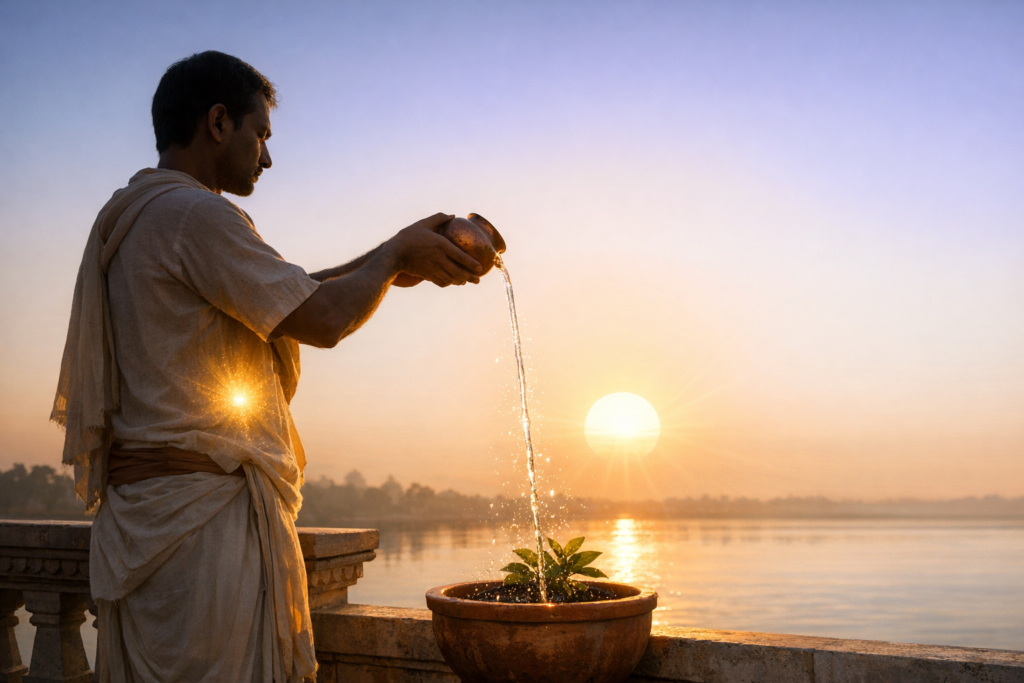
The festival’s defining home rite is the preparation and sharing of ‘Pana’—a cooling, nourishing drink aligned with the needs of ‘grishma’ (the hot season). In its beloved ‘Bela Pana’ form, ripe ‘bela’ (Aegle marmelos/wood apple) pulp is blended with water, jaggery, black pepper, grated coconut, a hint of cardamom, and seasonal fruits; some families enrich it with ‘chenna’ for texture and sweetness. Earthen pots are consecrated and suspended with a tiny perforation so a gentle ‘dhārā’ (stream) of water falls continuously over a ‘Tulasi’ plant or a deity icon—an offering called ‘Basudhāra’ that symbolizes sustaining life and tempering seasonal heat. For many families, the earthy perfume of ‘bela’ and the soft drip from a clay pot evoke courtyard afternoons shaded by mango or neem, weaving memory and meaning into the New Year’s first day.
Temples across Odisha, including the sacred precincts of Lord Jagannath at Puri, observe abhisheka, special naivedya, and ‘pana’ offerings. Village squares host ‘Meru yatra’ gatherings, and in many regions the ascetic-art tradition of Danda Nata concludes with salutations to ‘Shakti’ and ‘Surya’. Beyond formal liturgy, Pana Sankranti energizes community ethics: watering trees, refilling bird baths, and distributing drinks to travelers and laborers—acts of compassion that align with ‘dharma’ at the hottest turn of the year.
Pana Sankranti inaugurates the Odia solar year while the concurrent lunar month proceeds from ‘Purnima’ to ‘Purnima’. This dual usage explains why Odisha’s New Year differs in timing from the lunisolar New Years such as ‘Ugadi’/’Gudi Padwa’ (Chaitra Shukla Pratipada). The coexistence of solar ‘Baisakh’ and lunar ‘tithi’ scheduling exemplifies the Hindu calendar’s integrative logic, where festival timing, agricultural rhythms, temple practices, and monastic computations harmonize across both systems.
Mesha Sankramana is observed across the subcontinent with regional names and flavors—’Vishu’ in Kerala, ‘Puthandu’ in Tamil Nadu, ‘Pohela Boishakh’ in Bengal, ‘Rongali Bihu’ in Assam, and ‘Vaisakhi’ prominent in Sikh tradition. While liturgies differ, each celebrates renewal at the Sun’s entry into Aries, underscoring a shared civilizational intuition that cosmic order (rita) and social ethos refresh together. Emphasizing this unity nurtures harmony among dharmic traditions—Hindu, Buddhist, Jain, and Sikh—through common values of gratitude, service, and reverence for nature.
From an Ayurvedic perspective, ‘Pana’ recipes are seasonally intelligent. ‘Bela’ is tridosha-balancing with a cooling virya; jaggery offers minerals; black pepper supports digestion that can flag in heat; coconut and banana ground vata and sustain energy. Preparing ‘Pana’ with safe, boiled-and-cooled water, favoring earthenware for natural cooling, and avoiding refined sugar maintains health while honoring tradition.
For sustainable practice, clay pots are preferred over plastic for ‘Basudhāra’ to reduce waste and keep water naturally cool. Offering water to trees, animals, and birds as ‘jala dāna’ can be managed with slow, steady drips to prevent wastage while maximizing benefit. If the ‘Sankranti’ moment falls at night locally, major new undertakings are best deferred until the next morning’s ‘Punya Kaal’, in line with muhurta guidance. Sourcing ‘bela’ and other ingredients from local farmers supports rural livelihoods at the agrarian new year, aligning celebration with community wellbeing.
For 2026, Pana Sankranti falls on 14 April across Odisha according to regional panjikas. Those planning temple visits, community service, or family rites may consult the local ‘Panchang’ for exact ‘Punya Kaal’ and align ‘pana’ preparation, ‘Surya arghya’, and ‘Basudhāra’ accordingly. Observed with understanding of its astronomical basis and its ethic of compassion, the Odia New Year becomes both a precise calendrical milestone and a lived practice of solidarity in the heat of ‘Baisakh’.
Inspired by this post on Hindu Pad.