-
Vishu in Kerala: The Astronomical New Year, Sacred Vishukkani, Sadhya, and Dharmic Harmony

Vishu marks the sidereal Sun’s entry into Mesha (Aries) and is cherished in Kerala as an astronomical New Year of vision, renewal, and balance. This in-depth explainer clarifies how almanacs determine Mesha Sankramana, why Vishu is linked to the term vishuvam, and how its rituals translate cosmic order into everyday ethics. Readers will learn the…
-
Vishu’s Timeless Mahatmya: Rituals, Astronomy, and the Soul of Kerala’s New Year

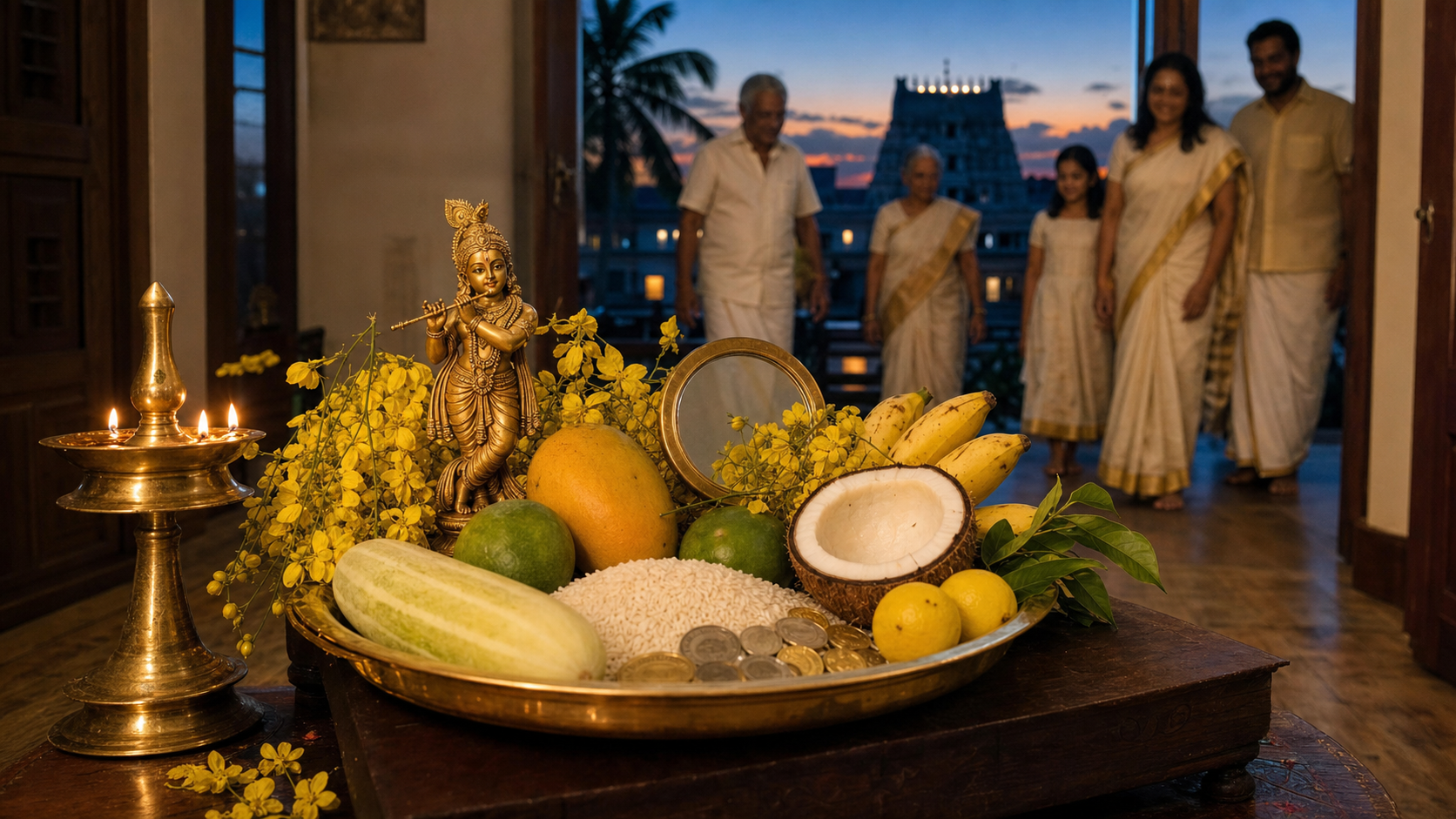
Vishu marks the Kerala New Year at Mesha Sankramana, uniting astronomy, ritual, and community in an auspicious dawn experience. The Vishukkani—lamp, mirror, grain, fruits, coins, and kani konna blossoms—creates a visual theology of light, abundance, and self-reflection. Households practice Vishukkaineetam, extending generosity to children and the wider community as a social ethic for the year…
-
Vishukkani Darshan: Timeless Ritual Science, Solar New Year, and Kerala’s Sacred Abundance

Vishukkani Darshan—Kerala’s sacred first sight on the Solar New Year—unites ritual, ecology, and ethics in a luminous dawn tableau. The arrangement features konna pua, a bronze Uruli with rice, seasonal fruits and vegetables, a nilavilakku, a mirror, gold or coins, and a revered text. Celebrated at Mesha Sankramana (mid-April), it aligns eyes and mind with…
-
Vishu Festival Unveiled: Astronomical New Year of Kerala, Sacred Kani, Kaineettam & Sadya

Vishu, Kerala’s Astronomical New Year, is celebrated at Mesha Sankramana when the Sun enters sidereal Aries, aligning the festival with the first day of Medam in the Malayalam calendar. The hallmark Vishukkani Darshan—an arrangement of uruli, konna blossoms, lamp, coins, sacred text, and mirror—encapsulates prosperity, knowledge, and self-reflection in a single auspicious sight. Vishu Kaineettam…
-
Pana Sankranti 2026 on April 14: Odia New Year’s astronomy, rituals, and dharmic unity

Pana Sankranti on 14 April 2026 marks the Odia New Year (Maha Vishuva Sankranti/Meru Sankranti) and the Sun’s ingress into sidereal Aries (Mesha Sankranti). This long-form guide explains the astronomical basis (sidereal vs tropical frameworks and ayanamsa), clarifies why solar months run from Sankranti to Sankranti while some lunar months run from Purnima to Purnima,…
-
Pana Sankranti 2026 (Odia New Year): A Definitive Guide to Date, Meaning, Rituals, and Science

Pana Sankranti 2026, the Odia New Year, falls on 14 April and begins the solar month of ‘Baisakh’ at Mesha Sankramana. This guide explains the festival’s astronomical basis in the sidereal zodiac, why solar months run ‘Sankranti’ to ‘Sankranti’ while lunar months run ‘Purnima’ to ‘Purnima’, and how regional panjikas determine the observance date. It…
-
Baisakhi 2026 (April 14): Definitive Guide to Khalsa Day, Sikh New Year, and Mesha Sankranti

Baisakhi (Vaisakhi) 2026 falls on Tuesday, 14 April, uniting harvest gratitude in Punjab with the Khalsa legacy of 1699 and India’s wider Mesha Sankramana solar New Year. The day is widely observed as the Sikh New Year within Punjabi solar tradition and the fixed-date Nanakshahi calendar. This definitive guide explains the festival’s history, the Khalsa’s…
-
Maha Vishuba Sankranti 2026: Odia New Year Date, Timeless Rituals, and Shared Dharma

Maha Vishuba Sankranti 2026, the Odia New Year, falls on April 14 and coincides with the Sun’s sidereal ingress into Mesha (Aries). The post explains the astronomical basis for Mesha Sankranti, how precession shapes its mid-April timing, and why local panchang consultation ensures ritual precision. It details core observances such as snana, arghya to Surya,…
-
Baisakhi (Vaisakhi) 2026 on April 14: Sikh New Year, Harvest Joy, and Mesha Sankranti

Baisakhi (Vaisakhi) 2026 falls on April 14 in India, uniting Sikh New Year observances, Khalsa remembrance, and Punjab’s harvest celebrations with the pan-Indian solar milestone of Mesha Sankranti. The date aligns with 1 Vaisakh in the Solar Nanakshahi framework while also intersecting with regional new-year festivals like Puthandu, Vishu, Rongali Bihu, and Maha Vishuva Sankranti.…
-
Vishu Phalam 2026–2027: Definitive Zodiac & Nakshatra Forecasts, Remedies and Auspicious Dates

Vishu Phalam 2026–2027 offers a comprehensive yearly horoscope for all 12 rashis and Nakshatra Phalam from 14 April 2026 to 14 April 2027. Grounded in Mesha Sankramana and the Kerala tradition of Vishu, it explains how predictions are derived using the sidereal zodiac, Panchanga, and key transits. The guide summarizes the planetary backdrop (Saturn in…
-
Chithirai Vishu (Puthandu) 2026: Auspicious Mesha Sankranti Time, Rituals, Meaning, and Unity

Chithirai Vishu, also known as Puthandu and Varusha Pirappu, falls on 14 April 2026 and aligns with Mesha Sankranti, the Solar New Year in the sidereal system. The exact Mesha Sankramana punyakalam is at 9:25 AM IST, opening Parabhava Varusha (2026–2027) in the 60-year Samvatsara cycle. The day integrates astronomical precision with household and temple…