-
Chingam 1, 2026: Powerful Guide to Malayalam New Year and Kollavarsham 1202

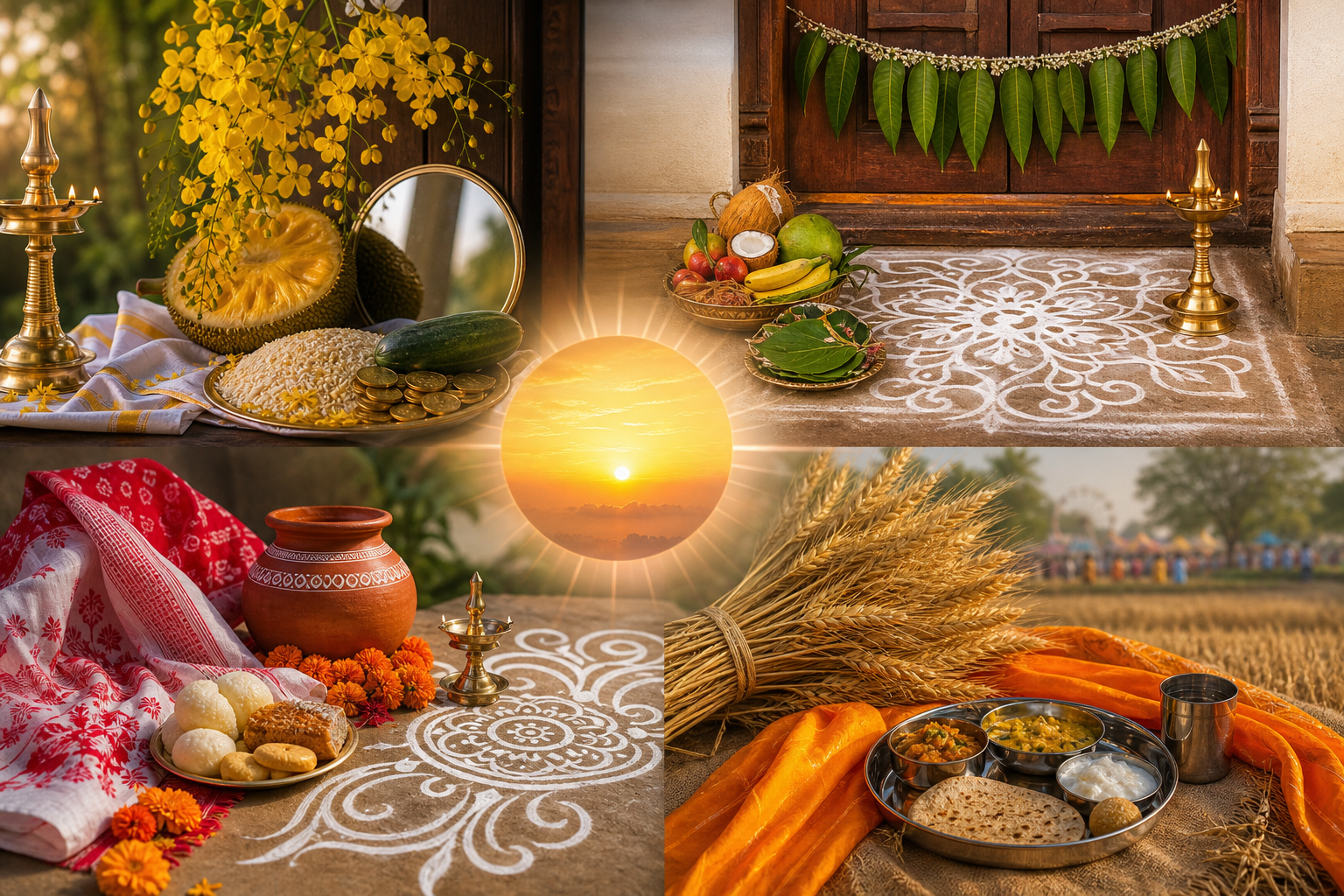
Chingam 1 in 2026 falls on August 17 and marks the beginning of Chingam month in the Malayalam calendar. It also opens Kolla Varsham 1202, the Malayalam New Year cycle for 2026-2027 in the Kollavarsham system. The day is connected with the Sun’s transition into Chingam rasi or Simha rasi from Karkidakam rasi or Karka…
-
Kerala’s Vishu Poster Uproar: Multiple FIRs, Arrests, and a Roadmap for Interfaith Harmony

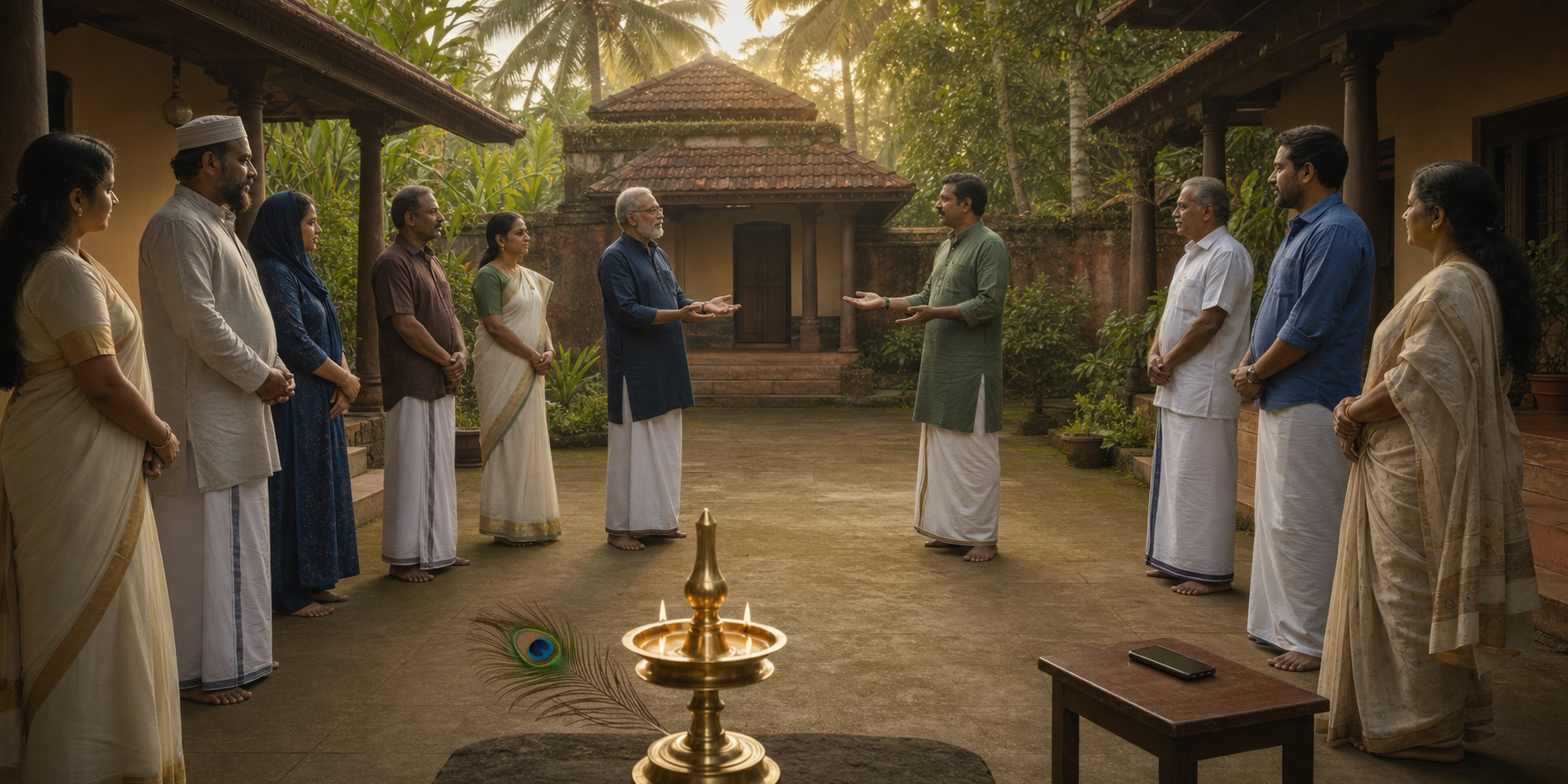
Kerala’s Vishu poster controversy began in Alappuzha and spread to other districts, including Malappuram, after an advertisement depicted Lord Krishna with a non-vegetarian dish. Multiple FIRs were registered and three individuals were arrested as police opened investigations into potential offences concerning religious sentiments and public order. This analysis situates the episode within India’s constitutional framework,…
-
Kerala Vishu Poster Furor: Chicken Mandi Before Shri Krishna Spurs Arrest, Harmony Lessons

A Vishu greeting poster from a Kerala restaurant that placed chicken mandi before an image of Shri Krishna triggered public outcry and a police arrest, spotlighting the high sensitivity of sacred symbols in India. The analysis explains why Vishukkani Darshan, vegetarian naivedya, and South Asian visual grammar made the imagery read as an offering, not…
-
Margazhi’s Quiet Power: Chennai Music Season, Bharatanatyam, and Vishu Across Continents

Margazhi (Mārgaśīrṣa) transforms the year’s close into a contemplative and artistic season, celebrated in Chennai’s Music Season and echoed by diaspora communities such as Sacramento’s 2025 Margazhi festival. The month’s Vaishnava and Shaiva observancesTiruppavai, Pavai Nombu, Vaikuntha Ekadasi, and Arudra Darshanambalance rigorous sadhana with living culture, from kolam to Bharatanatyam. A case study of marking…
-
Vishu in Kerala: The Astronomical New Year, Sacred Vishukkani, Sadhya, and Dharmic Harmony

Vishu marks the sidereal Sun’s entry into Mesha (Aries) and is cherished in Kerala as an astronomical New Year of vision, renewal, and balance. This in-depth explainer clarifies how almanacs determine Mesha Sankramana, why Vishu is linked to the term vishuvam, and how its rituals translate cosmic order into everyday ethics. Readers will learn the…
-
Vishu in Chennai: A Definitive Temple Guide to Vishukkani, Kaineettam, and Sunrise Darshan

Vishu in Chennai blends Kerala-style dawn rituals with the city’s broader new-year celebrations, offering a rare opportunity to experience Vishukkani, Usha pūjā, and Vishu Kaineettam alongside Puthandu observances. This guide explains the astronomical basis of Vishu (Mesha Sankramana), outlines what to expect during early-morning darshan, and highlights key temples such as Sri Ayyappan Guruvayurappan Temple…
-
Boishakh Mash 2026, Bengali Calendar 1433: Dates, Poila Boishakh 2026, Rituals, and Dharmic Unity

Boishakh Mashalso known as Baisakh or Baishakhopens Bengali Calendar 1433 in mid-April 2026, setting the cultural and seasonal tone for West Bengal and Bangladesh. This guide clarifies region-specific dates (15 April–15 May in West Bengal; 14 April start in Bangladesh), explains the sidereal solar mechanics behind Mesha Saṅkrānti, and shows how time zones and civic…
-
Vishu’s Timeless Mahatmya: Rituals, Astronomy, and the Soul of Kerala’s New Year

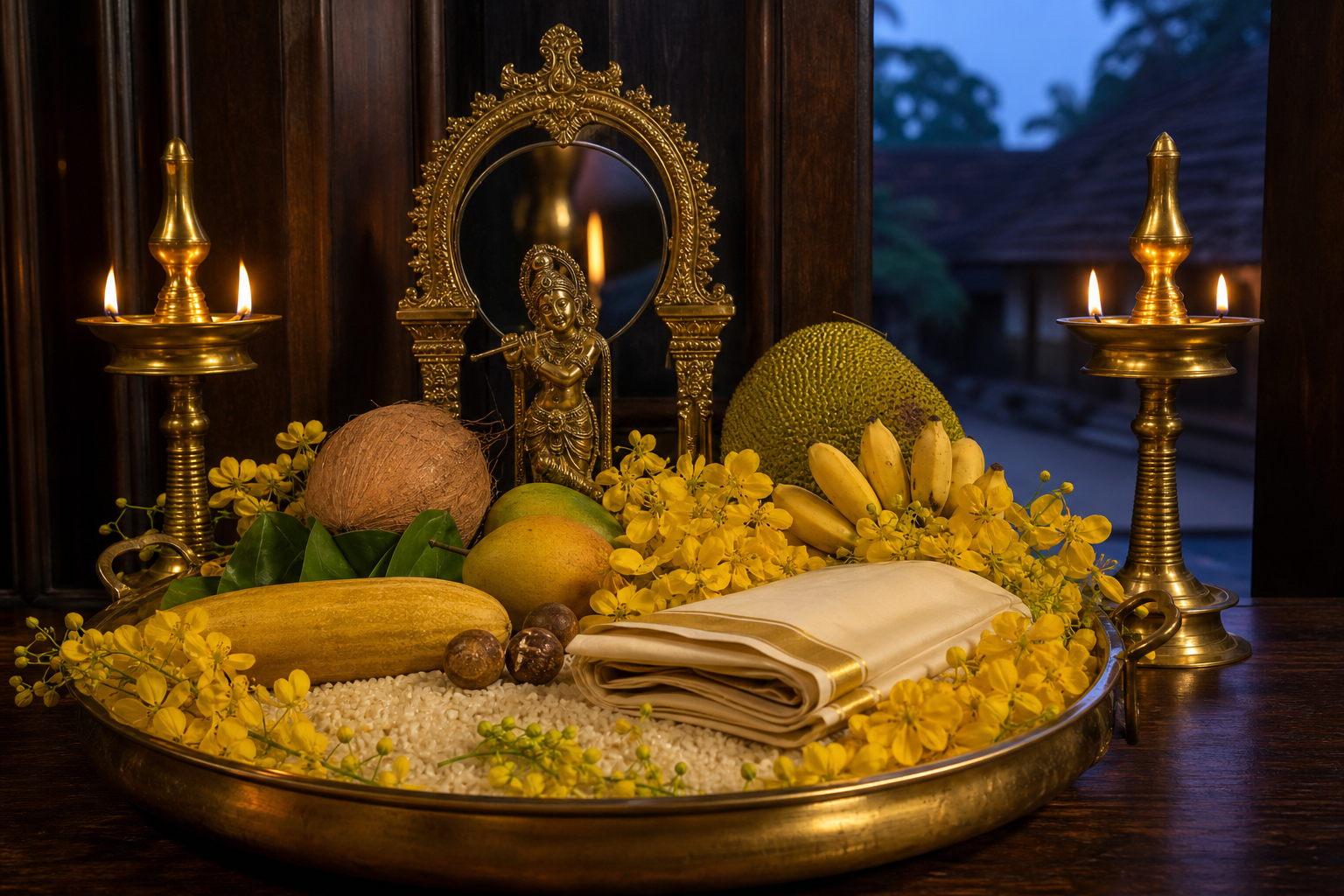
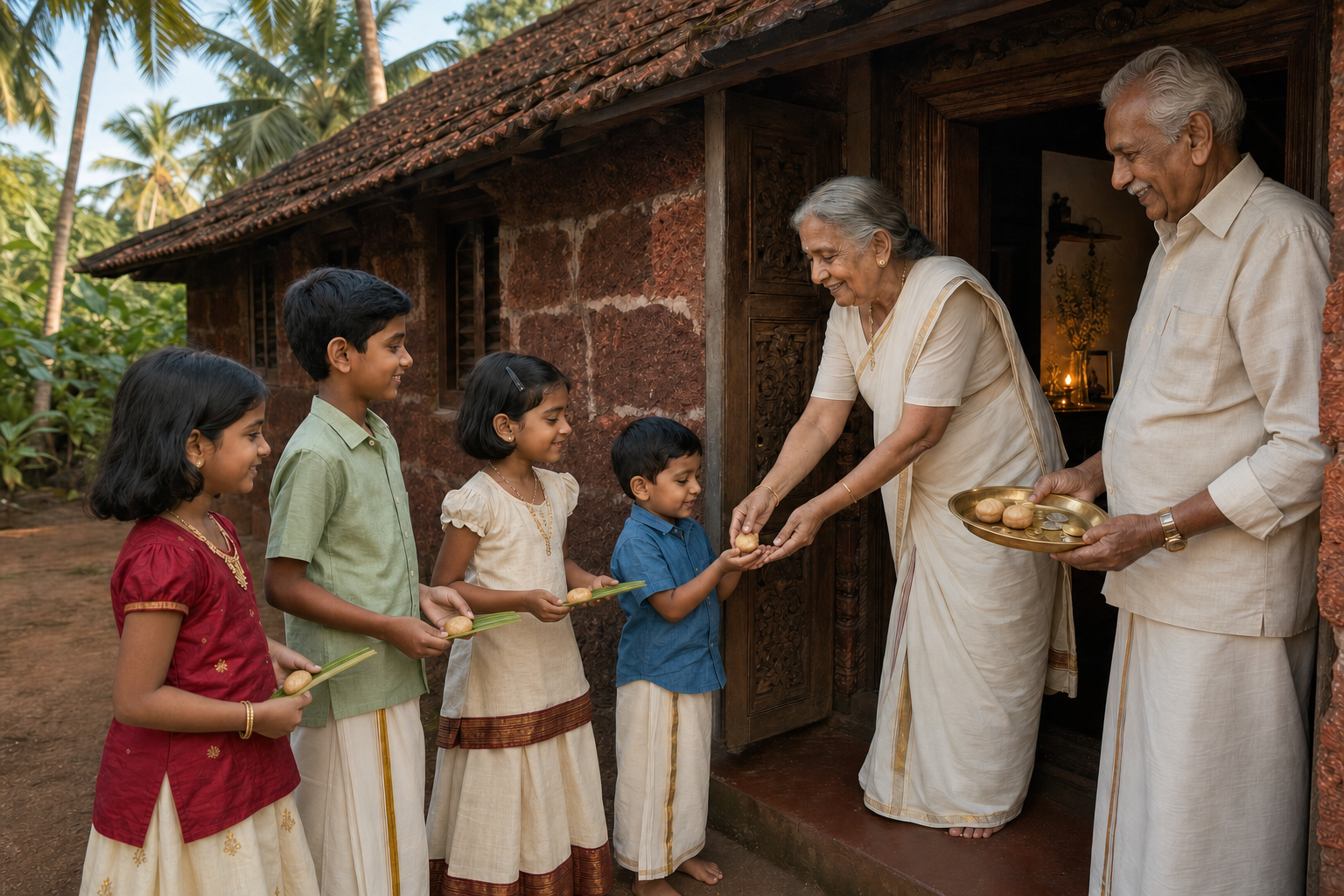
Vishu marks the Kerala New Year at Mesha Sankramana, uniting astronomy, ritual, and community in an auspicious dawn experience. The Vishukkanilamp, mirror, grain, fruits, coins, and kani konna blossomscreates a visual theology of light, abundance, and self-reflection. Households practice Vishukkaineetam, extending generosity to children and the wider community as a social ethic for the year…
-
Vishu in Chennai: Essential Temple Guide with Vishukkani Darshan, Pujas, and Travel Tips

Vishu in Chennai brings Kerala-style Vishukkani Darshan together with citywide New Year darshan during Chithirai Masam, often coinciding with Tamil Puthandu. This guide explains the astronomical basis of Vishu (Mesha Saṅkramaṇa), details the Vishukkani ritual, and highlights temples known for pre-dawn Vishu observances. It spotlights Sri Ayyappan–Guruvayurappan (Mahalingapuram), Sree Ayyappa (R.A. Puram), and Sri Anantha…
-
Radiant Konna Poo in Vishu: Botany, Bloom Cycles, and Sacred Symbolism in Kerala

Konna poo, the golden raceme of Cassia fistula, anchors the Vishukkani Darshan of Vishu by aligning seasonal bloom with sacred symbolism. This comprehensive overview explains the tree’s botany and phenology, showing why its peak flowering in mid-April so precisely matches Kerala’s new year observances. Readers will find a clear account of the Vishukkani arrangement and…
-
Vishukkani Darshan: Timeless Ritual Science, Solar New Year, and Kerala’s Sacred Abundance

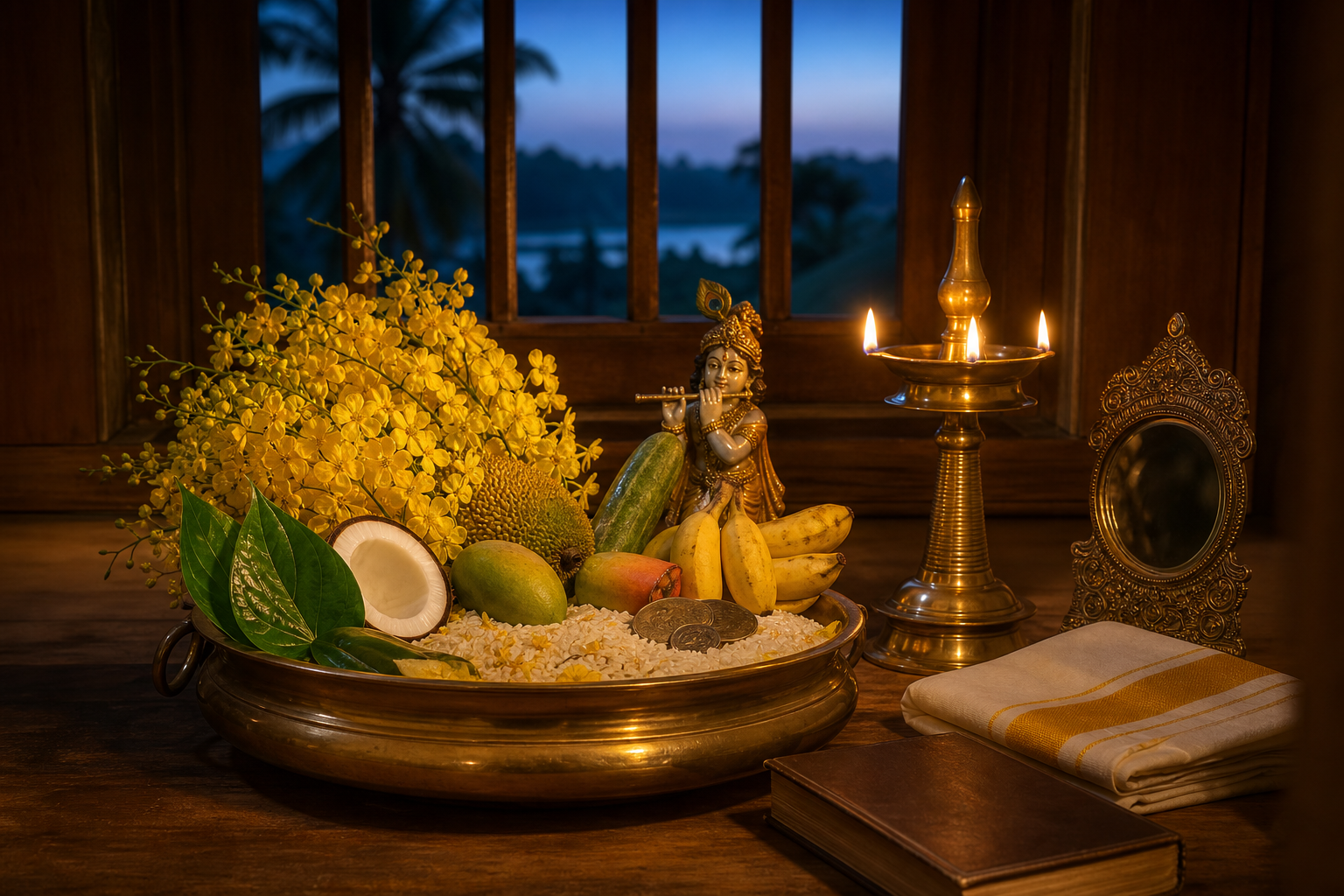
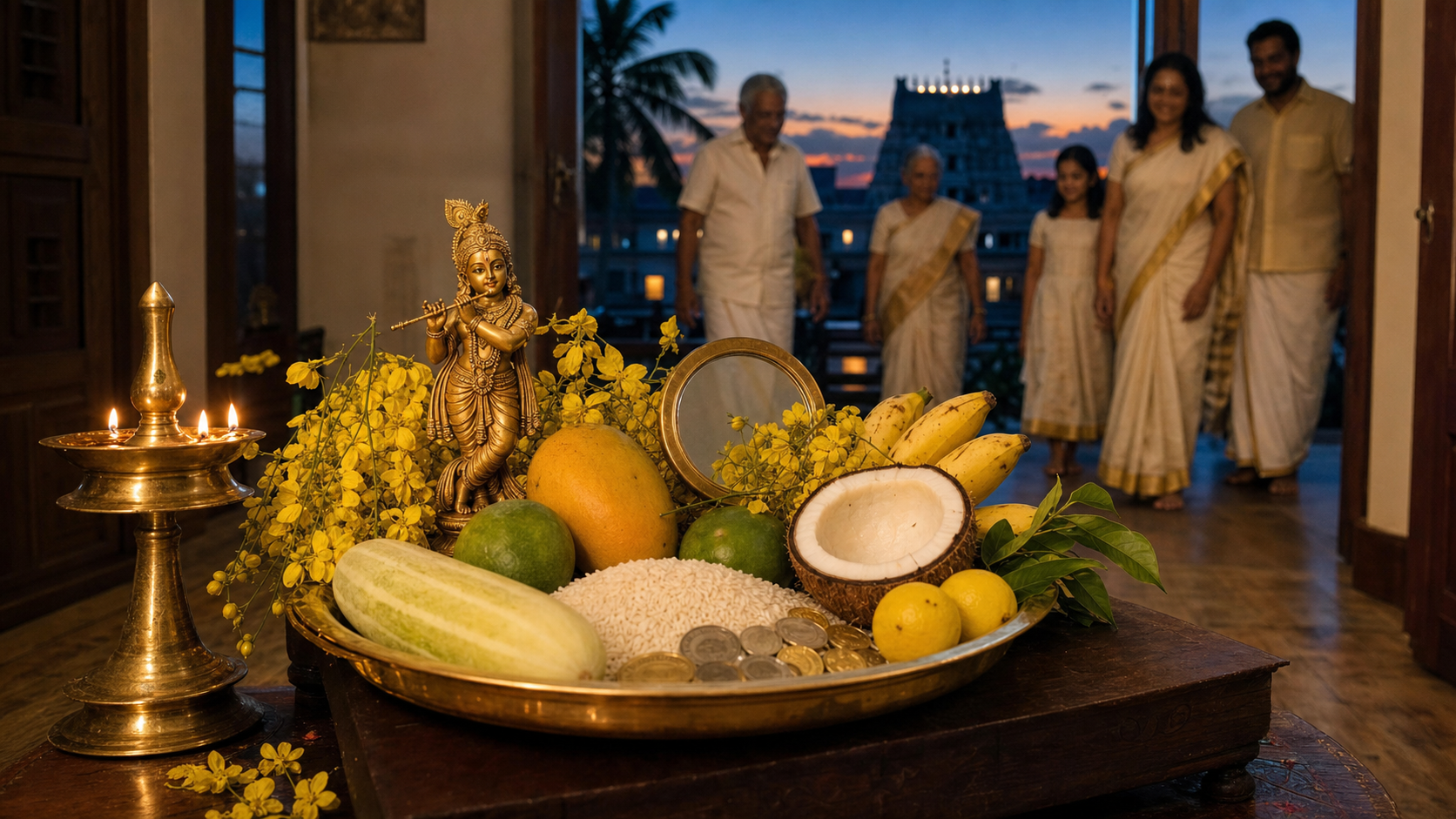
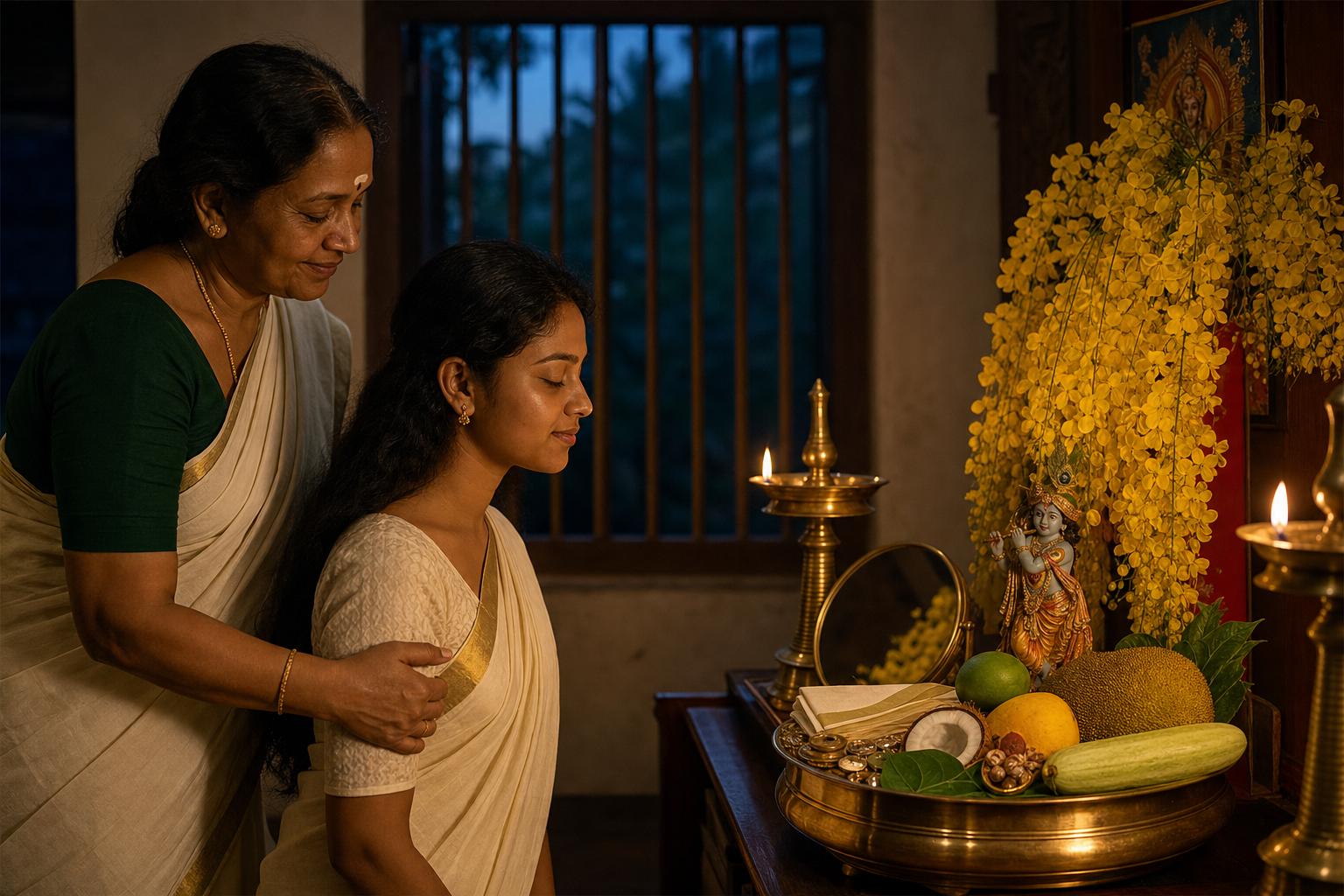
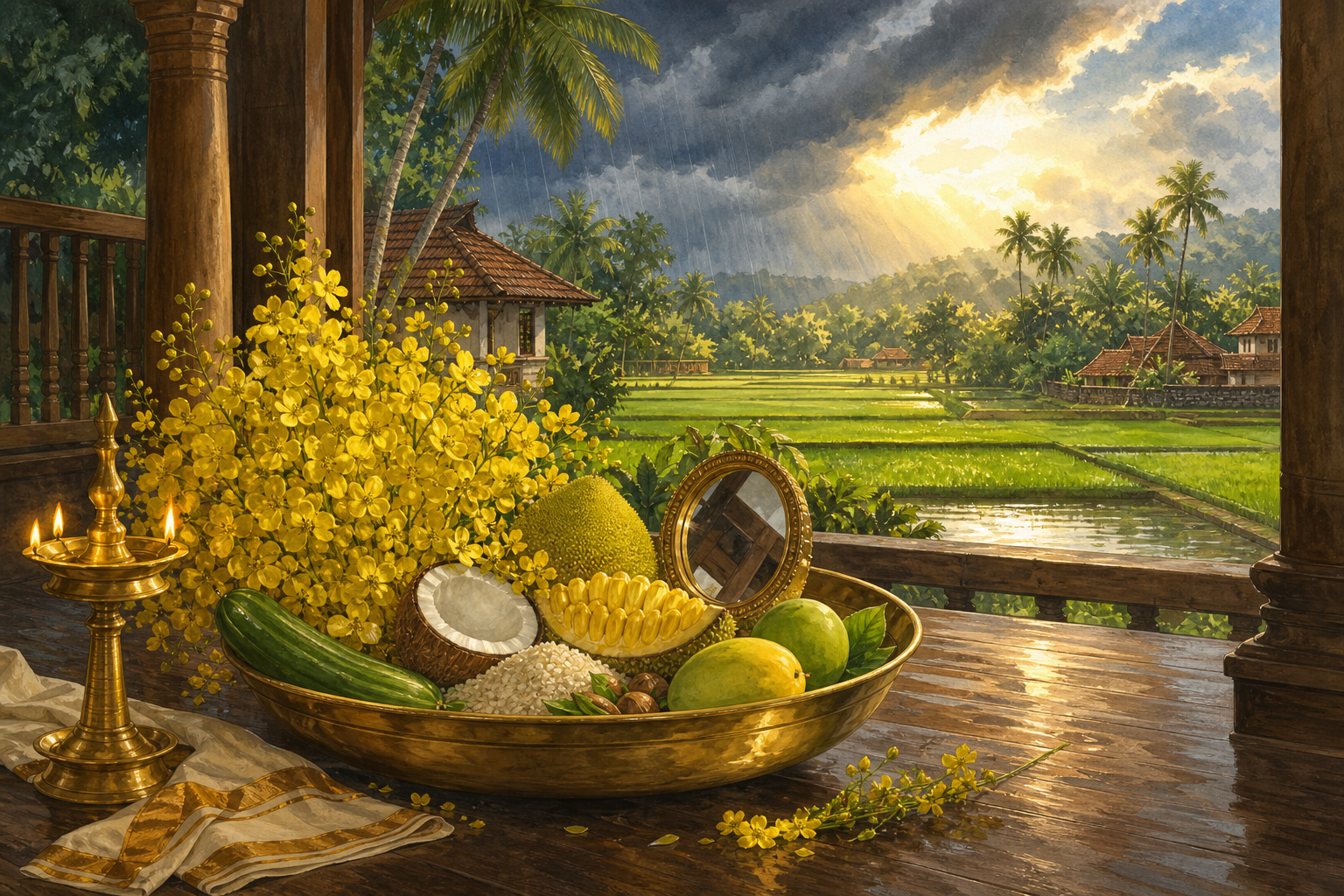
Vishukkani DarshanKerala’s sacred first sight on the Solar New Yearunites ritual, ecology, and ethics in a luminous dawn tableau. The arrangement features konna pua, a bronze Uruli with rice, seasonal fruits and vegetables, a nilavilakku, a mirror, gold or coins, and a revered text. Celebrated at Mesha Sankramana (mid-April), it aligns eyes and mind with…
-
Vishu Kanji & Vishu Katta: Authentic Kerala Vishu Breakfast, Ritual Meaning, and Recipe Guide

This long-form guide clarifies the cultural and culinary essence of Vishu Kanji and Vishu Katta, the traditional Kerala breakfast served after Vishukkani Darshan on Vishu. It explains how both dishes share core ingredientsunakkalari or pacha ari, fresh grated coconut, cumin, and saltwhile diverging in texture through different liquid ratios and techniques. A detailed, time-efficient workflow…
-
Vishu Festival Unveiled: Astronomical New Year of Kerala, Sacred Kani, Kaineettam & Sadya

Vishu, Kerala’s Astronomical New Year, is celebrated at Mesha Sankramana when the Sun enters sidereal Aries, aligning the festival with the first day of Medam in the Malayalam calendar. The hallmark Vishukkani Darshanan arrangement of uruli, konna blossoms, lamp, coins, sacred text, and mirrorencapsulates prosperity, knowledge, and self-reflection in a single auspicious sight. Vishu Kaineettam…
-
Konna Poo (Cassia fistula) in Vishu: Science, Sacred Symbolism, and Sustainable Tradition

Cassia fistula (Konna poo/Kanikkonna), the golden shower tree, blooms in perfect synchrony with Vishu, anchoring the Vishukkani in Kerala with its luminous racemes. This comprehensive guide explains its taxonomy, morphology, native range, and seasonal ecology, then connects those facts to the solar new year’s symbolism in the Malayalam calendar. Readers learn how the golden hue…
-
Vishukkani Darshan Unveiled: Meaning, Muhurta, and Complete Setup for a Prosperous Vishu

Vishukkani Darshan is the sacred “auspicious sight” that inaugurates Vishu, the Malayalam solar New Year, by presenting a curated ensemble of light, abundance, and devotion. This comprehensive guide explains what Vishukkani is, when it is celebrated (on Mesha Sankranti, typically 14–15 April), and why each componentkonna pua, the ‘Uruli’ of rice, fruits, vegetables, lamp, mirror,…
-
Vishu Kanji & Vishu Katta: Authentic Kerala New Year BreakfastHistory, Method, and Meaning

Vishu Kanji and Vishu Katta anchor the Vishu morning in Kerala with a sattvic, auspicious breakfast rooted in simplicity and seasonality. Drawing on raw rice, abundant fresh coconut, cumin, and a restrained use of salt, both dishes can be prepared within one hour. Vishu Kanji is a silken coconut–rice porridge, while Vishu Katta is a…
-
Vishu Festival Rituals and Customs: A Complete Guide to Vishukkani, Kaineettam, and Sadya

Vishu, Kerala’s astrological New Year, is observed on the first sunrise after Mesha Sankramana and centered on the sacred first sight called Vishukkani. This comprehensive guide explains the astronomy behind timing, clarifies the distinction between Vishu and the Malayalam civil new year, and details how to assemble the Vishukkani with nilavilakku, uruli, kani konna, grains,…
-
Vishukkani Vili in North Malabar: Living Heritage of Vishu, Community Joy, and Generous Giving

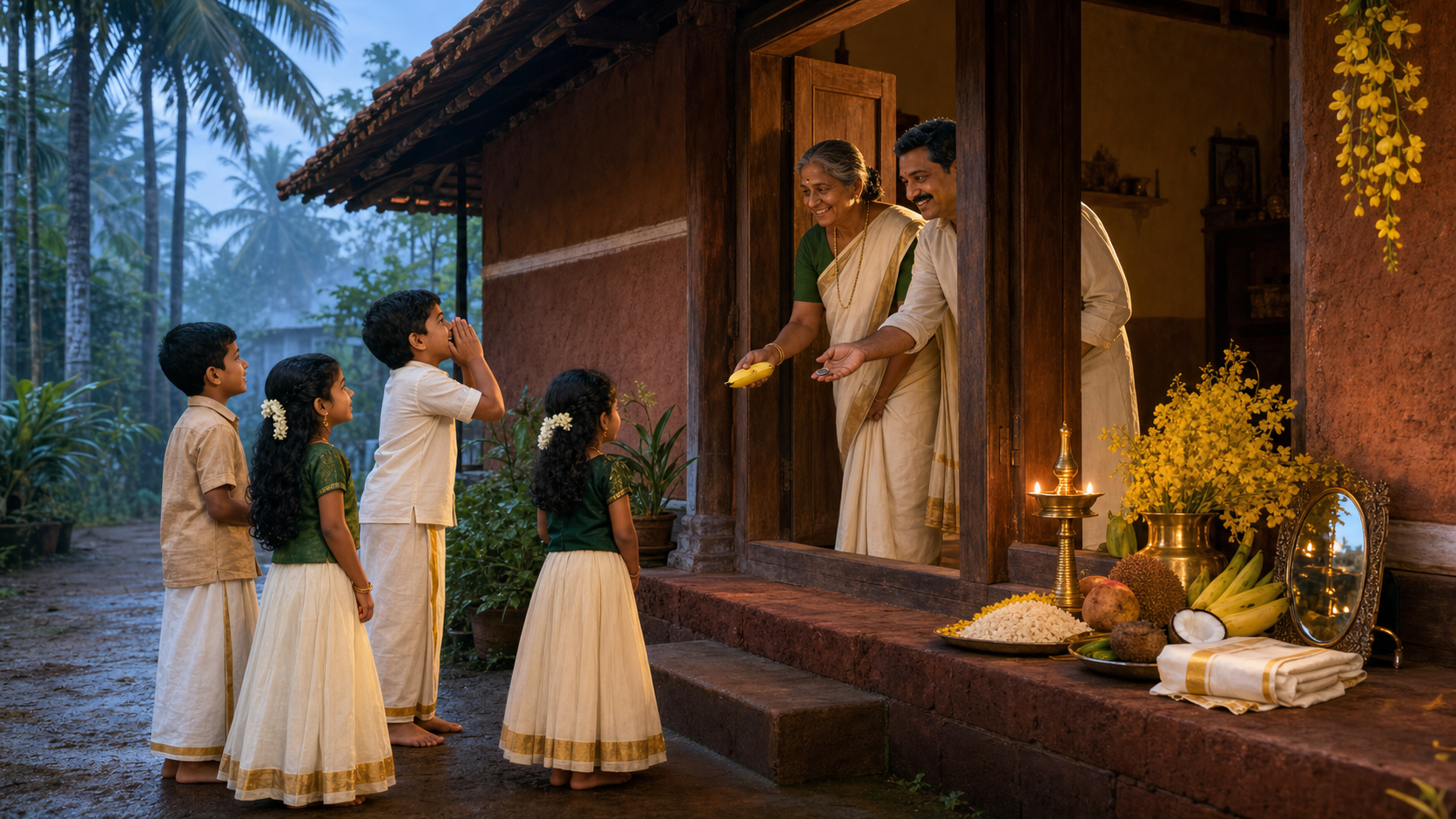
Vishukkani Vili is a living folk tradition of Vishu in North Malabar, Kerala, where children move door to door calling ‘vishukaniye, vishukaniye’ and receive Vishukkaineettam as blessings. Rooted in the dawn viewing of the Vishukkani, the practice turns private auspiciousness into a shared neighborhood experience. The custom strengthens intergenerational ties, teaches dana (giving) and reciprocity,…