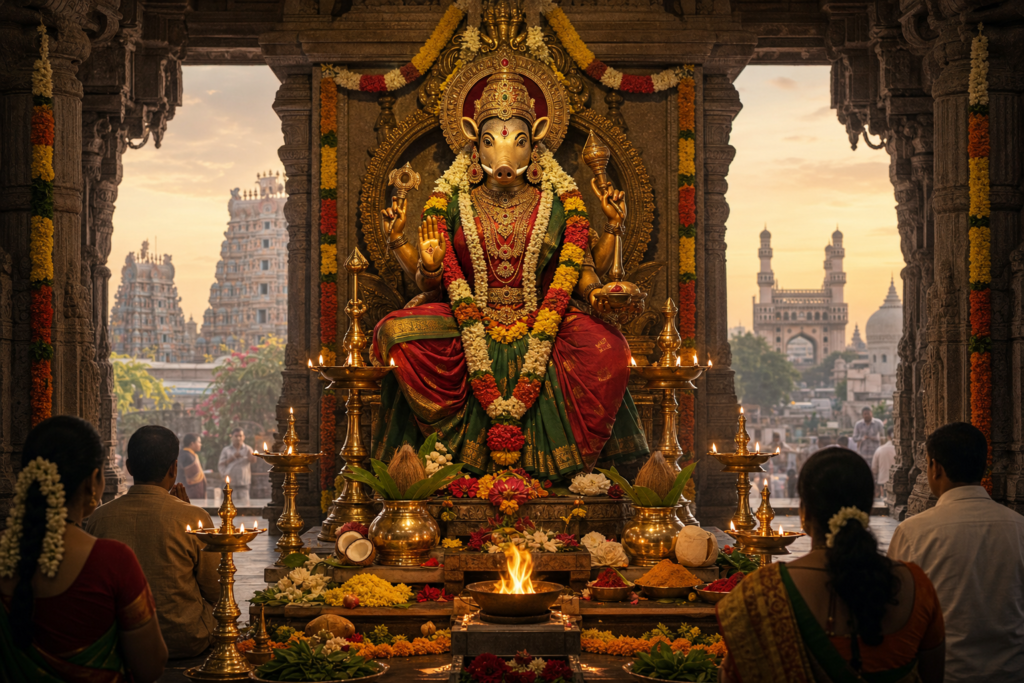
Masik Shivaratri is observed each month on Krishna Paksha Chaturdashi, the lunar day preceding Amavasya (No Moon), and is regarded as an especially auspicious time for Shiva Puja. In 2026, devotees can plan monthly observances around this tithi to align worship, fasting (vrata), and meditation with the night traditionally dedicated to inner stillness and devotion to Shiva.
Maha Shivaratri is observed on Masa Shivratri in Magh month as per Marathi, Gujarati, Telugu, and Kannada Calendars. This convention reflects regional calendrical practices and helps explain why festival listings may appear different across almanacs despite referring to the same lunar principle.
Across traditions, devotees commonly mark Masik Shivaratri with evening or late-night worship, mantra japa (often “Om Namah Shivaya”), quiet contemplation, and offering Bilva patra, water, and milk to the Shiva Linga. Many households observe a fast tailored to health and capacity, breaking it after the night vigil. The emphasis remains on simplicity, satvik food when taken, and an atmosphere conducive to silence and reflection.
Experientially, many practitioners describe the monthly rhythm of Masik Shivaratri as grounding and restorative. Preparing the altar, lighting a lamp, and keeping vigil through the quiet hours fosters concentration and emotional balance. Even those new to the vrata often find that monthly observance builds gentle discipline, steadies the breath and mind, and brings a felt sense of proximity to Shiva’s grace.
Regional calendars can influence how dates are listed. Differences between Amanta and Purnimanta month reckonings, local sunrise and moonset timings, and time-zone offsets for the diaspora mean that published dates may vary. For accuracy, it is advisable to verify the exact Krishna Paksha Chaturdashi for one’s location in a trusted regional Panchang or through a nearby temple’s schedule, especially for 2026 observances.
The spirit of Masik Shivaratriinner restraint, compassion, and meditative awarenessresonates across dharmic traditions of Hinduism, Buddhism, Jainism, and Sikhism. Families often integrate shared practices such as silence, mindful reading of sacred texts, or seva (service), creating a unifying space that honors multiple paths while nurturing a common ethic of self-discipline and reverence.
For planning, marking each month’s Krishna Paksha Chaturdashi in advance supports steady practice. Simple preparationscollecting Bilva leaves respectfully, arranging a clean puja space, and choosing a sustainable, minimal offeringhelp keep the focus on devotion rather than display. Where health permits, a light or partial fast can be undertaken; otherwise, a food sattva-focused approach and mindful hydration maintain the vrata’s intention without strain.
In 2026, approaching each Masik Shivaratri as a monthly immersionstudy, japa, and silent prayercan deepen the experience of Maha Shivaratri when it arrives in Magh. By aligning with the lunar cycle and adapting observances to local calendars, devotees sustain a year-long arc of contemplation that is both personally meaningful and harmonizing within the larger dharmic family.
Inspired by this post on Hindu Pad.