Hanuman Jayanti Upvaas in 2026 falls on 1 April 2026 and, in most regions of India, is aligned with Chaitra Shukla Chaturdashithe lunar day preceding Hanuman Jayanti where the festival is observed on Chaitra Purnima. This observance is widely kept as a sunrise-to-sunset fast (upvaas) dedicated to Shri Hanuman, honoring the ideal of unwavering devotion, strength, and service (seva) exemplified in the Ramayana’s Sundara Kanda.
Upvaas is traditionally undertaken on the day before Hanuman Jayanti to purify the mind and prana (vital energy), deepen focus on japa and parayana (recitations), and prepare for the full festive worship of the following day. Many devotees maintain a complete fast, while others follow a phalahar (fruit- and milk-based) or a light saatvik regimen, always avoiding onion and garlic. The fast is generally concluded (parana) after sunset with prasad.
Panchang specifics and regional calendars can produce variations in date and observance. While the Upvaas on 1 April 2026 corresponds to Chaitra Shukla Chaturdashi in many North Indian traditions, some regions celebrate Hanuman Jayanti in other months based on local customs (for example, certain South Indian calendars observe Hanuman Jayanti in Margazhi/Dhanu connected to Moola Nakshatra, or on alternate tithis). As with all tithi-based observances, devotees are advised to confirm local sunrise-based calculations with a trusted Panchang or nearby temple.
The spiritual rationale of the Upvaas centers on cultivating bala (inner strength), buddhi (clarity), and dhairya (fortitude)virtues Shri Hanuman embodies. Devotees often describe a marked sense of composure, courage, and devotional focus by sunset, particularly when the fast is accompanied by mindful breath awareness and steady recitation. The discipline of fasting is also a unifying dharmic practice, resonant with the broader ethos of self-restraint and compassion cherished across Hinduism, Buddhism, Jainism, and Sikhism.
Suggested Sankalp (intention) before beginning the fast may be articulated in one’s own language, committing to observe Hanuman Jayanti Upvaas on Chaitra Shukla Chaturdashi for spiritual purification, devotion to Shri Rama and Shri Hanuman, and the welfare of all beings. A concise resolve focusing on truthfulness, ahimsa, and seva sharpens the day’s meditation and aligns action with purpose.
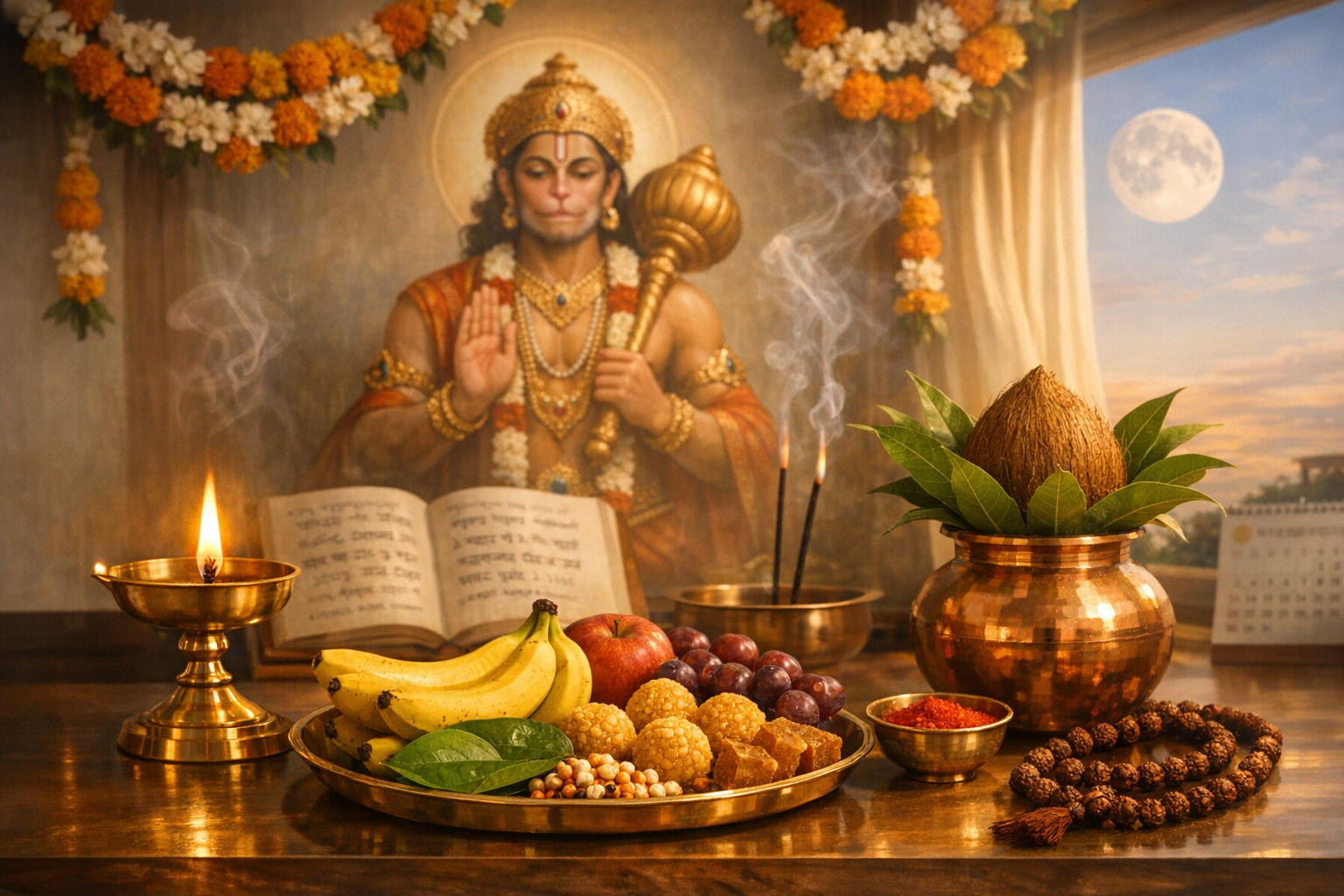
Vrat Vidhi (step-by-step): After a pre-dawn bath, the worship space is cleaned and made simple but auspicious. A photo or murti of Shri Hanuman (or of Shri Rama with Sita, Lakshmana, and Hanuman) is placed on a clean altar. A lamp with oil or ghee is lit, and incense is offered. Red or orange flowers, especially jasmine and marigold, are considered favorable. Traditional offerings include sindoor (vermilion), betel leaves, bananas, boondi or besan laddus, roasted gram (chana), and jaggery, as locally followed.
Recitation and parayana: The Hanuman Chalisa is most widely recited, often in multiples of 11, 21, or 108based on individual capacity. Many also undertake a Sundara Kanda parayana (continuous or segmented), chant the Maruti Stotra (popular in Maharashtra), or recite the Hanumat Kavach. Soft, attentive japa on the divine name of Rama or “Sri Ram Jai Ram Jai Jai Ram” in remembrance of Hanuman’s unwavering bhakti is equally suitable.
Seva and dana: In the spirit of Hanuman’s service, devotees frequently complement the Upvaas with acts of charityoffering annadanam (food distribution), supporting temple activities, or assisting those in need. If feeding animals is customary locally, do so mindfully and responsibly, in coordination with approved community practices and without disturbing wildlife.
Types of fasting observed on this day include: nirjala (without water), which is rigorous and should only be attempted by experienced practitioners in good health; phalahar, which includes fruits, milk, and water; and a single saatvik meal (ek-bhojan) taken before sunrise or after sunset, depending on local tradition. Hydration with water (and, where appropriate, milk) is recommended for most householders unless one has a clear and safe practice regimen.
Parana (breaking the fast) is generally performed after sunset with simple prasad such as fruit, a small piece of ladoo, or roasted gram, followed by a light saatvik meal if needed. Many conclude with a brief thanksgiving to Shri Hanuman, reflecting on the day’s inner discipline and rededicating the fruits of the Upvaas to the well-being of family, community, and all beings.
Nourishment guidelines during Upvaas emphasize purity and simplicity. Common inclusions are seasonal fruits, soaked nuts, milk or buttermilk, and upvaas-friendly preparations made from ingredients such as sabudana, rajgira (amaranth), kuttu (buckwheat), or singhada (water chestnut) flouradhering to one’s family and regional rules. Tea and coffee are often avoided to maintain sattva and steady attention, though practices differ by household.
Health considerations: Individuals managing medical conditions (such as diabetes, pregnancy, chronic illness, or those on regular medication) should adapt the fast under medical guidance. Children, the elderly, and those engaged in strenuous labor may keep a gentler phalahar or ek-bhojan approach. The dharmic principle remains intention and mindfulness over rigid austerity for those to whom it is unsafe.
From a yogic and philosophical perspective, this Upvaas harmonizes prana and steadies the mind. Shri Hanumanrevered as Vayuputrasymbolizes mastery of pranic energy coupled with humility and discernment. Practices such as slow, conscious breathing and steady mantra japa on this day help align the subtle energies, encouraging resilience (dhairya), clarity (buddhi), and compassionate action (seva) in daily life.
The observance also highlights dharmic unity: fasting as mindful discipline, scriptural recitation, and acts of service are shared values across Hinduism, Buddhism, Jainism, and Sikhism. Emphasizing these common foundations nurtures mutual respect and cohesive community life, while allowing each tradition to honor its own liturgy, symbols, and methods of practice.
Common questions arise regarding what nullifies a fast and how strictly to observe food rules. In general, intention and adherence to one’s family sampradaya guide practice. If an inadvertent lapse occurs, devotion can be maintained through additional japa, charity, or extra recitation in the evening. The spirit of the Upvaasreverence, restraint, and serviceremains central.
A practical schedule for 1 April 2026 might include: pre-dawn bath and Sankalp; morning puja and Hanuman Chalisa; midday quiet study or listening to Sundara Kanda; late-afternoon lamp lighting and concluding recitations; and post-sunset parana with simple prasad. Where feasible, participate in temple aarti or satsang to anchor the day in community worship and seva.
Eco-conscious observance enhances the sanctity of the day: prefer oil or ghee lamps in reusable holders, minimize single-use plastics in offerings, and share prasad mindfully to avoid waste. Thoughtful choices align devotional practice with care for the wider living worldanother core dharmic value.
Summary: Hanuman Jayanti Upvaas 2026 on 1 April (Chaitra Shukla Chaturdashi) is a focused period of fast, prayer, and service observed from sunrise to sunset in most regions. Exact local observance should be confirmed with a reliable Panchang, noting regional calendars. With clear intention, appropriate dietary discipline, recitations such as Hanuman Chalisa and Sundara Kanda, and acts of seva, devotees engage Hanuman’s ideals of strength, wisdom, and humilityvalues that deepen personal resilience and foster unity across dharmic traditions.
Inspired by this post on Hindu Pad.