Hanuman Deeksha, popularly called Anjaneya Maala, is a time-bound vrata practiced with disciplined devotion across Andhra Pradesh and Telangana. In 2026, the traditional observance window begins on April 2 and concludes on May 12, allowing devotees to undertake 11-day, 21-day, or 41-day Deeksha spans according to personal capacity and guidance received at local Hanuman temples. The practice is especially vibrant at Kondagattu Hanuman Temple (historically associated with Karimnagar district, now in Jagtial) and at Sri Maddi Anjaneya Swamy Temple near Jangareddigudem in West Godavari (locally referenced as Guruvindagudem/Guravaigudem), where community padayatras, collective parayana, and elaborate visarjana offerings shape the sacred season.
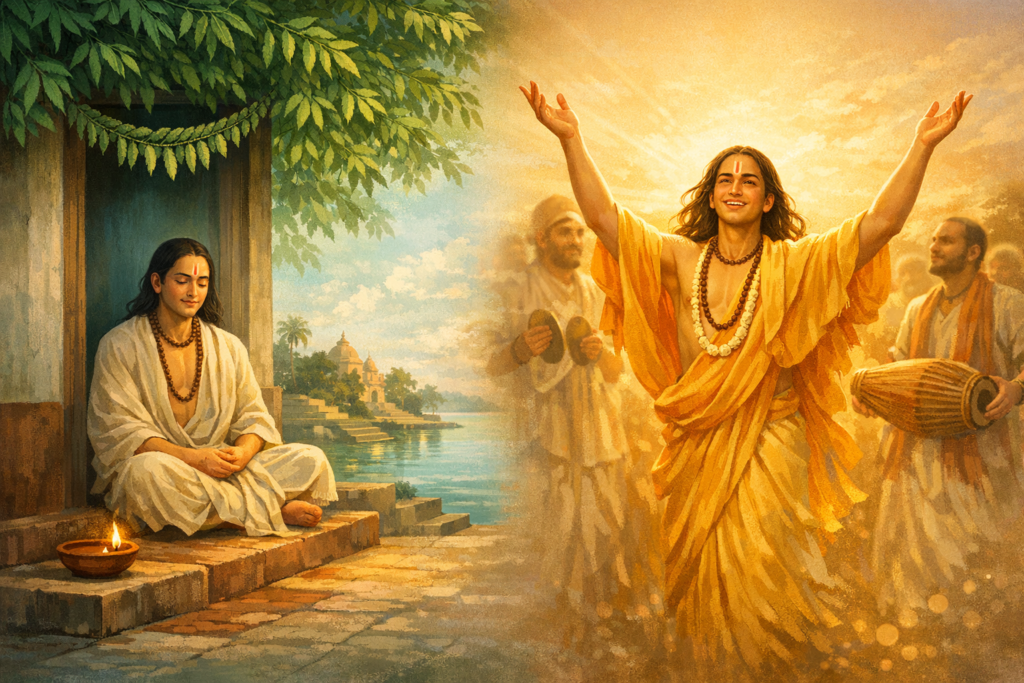
Deeksha in the dharmic lexicon denotes a consecrated vow—an intentional, time-bound commitment to spiritual discipline (niyamas) governed by modesty, restraint, and service (seva). In this tradition, the Anjaneya Maala—usually a sanctified neck garland of tulasi, rudraksha, or wooden beads—publicly marks the resolve to live with heightened purity, simplicity, and remembrance (smarana) of Sri Anjaneya Swamy. The mala is typically donned (mala dharana) at a Hanuman shrine under a priest’s guidance and respectfully removed (mala visarjana) upon completion of the vow, often after darshan and special archana/abhisheka to Hanuman.
For 2026, the principal time markers are practical as well as devotional. With an April 2 start, the three commonly observed spans resolve approximately as follows: an 11-day Deeksha would complete around April 12, a 21-day Deeksha around April 22, and a 41-day Deeksha on May 12. Counting conventions can vary by temple or family tradition; devotees generally follow the guidance of the initiating priest or local sampradaya. In many communities, the conclusion is intentionally aligned close to regional Hanuman Jayanti observances in the Vaishakha cycle, though local calendars may differ between Chaitra Purnima and Vaishakha dates.
While Hanuman Deeksha is undertaken statewide, two centers have attained special prominence. Kondagattu Hanuman Temple draws large padayatra groups and family sabhas who undertake collective niyamas, evening bhajans, and Sundara Kanda parayana. At Sri Maddi Anjaneya Swamy Temple near Jangareddigudem (West Godavari), the Anjaneya Maala tradition is equally resonant, with well-attended abhishekam schedules, community annadanam, and structured visarjana procedures that support both first-time and experienced participants.
The core niyamas practiced during Hanuman Deeksha are widely shared across sampradayas, even as exact prescriptions vary by guru or temple: a strict sattvic vegetarian diet (often onion- and garlic-free), abstention from alcohol and tobacco, celibacy and speech discipline, early rising with snana (purificatory bath), daily Hanuman worship at home or temple, and a dedicated period of japa and stotra/parayana. Many keep Tuesdays and Saturdays as special vrata days for intensified sadhana, while some observe partial fasting (upavasa) or ekabhukta (one main meal) based on health and guidance.
Dress and external markers reinforce inner resolve. Devotees commonly wear saffron/kesari or red attire, apply sinduram or kumkum on the forehead (and sometimes a thin streak across the eyebrows), and keep footwear usage minimal or strictly functional. The Anjaneya Maala itself is treated with reverence: it is kept clean, dry, and above the waist; it is not removed casually; and it is protected from perfunctory handling to maintain the sankalpa’s integrity.
Liturgy centers on remembrance of Rama through Hanuman. Daily recitations often include the Hanuman Chalisa, “Anjaneya Dandakam,” and parayana of Sundara Kanda. Japa of the Hanuman Gayatri—“Om Anjaneyaya Vidmahe Vayuputraya Dhimahi Tanno Hanuman Prachodayat”—is widely practiced, with devotees setting a fixed daily count (for example, 108, 216, or 1008 repetitions) according to time and capacity. Traditional households may add Ram Nama japa, Suprabhata, or evening arati to complete the daily rhythm of worship.
A workable daily routine for those balancing study or work typically includes: pre-dawn snana; sankalpa and mala puja; fixed japa and Chalisa recitation; brief Sundara Kanda parayana (or portion thereof) in the evening; and final arati before rest. On Saturdays, many add extended parayana, temple darshan, or collective bhajan, often concluding with distribution of prasada. The guiding principle is steadiness: even short, consistent practice performed with shraddha yields deeper clarity and inner strength over the Deeksha span.
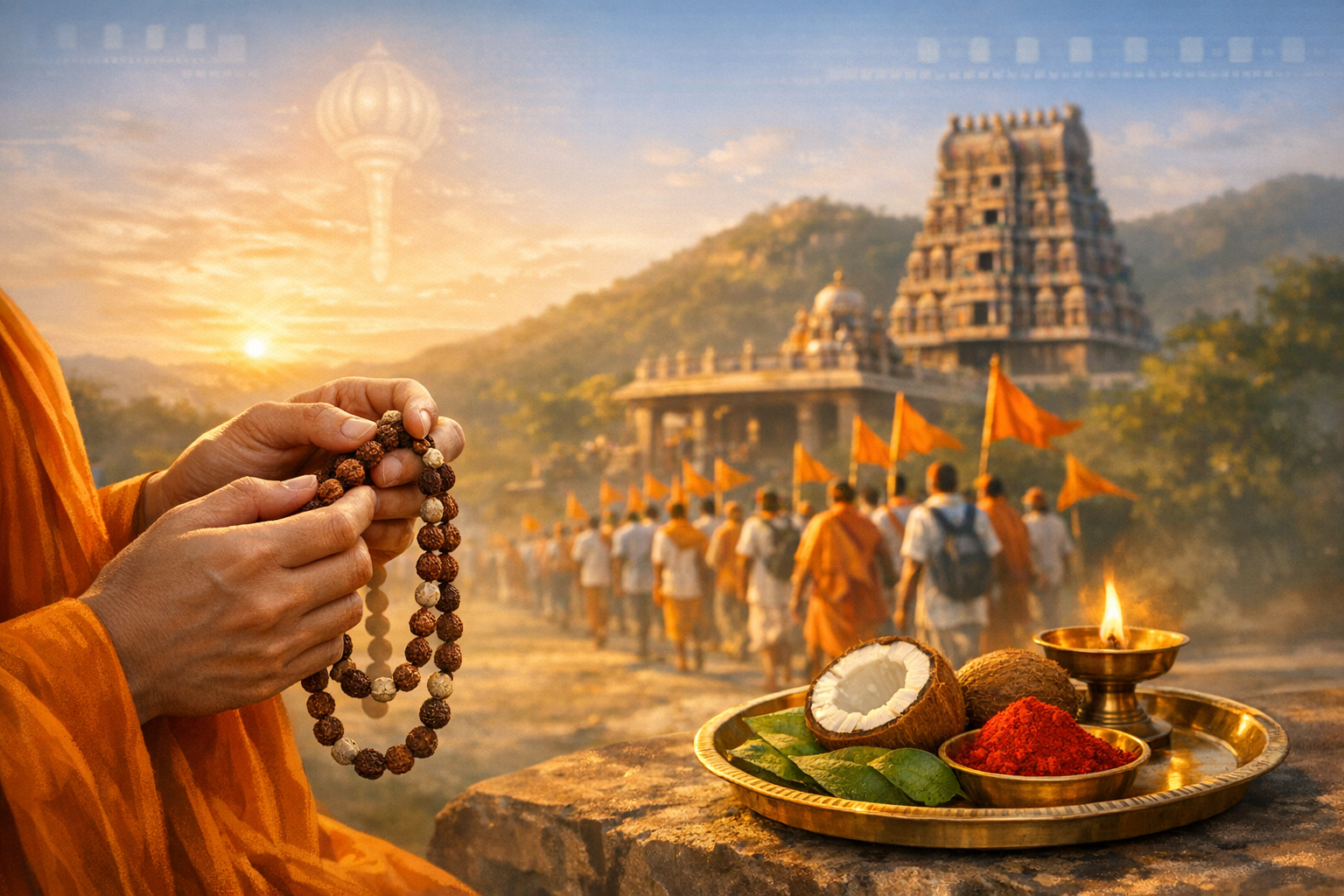
The concluding phase (mala visarjana) generally involves visiting a Hanuman temple, performing archana/abhisheka (as permitted by temple schedule), offering coconuts, betel leaves, and vastra or sinduram, and finally removing the mala with gratitude. Where possible, devotees undertake padayatra to Kondagattu or to Sri Maddi Anjaneya Swamy Temple for darshan and visarjana; when travel is not feasible, visarjana is completed at a nearby Hanuman shrine with equivalent sanctity and priestly guidance.
Padayatra has grown into a hallmark of Hanuman Deeksha in Andhra Pradesh. Groups synchronize routes to Kondagattu or Maddi Anjaneya, traveling with discipline, simplicity, and mutual care. Recommended norms include hydration planning, sun protection, basic first-aid, reflective clothing for early-morning or evening hours, and adherence to local traffic, temple, and environmental rules. The yatra is as much an ethical pilgrimage as a devotional one—respect for villagers, careful waste management, and gratitude toward local support uphold dharma in practice.
Service (seva) and dana often accompany the vow. Many families support annadanam at conclusion, contribute to goshalas or temple upkeep, and volunteer for community-cleanliness drives en route. Ethical considerations include avoiding wildlife feeding near sanctuaries, using biodegradable offerings, and supporting temple-regulated charitable activities to ensure safety and accountability.
Hanuman Deeksha sits comfortably within a broader dharmic tapestry that honors vow-based practice. Orthodox Hindu vrata traditions align with disciplined observances in Buddhism (e.g., the rains-retreat ethic of vassa and precept days), Jainism (vratas of ahimsa and Paryushana introspection), and Sikhism (nitnem, kirtan, and seva). This shared culture of restraint, remembrance, and service underscores a common civilizational ethos—inner strength cultivated through outer simplicity—while honoring each tradition’s distinct path. The unity lies in the values; the diversity in the methods.
Participation is inclusive. Men and women, students and professionals, and elders with health considerations all undertake Deeksha with suitable adjustments. Where fasting or extended walking is not advised, devotees maintain core niyamas—sattvic diet, japa, and daily worship—while consulting medical professionals if needed. Temple customs regarding menstruation and specific ritual participation vary; devotees follow local norms with respect and choose conscience-based alternatives for home worship whenever appropriate.
Practical questions often arise. If a niyama is unintentionally broken, most sampradayas prescribe simple prayaschitta: acknowledge the lapse, recite additional japa or Chalisa with sincerity, and resume the vow without self-reproach. If travel interrupts the routine, an early-morning or late-evening consolidated session—combined with mental japa (manasika japa) during transit—can sustain continuity. The spirit of Deeksha is steadfastness, not perfectionism; gentle persistence is the hallmark of long-duration vows.
Calendar context in 2026 is notable. With Ugadi occurring in late March, the April 2–May 12 Deeksha window naturally spans the Chaitra–Vaishakha transition for Andhra Pradesh/Telangana. Depending on local reckoning, Hanuman Jayanti observances may fall around the Vaishakha cycle; thus, many Deeksha groups synchronize visarjana near regional Jayanti dates, especially at Kondagattu and Sri Maddi Anjaneya Swamy Temple, to participate in special alankarams, harati, and collective parayana.
Beyond ritual correctness, devotees repeatedly describe the inner fruit of Hanuman Deeksha in experiential terms: heightened focus (ekagrata), resilience under stress, and a pervasive sense of protective grace. Hanuman—embodying shakti tempered by seva—becomes a living ideal: courage disciplined by humility, strength in service of dharma. For students, professionals, and families alike, the vow clarifies priorities and fosters a gentle yet unshakable routine of prayer, work, and compassion.
In summary, Hanuman Deeksha 2026 offers a thoughtfully structured path: a clear start and culmination (April 2 to May 12), flexible durations (11, 21, or 41 days), temple-centered guidance (notably at Kondagattu and Sri Maddi Anjaneya), and accessible daily practices—sattvic diet, japa, Hanuman Chalisa, and Sundara Kanda parayana—that fit modern lives without compromising depth. Undertaken with sincerity and a spirit of unity with all dharmic traditions, Anjaneya Maala becomes more than a symbol; it is a lived curriculum in devotion, discipline, and service.
Inspired by this post on Hindu Pad.