Gudi Padwa, observed on Chaitra Shukla Pratipada, inaugurates the lunisolar New Year in Maharashtra and the Konkan region, aligning with the Shaka Samvat. As a spring festival, it marks cyclical renewal in nature and society while inviting households to begin the year with clarity, gratitude, and ethical resolve. Beyond regional boundaries, it resonates with related New Year observances such as Ugadi in Andhra Pradesh, Telangana, and Karnataka, and Navreh in Kashmir, underscoring unity across dharmic traditions through shared themes of renewal, seva, and inner discipline.
Anchored in the Hindu calendar, the day follows the udaya tithi principle, in which the tithi present at sunrise determines observance. Chaitra Shukla Pratipada also coincides with the commencement of Chaitra Navratri, reinforcing a broader, pan-Indic emphasis on sadhana, devotion, and self-cultivation at the turn of the year. In many communities, panchanga shravana, or listening to the almanac’s forecasts, integrates astronomy, agriculture, and auspicious timing into everyday decision-making.
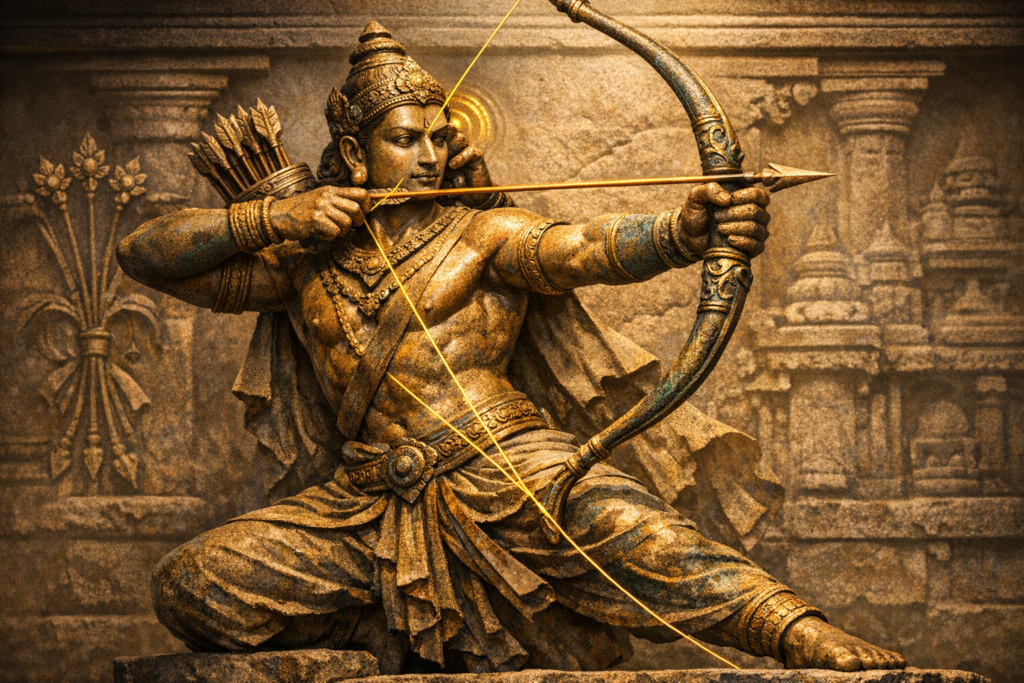
Gudi Padwa’s cultural memory is layered. Some traditions remember it as Brahma’s day of creation, hence the name Brahma-dhwaja for the Gudi; others link the raised Gudi with Rama’s triumphant return to Ayodhya, or as a victory standard emblematic of righteous governance and renewed social order. Such plural narratives coexist comfortably in dharmic culture, reflecting a civilizational ethos that values interpretive diversity while upholding common ethical aims.
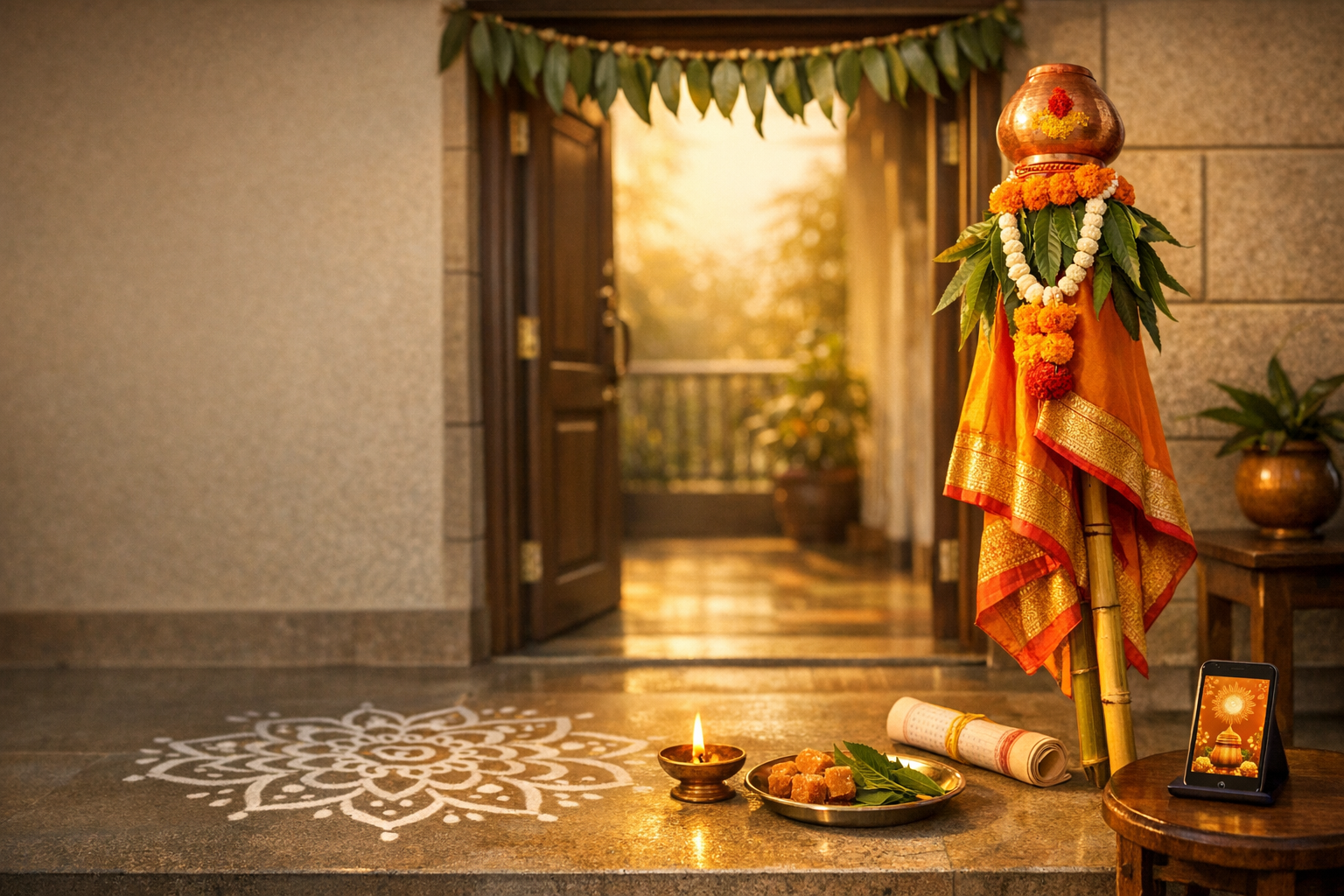
Households characteristically prepare by cleaning spaces, drawing colorful rangoli at thresholds, and tying a toran of mango leaves. The Gudi itself is fashioned as a victory standard: a fresh silk or zari-bordered cloth draped over a long pole, topped with an inverted kalash of copper, silver, or steel, and adorned with neem and mango leaves, marigold flowers, and a sugar garland known as gathi. The installation is typically placed on the right side of the main entrance or balcony, ideally facing east, inviting auspiciousness, vigor, and clarity into the home.
Sensory anchors give the day enduring emotional resonance. Many recall the quiet stillness of the pre-dawn abhyanga snana, the scent of rangoli powders, the glimmer of zari in morning light, and the bittersweet taste of neem and jaggery offered as prasad. These elements collectively symbolize the embrace of life’s contrasts, the resolve to meet challenges with steadiness, and the aspiration to live the New Year with purpose.
Symbolically, each element of the Gudi contributes to a holistic message. The elevated pole stands for upright resolve; the silk cloth signals dignity and prosperity; the inverted kalash indicates fullness and the descent of blessings; neem and marigold balance purification with auspicious joy; and the sugar garland frames sweetness as an earned reward of disciplined living. Together, these signs translate cosmic order into daily practice, aligning households with dharma at the year’s threshold.
A careful, step-wise home ritual emphasizes simplicity and intention. Step 1: before sunrise, perform abhyanga snana and wear fresh clothing. Step 2: clean the threshold, draw rangoli, and fix a mango-toran. Step 3: prepare a pole, traditionally of bamboo or neem. Step 4: drape a clean silk or zari-bordered cloth, typically in auspicious hues such as saffron, yellow, or green. Step 5: attach a gathi of sugar, fresh neem and mango leaves, and marigold flowers; optionally include turmeric and kumkum. Step 6: place an inverted kalash on the top. Step 7: install the Gudi upright on the right side of the entrance or balcony, preferably facing east. Step 8: offer flowers, akshata, incense, and a lamp, and recite simple stotras or nama-japa. Step 9: distribute prasad, including a mixture of tender neem leaves and jaggery, honoring life’s bittersweet lessons at the very outset of the year.
Culinary traditions vary by region and family. In Maharashtra, home kitchens often center the festive meal on puran poli, shrikhand, batata bhaji, and seasonal vegetables. The prasad of neem and jaggery is especially meaningful; neem connotes purification and resilience, while jaggery signifies warmth and sweetness, together modeling equanimity amidst contrasting experiences.
Timekeeping naturally matters on Chaitra Shukla Pratipada. While local panchangs provide precise muhurta, general guidance holds that raising the Gudi after sunrise during the Pratipada tithi is ideal. If the tithi straddles two sunrises, customary rules favor observance on the day when Pratipada prevails at sunrise. Many families also treat the day as broadly auspicious for new beginnings within the bounds of dharma and prudence.
Across dharmic communities, spring New Year observances share an ethical core. In Hindu settings, sadhana and seva frame the day; in Sikh families, Vaisakhi soon after highlights community service, devotion, and kirtan; in many Buddhist communities across Asia, the spring period is linked to mindfulness, compassion, and acts of dana; in Jain practice, the annual cycle uplifts ahiṁsā and aparigraha as enduring guideposts. The common thread is a renewed commitment to truthfulness, restraint, kindness, and social harmony, affirming unity in spiritual diversity without demanding uniformity.
Eco-conscious practice is integral to tradition. Natural leaves, flowers, and rangoli powders return easily to the earth. Households can opt for locally woven cloth, reusable kalash, and minimal plastic. Offering edible prasad and repurposing floral décor into compost align the festival’s message of renewal with tangible care for the environment.
Gudi Padwa wishes, SMS greetings, and WhatsApp status messages extend the festival’s spirit beyond the doorway, strengthening social bonds in a digital age. Consider messages that blend cultural accuracy with heartfelt aspiration, speaking to renewal, courage, gratitude, and harmony across traditions.
Happy Gudi Padwa. May the Gudi at your door awaken clarity, courage, and compassion throughout the year.
Chaitra Shukla Pratipada blessings to you and yours. May health, wisdom, and harmony grow in every home.
May Shaka Samvat bring right intention, right effort, and right action into every new beginning.
With neem and jaggery, may you embrace life’s bittersweet truth and find strength in equanimity.
गुढी पाडव्याच्या हार्दिक शुभेच्छा!
Gudhi Padwa cha Hardik Shubhechha!
नववर्षाच्या शुभेच्छा! आनंद, आरोग्य आणि समृद्धी लाभो.
May the raised Gudi herald victories earned through dharma, discipline, and compassion.
On this Gudi Padwa, may home and heart be guided by satya, ahimsa, and seva.
Let the New Year open with gratitude for the past, purpose in the present, and hope for the future.
May your threshold shine with rangoli, and your path be lit with wisdom all year long.
Wishing you auspicious beginnings and the sweetness of well-earned joy. Happy Gudi Padwa.
Ugadi Subhakankshalu. May our many paths meet in shared goodwill and unity.
Yugadi Habbada Shubhashayagalu. Wishing a year of harmony and abundance.
Navreh Mubarak. May renewal bless every household with peace and resilience.
Cheti Chand ji Lakh Lakh Wadhaiyun. May the New Year strengthen community and compassion.
As the Gudi rises, may your aspirations rise with it, steady and luminous.
May the silk of the Gudi remind us to carry ourselves with dignity and kindness.
From the first light of Chaitra, may knowledge, courage, and humility guide your steps.
May the kalash atop the Gudi pour blessings of clarity, health, and harmony into your life.
Wishing you auspiciousness in every decision and grace in every challenge. Happy Gudi Padwa.
Let the New Year begin with mindful action, generous service, and steadfast hope.
May your home be a sanctum of joy, your work a field of purpose, and your heart a lamp of peace.
In the spirit of spring, may your efforts blossom into wellbeing for family and community.
May the gathi’s sweetness remind you that patience and perseverance yield lasting joy.
From dawn puja to evening lamp, may the day’s rhythm bring balance to mind and home.
Wishing you small daily victories that add up to a year of meaningful growth.
May auspicious timings align with wise choices and compassionate intentions.
This Chaitra, may you plant seeds of kindness, water them with effort, and harvest harmony.
May your WhatsApp status carry blessings that uplift friends and family near and far.
Let the Gudi be a reminder that resilience and righteousness prevail in the long run.
Wishing you disciplined mornings, grateful evenings, and a heart that welcomes new learning.
May your rangoli be as colorful as your hopes, and your actions as steady as your resolve.
May tradition guide your steps, and compassion soften every footprint. Happy Gudi Padwa.
On Chaitra Shukla Pratipada, may your inner Gudi stand tall with integrity and grace.
From heritage to habit, may your year be a living bridge between wisdom and daily life.
Let shared wishes become shared actions for a kinder, greener, more harmonious world.
Practical guidance helps households observe accurately and meaningfully. The right-side placement of the Gudi signifies the assertive, active channel of auspiciousness at the entrance. East-facing orientation harmonizes with sunrise symbolism. Where architectural constraints exist, a balcony or window installation maintains the intent of announcing renewal to the neighborhood and invoking blessings into the home.
Frequently asked questions center on timing, materials, and safety. The festival follows the sunrise-based tithi rule; silver, copper, or steel kalash are all acceptable; locally available flowers and leaves are encouraged; and the structure should be secured well against wind. Devotional practice can be kept simple, favoring sincerity over complexity: a clean space, a lamp, and heartfelt prayers are fully sufficient.
A short list of do and do not guidelines supports mindful celebration. Do prioritize eco-friendly décor and compostable materials; do share prasad and a warm greeting with neighbors and colleagues; and do align new projects with ethical intent. Do not waste food, overuse plastic, or cause disturbance in shared spaces. The festival’s spirit is best honored by gentleness, generosity, and good stewardship.
As households in Maharashtra and the broader Deccan celebrate Gudi Padwa and Ugadi, the New Year becomes a bridge across dharmic communities. The shared season affirms an enduring truth: diverse practices can uphold common values of renewal, unity, and service. With a well-raised Gudi, a mindful meal, and messages of goodwill, the year opens on a note of harmony that can sustain families and societies alike.
Inspired by this post on Hindu Pad.