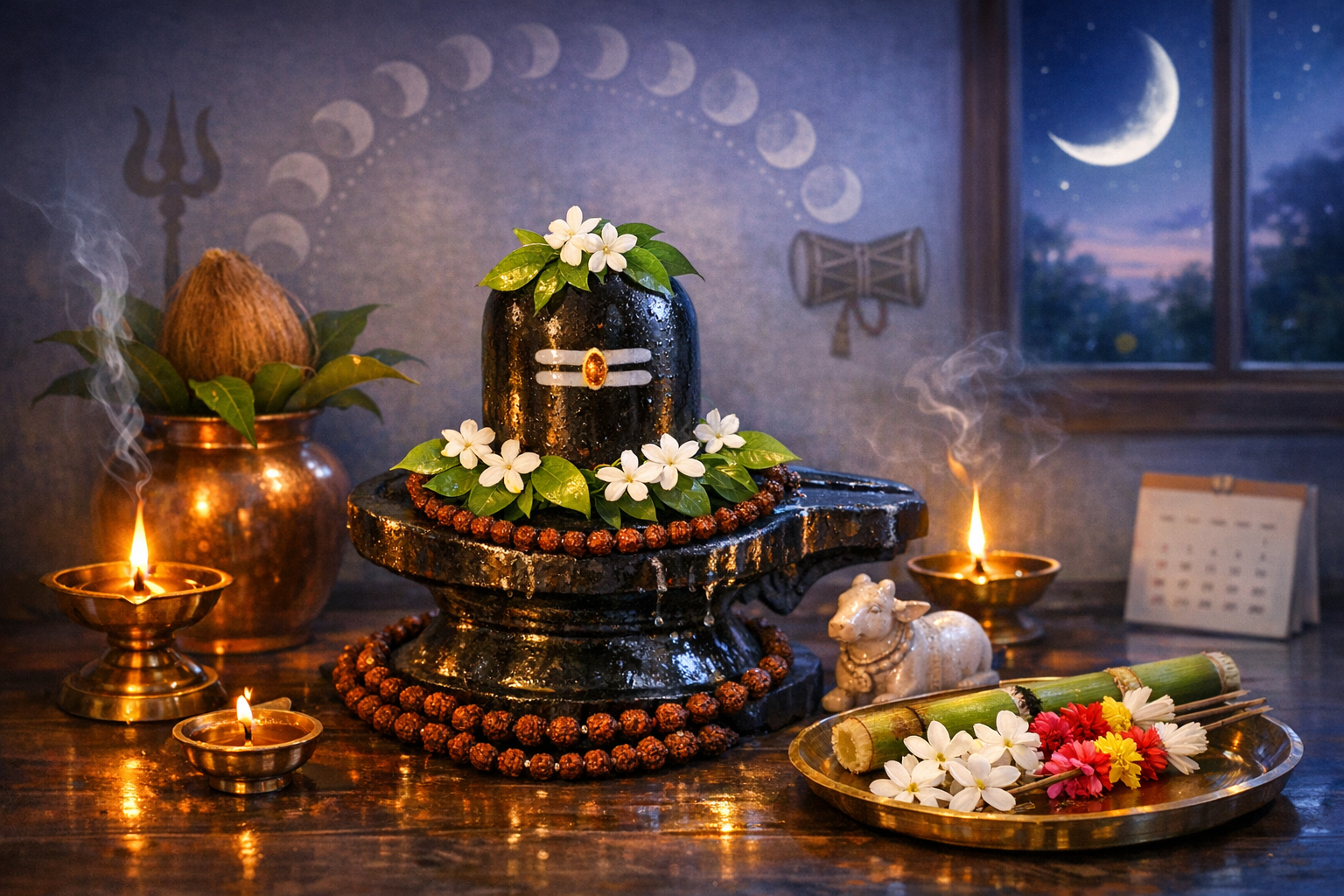
Anang Trayodashialso spelled Ananga Trayodasiis a sacred vrata observed in honor of Lord Shiva with complementary reverence to Rati and Kamadeva (Ananga). In 2026, Anang Trayodashi falls on March 30. The observance occurs on the thirteenth lunar day (Trayodashi) of the Shukla Paksha in the month of Chaitra and is traditionally followed in Maharashtra, Gujarat, and several South Indian regions. The vrata is associated with sanctifying love, restoring harmony in relationships, and cultivating refined self-discipline consistent with the broader dharmic ethos.
The epithet Anangaliterally “bodiless”invokes the well-known narrative of Kamadeva incinerated by Lord Shiva’s fire of tapas, then restored without a corporeal form. Purana literature preserves this story to illuminate the primacy of inner mastery over external allure. Rati’s devotion and lamentation are integral to the mythic sequence, and her worship, alongside Shiva’s, symbolizes the balanced sanctification of kama and dharma within household life. In this sense, Anang Trayodashi unites renunciant resolve (tapas) with a householder’s sacred responsibilities (grihastha dharma).
From a calendrical perspective, Anang Trayodashi aligns with Chaitra Shukla Trayodashi. A tithi is a lunar day, defined by the longitudinal separation between the sun and the moon increasing by 12 degrees. Because tithis do not map precisely onto civil days, local panchang computations are essential for exact observance. Many authorities prioritize the tithi prevailing at sunrise for fasting, while the Shiva-focused worship on Trayodashi naturally harmonizes with Pradosha Kala (the twilight period after sunset). Regional practice may adopt either or both considerations under the guidance of local parampara.
For 2026, most India-based panchang listings place Anang Trayodashi on March 30. Geographic longitude, latitude, and daylight-saving adjustments can shift the date outside India, so diaspora communities should confirm with a regional panchang or temple. Where local guidance differsbut remains within accepted dharmashastric rulesdevotees may follow their tradition consistently across the year.
While many observe Ananga Trayodasi as a single-day vrata, there is also a time-honored sankalpa to continue the vow monthly for one lunar year, culminating with udyapana (formal completion). The extended vrata emphasizes gradual refinement: cultivating compassion, mutual respect, and emotional steadiness within relationships. Couples seeking marital harmony, those aspiring for a suitable alliance, and householders intent on deepening sacred affection within dharma frequently undertake this discipline with devotion to Rati and Kamadeva under Lord Shiva’s grace.
Preparations begin with a clean, sattvic environment, personal purification through snana, and mental composure. A simple home altar or visit to a Shiva temple helps center intention. Devotees maintain truthfulness, ahimsa, and restraint over the senses (indriya-nigraha) throughout the day. Abstaining from tamasic foods and cultivating inwardness through japa and dhyana reflect the core aim of the vrata: sublimation of desire into sacred love aligned with dharma.
Puja Vidhi typically proceeds as follows, to be adapted per family sampradaya. After offering a sankalpa for Anang Trayodashi 2026, Shiva worship is performed with Panchamrita abhisheka to a Shivalinga or Shiva murti, adorning with Bilva Patra, and offering dhupa, deepa, pushpa, and naivedya. The narrative of Kama Dahana may be recited or reflected upon in brief. Complementary worship of Rati and Kamadeva follows, often with fragrant flowers, sandalwood paste, and the symbolic presence of sugarcanerecalling the iconography of Kamadeva’s sugarcane bow and flower-arrows. Devotees commonly schedule the central worship during Pradosha Kala, aligning the vrata’s essence with Shiva’s most receptive twilight grace.
Materials are simple yet meaningful: Bilva Patra, flowers suited for Shiva (such as white flowers), sandalwood paste, incense, ghee or oil lamps, Panchamrita ingredients (milk, curd, ghee, honey, and sugar), clean water for arghya, fruits, and sattvic sweets for naivedya. For the Rati–Kamadeva segment, sugarcane and fragrant blossoms (such as jasmine or mango buds, where regionally available) are traditional. Households should honor local availability, the guidance of elders, and ecological responsibility by choosing sustainable and biodegradable offerings.
In terms of timing, devotees may observe a daytime fast and conduct the primary puja during Pradosha Kala on Trayodashi. If pradosha coincides with the prevailing Trayodashi, it is considered especially auspicious for Lord Shiva’s worship. Where traditions emphasize the sunrise rule, one maintains the fast on the civil date when Trayodashi prevails at sunrise, and still retains Pradosha Kala for Shiva-archana that evening as available.
Fasting guidelines range from nirjala (waterless) to upavasa with phalahara (fruits and light sattvic foods), depending on health, age, and guidance. Many opt for a moderate vrata that maintains clarity without strain. Parana (breaking the fast) is typically done after the main puja, often post-sunset, or according to local instruction the following morning if so prescribed. Those with medical conditions, pregnant women, and the elderly should adapt with care and, when needed, consult a qualified advisor to preserve well-being within the spirit of the vow.
When undertaken as a year-long vrata, observance is repeated every Shukla Trayodashi from Chaitra onward, concluding with udyapana. The completion often includes a more elaborate puja, recital of stotras to Shiva, and acts of dana such as feeding guests or contributing to community service. Udyapana signifies gratitude and the resolve to carry forward the vrata’s inner gainsequanimity, mutual understanding, and sanctified affectioninto everyday life.
Classical and folk traditions ascribe many benefits to Ananga Trayodashi: harmony between spouses, removal of relational discord, refinement of emotions, auspicious conditions for progeny, and the flowering of affection anchored in dharma. From a practical dharmic perspective, the vrata trains attention and self-regulation, aligning kama with dharma and long-term well-being. As the narrative underscores, when desire is illumined by knowledge and restraint, love matures into a force for stability, compassion, and shared purpose.
Regional observances in Maharashtra and Gujarat often feature a pronounced Pradosha focus on Lord Shiva, while families also recall the Rati–Kamadeva dimension with seasonal flowers and sugarcane where customary. In South Indian regions, devotees similarly emphasize Shiva-archana with Bilva Patra and fragrant offerings, adjusting flowers and naivedya to local seasonality. Such plural expressions reflect the strength of the Hindu way of life: one sacred principle articulated through many complementary customs.
This vrata also resonates with the broader dharmic family. The emphasis on self-restraint, compassion, and truthful conduct finds clear affinities with Buddhist Uposatha reflections, Jain vrata and poshad disciplines, and Sikh commitment to ethical living supported by simran and ardas. By honoring this shared commitment to inner refinement and social harmony, Anang Trayodashi embodies unity in diversity across Hinduism, Buddhism, Jainism, and Sikhism.
Practical considerations enhance the experience. Observing a calm, decluttered space supports concentration. Selecting eco-friendly lamps and natural flowers reduces environmental impact. Consulting a local panchang ensures precise tithi alignment, while checking with one’s family priest or temple preserves continuity with ancestral practice. Where travel or work intervenes, devotees may adapt respectfully and offer a sincere, concise puja rather than forgo the observance entirely.
As with all vratas, intention shapes outcome. Anang Trayodashi is not merely a quest for external results; it is a disciplined offering of time, attention, and affection into the sacred. When practiced with humility, compassion, and steadiness, the vrata clarifies relationships, orders priorities, and invites grace into the rhythms of daily lifefulfilling the spirit of the observance beyond the formal ritual.
In summary, Anang Trayodashi 2026 will be observed on March 30. Aligning with Chaitra Shukla Trayodashi, it honors Lord Shiva and, in many homes, includes worship of Rati and Kamadeva to sanctify love within dharma. With thoughtful preparation, careful attention to tithi and Pradosha Kala, and a balanced fasting discipline, devotees can undertake either a single-day or year-long Ananga Trayodasi Vrat. The vrata’s heart remains the same across regions and lineages: refining desire through wisdom, ennobling relationships through devotion, and advancing unity across the dharmic traditions.
Inspired by this post on Hindu Pad.