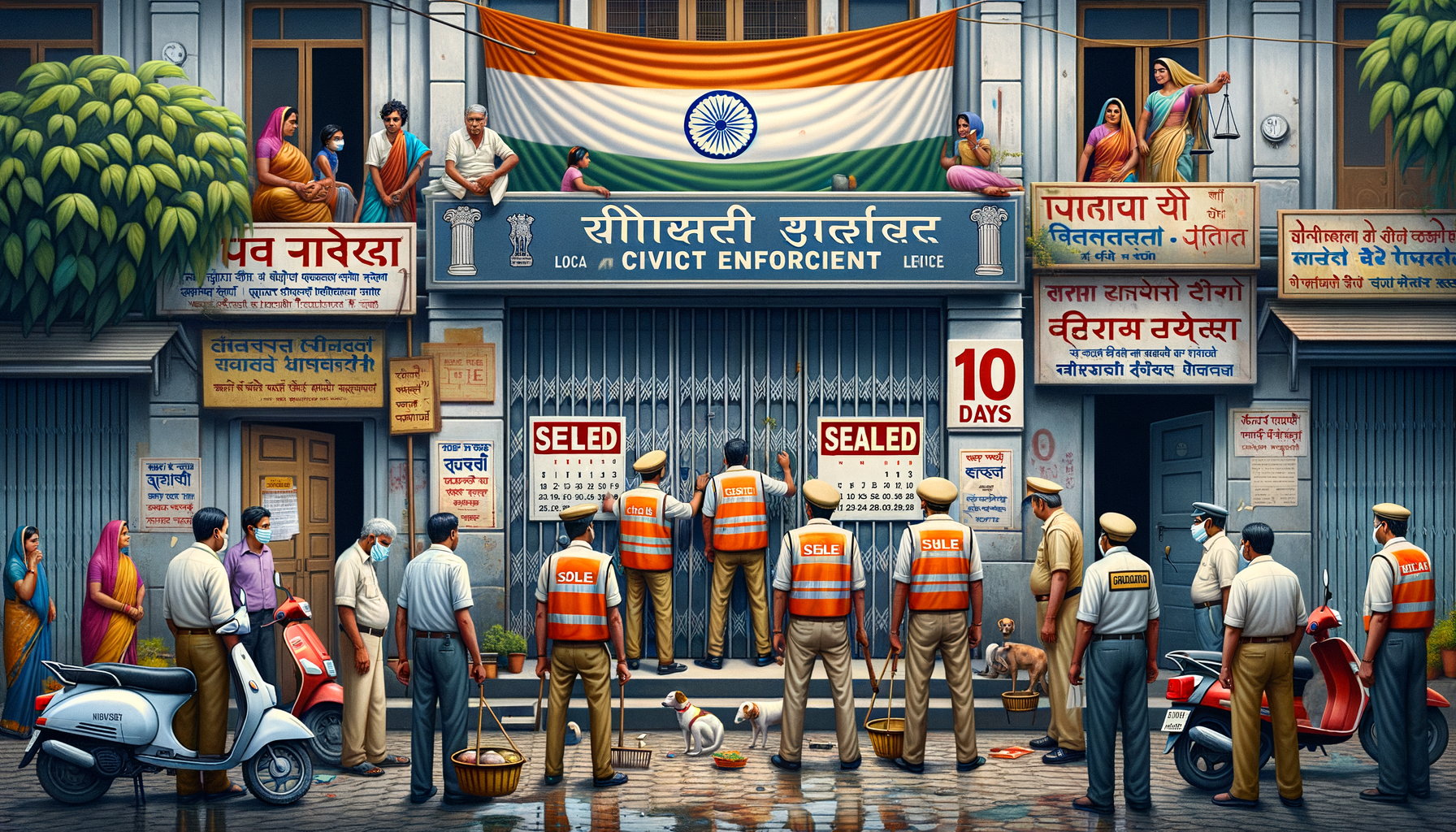
Reports of illegal cattle slaughter in Tisgaon, Maharashtra, have prompted significant public protest, with Hindu Janajagruti Samiti (HJS) calling for the immediate and permanent closure of unauthorised slaughterhouses. In response, the District Guardian Minister has assured that all such facilities operating outside the law will be demolished within 10 days, signaling a firm administrative stance on compliance and public safety.
The issue raises intertwined concerns of rule of law, public health, animal welfare, and community harmony. In a region where dharmic traditionsHinduism, Buddhism, Jainism, and Sikhismemphasize compassion, ahimsa, and responsible stewardship, addressing illegal slaughterhouses becomes not only a legal necessity but also a moral imperative. An orderly and humane approach, consistent with constitutional safeguards and municipal regulations, can strengthen civic trust while respecting diverse beliefs and livelihoods.
The ministerial assurance of a 10-day deadline suggests a coordinated enforcement plan that may include inspections, sealing, and, where warranted, demolition of unauthorised structures. Transparent procedures, adherence to due process, and alignment with environmental and veterinary standards are essential to ensure that corrective actions are both effective and just. Clear, time-bound steps also help reduce community anxiety and speculation.
Residents in Tisgaon have voiced concerns about sanitation, safety, and the potential for illicit trade associated with unregulated operations. Peaceful civic engagement, as seen in these protests, can channel public sentiment into constructive outcomes when paired with accountable governance. Comparable towns in Maharashtra have observed that targeted, lawful interventions improve neighborhood well-being, reduce nuisances, and enhance confidence in local institutions.
Moving forward, a balanced strategy would include: rigorous legal enforcement; strict adherence to food safety and animal transport laws; and, where appropriate, support for lawful, licensed facilities that meet hygiene, environmental, and traceability norms. Parallel measuressuch as livelihood transition assistance and compliance trainingcan minimize economic disruption and discourage the re-emergence of illegal activity, thereby sustaining long-term community stability.
Accountability mechanisms will be vital. Publicly accessible updates, helplines for reporting violations, and third-party audits can help track progress against the 10-day deadline and beyond. Such transparency fosters social harmony by ensuring that all stakeholdersresidents, faith communities, traders, and officialssee that actions are evidence-based, humane, and non-discriminatory.
This development in Tisgaon underscores a broader principle: upholding the rule of law in ways that protect public health and animal welfare strengthens unity among dharmic communities and the wider society. A measured, compassionate, and lawful resolutionimplemented with clarity and respectcan prevent polarisation, reinforce interfaith trust, and affirm shared values of dignity, safety, and harmonious coexistence.
Inspired by this post on Hindu Jagruti Samiti.