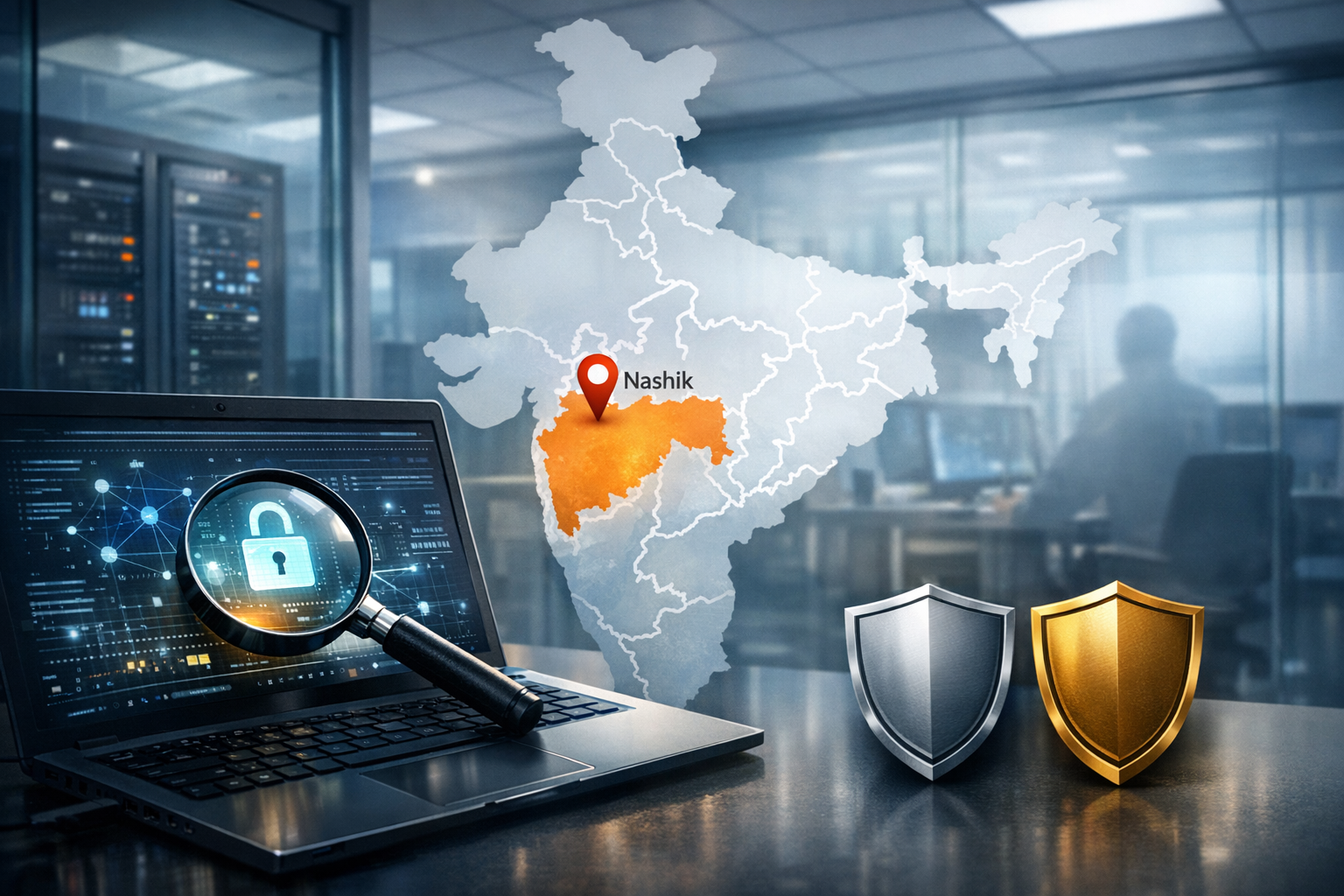
Allegations of sexual exploitation involving young women at a TCS office in Nashik have drawn an extraordinary response from Advocate Sanjeev Punalekar, who has publicly urged a probe by the Maharashtra Anti-Terrorism Squad (ATS) and the National Investigation Agency (NIA) to examine a potential terror angle. Framed this way, the matter extends beyond workplace misconduct into the terrain of counterterrorism risk, data-protection threats, and national security.
At this stage, the facts remain under investigation and have not been established in a court of law. All individuals and entities referenced are entitled to the presumption of innocence. Any proposed link to organized crime, trafficking, or extremist networks would need to be substantiated by admissible evidence and evaluated through due process.
Understanding institutional mandates is central to assessing the request. The ATS in Maharashtra functions within the state police architecture to investigate terrorism-related offenses, especially those implicating public safety and organized networks. The NIA operates under the National Investigation Agency Act, 2008, and may take over or initiate investigations into scheduled offensesmost notably those under the Unlawful Activities (Prevention) Act (UAPA). Under Section 6 of the NIA Act, state police submit a report to the Ministry of Home Affairs (MHA), which then decides whether the NIA should assume jurisdiction based on gravity, inter-state or international linkages, and national security implications.
Why consider a terror angle in what appears at first glance to be a workplace case? Contemporary counterterrorism analysis recognizes that sexual exploitation, coercion, and blackmail can be instrumentalized by extremist or criminal ecosystems for recruitment, finance, and access. In business process outsourcing (BPO) and technology services environmentswhere personnel may handle sensitive client datacoercive control can morph into data exfiltration, insider facilitation, or social engineering. Reports and social media discourse around “Nashik BPO allegations” illustrate why investigators may test for such vectors even when they ultimately find none.
An ATS–NIA scoping exercise, if authorized, would likely begin with parallel tracks: (1) a victim-centered, trauma-informed inquiry to document alleged exploitation; and (2) a national-security risk assessment to determine whether there are indicators of organized facilitation, radicalization, or foreign influence. Both tracks depend on meticulous chain-of-custody protocols, digital forensics, and corroborated witness testimony.
From a legal perspective, several frameworks intersect. The Sexual Harassment of Women at Workplace (Prevention, Prohibition and Redressal) Act, 2013 (POSH Act) requires Internal Committees (ICs), time-bound inquiries, safety measures, and non-retaliation. Depending on fact patterns, provisions under the Indian Penal Code and, as applicable, the Bharatiya Nyaya Sanhita, 2023, may address assault, criminal intimidation, or exploitation; the Immoral Traffic (Prevention) Act, 1956 can be implicated if trafficking elements emerge. Digital elementsnon-consensual imagery, threats over messaging platforms, or data misusecan engage the Information Technology Act, 2000 (including Sections 66, 66E, 67, and 67A) and the Digital Personal Data Protection Act, 2023 for privacy violations. A terror angle would require threshold indicators under UAPA and related scheduled offenses before NIA jurisdiction is triggered.
Technically, investigators would preserve and image relevant devices and servers, review enterprise SIEM logs, and analyze email, chat, and collaboration platforms for patterns indicating coercion, social engineering, or data leakage. Mobile forensics on consented devices, link analysis on call-detail records, and financial forensics on suspected actors (including checks for hawala-like flows) can reveal coordination. OSINT would probe recruiter networks, suspicious job postings, burner accounts, or cross-border digital touchpoints. Red flags include synchronized off-boarding of personnel, anomalous access to sensitive datasets, and repeat use of the same third-party intermediaries.
Supply-chain scrutiny is essential. Vendor onboarding, KYC of staffing partners, contract compliance, and background verification practices in a BPO setting often determine the attack surface. Zero-trust access controls, privileged access management, and data loss prevention (DLP) policies help minimize insider risk. Corporates aligned to ISO/IEC 27001, SOC 2, and NIST CSF can more readily supply audit trails that accelerate law-enforcement assessments.
Equally important is survivor protection. Immediate safety measuresseparating accused from complainants, no-contact directives, secure transport, and privacy safeguardsare non-negotiable. POSH-compliant processes, psychological first aid, and access to independent legal counsel reduce re-traumatization and signal institutional accountability. Confidentiality must be rigorously maintained, especially where national-security screening proceeds in parallel.
Media and public discourse carry responsibility. Sensationalism, communalization, or doxxing of survivors can impede justice, harm innocents, and erode social cohesion. Balanced communication by institutionsacknowledging allegations, outlining process steps, and committing to cooperation with authoritiessupports both public trust and evidentiary integrity.
Potential outcomes of a terror-angle assessment range across a spectrum. At one end, investigators may rule out UAPA triggers, retaining the matter with state police for workplace and criminal-law offenses. At the other, even narrow indicators of organized coercion, foreign facilitation, or data compromise could justify escalating to NIA for a fuller counterterrorism probe. In either case, a time-bound, transparent approach is essential to restore confidence among employees, clients, and the local community in Nashik.
Policy learnings are already visible. Organizations in sensitive data environments benefit from: (a) periodic red-teaming of insider threats; (b) strengthened vendor governance and background checks; (c) robust whistleblower channels with anti-retaliation guarantees; (d) continuous POSH training tailored for hybrid work; and (e) secure-by-design collaboration tools with fine-grained monitoring. At the ecosystem level, structured information-sharing between corporate CSOs, state ATS units, and CERT-Inwithin privacy and legal boundscan accelerate early-warning for coercion-based threats.
These issues transcend any single institution and speak to shared societal values. Across dharmic traditionsHinduism, Buddhism, Jainism, and Sikhismprinciples such as ahimsa, dignity, and compassion converge on a simple imperative: protect the vulnerable, seek truth without prejudice, and uphold justice without fueling division. A careful, evidence-led inquiry advances these values while safeguarding national security.
The call for an ATS–NIA examination should therefore be read as a request for rigorous testing of hypotheses, not as a presumption of guilt. If indicators of a terror nexus are absent, the finding will be clarifying; if present, early detection may prevent deeper harmto survivors, to data security, and to the broader public interest. Either way, a measured, law-led response is the path to accountability, healing, and social unity.
Given the sensitivity of the allegations and the reputational stakes for individuals and organizations, continuous updates from law enforcement and compliant corporate disclosures should guide public understanding. Facts must lead; conjecturehowever compellingshould not outpace evidence.
Inspired by this post on Hindu Jagruti Samiti.