Tag: National security

  • The Indus Waters Treaty Reckoning: How Nehruvian Statecraft Cost Bharat Leverage

    The Indus Waters Treaty Reckoning: How Nehruvian Statecraft Cost Bharat Leverage

    This analysis separates hydraulic fact from televised spectacle in the debate over the Indus Waters Treaty. It explains how the 1960 pact divided the six-river system, why the familiar 80:20 shorthand requires context, and what rights Bharat retained on the western rivers. It assesses Jawaharlal Nehru’s settlement in its post-Partition setting while identifying the strategic…

  • FCRA 2.0 Explained: What Bharat’s Tough Foreign-Funding Overhaul Means for Sovereignty

    FCRA 2.0 Explained: What Bharat’s Tough Foreign-Funding Overhaul Means for Sovereignty

    The Foreign Contribution (Regulation) Amendment Bill, 2026 proposes a major new framework for supervising foreign contributions and assets when an organisation’s FCRA registration is cancelled, surrendered or ceases. Often described informally as “FCRA 2.0,” the measure remained a pending Bill as of 11 July 2026 and should not be mistaken for fully implemented law. Its…

  • The Silent Encirclement: How China Is Reshaping the Bharatiya Subcontinent

    The Silent Encirclement: How China Is Reshaping the Bharatiya Subcontinent

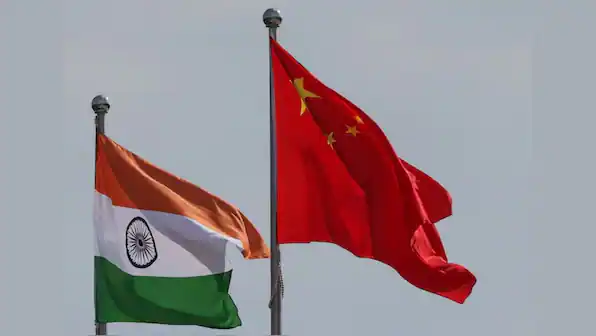
    China’s challenge to the Bharatiya subcontinent extends far beyond conventional military pressure along the Line of Actual Control. This analysis explains how infrastructure finance, defence supply, ports, digital networks, debt exposure and political influence can create asymmetric dependence across South Asia. It provides country-specific assessments of India, Pakistan, Nepal, Bhutan, Bangladesh, Myanmar, Sri Lanka and…

  • Congress, Khilafat, and the Crucial Question of Defending India Under British Rule

    Congress, Khilafat, and the Crucial Question of Defending India Under British Rule

    This study examines how Congress, the Khilafat leadership, the Muslim League, and British authorities approached national defence during the crises of 1921 and the Second World War. It explains why opposition to colonial rule did not remove India’s need to resist foreign conquest. Statements attributed to Maulana Abul Kalam Azad and Lala Lajpat Rai are…

  • India–Pakistan Talks After Terror: A Hard-Edged Framework for Lasting Peace

    India–Pakistan Talks After Terror: A Hard-Edged Framework for Lasting Peace

    This long-form analysis examines why renewed calls for India–Pakistan dialogue provoke deep scepticism after repeated cycles of outreach, aggression and terrorism. It explains the 2026 open letter signed by 117 Indian and Pakistani public figures and evaluates its proposals individually. The discussion distinguishes crisis communication, humanitarian engagement, religious access, Track Two diplomacy and comprehensive political…

  • Indus Waters Treaty After Pahalgam: The Strategic Pause India Could Not Ignore

    Indus Waters Treaty After Pahalgam: The Strategic Pause India Could Not Ignore

    The Indus Waters Treaty pause after the Pahalgam terrorist attack was not a sudden diplomatic impulse but the result of years of legal, strategic, and security tensions. This analysis explains how Article 370, India’s 2023 modification notice, and the Kishenganga-Ratle dispute created the background for the 23 April 2025 decision. It clarifies what abeyance means,…

  • J&K School Book Scandal Exposes Alarming Risks in Educational Oversight

    J&K School Book Scandal Exposes Alarming Risks in Educational Oversight

    The Jammu and Kashmir administration suspended eight education officials and ordered an inquiry after books allegedly glorifying terrorists and separatists were found in government school libraries. The controversy has raised serious questions about content vetting, procurement oversight, and the responsibility of public education in conflict-sensitive regions. Reports suggest that one disputed book used politically charged…

  • Jaishankar’s Sharp Warning on European Arms Exposes India’s Security Dilemma

    Jaishankar’s Sharp Warning on European Arms Exposes India’s Security Dilemma

    Dr. S. Jaishankar’s Finland remarks exposed a major contradiction in Western criticism of India’s Russia ties. He argued that European weapons have been used against India, while Indian weapons have not threatened Europe. The issue goes beyond rhetoric because Pakistan has long been a central factor in India’s national security calculations. SIPRI-style arms-transfer data helps…

  • Seychelles and Bharat: Powerful Partnership Shaping the Indian Ocean Future

    Seychelles and Bharat: Powerful Partnership Shaping the Indian Ocean Future

    Seychelles is far more than a small island nation in Bharat’s maritime imagination. Its vast Exclusive Economic Zone, location near vital Sea Lines of Communication, and deep Indian diaspora links make it a crucial node in the Indian Ocean Region. Prime Minister Narendra Modi’s 2026 visit highlighted 50 years of diplomatic relations, maritime cooperation, blue…

  • Gandhi, Ahimsa, and National Defence: A Powerful Historical Reassessment

    Gandhi, Ahimsa, and National Defence: A Powerful Historical Reassessment

    This article reassesses the historical controversy around Gandhi’s doctrine of non-violence, the Khilafat movement, Congress politics, and the demand for national defence in late colonial India. It explains why critics feared that absolute pacifism could weaken sovereignty, especially during a period of communal mobilisation and imperial uncertainty. The analysis distinguishes between legitimate scrutiny of political…

  • Indus Waters Treaty Crisis: Why Bharat’s Firm Stand Defends Legal Order

    Indus Waters Treaty Crisis: Why Bharat’s Firm Stand Defends Legal Order

    India’s rejection of the Hague-based Court of Arbitration ruling on the Indus Waters Treaty rests on a jurisdictional argument, not merely diplomatic disagreement. The dispute turns on whether technical objections to Indian hydroelectric projects should proceed through the Neutral Expert mechanism before any arbitration process is triggered. India argues that parallel proceedings undermine the treaty’s…

  • Why MHA’s Demographic Panel Visits Could Reshape India’s Border Security Debate

    Why MHA’s Demographic Panel Visits Could Reshape India’s Border Security Debate

    The MHA’s High-Level Committee on Demographic Changes is preparing field visits to border states, metro cities, industrial towns, and sensitive regions to study post-2011 population shifts. The inquiry is expected to focus on illegal immigration, abnormal demographic patterns, identity-document fraud, public service pressures, and local governance challenges. This long-form analysis explains why the issue must…

  • Indus Waters Treaty Exposed: How Legal Warfare Became a Powerful Weapon Against India

    Indus Waters Treaty Exposed: How Legal Warfare Became a Powerful Weapon Against India

    This analysis explains how the Indus Waters Treaty evolved from a water-sharing settlement into a contested instrument of legal and strategic pressure. It examines how Pakistan’s recurring objections to Indian hydropower projects on the western rivers have often imposed delay even when India’s core technical position survived scrutiny. The Baglihar, Kishanganga, and Ratle disputes show…

  • India’s Police at a Breaking Point: Cybercrime, Narco-Terror and Urgent Reform

    India’s Police at a Breaking Point: Cybercrime, Narco-Terror and Urgent Reform

    India’s policing challenge has moved far beyond traditional crime control into cybercrime, narco-terrorism, hybrid warfare, financial fraud, and AI-enabled threats. The article explains why a colonial-era police structure cannot adequately respond to crimes that cross borders, platforms, currencies, and jurisdictions. It highlights the scale of cybercrime complaints, the strategic use of narcotics by hostile networks,…

  • Indus Waters Treaty: The Fragile Pact That Survived Wars But Faces a Hard Reckoning

    Indus Waters Treaty: The Fragile Pact That Survived Wars But Faces a Hard Reckoning

    The Indus Waters Treaty is often celebrated as a rare India-Pakistan agreement that survived wars, terrorism crises, and decades of diplomatic hostility. This analysis explains why survival alone is not the same as success. It examines the treaty’s 1960 structure, the division of eastern and western rivers, the role of the Permanent Indus Commission, and…

  • Bharat Raksha Manch’s Bengal Warning: Demography, Security, and Dharmic Unity

    Bharat Raksha Manch’s Bengal Warning: Demography, Security, and Dharmic Unity

    Bharat Raksha Manch’s Kolkata meeting has brought renewed attention to West Bengal’s demographic anxieties, border-security challenges, and concerns over illegal infiltration from Bangladesh. The issue is complex because Bengal’s border geography, partition history, refugee movements, and district-level demographic trends overlap with present-day political mobilisation. A responsible response requires evidence-based policy, lawful documentation checks, stronger border…

  • Punjab’s Hard Truth: Why Khalistani Extremism Must Be Confronted With Unity

    Punjab’s Hard Truth: Why Khalistani Extremism Must Be Confronted With Unity

    Punjab’s renewed debate over Damdami Taksal, Bhindranwale, and Khalistani symbolism highlights a deeper national security and civilisational challenge. The issue is not Sikh religious identity, which remains an integral dharmic tradition rooted in seva, courage, and spiritual discipline. The real concern is the political rehabilitation of extremist narratives that once pushed Punjab into years of…

  • बंगाल में UCC का निर्णायक मोड़: कानून, सुरक्षा और ध्रुवीकरण से परे तथ्य

    बंगाल में UCC का निर्णायक मोड़: कानून, सुरक्षा और ध्रुवीकरण से परे तथ्य

    पश्चिम बंगाल में मुख्यमंत्री शुभेंदु अधिकारी द्वारा UCC, जबरन धर्मांतरण, भूमि विवाद और अवैध घुसपैठ पर दिए गए वक्तव्य ने राज्य की राजनीति को संवैधानिक और सांस्कृतिक बहस के केंद्र में ला दिया है। यह लेख समान नागरिक संहिता के विधिक अर्थ, उसके संवैधानिक आधार और संभावित सामाजिक प्रभावों की तथ्यात्मक समीक्षा करता है। इसमें…

  • Why Bharat’s PL-15 Shock Demands More Than a Powerful Long-Range Missile

    Why Bharat’s PL-15 Shock Demands More Than a Powerful Long-Range Missile

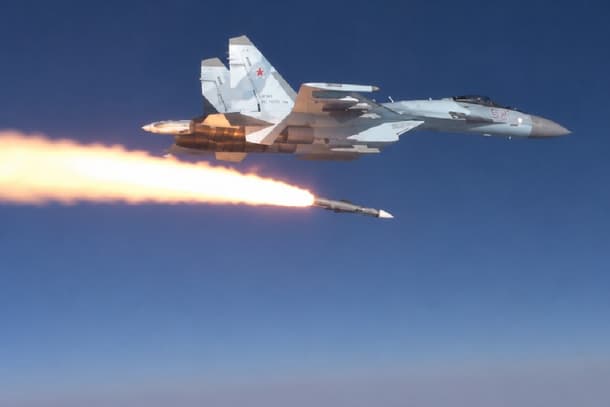
    Bharat’s reported interest in the Russian R-37M missile is best understood as an interim response to Pakistan’s J-10C and PL-15 combination, not as a complete solution. The PL-15 challenge is rooted in networked air warfare, where sensors, datalinks, AEW&C aircraft, electronic warfare, and pilot training matter as much as missile range. The R-37M can threaten…

  • Shiv Sena UBT’s Fiery Warning on BJP, China and Ram Mandir Accountability

    Shiv Sena UBT’s Fiery Warning on BJP, China and Ram Mandir Accountability

    The Shiv Sena (UBT) controversy over BJP, China, and the Ram Mandir row highlights a serious debate about political Hindutva, national security, and temple accountability. The Saamana editorial accused the BJP of inconsistency between its claims of patriotism and Hindutva and its alleged handling of Chinese incursions and Ram Mandir donation concerns. This rewritten analysis…