
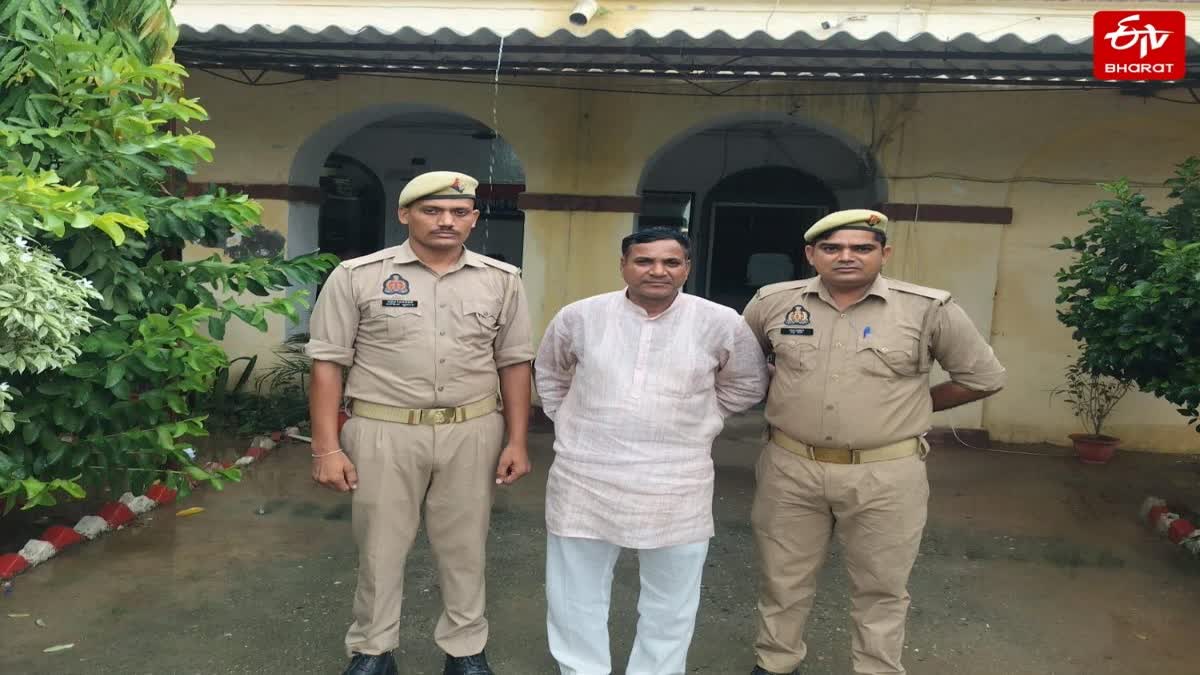
An allegation of attempted unlawful religious conversion in a Bareilly village has placed the Mirganj police investigation at the intersection of criminal law, religious freedom, public health claims and community trust. The case concerns Prempal, a 51-year-old resident of Bhudasi village in the Sisgarh, also rendered as Sheeshgarh, police-station area. Police accuse him of offering inducements to Hindus at a Christian prayer gathering and of making derogatory remarks about Hindu deities. He has been arrested and remanded to judicial custody, but the allegations had not resulted in a judicial finding of guilt as of 13 July 2026.
The reported timeline in Sainjna village
The case began with a written complaint submitted to Mirganj police on 9 July 2026 by Ankit, son of Khubkaran, from Sainjna village. According to the complaint, a religious meeting was being held at the home of Gajendra, son of Chedalal. Ankit alleged that Prempal was preaching Christianity and encouraging people present at the house to change their religion. Contemporary accounts from ETV Bharat and other local publications attribute these claims to the complainant and the First Information Report, rather than to independently tested evidence.
The complaint reportedly alleged that employment, financial assistance and help with marriage expenses were presented as benefits connected with conversion. It also referred to promises that prayer could address serious illness, exorcise spirits or provide protection from witchcraft. When some villagers objected, Prempal allegedly made insulting statements about Hindu gods, goddesses and religious beliefs. Each of these assertions remains an allegation requiring proof through witnesses, recordings, documents or other admissible evidence.
Public accounts agree that the complaint and FIR date were 9 July, but they do not describe the arrest in an entirely consistent manner. Some early summaries compressed the sequence and suggested that Prempal was apprehended at the gathering. A later account based on the police press note reported that he was arrested on 10 July near the Nagaria Sadat railway underpass after police received information about his location. The arrest memo and case diary, neither of which was publicly available in the material reviewed, should be treated as the controlling records for the precise time and place of arrest.
Reporting based on the police statement identifies Sub-Inspectors Nitin Shirish and Rajveer Singh, Head Constable Mohammad Umar and Constable Amit Kumar as members of the arresting team. Local reporting also attributes supervision or confirmation of the investigation to Mirganj SHO Ravi Kumar Singh. Prempal was subsequently produced before a competent court and remanded to judicial custody. Judicial custody is a procedural measure during an investigation; it is not a conviction or a judicial endorsement of every allegation in the FIR.
Superintendent of Police (South) Anshika Verma publicly confirmed the central outline: police received Ankit’s complaint about a special meeting at which benefits were allegedly offered for religious conversion, registered a case and arrested Prempal. An ANI account of the statement said further legal action was underway. Another report confirmed that six books and a mobile phone were seized.
What the police seized—and what the seizure can prove
The reported inventory consists of one Bible; one copy of Shastra Bhajan Sanhita aur Niti Vachan; two copies of Naya Niyam, or the New Testament; one book titled Muktidata Kaun; one book titled Bedari Ke Geet; one handwritten notebook; and one mobile phone. The two copies of Naya Niyam bring the total number of printed volumes to six. Police have taken these objects into custody as potential evidence, and no public forensic findings were available at the time of writing.
Religious literature is not contraband merely because it advances a particular theology. Possessing a Bible, distributing devotional texts or attending a prayer meeting does not by itself establish coercion, fraud or unlawful conversion. The evidentiary question is contextual: whether the books, notebook or communications show that a prohibited benefit was made conditional on abandoning one faith and adopting another, or that a concrete attempt to produce such a change had begun. The prosecution must connect the seized material to the alleged conduct rather than rely on the religious identity of the material alone.
The notebook and mobile phone could be more probative if they contain attendee lists, messages arranging meetings, records of promised benefits, financial transfers, instructions from other persons or recordings of the disputed statements. Investigators must nevertheless preserve the device, document the chain of custody and create a reliable forensic image before examining its contents. If extracted chats, photographs or audio files are later offered in court, their admissibility is governed by the electronic-record requirements in section 63 of the Bharatiya Sakshya Adhiniyam, 2023. The certificate, device particulars and method of extraction can become as important as the content itself.
The Bharatiya Nagarik Suraksha Sanhita also requires specified searches and seizures, including preparation of the inventory and signatures of witnesses, to be recorded through audio-video electronic means and forwarded without delay to the designated magistrate. Compliance with these safeguards helps protect both the investigation and the accused from later disputes over what was recovered, where it was found and whether the material was altered.
Some reports state that Prempal described himself during questioning as a Christian preacher, acknowledged organising the meeting and said the attendees had not converted despite his efforts. Such a police account may guide an investigation, but it is not automatically proof at trial. Section 23 of the Bharatiya Sakshya Adhiniyam generally prevents a confession made to a police officer from being proved against an accused person. A custodial confession ordinarily requires the immediate presence of a magistrate, subject to the limited exception for information distinctly related to a subsequently discovered fact.
The criminal provisions cited in the FIR
The FIR reportedly invokes sections 62 and 299 of the Bharatiya Nyaya Sanhita, 2023, together with sections 3 and 5(1) of the Uttar Pradesh Prohibition of Unlawful Conversion of Religion Act, 2021. These provisions address different elements, and merely listing them together does not relieve investigators of explaining the factual foundation for each charge.
BNS section 62 is a residual attempt provision. It applies when a person performs an act toward an offence punishable under the BNS and the Sanhita has not created a separate punishment for that attempt. Its maximum custodial consequence is generally one-half of the longest imprisonment provided for the underlying offence, along with the fine applicable to that offence. The prosecution must therefore identify the underlying BNS offence and an act that progressed beyond mere intention or preparation.
The role of section 62 in this particular FIR requires clarification. BNS section 299 already covers both insulting and attempting to insult religious beliefs, while section 3 of the Uttar Pradesh statute independently prohibits an attempt to convert through specified unlawful means. Because section 62 operates only where the BNS makes no express provision for the attempt, the eventual chargesheet should explain the precise predicate offence and why the general attempt clause is legally necessary.
BNS section 299 addresses words, writing, signs, visible representations, electronic communications or other conduct used with a deliberate and malicious intention to outrage the religious feelings of a class by insulting its religion or beliefs. The punishment may extend to three years, a fine, or both. The required mental element is substantial: investigators should preserve the exact words allegedly spoken, identify who heard them, establish their context and examine any recording. A witness merely characterising a statement as objectionable is less informative than a reliable account of the actual language and circumstances.
Section 3 of the Uttar Pradesh Act prohibits converting or attempting to convert another person through misrepresentation, force, undue influence, coercion, allurement or fraudulent means, and it also addresses abetment and conspiracy. Section 5 provides punishment for contravening section 3. In this case, the alleged promises of employment, money and other material assistance appear to be the factual basis for the allurement theory, while the reported prayer meeting and distribution of literature form part of the surrounding context.
An important correction to the description of Uttar Pradesh law
The principal statute did not first take effect in November 2021. India Code records its enactment on 5 March 2021, following the state’s 2020 ordinance. More importantly, the penalty range of one to ten years and a fine up to ₹50,000 describes the earlier framework incompletely and is no longer current. The Uttar Pradesh Prohibition of Unlawful Conversion of Religion (Amendment) Act, 2024 received assent and took effect on its Gazette publication on 6 August 2024.
Under the 2024 amendment appended to the statutory text, an ordinary contravention of section 3 carries imprisonment of three to ten years and a fine of at least ₹50,000. Where the person concerned is a minor, a woman, a disabled or mentally challenged person, or belongs to a Scheduled Caste or Scheduled Tribe, the range is five to fourteen years of rigorous imprisonment with a fine of at least ₹1 lakh. Mass conversion carries seven to fourteen years and a fine of at least ₹1 lakh. The statute separately creates severe penalties for money received from foreign or illegal institutions in connection with unlawful conversion and for the additional violent, trafficking or marriage-related conduct described in section 5(3).
The available Mirganj reports cite sections 3 and 5(1); they do not report charges under the foreign-funding or aggravated subsection 5(3) provisions. Nor do they establish that a mass conversion occurred. A gathering with several attendees is not automatically a mass conversion, particularly when police reporting itself suggests that no attendee ultimately changed religion. The applicable penalty category will depend on the facts alleged in the final police report and the charges, if any, framed by the court.
The amended section 7 classifies offences under the Act as cognizable, non-bailable and triable by a Court of Session. Non-bailable does not mean that release is legally impossible; it means bail is not available as an automatic police-station entitlement. The public prosecutor must receive an opportunity to oppose release, and the Sessions Court must apply the statutory conditions. This stricter framework explains the immediate significance of judicial custody while preserving the court’s responsibility to assess the material independently.
The amendment also replaced the original section 4. Information about a suspected contravention may now be given by any person under the procedure in Chapter XIII of the Bharatiya Nagarik Suraksha Sanhita. Ankit therefore need not be the person allegedly targeted for conversion merely to provide information in a 2026 case. Section 12 retains a special burden concerning whether a conversion was lawfully effected, but that provision does not transform an accusation into proof. Its precise operation may also require careful analysis where the allegation concerns only an unsuccessful attempt rather than a completed conversion.
The statute further prescribes pre-conversion and post-conversion declarations for a formal change of religion. The person seeking conversion ordinarily gives advance notice, while the person conducting the ceremony has a separate notice obligation. These procedures are distinct from the central allegation in Mirganj: that material and other benefits were used to induce people to convert. The case should not be reduced to the mere absence of paperwork unless the evidence shows that a conversion ceremony was proposed or performed.
Religious freedom, propagation and the evidentiary boundary
Article 25 of the Constitution protects freedom of conscience and the right of every person to profess, practise and propagate religion, subject to public order, morality, health and the other fundamental rights. Constitutional protection therefore extends both to a Hindu villager’s right to retain and practise the inherited faith without manipulation and to a Christian’s right to pray, teach and explain Christian beliefs peacefully. The legal boundary is crossed not by theological discussion itself but by proved coercion, fraud, prohibited allurement or other conduct that overrides free choice.
The Supreme Court’s established distinction is between transmitting the tenets of a faith and claiming a fundamental right to convert another person. At the same time, freedom of conscience includes an individual’s ability to choose, retain, change, express or decline to disclose a faith. The constitutional task is therefore not to suppress peaceful religious exchange; it is to protect voluntary decision-making from force or manipulation while applying identical standards to every religious community.
A particularly relevant development is the Supreme Court’s October 2025 decision in Rajendra Bihari Lal v. State of Uttar Pradesh. Examining several cases under the same state law, the Court found in one instance that a religious gathering and theological speech did not establish a violation when the record disclosed no direct attempt to allure or induce conversion. It also stressed that charitable work or receipt of aid was not, without the required unlawful nexus, sufficient to constitute an offence. The Court quashed proceedings affected by legal and evidentiary defects while leaving other matters to follow their lawful course.
That judgment does not decide Prempal’s case, but it identifies the evidentiary discipline the Mirganj investigation requires. Police must determine whether a job, payment, marriage contribution or healing promise was actually offered; whether it was conditional on adopting Christianity; whether the recipients understood it that way; and what act was performed toward conversion. A prayer meeting, religious book or act of charity may provide context, but context cannot substitute for proof of the prohibited nexus.
The same discipline applies to the defence. A claim that the event was only a voluntary prayer meeting cannot be accepted automatically if credible witnesses, recordings or financial records show targeted inducements. Conversely, community suspicion cannot replace evidence where attendees voluntarily sought prayer, no benefit was conditional on conversion and no concrete step toward changing faith occurred. A fair inquiry must test both possibilities rather than begin with a predetermined conclusion.
Earlier Bareilly cases and the limits of a claimed pattern
Bareilly has seen other reported cases involving similar allegations. In August 2024, police arrested Pastor Ishwari Prasad in the Baheri area after complainants alleged that poor residents, including women and children, were being offered financial benefits and that the Ramcharitmanas was insulted during religious sessions. That report documented an arrest and investigation, not a final determination of guilt, and the outcome was not established by the material reviewed for this account.
In October 2025, Baradari police arrested Pastor Sumit Masey, Amit Masey, also identified as Akshay Masey, and Sarita. Police alleged that poor and socially marginalised Hindus were offered better living conditions and faith healing. A fourth named person, Satyapal, was reported missing at the time of publication. Describing him as still absconding in July 2026 would require a fresh official update.
Reports have also referred to cases in Prem Nagar and Izzat Nagar. Multiple FIRs can justify administrative scrutiny, but they do not by themselves establish a single organised network or a statistically rising trend. A defensible pattern analysis would require comparable data on complaints, closures, chargesheets, acquittals, convictions, repeat participants, financial links and appellate outcomes. Without those data, the careful formulation is that Bareilly has recorded several allegations—not that every allegation has been proved or connected.
The human stakes behind the legal language
For a household facing unemployment, debt, illness or the cost of a wedding, a promise of work or financial rescue can carry extraordinary emotional weight. The state law treats offers such as gifts, material benefits, employment, free education, a better lifestyle or threats of divine displeasure as potentially relevant forms of allurement. Yet the existence of poverty does not erase personal agency, and charitable assistance does not become criminal merely because a religious person provides it. The decisive question is whether assistance was used as leverage for conversion.
The reported faith-healing claims require similarly careful treatment. Prayer for recovery is a common practice across many religions and is ordinarily part of protected belief. A claim that prayer will certainly cure a serious disease, however, becomes socially dangerous if it discourages evidence-based medical care or is used to pressure a vulnerable patient into changing religion. Investigators should establish the words used, the medical circumstances and whether any person was advised to abandon treatment. No such medical finding was publicly available in this case.
Alleged insults to Hindu deities also deserve a serious and religion-neutral inquiry. Hindu villagers are entitled to have deliberate and malicious attacks on their sacred beliefs examined under the same legal standard that protects every other community. At the same time, comparative theology, disagreement and even uncomfortable criticism cannot automatically be converted into a criminal offence. Section 299 requires proof of the heightened intention specified by Parliament.
Within a Dharmic civilisational framework, Hindu, Buddhist, Jain and Sikh traditions possess distinct doctrines while sharing deep commitments to ethical responsibility, plural paths, disciplined inquiry and respect for conscience. Protecting that inheritance does not require hostility toward ordinary Christians or any other community. It requires a consistent principle: no person should be coerced, deceived, purchased or demeaned into abandoning a faith, and no peaceful believer should be criminalised merely for worship, teaching or possessing scripture.
Community leaders and news organisations carry a parallel responsibility. Using terms such as missionary, conversion network or predatory proselytisation before the evidence is tested can inflame a village and prejudice public understanding. Erasing credible complaints as mere intolerance can be equally damaging. Accurate reporting should repeatedly distinguish the complainant’s allegations, the police theory, the accused person’s position and facts established by a court.
What the investigation must establish next
A comprehensive investigation should record separate statements from attendees and neighbours; identify the person who arranged the house meeting; recover any lawful audio or video; examine whether benefits were promised and by whom; verify employment, financial or marriage-assistance claims; trace relevant transactions; and determine whether the notebook or phone connects Prempal to other organisers. Investigators should also document whether anyone agreed to convert, whether a ceremony was planned and what concrete act allegedly constituted the attempt.
The police must then compare each fact with each statutory ingredient. For section 299, that means the exact insult and deliberate, malicious intent. For the state Act, it means a conversion or attempt tied to a prohibited method. For BNS section 62, it means a specified predicate offence and an act toward its commission where no separate attempt provision exists. If the evidence meets those tests, the police may submit a chargesheet; if it does not, the lawful outcome is a closure report or omission of unsupported charges.
As of 13 July 2026, the publicly available material reviewed for this account did not include the FIR itself, an arrest memo, the remand order, witness statements, a forensic report, a chargesheet or a judicial finding connecting Prempal to a wider organisation. Assertions that he belonged to a network, had converted years earlier or had a family connection to the police appear in some later media reports but were not confirmed in the official statement cited by major news agencies. They should not be presented as established facts without documentary support.
The Mirganj case is therefore a high-stakes test of two protections that should reinforce rather than defeat each other: the right of Hindu villagers to be free from inducement and denigration, and the right of every accused person and religious community to an evidence-based, impartial process. A rigorous investigation can protect freedom of conscience only if it follows the evidence, preserves procedural safeguards and allows the court—not public outrage—to determine criminal responsibility.
Inspired by this post on Hindu Post.










Leave a Reply
You must be logged in to post a comment.