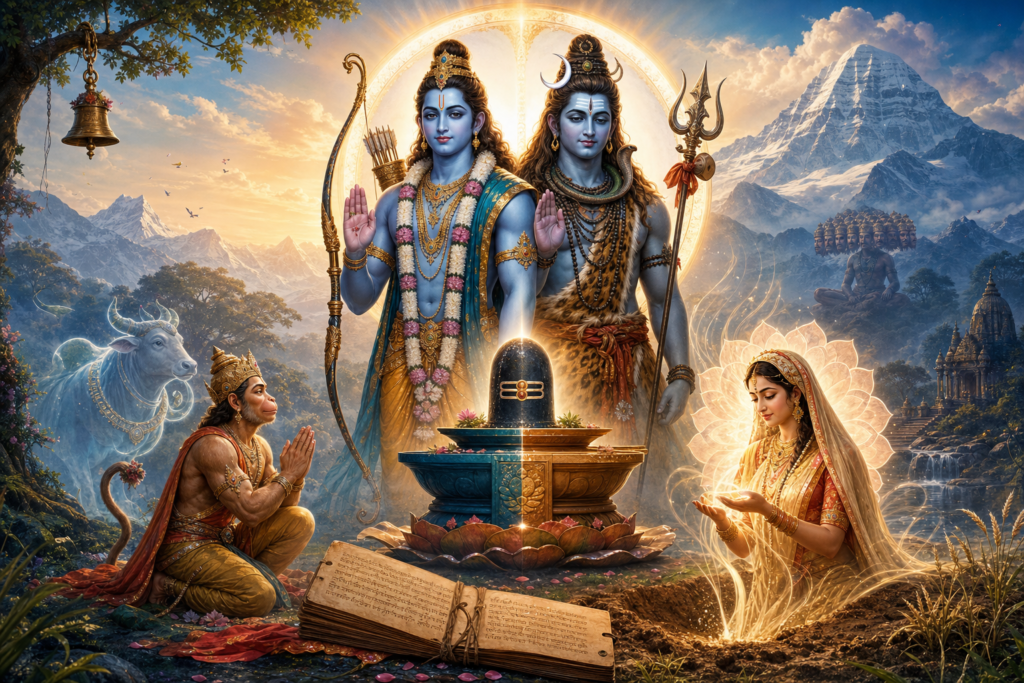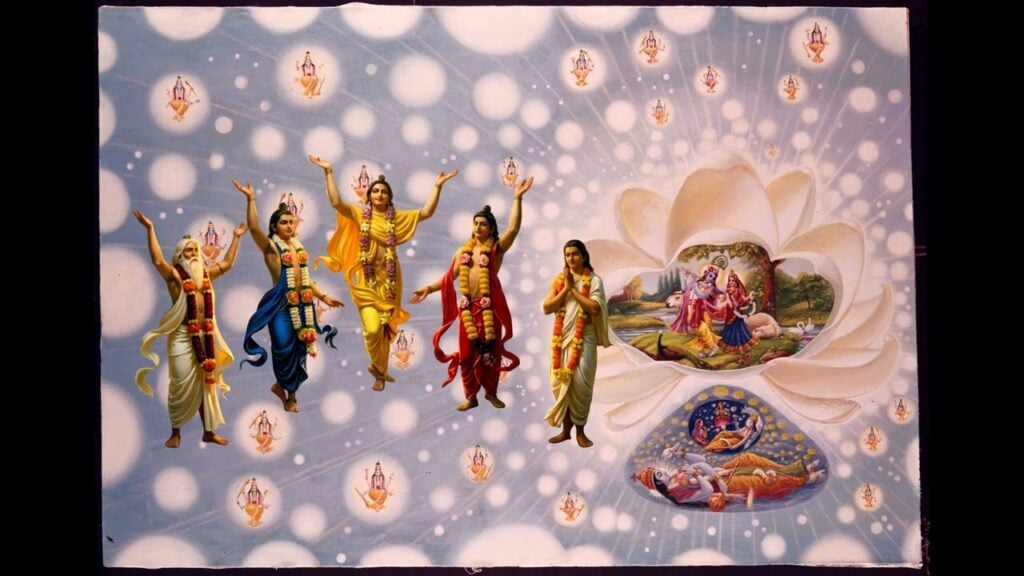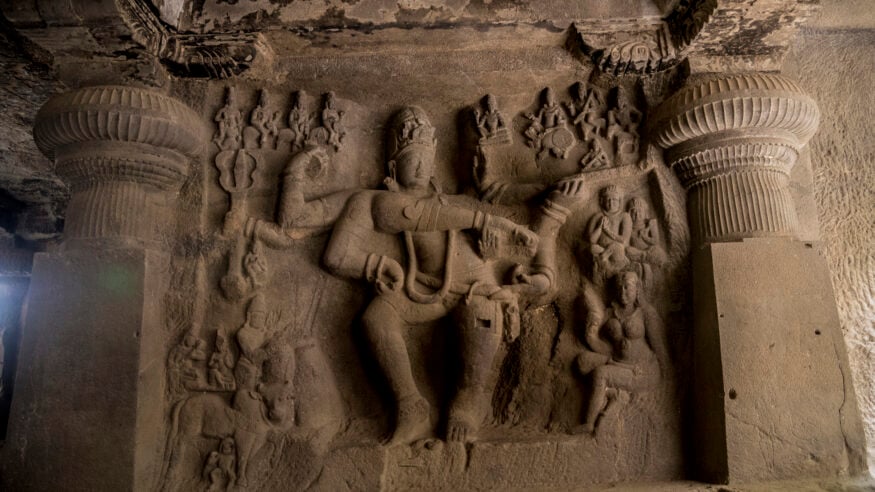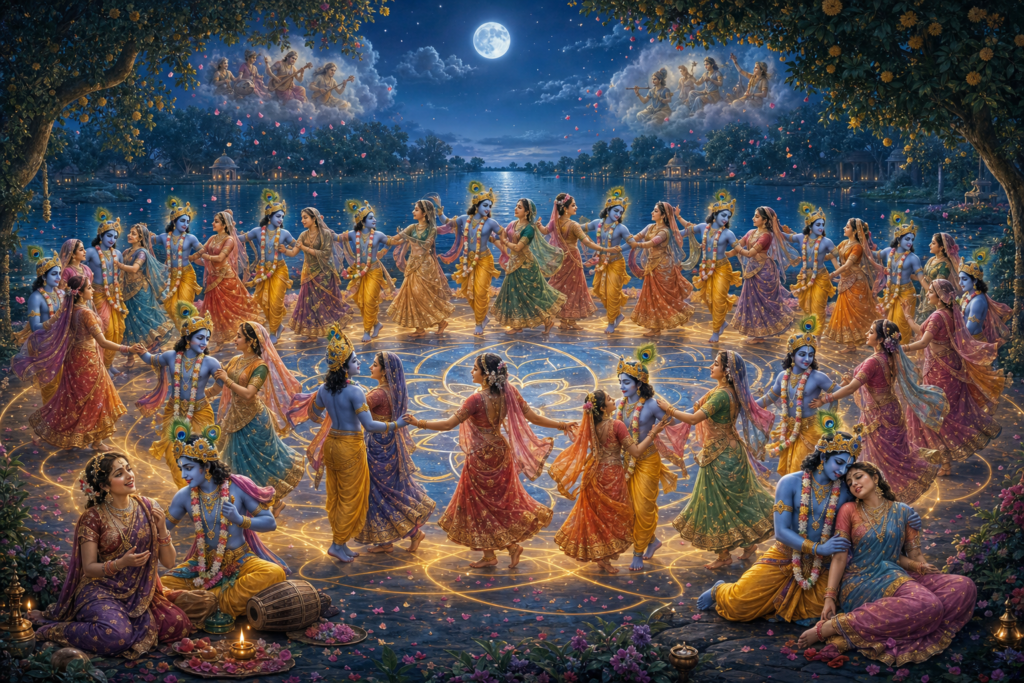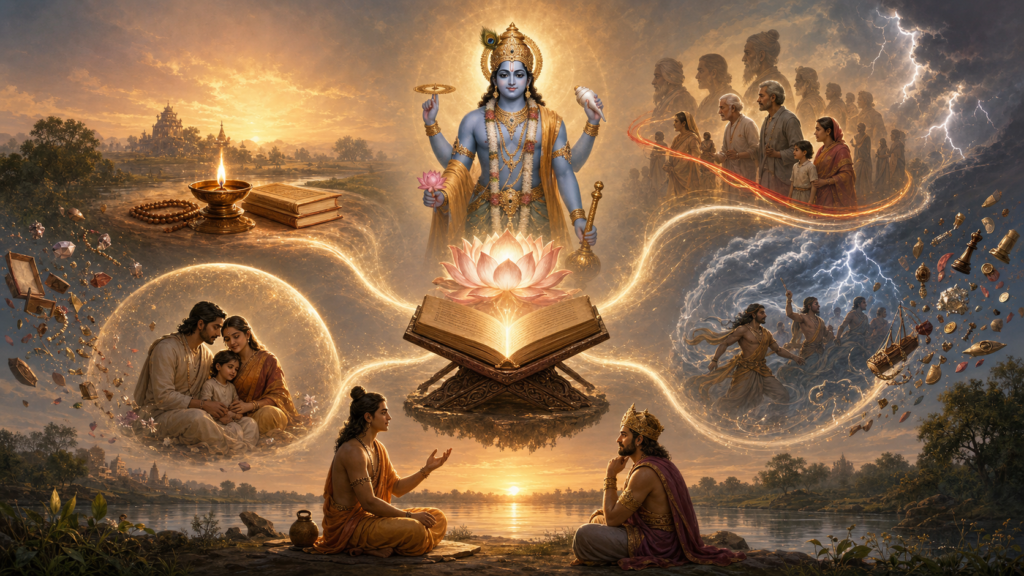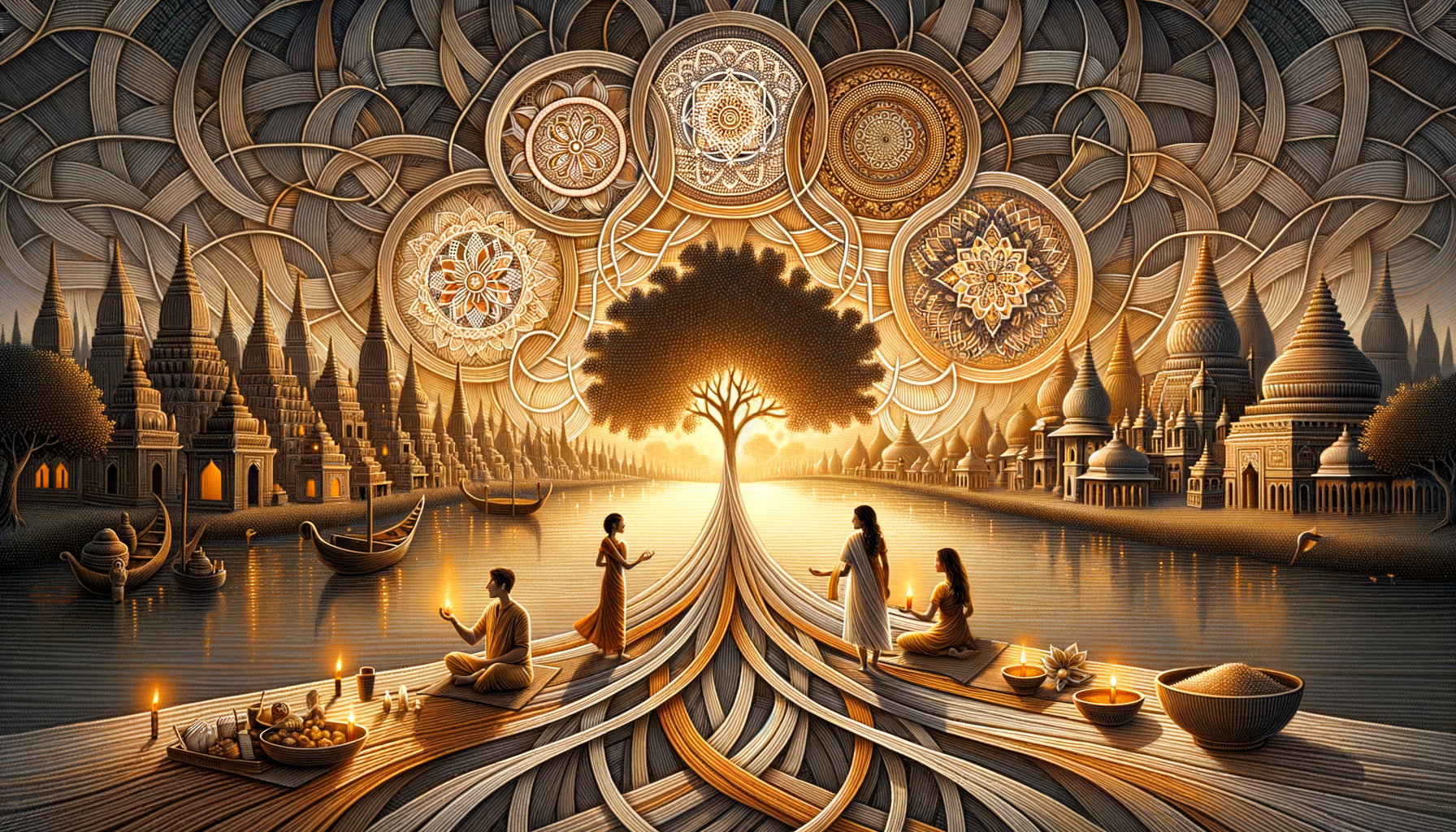
Hinduism places interconnectedness at the center of religious life, teaching that diversity of forms, paths, and practices ultimately expresses a single underlying reality. This perennial insight appears in philosophical reflection, temple ritual, household worship, and public festivals, sustaining a lived sense of unity in diversity that resonates across Dharmic traditions.
Philosophically, the relationship between atman and Brahman affirms a shared essence of life. The Vedic intuition that “ekam sat vipra bahudha vadanti” underscores how truth may be approached through multiple lenses without losing coherence. This framework helps explain why varied disciplinesbhakti, jnana, karma, and raja yogaare each regarded as valid, complementary avenues to the same summit.
Scriptures and practice reinforce this inclusivity. The Bhagavad-Gita describes the Divine responding to seekers in the mode they adopt, thereby acknowledging a plurality of approaches. Temples, home altars, and processional festivals maintain this plurality in public view, binding communities through shared devotion while honoring local customs, regional languages, and distinct ritual lineages.
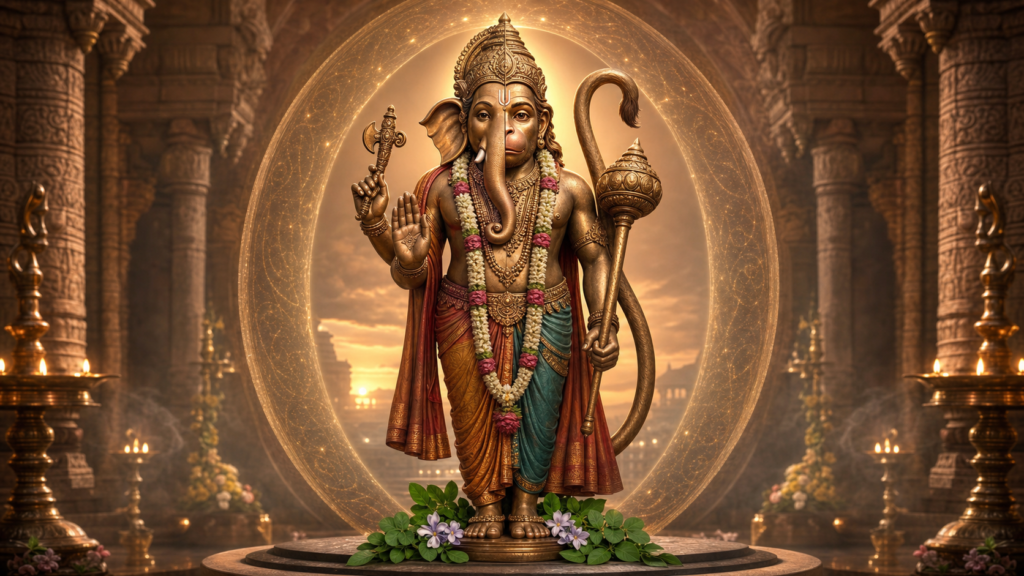
The principle of Ishtapersonal choice in divine form and practicefurther institutionalizes pluralism. By allowing worshippers to honor an Ishta Devata aligned with their temperament and duty, Hinduism encourages sincere, disciplined practice without insisting on uniformity. Such flexibility has historically nurtured spiritual depth alongside social cohesion.
Ritual rhythms and festivals translate these ideas into communal life. During Deepavali or Navaratri, families, neighbors, and visitors participate together in lighting lamps, sharing prasad, and singing hymns. Many describe a felt sense of solidarity at such moments, when sacred sound, fragrance, and light dissolve boundaries and reveal a common spiritual aspiration.
Reverence for life strengthens the ethic of connection. Ahimsa guides dietary choices, daily conduct, and environmental stewardship, inviting responsibility toward animals, rivers, forests, and soil. Care for Earth is not a cultural add-on but a direct expression of seeing the One dwelling in all beings.
This vision naturally extends to Dharmic kinship. Buddhism’s emphasis on interdependence (pratityasamutpada), Jainism’s anekantavada and rigorous ahimsa, and Sikhism’s sarbat da bhala and seva articulate complementary pathways that affirm dignity, compassion, and shared responsibility. Together, these traditions model a civilizational ethos that prizes inner transformation and social harmony.
Everyday experiences make the principle tangible. A community langar that welcomes all, a neighborhood aarti where lamps circulate hand to hand, or a quiet morning of japa and meditation before workeach moment aligns personal practice with collective well-being. Such practices cultivate humility, empathy, and a habit of seeing unity behind difference.
Historically and today, Dharmic traditions offer an alternative to ideologies that insist on a single exclusive path. They advance a framework where many methods can coexist without rivalry, provided ethical discipline, respect, and responsibility remain central. This orientation supports interfaith dialogue, social trust, and cultural resilience.
Practical commitments strengthen this unity: study of foundational texts, regular meditation, mindful speech, shared seva, and open-hearted dialogue. Communities that invest in these disciplines tend to sustain both spiritual depth and civic concord, demonstrating how inner clarity can guide outward cooperation.
Ultimately, the message aligns with Vasudhaiva Kutumbakamthe world as one family. Hinduism’s spiritual tapestry, woven from many strands, shows how plurality need not fragment society. When approached with knowledge, humility, and care, diversity becomes the very medium through which oneness is realized and lived.
Inspired by this post on Hindu Blog.