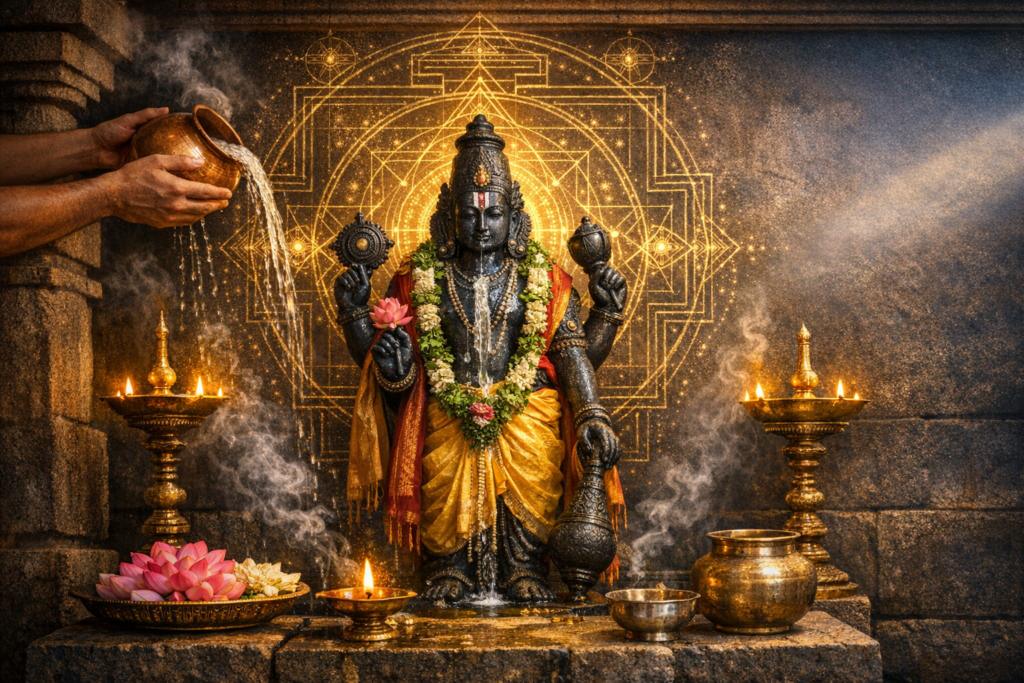
Kshirgram Jogadya Shaktipeeth in West Bengal stands at the confluence of Ramayana lore and Shakta devotion, where the spiritual memory of Hanuman’s courage is interwoven with the living presence of Maa Jogadya, revered locally as an aspect of Bhadrakali. The site is celebrated as a Shakti Peetha, part of the sacred geography that maps the compassion, protection, and transformative power of the Divine Mother across the subcontinent.
Located near Katwa in the Bardhaman region, Kshirgram (also spelled Khirogram) preserves an enduring tradition that links the temple to the epic episode of Mahiravana. According to regional narratives, this is the “sacred shrine where Hanuman established Goddess Bhadrakali,” remembered in Bengal as Maa Jogadya. The continuity of worship at the Maa Jogadya Mandir embodies the layered history of Bengal’s devotional culture and its commitment to dharma.
In the Ramayana cycle, Mahiravana—an underworld ally of Ravana—abducted Rama and Lakshmana during the Lanka war. Hanuman descended into Pātāla, learned the hidden rites guarding Mahiravana’s power, and confronted the demon in a sanctum protected by five directions of flame. The tradition highlights Hanuman’s manifestation as Panchamukhi Hanuman, extinguishing the five lamps simultaneously and ending Mahiravana’s tyranny to rescue Rama and Lakshmana.
Before that decisive combat, Hanuman is said to have invoked Bhadrakali for strength and righteous protection. In gratitude for victory, he consecrated the Mother’s presence, a sacred act that, in Bengali memory, resonates as the establishment of Maa Jogadya. Kshirgram’s Jogadya Shaktipeeth thus becomes a doctrinal bridge, joining Vaishnava devotion to Rama with the Shakta recognition of the Divine Mother’s fierce compassion.
As a Shakti Peetha, Kshirgram is associated with the falling of a part of Sati’s foot; while accounts vary on specifics, the consensus venerates the site as a locus of primordial Shakti. The presiding Goddess—Maa Jogadya—is worshipped as Bhadrakali, whose iconography conveys vigilant grace, moral courage, and protection of devotees. This theological frame highlights how Shakti tempers valor with compassion, harmonizing strength and service.
Pilgrims describe the darshan at Maa Jogadya Mandir as an experience of gathered resolve: the courage of Hanuman, the protective embrace of the Mother, and the ethical clarity of dharma converge in one sacred encounter. Rituals emphasize humility, seva, and remembrance of Hanuman’s vow-keeping. Seasonal observances, especially during Navaratri, amplify the atmosphere of gratitude and collective renewal.
The legend’s moral architecture is strikingly inclusive. The virtues it affirms—steadfast courage, compassionate action, and fidelity to truth—are honored across Hinduism, Buddhism, Jainism, and Sikhism. As a living heritage site, Kshirgram encourages dharmic unity by inviting all who revere these values to contemplate the feminine sacred, honor service to others, and reaffirm a shared commitment to non-harm and righteousness.
From a cultural heritage perspective, Kshirgram exemplifies how sacred geography preserves civilizational memory. The temple’s narrative of Panchamukhi Hanuman and Bhadrakali’s grace offers a resilient frame for ethical life: courage must be directed by wisdom, and power is to be sanctified by compassion. These ideas inform public devotion and everyday ethics, shaping community identity in Bengal and beyond.
For students of epic literature and comparative religion, the site illustrates an integrative reading of the Ramayana. Hanuman’s heroic rescue of Rama and Lakshmana is not presented in isolation; rather, it is completed through the consecration of Shakti, signaling that devotion (bhakti), ethical action (dharma), and transformative knowledge (jnana) work in concert. This synthesis sustains the relevance of the story for contemporary seekers.
Today, Kshirgram Jogadya Shaktipeeth continues to draw pilgrims, historians, and spiritual practitioners. The shrine’s enduring message—Hanuman’s triumph through Bhadrakali’s grace—invites reflection on how resolve, humility, and shared dharmic values can guide harmonious living. In honoring Maa Jogadya, communities celebrate a legacy that binds Bengal’s local devotion to the wider tapestry of India’s sacred traditions.
Inspired by this post on Hindu Blog.