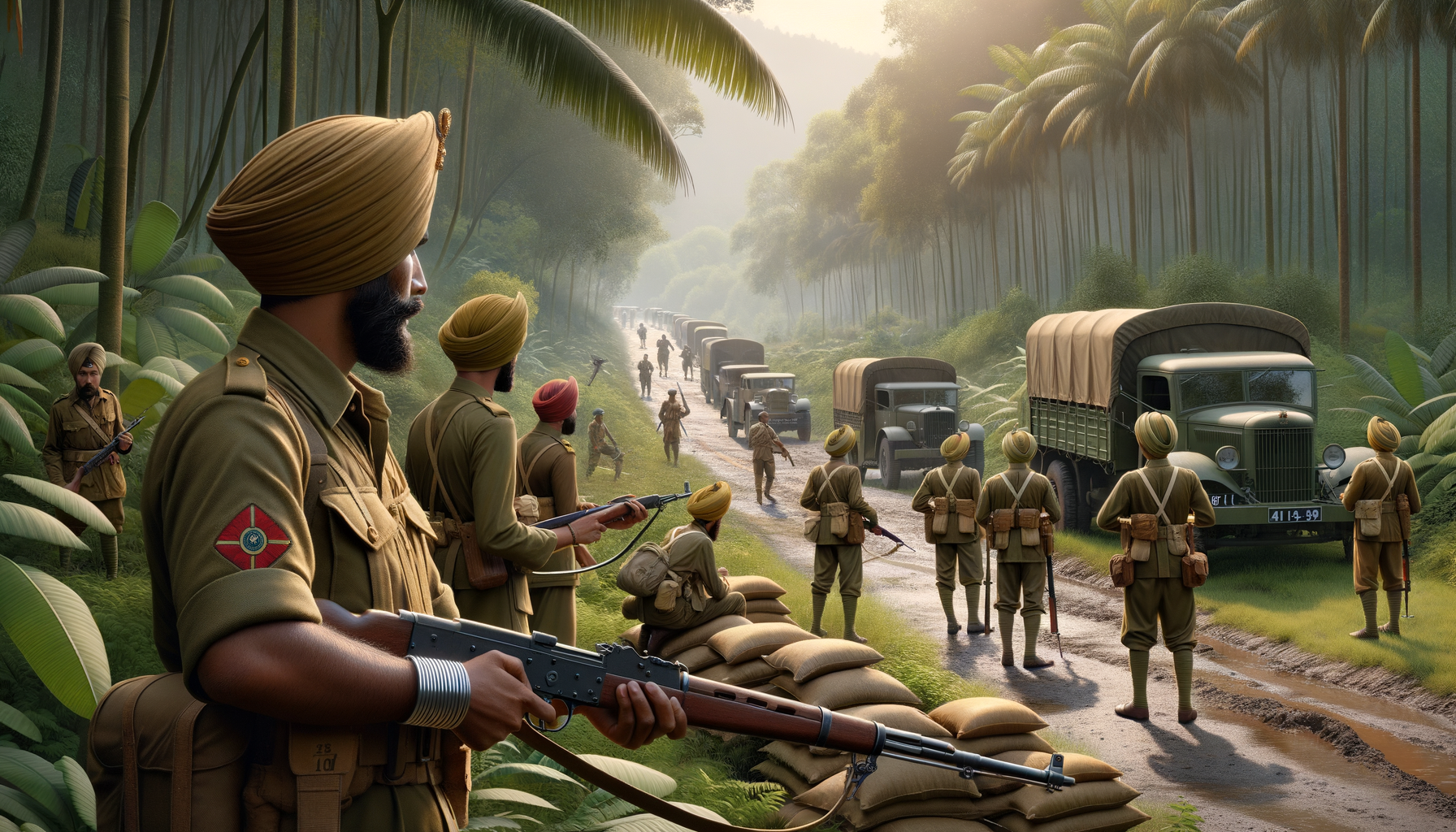
The Malaya Campaign of 1941–42 demanded uncommon courage from units of the British Indian Army. Among them, the 5th Battalion, 11th Sikh Regiment stood out for disciplined tenacity and exemplary morale in the face of overwhelming odds. Their conduct in Malayamarked by steadfast rear-guard actions, protective withdrawals, and an unwavering commitment to dutyembodies a standard of military professionalism that continues to inspire.
Operating under relentless pressure amid tropical terrain, extended supply lines, and rapid enemy advances, the battalion confronted the operational realities of World War II in Southeast Asia with composure. In positions that often required holding ground to safeguard broader formations, the soldiers of the 5/11 Sikh Regiment demonstrated the tactical patience, cohesion, and resolve associated with effective final stands. Such actions were not merely acts of defiance; they were deliberate contributions to the protection of withdrawing columns and vulnerable non-combatants during the Battle of Malaya.
Contemporary accounts from British Malaya describe moments where small, well-led detachments made a decisive difference in buying time along critical axes of movement. The battalion’s emphasis on duty, discipline, and mutual trust was central to these outcomes. Even as the strategic situation deteriorated, their bearing remained professional and restrained, balancing operational necessity with the ethical imperatives expected of a regular force representing the Indian Army.
The ethos guiding the 5/11 Sikh Regiment was anchored in dharmaduty with compassionand the kshatra ideal of principled courage. These values resonate across dharmic traditions, including Hinduism, Buddhism, Jainism, and Sikhism, emphasizing protection of the vulnerable, self-discipline, and service. The battalion’s example underscores that military valor and moral restraint are not opposites but complementary pillars of an integrated ethical framework that transcends individual sectarian identities and fosters unity across dharmic communities.
Beyond battlefield effectiveness, the human dimension stands out. Letters, memoirs, and regimental recollections evoke the quiet determination of soldiers who understood both the gravity of the Malaya Campaign and their responsibility to one another. The emotional weight of rear-guard tasksknowing that every hour held could save livesimbued their actions with a dignity that speaks to readers across generations. In this way, the battalion’s story functions as both a historical record and a moral touchstone.
The legacy of the 5th Battalion, 11th Sikh Regiment in Malaya is thus twofold: tactically, it represents textbook examples of delaying actions and unit cohesion under duress; ethically, it affirms a shared dharmic commitment to courage tempered by compassion. Remembering this chapter of World War II Indian Army history strengthens a broader culture of interfaith respect, collective resilience, and unity within and across dharmic traditions.
As the story of the Malaya Campaign continues to be studied, the battalion’s gallant final stands remain a vital reference for understanding how disciplined leadership, moral clarity, and communal solidarity can shape outcomes far beyond the battlefield. Their bravery, rooted in shared civilizational values, offers a clear and enduring lesson: unity in purpose and principle is a force multiplier in both war and peace.
Inspired by this post on SikhNet – News.