The image of Lakshmana drawing a protective Lakshmanrekha around Sita has become one of the most recognizable motifs associated with the Ramayana. Yet a careful reading of the Valmiki Ramayana reveals no such line. This absence often surprises readers who grew up with popular retellings, televised adaptations, and schoolbook illustrations that foreground the boundary as a decisive moment in the narrative.
Textually, the Aranya Kanda in the Valmiki Ramayana describes Sita urging Lakshmana to go after Rama, Lakshmana’s reluctant departure, and Ravana’s arrival disguised as a mendicant. The sequence emphasizes duty, anxiety, and deception, but it does not include Lakshmana inscribing a line. Modern scholarship generally agrees that the motif is a later accretion rather than part of the earliest stratum of the epic tradition.
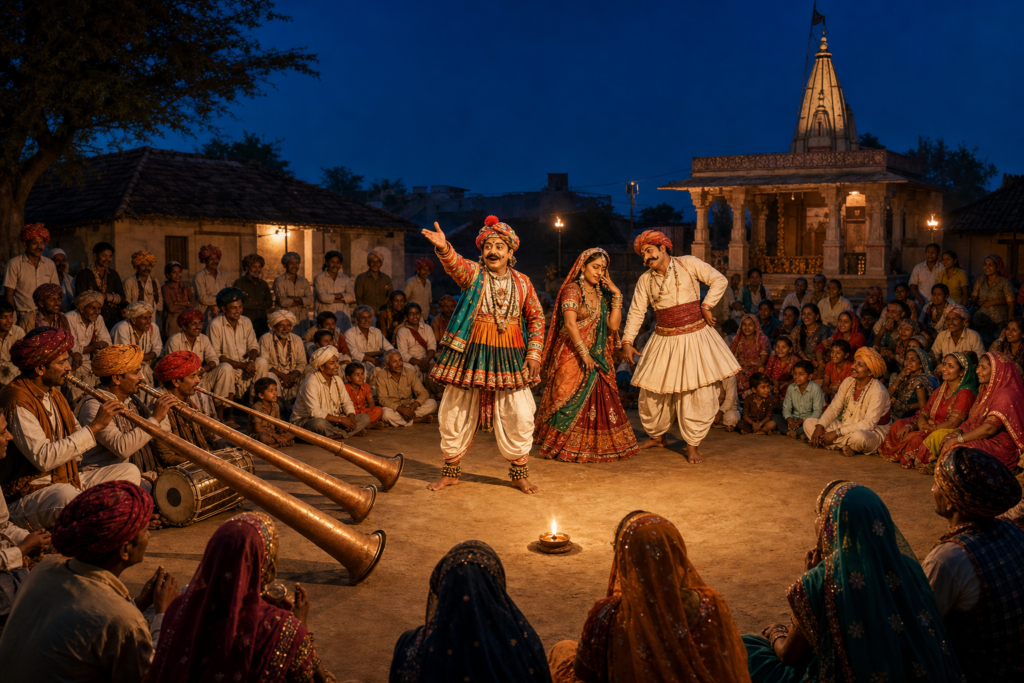
How, then, did the Lakshmanrekha enter the story-world? The motif gains clear visibility in later-day Ramayanas, regional vernacular retellings, and performance traditions such as Ram Lila. Over centuries, storytellers, poets, and theater practitioners introduced visual devices that clarified ethics for audiencesamong them a drawn boundary that dramatizes maryada (normative limits) and the peril of crossing thresholds. In this way, the Lakshmanrekha became a memorable teaching symbol, even if it is not part of Valmiki’s original text.
There are persuasive reasons why the motif took root. Pedagogically, a line on the ground offers a simple, powerful visualization of protection and transgression. Dramaturgically, it provides a clear stage cue. Ethically, it highlights the tension between trust, autonomy, and obedience in the Sita–Lakshmana–Ravana episode. Such narrative clarifications are common across the epic’s long history, where later Ramayanas and oral traditions often reshape scenes to communicate dharma with greater immediacy.
Symbolically, the Lakshmanrekha speaks to enduring concerns: safe boundaries, consent at thresholds, and the responsibilities that accompany protection. In modern Indian languages, “Lakshmanrekha” now functions as a living metaphor for ethical limits and legal or social red lines. The idea resonates well beyond the Ramayana, finding analogues across dharmic traditionsBuddhist sīla and monastic sīmā (boundary), Jain maryada in conduct, and Sikh maryada in communal disciplineall of which frame freedom through self-regulation and responsibility.
Plurality is a hallmark of the Ramayana tradition. Hundreds of tellings exist across South and Southeast Asia, in Hindu, Buddhist, and Jain contexts, each bearing distinctive emphases and motifs. Within this tapestry, the Valmiki Ramayana remains the foundational source, while later retellingsfrom classical poetry to folk performanceextend the epic’s moral reach. Recognizing this layered textual history enriches understanding rather than diminishing devotion.
A balanced approach distinguishes between the earliest narrative layer and later interpretive additions without ranking one as “truer” than the other. The Valmiki account offers the canonical arc and language of the epic; the Lakshmanrekha, though later, distills ethical concerns in a single, memorable image. Together they illuminate how dharma is taught, received, and reimagined across ages and communities.
For readers seeking both accuracy and meaning, the takeaway is clear: consult the Valmiki Ramayana to know what the earliest text says, and appreciate the Lakshmanrekha as a powerful symbol introduced by later Ramayanas and performance traditions. This dual awareness honors textual fidelity and embraces the creative, unifying vitality of the wider dharmic narrative ecosystem.
Inspired by this post on Hindu Blog.