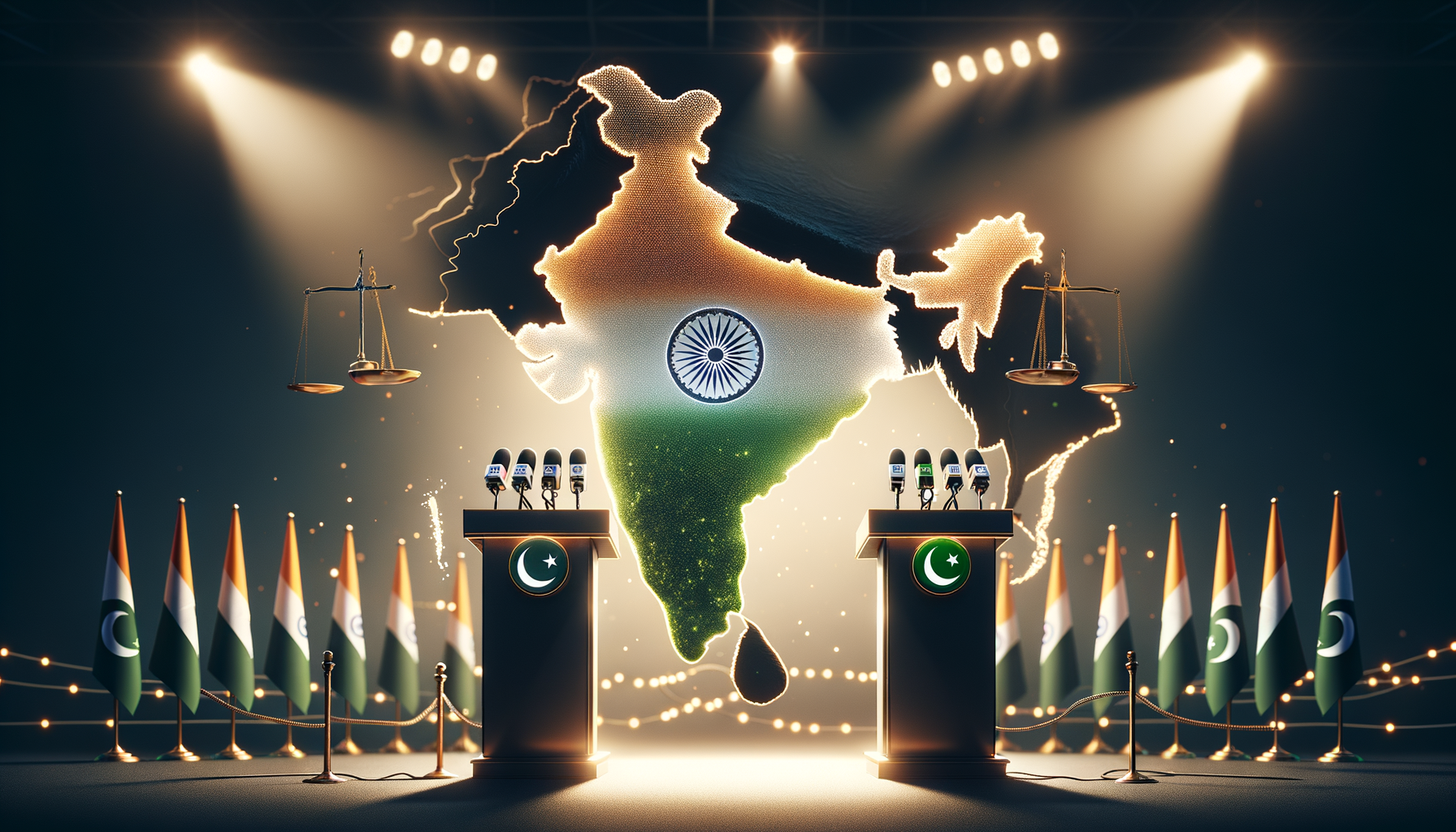
On 24 November 2025 in New Delhi, Pakistan’s Ministry of Foreign Affairs condemned remarks attributed to India’s Defence Minister Rajnath Singh referencing Sindh, describing them as a ‘Hindutva mindset’ that ‘challenges established realities’ and reviving the charge that India is ‘expansionist.’ The exchange immediately sharpened India-Pakistan discourse, with media narratives amplifying cross-border anxieties and policy commentators reassessing risks to regional stability.
Set against the backdrop of Indo-Pak Relations, the controversy illustrates how terminology such as ‘expansionist’ reappears cyclically in moments of heightened sensitivity. While the phrasing seeks to frame intent, the diplomatic consequences often extend beyond rhetoric—shaping public sentiment, affecting Track I and Track II engagements, and complicating confidence-building measures designed to reduce Cross-Border Tensions.
Historically and culturally, Sindh is interwoven with the civilizational tapestry of the Indian subcontinent. Shared linguistic, artistic, and spiritual currents connect communities across borders, with enduring ties spanning Hinduism, Buddhism, Jainism, and Sikhism. These dharmic traditions have long modeled pluralism, restraint, and dialogue—values that remain essential for a sustainable framework of Geopolitics and International relations in South Asia.
In Geopolitical Tensions of this kind, precision in language matters. Diplomatic Relations benefit when political messaging distinguishes between cultural-civilizational bonds and contemporary statecraft, thereby reducing misperceptions. A clear emphasis on sovereignty, mutual respect, and legal norms—alongside space for cultural scholarship—can prevent symbolic assertions from being misread as policy positions.
Public reaction across the region reflects a familiar mix of pride, pain, and fatigue. Families with roots in Sindh and the broader subcontinent often feel the emotional weight of historical memory and present-day borders. Their experiences underscore a simple truth: de-escalatory language and issue-based dialogue serve citizens better than escalatory framing, which tends to polarize communities and narrow diplomatic options.
For policy practitioners, the episode offers practical lessons. First, avoid zero-sum narratives that reinforce siege mentalities. Second, center discussions on tangible deliverables—trade facilitation, humanitarian corridors, and cultural exchanges—where progress is measurable. Third, draw from the region’s dharmic inheritance, which prizes unity in diversity, to guide conflict-sensitive communication and confidence-building.
Anchoring analysis in Unity in Diversity does not dilute national interests; it contextualizes them within a broader ethic of pluralism and responsibility. By foregrounding constitutional values, interfaith respect, and the shared civilizational heritage of Sindh, stakeholders can affirm cultural continuity without inviting strategic misinterpretation.
Ultimately, sustainable peace requires disciplined rhetoric and patient diplomacy. As this episode demonstrates, words carry strategic weight in South Asia’s security environment. Calm, law-grounded diplomacy—supported by societal initiatives that reinforce inter-communal harmony—remains the most reliable pathway to reduce Cross-Border Tensions and safeguard regional stability.
Inspired by this post on Struggle for Hindu Existence.