
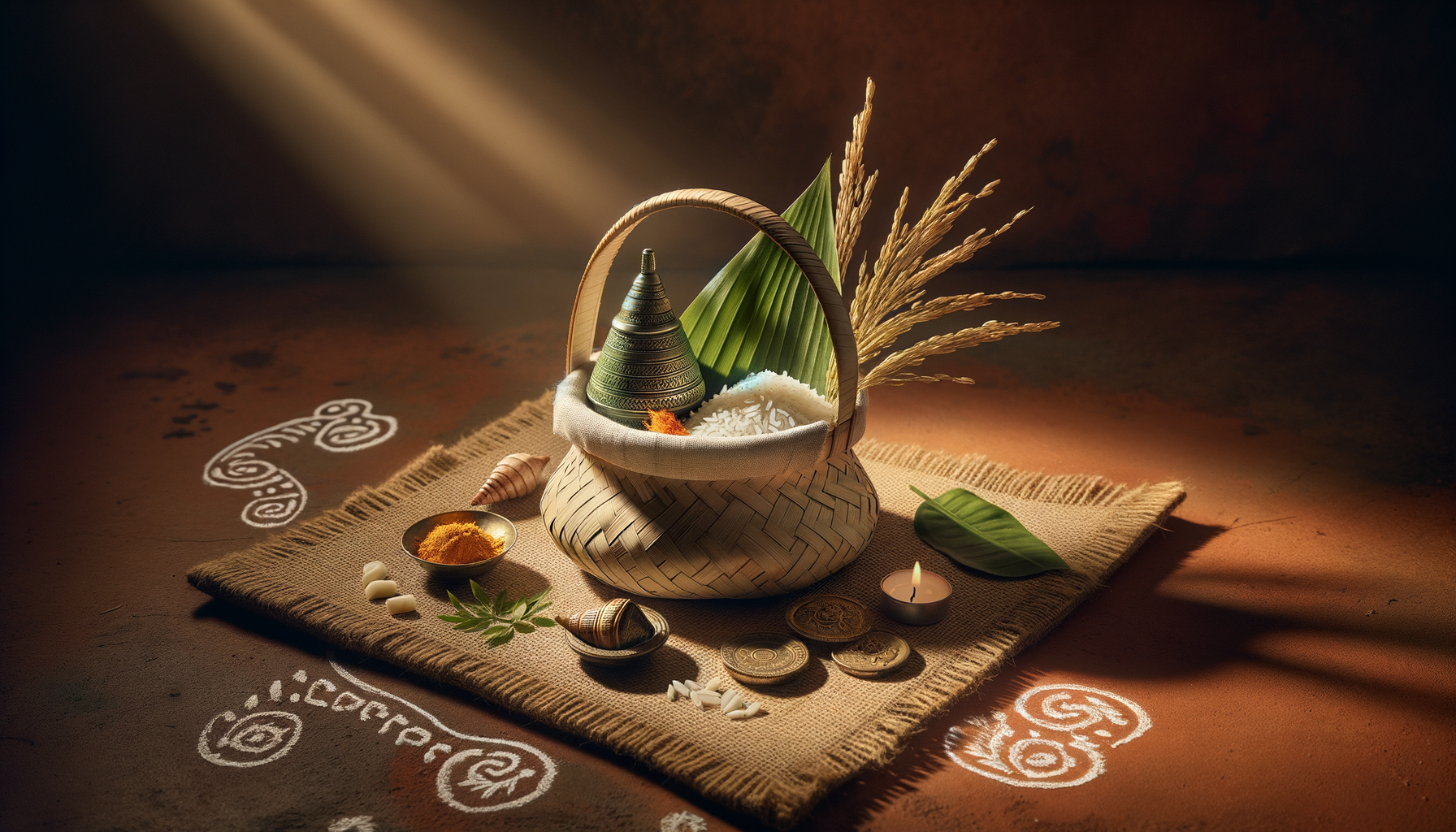
Ari Lakshmi refers to a distinctive Bengali household practice in which Goddess Lakshmi is invoked through a simple, symbolic arrangement inside a small bamboo basket. Rooted in agrarian life and seasonal rhythms, this form of Lakshmi Puja is especially noted in family traditions associated with the Dhaka and Comilla regions, where everyday agricultural elements are transformed into a focused domestic shrine of abundance, wellbeing, and ethical prosperity.
In this tradition, the bamboo basketoften akin to the kulo used in Bengal’s agrarian householdsserves as the sacred vessel. The interior is typically lined with clean cloth or leaves and then layered with rice grains or unhusked paddy (dhaan). Households may add turmeric, vermilion, durva grass, a small sheaf of paddy, betel leaves, cowries or coins, a diya, and occasionally a conch. Rather than a sculpted murti, Lakshmi’s presence is represented through these materials and through alpona (rice-paste motifs) or small footprints that signify an invitation to the Goddess.
Each element carries layered symbolism that aligns with core values in Hindu traditions. The bamboo basket mirrors sustainability and interwoven community life; rice and paddy embody annam (sustenance) and the continuity of harvest cycles; turmeric and vermilion mark auspiciousness and shakti; cowries or coins evoke responsible wealth; and the lamp symbolizes inward illumination and clarity. Alpona patterns and footprints, drawn with rice paste, visually express the wish for a dignified, harmonious home graced by Lakshmi.
Ritual observances are typically calm and contemplative. Families clean and sanctify the basket, draw a simple alpona, arrange grains and auspicious items, and light a lamp before offering flowers, sweets, or seasonal produce. Simple stotras or names of Lakshmi may be recited, and silence is often observed to deepen gratitude for food, livelihood, and family cohesion. The emphasis rests on sincerity over scale, making the practice accessible in both rural homes and urban apartments.
Within Bengali households, Ari Lakshmi preserves intergenerational memory and shared identity. Many recall evenings when elders carefully arranged the basket, guiding younger members through gestures of reverence, cleanliness, and care. The quiet dignity of this puja fosters emotional connectionuniting family around values of gratitude, ethical earning, and mindful consumptionwhile strengthening cultural heritage through lived, repeatable acts.
The practice resonates with broader dharmic sensibilities that honor simplicity, non-violence, and reverence for sustenance. Comparable household customs across dharmic traditionssuch as lamp-lighting, rice-based offerings, or gratitude for harvestsaffirm a shared ethos: wealth is best understood as responsibility, not excess. This convergence underscores unity-in-diversity across Hinduism, Buddhism, Jainism, and Sikhism, where humility, ethical prosperity, and service to community are held in high regard, even as forms of worship and expression vary.
Contemporary relevance is notable. Ari Lakshmi offers an eco-conscious model that uses biodegradable, locally available materials, aligning with modern sustainability goals. It adapts well to small spaces, encourages children to engage with cultural practices through touch and sight, and provides an opportunity to discuss the ethics of wealth, sharing (daan), and community wellbeingtimeless lessons presented through a simple bamboo basket.
Ari Lakshmi thus stands as a lucid, elegant expression of Bengali tradition: an everyday shrine to prosperity fashioned from the very elements that sustain life. It is a practice that bridges memory and meaning, joining material sufficiency with spiritual clarity, and quietly reminding households that true abundance is measured by gratitude, harmony, and collective care.
Inspired by this post on Hindu Blog.










