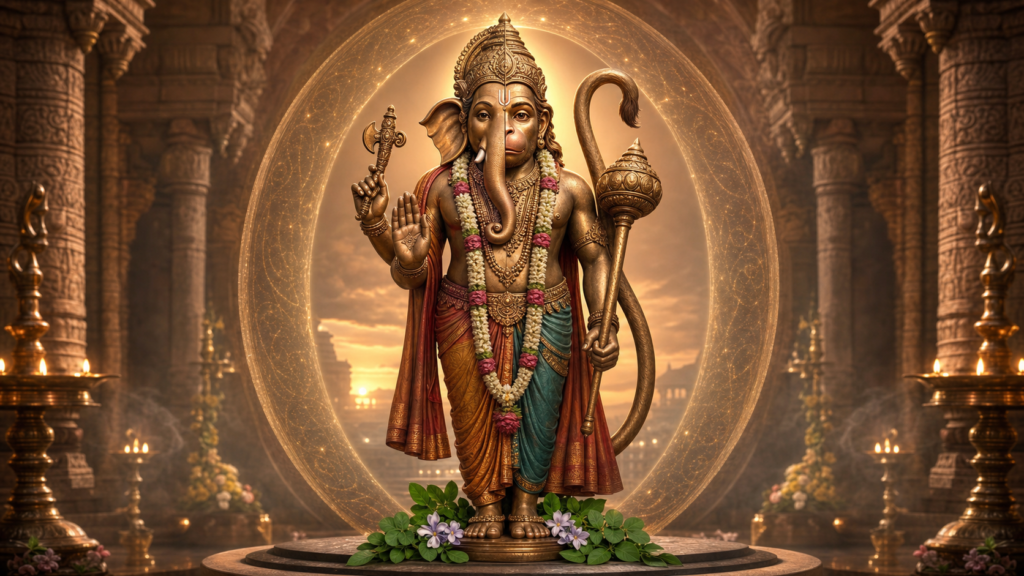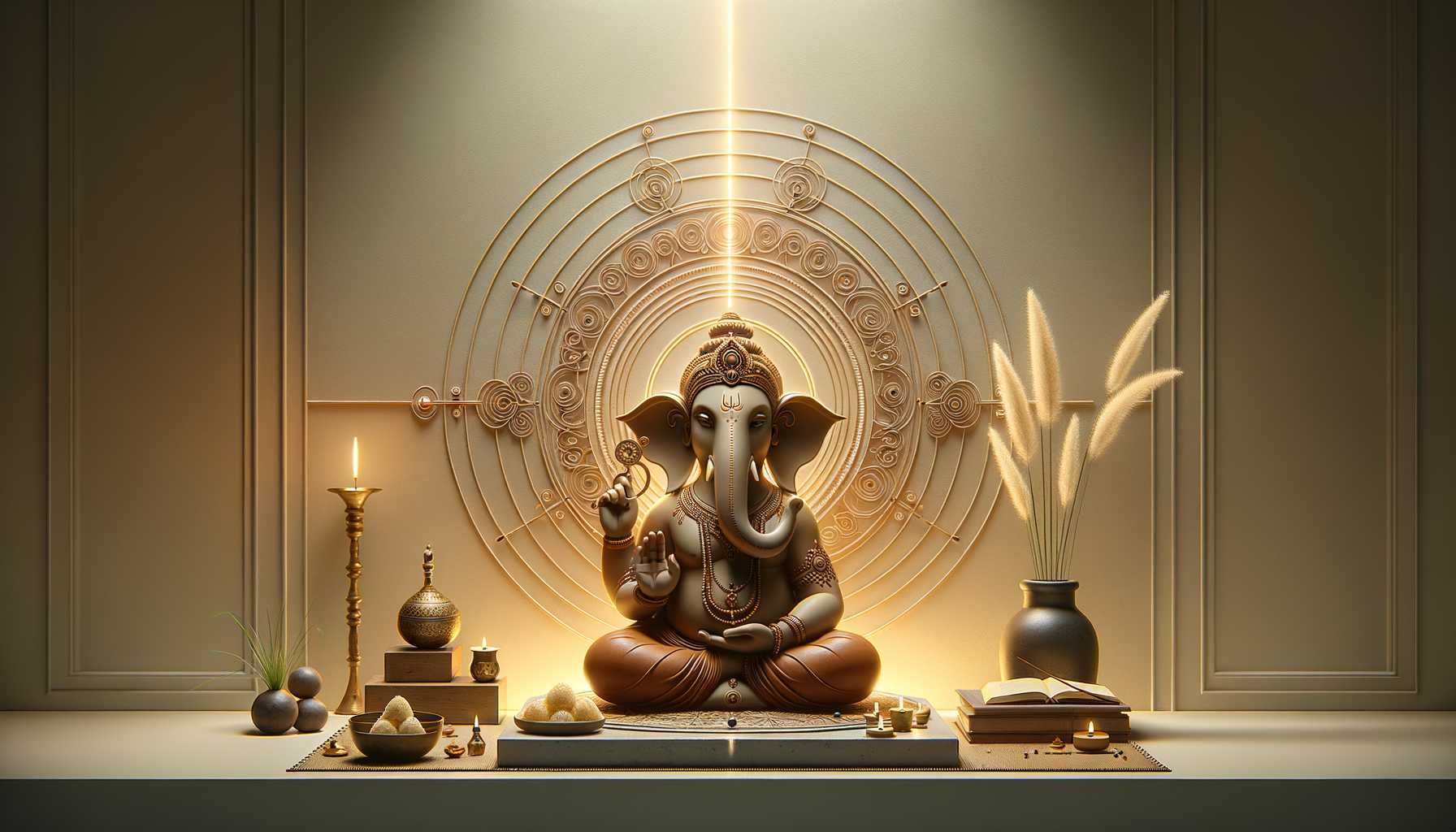
Among the many sacred representations of Shri Ganesha, the straight-trunk form stands out for its distilled spiritual clarity. Devotees often encounter idols with trunks turning left (ida) or right (pingala), yet the rare straight trunk evokes a deeper yogic symbolism: the ascent beyond duality into luminous balance. This form invites contemplation on wisdom, auspiciousness, and the inner removal of obstaclesqualities venerated across dharmic traditions.
In symbolic terms, a straight trunk is frequently understood as an image of sushumna nadi the central channel in yogic anatomysignifying equilibrium of ida and pingala and the unitive awareness cultivated through dhyana. Whereas left-trunk images are associated with calm domestic auspiciousness and right-trunk images with disciplined spiritual rigor, the straight-trunk murti represents poised transcendence, a sattvic state conducive to one-pointed concentration and stable insight. It gestures toward moksha-orientation, not by negating everyday life, but by harmonizing it with inner stillness.
Ritually and practically, a straight-trunk Ganesha idol is well suited for spaces dedicated to learning, meditation, and decision-making. Households, study rooms, and workplaces that value clarity, ethical focus, and steady progress often gravitate to this form. In these settings, Ganesha as Vighnaharta is contemplated not only as the remover of external impediments but also as the guide who softens inner rigidity, confusion, and hesitationsubtle obstacles that impede wisdom.
Viewed through a yogic-psychological lens, the straight trunk symbolizes coherent pranic flow and balanced attention. Practices such as mindful breathing and brief periods of dhyana foster the steady, integrative awareness this form embodies. While traditional texts emphasize viveka (discernment) and abhyasa (consistent practice), contemporary experience similarly attests that single-pointed focus supports emotional regulation, cognitive clarity, and constructive actionqualities aligned with sattva and inner composure.
Scriptural and devotional currents reinforce this meaning. Ganesha is honored as Siddhivinayaka, the bestower of success on noble undertakings, and as the guardian of right beginnings. While invocations such as “Vakratunda Mahakaya” praise the awe-inspiring presence of Ganesha (even when celebrating curved-trunk imagery), recitations like Ganesha Atharvashirsha and “Om Gam Ganapataye Namah” are equally appropriate for the straight-trunk form. Regional traditions may vary, yet a consistent theme endures: wisdom arises where attention is serene and conduct is upright.
For home worship, many place a straight-trunk Ganesha in the east or north-east of the sacred space, maintaining a clean, quiet, and well-lit area. Offerings such as modaka, durva grass, and fresh flowers are common. A simple daily routinelighting a lamp, practicing three to five minutes of gentle breath awareness, and reciting a short mantrahelps cultivate the calm focus this form signifies. Integrating ethical observances, study, and compassionate living anchors the devotional mood in everyday choices.
The benefits traditionally associated with this form include composure under pressure, clarity in studies and work, harmonious relationships, and steady progress in sadhana. Devotees frequently describe a felt shift toward patience, thoughtful speech, and courage to refine habits. Over time, this becomes a quiet reservoir of resilience, enabling purposeful action without agitation.
Intertraditionally, the symbolism resonates across the dharmic family. Buddhism’s emphasis on attentive awareness, Jainism’s valorization of self-discipline and right conduct, and Sikhism’s stress on ethical living and remembrance of Oneness all converge with the straight-trunk ideal of inner balance and egoless action. Such convergences nurture unity in spiritual diversity, affirming that the removal of obstacles is ultimately an inner alignment with truth and compassion.
In lived experience, many communities reflect that during Ganesh Chaturthi or new beginnings, the presence of a straight-trunk murti encourages thoughtful planning, measured speech, and goodwill. In study halls and offices, it often becomes a symbol of ethical focusreminding teams and students alike to seek clarity before action. Across these contexts, the form serves as an ever-present invitation: to move from restlessness to centeredness, from uncertainty to insight.
Choosing a Ganesha idol is a deeply personal matter of Ishtawhat elevates the mind and refines conduct. For those inclined toward contemplative order and balanced resolve, the straight-trunk form offers a subtle, steadying presence. It quietly teaches that true auspiciousness is not noise or haste, but the soft radiance of a mind aligned with wisdom, compassion, and disciplined joy.
Inspired by this post on Hindu Blog.