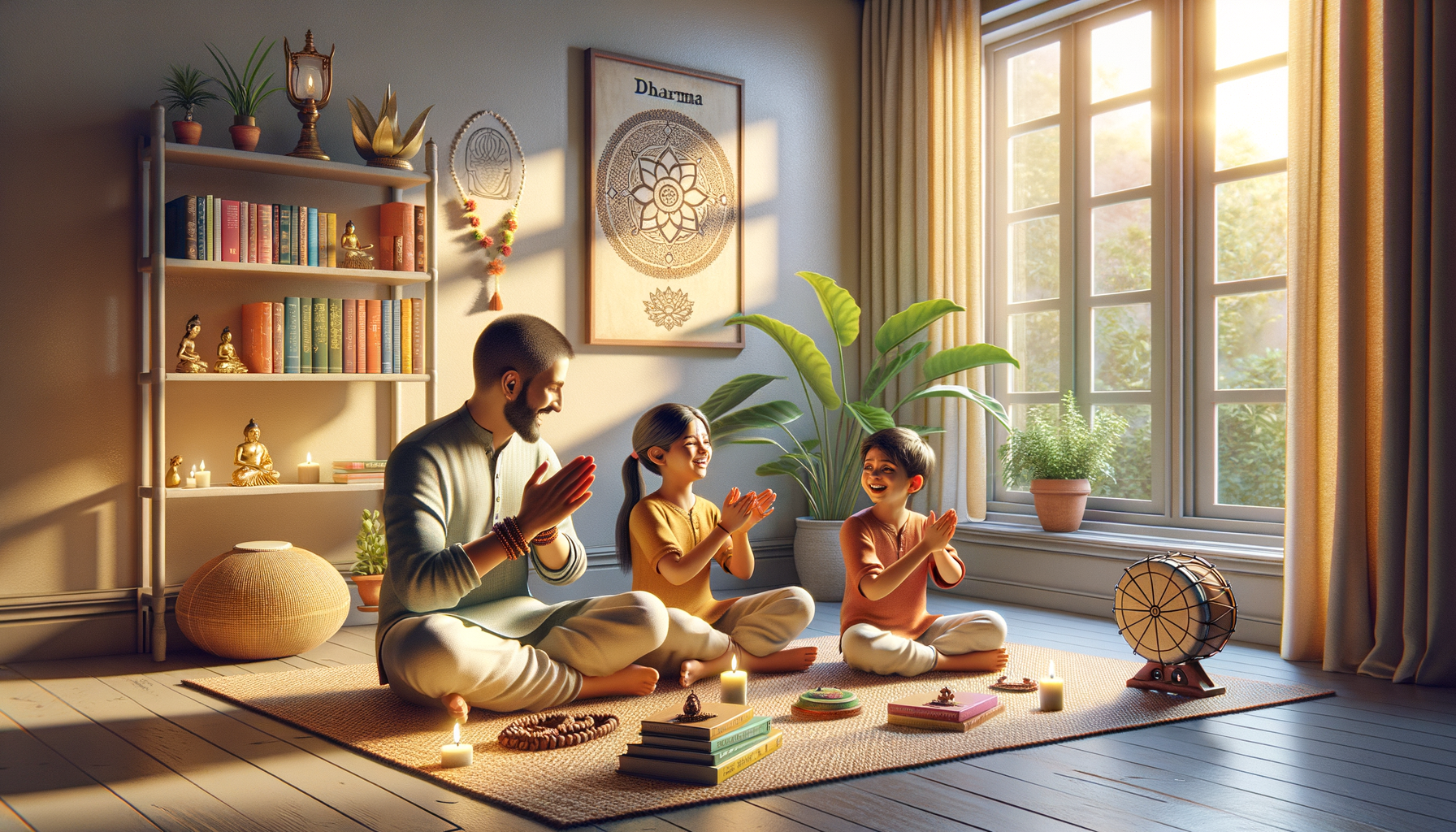
In many Dharmic families, spiritual growth emerges not from lectures or constant instruction but from play, respect, and a sense of lightness. This perspective reflects Hindu spirituality and the Hindu way of life, and it resonates across Buddhism, Jainism, and Sikhism, where compassion, mindfulness, and everyday presence guide early learning. When children are met with warmth and delight rather than didactic teaching, they naturally develop inner stability, empathy, and a lifelong curiosity about dharma.
Play functions as a child’s first experience of mindfulness. Singing, movement, simple games, and shared laughter cultivate presence (bhava) and allow prana to settle. These moments are not trivial; they are formative. They teach attention, gratitude, and relational harmony without the burden of moralizing. In this sense, playful time at home becomes a quiet sadhana that strengthens family values and spiritual awareness in an age-appropriate way.
Respecting children as carriers of innate wisdom is equally important. Within the broader spirit of the Guru-Shishya Relationship, learning is reciprocal rather than hierarchical: adults observe, listen, and learn from a child’s natural wonder. Treating their questions with seriousness and their emotions with dignity fosters self-worth and ethical clarity. This approach affirms ahimsa in communication and nurtures trustcore qualities shared across Dharmic traditions.
Excessive seriousness can dampen curiosity and close the heart. A light, joyful environment invites children to explore the sacred through everyday experiences. Simple breath awareness woven into play, brief quiet moments after laughter, and affectionate encouragement help children feel safe in their own bodies and minds. Such practices integrate mindfulness and compassion into daily rhythms without pressure or performance.
Families can embed spiritual practices into ordinary routines. Greeting rituals that include clapping and laughter create a welcoming field of connection at day’s end. Short, playful breath awareness exercises before meals steady attention. Storytelling from the Puranas, Jataka tales, Jain moral parables, and Sikh sakhis offers shared meaning while honoring pluralism. Nature walks, bhajans or kirtan with gentle movement, and age-appropriate seva at home translate values into action and strengthen bonds.
Many households recall evenings when a parent returned home with a smile, a clap, and a few playful sounds that set the room laughing. These small rituals are often remembered for decades because they express belonging, tenderness, and care. In retrospect, they were a child’s first lessons in presence, gratitude, and the quiet joy at the heart of spiritual life.
Centered on play, respect, and joy, this Dharmic approach to parenting builds a resilient foundation for spiritual growth. It naturally integrates mindfulness, compassion, and family values while honoring the unity-in-diversity of Hinduism, Buddhism, Jainism, and Sikhism. By choosing connection over constant instruction, families cultivate inner clarity and communal harmonyessentials for a balanced, ethical, and spiritually aware life.
Inspired by this post on Hindu Pad.