Unveiling the Unmanifest (Avyakta): A Clear Guide to the Eternal Self in Hindu Thought
In Hindu philosophical inquiry, the unmanifest”avyakta”designates reality beyond sensory perception and conceptual grasp. It points to a dimension that precedes and sustains the manifest world, aligning with the Vedantic vision of the “Eternal Self” (Atman) and the impersonal absolute (Brahman). This exploration clarifies how “avyakta” functions as a pivotal idea for understanding consciousness, ethical living, and spiritual practice in everyday life.
Classical sources articulate this clearly: the Bhagavad Gita (8.20) distinguishes the changing manifest from an “avyakta” that is timeless and inexhaustible, while the Kena and Katha Upanishads describe an ultimate reality apprehended not by the senses but by the very awareness that illumines them. In this view, the unmanifest is not absence; it is the subtle ground of being from which forms arise and into which they resolve.
Philosophically, the distinction may be framed as manifest (“vyakta”) and unmanifest (“avyakta”). The manifest corresponds to name, form, and function within “Prakriti”governed by the gunas (sattva, rajas, tamas)while the unmanifest aligns with “nirguna Brahman,” reality devoid of limiting attributes. The Atman, as pure witnessing consciousness, is identical with this unbounded ground in non-dual (Advaita) interpretations, yet the insight is meaningful across diverse schools.
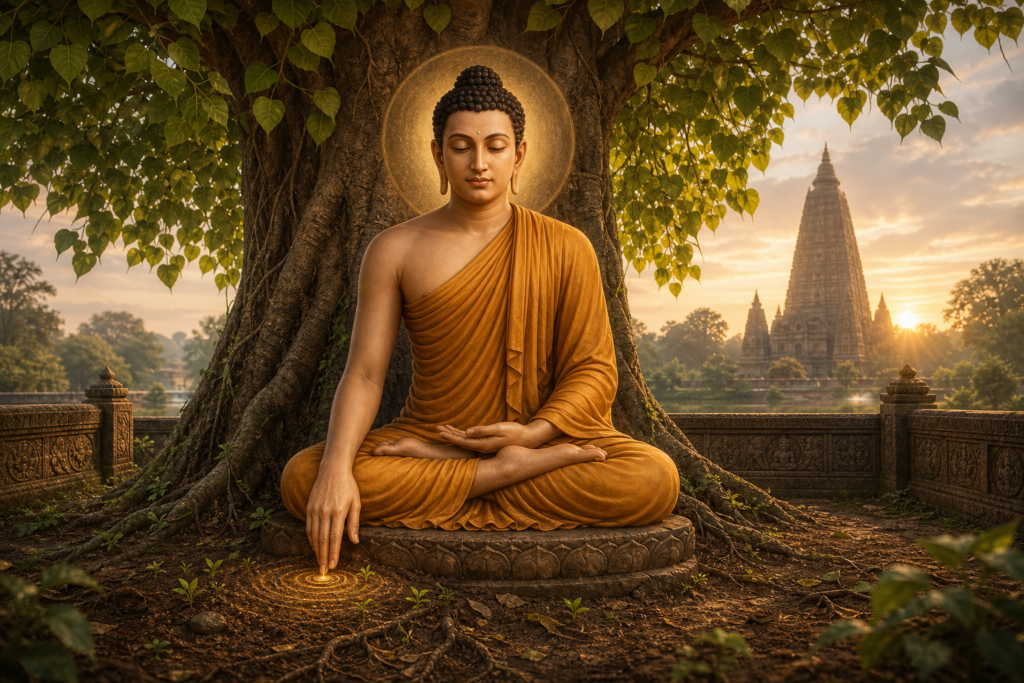
A practical entry point appears in the simple act of noticing awareness itself. When attention settlesthrough “pratyahara” (gentle withdrawal of the senses) and sustained meditationmany practitioners report a stable, lucid stillness that is not another sensory object. This does not negate the world; rather, it situates perception within a wider field of presence that is not shaken by change.
In lived experience, this insight expresses as inner steadiness, ethical clarity, and compassion. The recognition that one’s core is not a fleeting role or emotion dissolves reactivity and fosters responsibility. In daily decisions, this often translates into non-injury (ahimsa), truthful speech, and self-restraintvirtues that flow naturally when identity is rooted beyond the surface play of appearances.
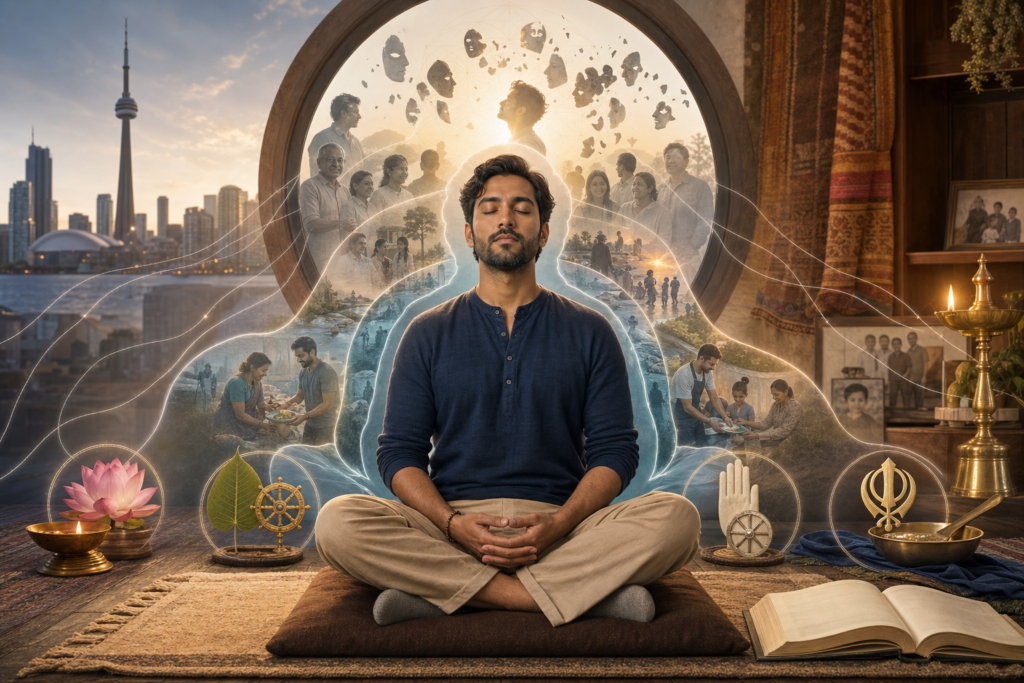
The unmanifest resonates across the dharmic family. In Buddhism, the “asaṅkhata dhātu” (the unconditioned) and Nibbāna indicate freedom from compounded phenomena; while the Buddhist analysis of self differs from Vedanta, the shared emphasis on transcending sensory constructs is evident. In Jainism, the vision of “śuddhātmā” (pure soul) beyond “pudgala” (matter) similarly affirms a luminous essence unbound by form. In Sikhism, the “Nirgun–Sargun” teaching holds that the One (Waheguru) is both beyond attributes (Nirgun) and manifest with attributes (Sargun), harmonizing transcendence and immanence. These convergences underscore unity-in-diversity at the heart of dharmic traditions.
Ethically, insight into “avyakta” widens the circle of care. Seeing the shared ground beneath differences encourages mutual respect, interfaith harmony, and service (seva). This integrative awareness supports the blog’s objective: strengthening unity among Hinduism, Buddhism, Jainism, and Sikhism by highlighting common contemplative goals and values.
Methodologically, the traditions recommend complementary paths: study (“śravaṇa”), reflection (“manana”), deep contemplation (“nididhyāsana”), meditation (dhyana), and selfless action (karma yoga). With consistent practice, seekers report that moments of still clarity naturally extend into relationships, work, and community life, transforming ordinary tasks into opportunities for mindful presence.
Common misconceptions deserve clarification. The unmanifest is not nihilism or world-denial; it is the very fullness that allows the world to appear. Nor is it unscientific credulity; it recommends disciplined inquirytesting claims against direct contemplative experience, ethical outcomes, and reason. Far from promoting withdrawal, the insight supports engaged, responsible living aligned with dharma.
Ultimately, the teaching of “avyakta” offers a coherent lens for integrating inner freedom with outer action. By grounding identity in the changeless, one meets change with wisdom and care. This is the enduring promise of the dharmic path: freedom that deepens compassion, clarity that strengthens community, and knowledge that inspires unity across traditions.
Avyakta means the unmanifest: reality beyond sensory perception and conceptual grasp. The article presents it as the subtle ground that precedes and sustains the manifest world.
How do the Bhagavad Gita and Upanishads describe the unmanifest?
The Bhagavad Gita distinguishes the changing manifest from an avyakta that is timeless and inexhaustible. The Kena and Katha Upanishads point to an ultimate reality known through the awareness that illumines the senses, not as another sensory object.
How is avyakta related to Atman and Brahman?
The article connects avyakta with the Vedantic vision of Atman and Brahman. In Advaita interpretations, Atman as pure witnessing consciousness is identical with the unbounded ground called nirguna Brahman.
Can meditation help a person understand the unmanifest?
The article presents pratyahara and sustained meditation as practical entry points. By noticing awareness itself, practitioners may recognize a stable, lucid stillness that is not merely another object of perception.
Does belief in the unmanifest deny the world?
No. The article explicitly says the unmanifest is not nihilism or world-denial, but the fullness that allows the world to appear. It supports engaged, responsible living aligned with dharma.
How does the article connect avyakta with other dharmic traditions?
The article notes resonances with Buddhism’s unconditioned, Jainism’s śuddhātmā, and Sikhism’s Nirgun-Sargun teaching. It presents these comparisons as a way to highlight unity-in-diversity across Hinduism, Buddhism, Jainism, and Sikhism.