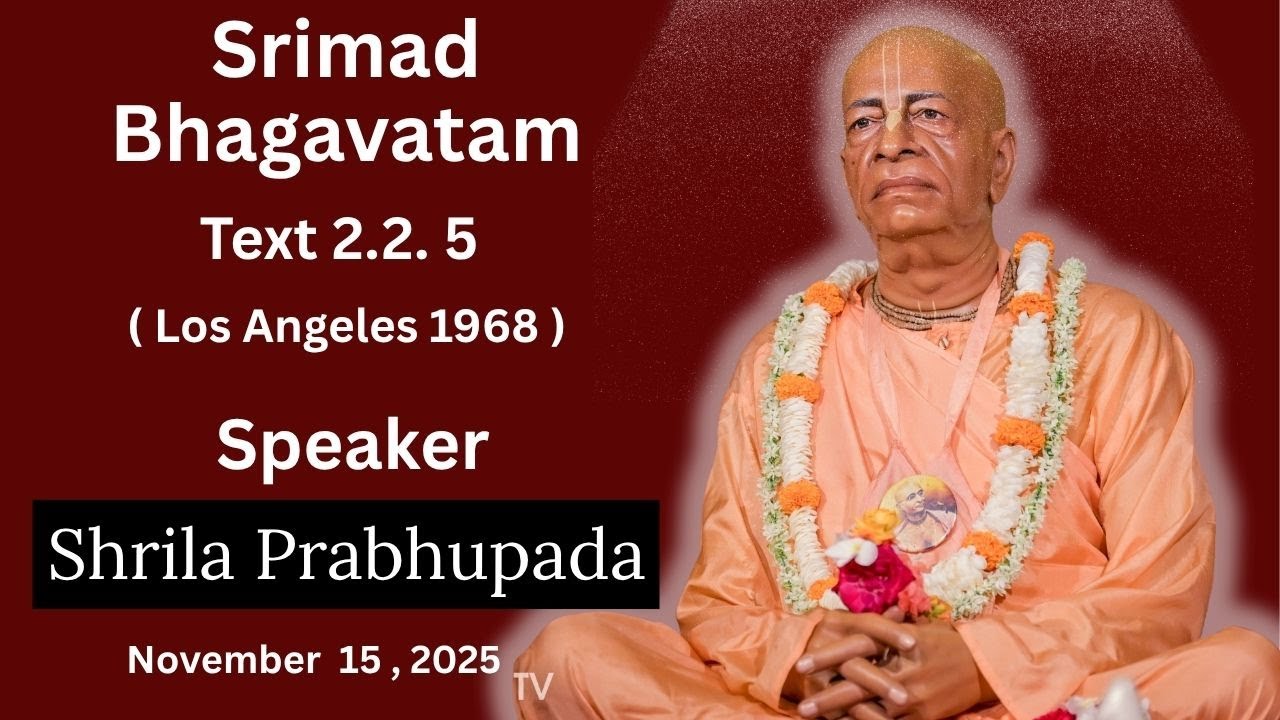
Srimad Bhagavatam 2.2.5 poses a series of searching questions that challenge assumptions about scarcity, fear, and dependency. Referenced in a 1968 Los Angeles lecture by Srila Prabhupada, the verse evokes vivid images—torn cloth on public roads, trees giving in charity, rivers quenching thirst, and mountain caves offering refuge—to illustrate how nature itself provides for basic needs when life is aligned with dharma and moderated desires.
The rhetorical force of the passage serves a precise purpose: to reframe security as a function of inner renunciation (vairagya) and trust in the Divine, rather than the relentless accumulation of possessions. The concluding emphasis—“does the Almighty Lord not protect”—anchors the teaching in the assurance of divine shelter (śaraṇāgati), an assurance that resonates across cultures and eras.
These motifs carry practical and ethical implications for contemporary life. Nature’s generosity invites reflection on sustainable living, ecological balance, and social responsibility. The trees, rivers, and caves symbolize a world designed to sustain life in simplicity; in response, measured consumption, gratitude, and service become coherent life practices rather than mere ideals.
Importantly, the verse’s core values harmonize with the shared ethos of dharmic traditions. Jainism’s aparigraha (non-possessiveness), Buddhism’s contentment and mindful restraint, Sikhism’s santokh (contentment) and trust in hukam, and Hinduism’s bhakti and vairagya converge on a unified principle: inner freedom arises from reduced craving and deep reliance on the sacred. This alignment underscores unity in spiritual diversity while honoring distinct paths.
Srila Prabhupada’s Los Angeles context adds historical depth: at the height of modern consumer culture, this teaching offered a counter-narrative of fearless simplicity, compassion, and devotion to Krishna. Its contemporary relevance persists wherever anxiety stems from overidentification with material security.
Applied as daily contemplation, the verse supports a balanced discipline: practice gratitude for what is already given; choose ethical consumption; serve through charity; cultivate devotion and mindful awareness; and trust that essential needs are met when life is aligned with dharma. Such practices nurture personal resilience and collective harmony.
Read as philosophy, ecology, and spiritual psychology combined, Srimad Bhagavatam 2.2.5 affirms a timeless insight: when desires are moderated and consciousness turns toward the Divine, the world is seen not as hostile but as hospitable—rich with provision, meaning, and protection.
Inspired by this post on Dandavats.