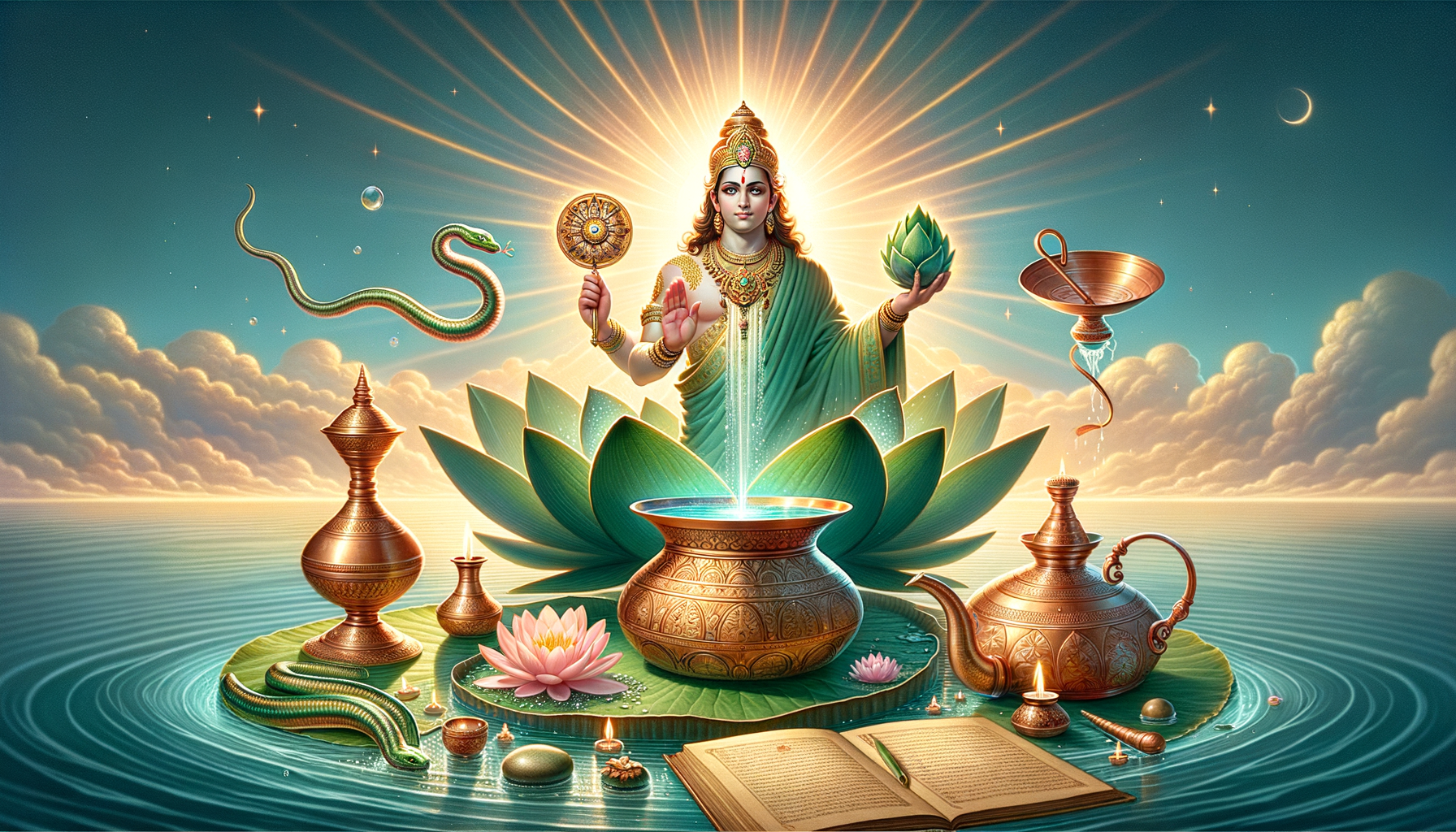
In the classical imagination of Ayurveda, the image of Lord Dhanvantari emerging from the churning of the cosmic ocean (Samudra Manthana) with the nectar of immortality is inseparable from the promise of healing that honors life, balance, and compassion. Within this tradition, the humble leech stands as a striking emblem: a living instrument of purification that reflects Dhanvantari’s gentle, restorative approach to medicine.
Ayurvedic texts, especially the Sushruta Samhita, describe Jalaukavacharana (leech therapy) as a refined method of Rakta Mokshana (therapeutic bloodletting). Employed for conditions rooted in Rakta and Pitta dushtisuch as inflammatory swellings, certain skin disorders, and localized venous congestionleeches draw small quantities of impure blood from superficial vessels, reducing heat, swelling, and pain with notable precision.
This therapy is celebrated as mridu upakramaa gentle intervention. Unlike sharp instruments, leeches attach and detach naturally, making the method suitable for delicate patients, including the elderly, children, and individuals with low pain tolerance. In this way, leech therapy embodies an ethic close to ahimsa, minimizing harm while maximizing relief, and thereby aligning with the healing ideal associated with Dhanvantari.
The association of leeches with Dhanvantari is therefore both practical and symbolic. Practically, they offer targeted purification without aggressive measures. Symbolically, they represent a living reminder that purification in Ayurveda is not violent extraction but mindful restorationremoving what is excessive so that equilibrium can return. This confluence of science and sanctity is precisely what Dhanvantari signifies in the Ayurvedic worldview.
Historically, vaidyas across regions have invoked Dhanvantari when initiating healing practices, underscoring the sacred trust between healer, patient, and remedy. Ritual remembrance during Dhanvantari Trayodashi (Dhanteras) reinforces the understanding that health is a holistic covenantrooted in knowledge, compassion, and reverence for lifeand that even the simplest creatures may serve as instruments of recovery.
The ethical foundations of this practice resonate across dharmic traditions. The preference for a gentle remedy aligns with the spirit of ahimsa cherished in Hinduism, Buddhism, and Jainism, while its service-oriented healing intention harmonizes with Sikh ideals of seva. This shared sensibility underscores a unifying message: true medicine uplifts while honoring life in all forms.
From an academic perspective, Jalaukavacharana is not merely antiquarian. Contemporary biomedicine employs medical leeches (e.g., Hirudo medicinalis) in reconstructive surgery to relieve venous congestion, demonstrating a convergence of ancient insight and modern evidence. The practice illustrates how Ayurvedic principleslocal decongestion, reduction of inflammation, and restoration of flowremain relevant in present-day clinical contexts.
Responsible application, however, is paramount. Classical sources advise species selection (nirvisha, non-poisonous leeches), meticulous hygiene, and clear indications. Leech therapy is not a blanket detox but a precise procedure administered by trained professionals for appropriate conditions. This disciplined approach preserves both safety and efficacy, staying true to the rigor of the Ayurvedic canon.
Seen through this lens, the leech’s connection to Dhanvantari becomes clear: it is a symbol of purification achieved with restraint; a clinical tool that exemplifies minimal violence and maximum compassion; and a bridge between the metaphysical promise of healing and its practical realization. In honoring this association, practitioners and seekers alike affirm a wider dharmic unity that values wisdom, care, and the sanctity of all life.
Inspired by this post on Hindu Blog.