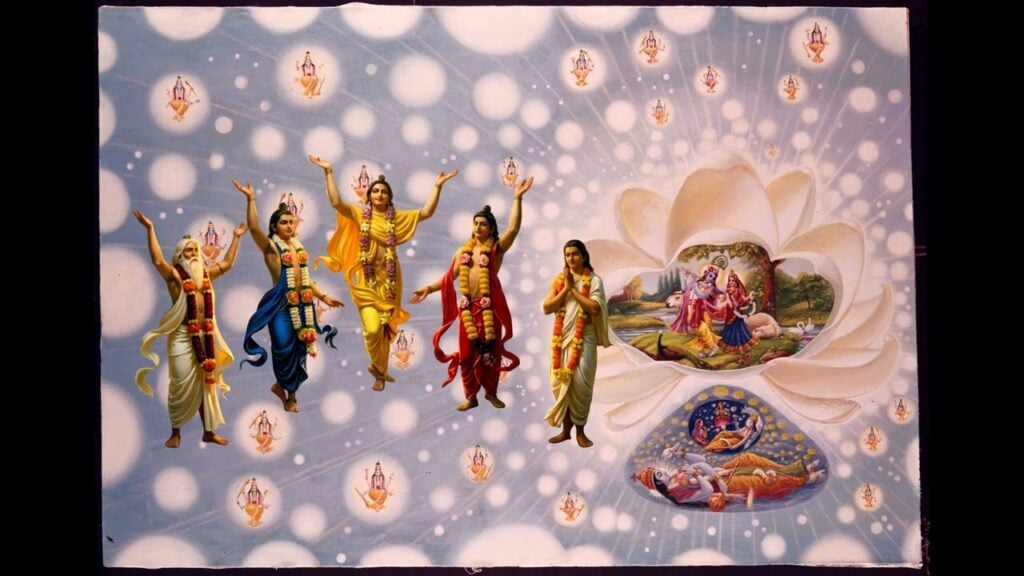
Bhakti, or devotion, often turns to the worship of form (murti-puja) because the Supreme Being is understood as the source from which the universe is projected. When the cosmos is seen as emerging from That, it becomes easier to contemplate Bhagavan. This orientation allows the mind to approach the ineffable through a tangible symbol, aligning everyday perception with spiritual intuition.
Human cognition naturally relies on images, patterns, and forms. A purely formless, abstract absolute can be philosophically affirmed but remains difficult to sustain in regular contemplation. Therefore, viewing the universe as God’s manifestation provides a legitimate and time-tested bridge from the visible to the invisible, from the known to the unknown.
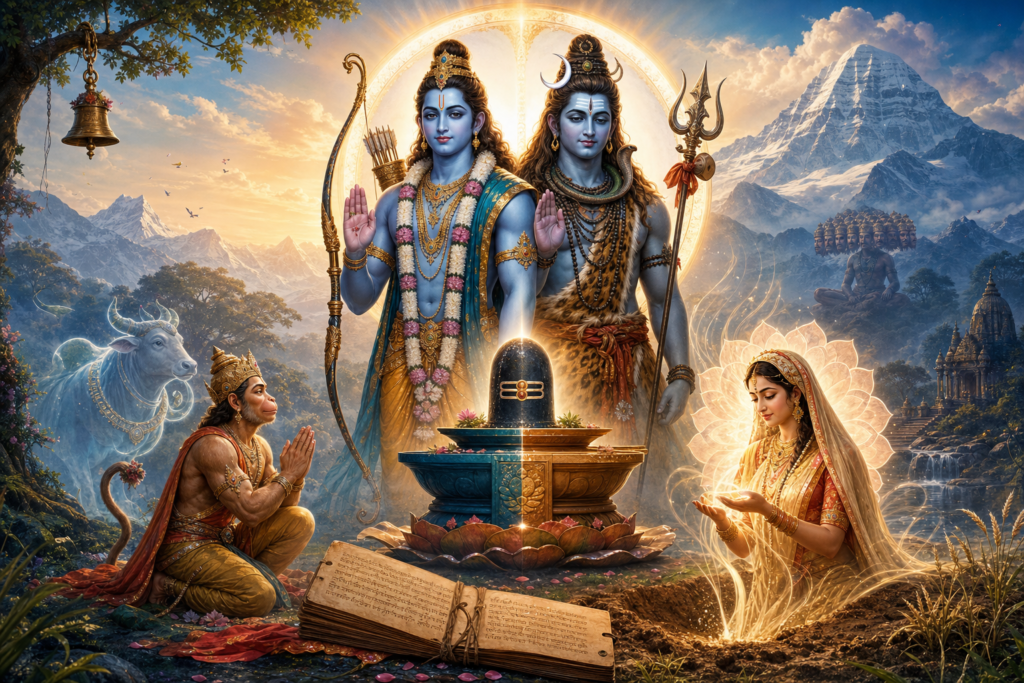
Within Hinduism’s Bhakti Tradition, this is the primary rationale for idol worship: form focuses attention. A murti does not confine the Infinite; it points beyond itself. The form serves as a deliberate aid to devotion, shaping the mind toward reverence and humility while gently directing it from the sthula (gross) to the sukshma (subtle) and, ultimately, to the formless.
Practically, murti-puja functions as pedagogy for the heart and mind. The act of lighting a lamp, listening to bhajans, and gazing upon a sanctified image cultivates one-pointedness (ekagrata). Through mantra, japa, and dhyana, attention is gathered, emotions are refined, and the intellect is oriented toward the highest truth. The symbol becomes a mirror through which inner life is clarified and deepened.
Many devotees observe that, in moments of uncertainty or grief, the presence of a consecrated image steadies the breath and softens the mind. Rituals that engage the sensesfragrance, light, sound, and touchtranslate lofty metaphysics into lived experience. This embodied devotion is not a diversion from philosophy; it is its practical expression in the rhythms of daily life.
This approach resonates across Dharmic traditions. Buddhists contemplate images of the Buddha and sacred mandalas; Jains venerate Tirthankara icons as reminders of perfected qualities; Sikhs honor the sacred word and symbols such as Ik Onkar while engaging in disciplined remembrance. Though the forms differ, the shared intent remains: to awaken virtue, concentrate the mind, and realize the formless through compassionate means. Unity in spiritual diversity is thus a strength, not a contradiction.
Common critiques of “idolatry” often miss this distinction between symbol and the Reality symbolized. In devotional practice, worship is offered to the Divine indicated by the form, not to the material object itself. Far from obscuring the Infinite, the formproperly understoodbecomes a precise instrument for spiritual clarity, aiding sustained attention and deepening devotion.
Recognizing Ishtaone’s chosen form or approachhonors individual nature and capacity. Some are drawn to direct contemplation of the formless Absolute; others find that beginning with form and progressing “from gross to subtle” is more natural. Both orientations are affirmed within Dharmic thought, reflecting a mature acceptance that many valid paths can lead to the same ultimate truth.
In this light, bhakti and the worship of form are best seen as compassionate technologies of the spirit. By starting where the human mind naturally dwellsin form, image, and storydevotion guides awareness toward the boundless. Murti-puja, therefore, does not compete with philosophical insight; it completes it, fostering a shared spiritual culture that unites Hinduism, Buddhism, Jainism, and Sikhism in a common pursuit of the Infinite.
Inspired by this post on Hindu Blog.