
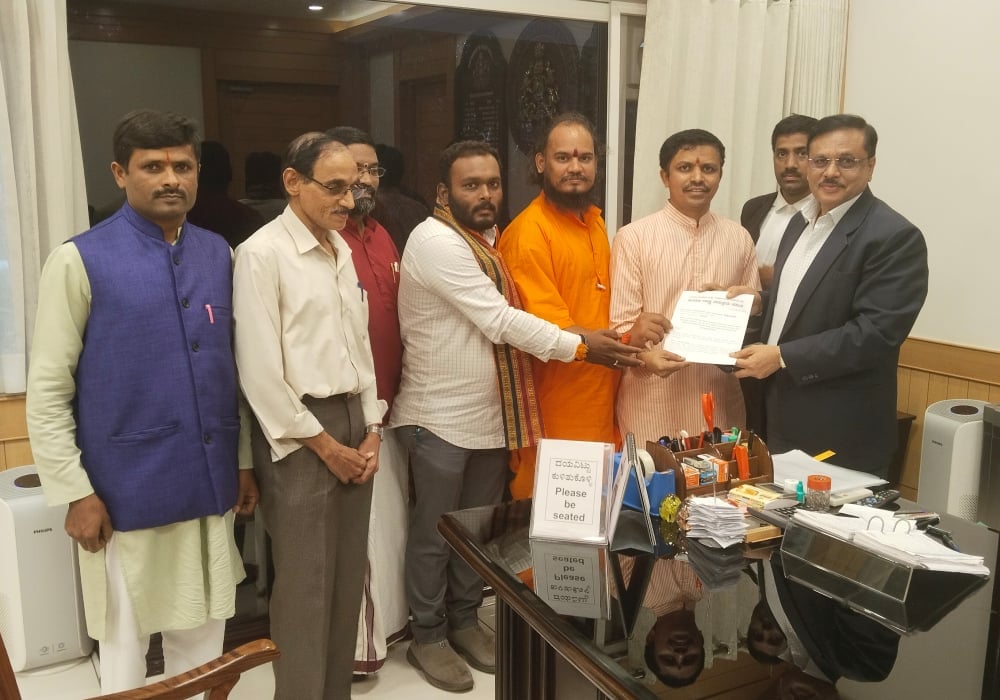
The Hindu Rashtra Samanvaya Samiti has submitted a memorandum to Karnataka’s Director General of Police seeking equal and impartial legal action in complaints concerning the alleged denigration of Hindu Deities and injury to Hindu religious sentiments. At its core, the representation raises a question larger than any single dispute: whether complaints involving sacred beliefs are examined under consistent legal standards, irrespective of the religious identity of the complainant, the accused or the community affected.
The available account identifies the submission and its central demand, but it does not reproduce the memorandum, name the specific incidents cited in it or disclose a police diary number, formal response or subsequent case status. Those limits matter. An academically responsible account must distinguish the Samiti’s stated grievance from facts independently established through investigation or adjudication.
What the memorandum represents
A memorandum is a formal representation to public authorities. It may provide allegations, supporting material, legal arguments and requested remedies, but it is not itself a First Information Report, investigative finding or judicial verdict. Its submission does not establish that an offence occurred, just as the absence of immediate police action does not by itself establish institutional bias. The document instead asks the senior police leadership to examine whether legally comparable complaints are being handled in a comparable manner.
The demand for impartiality has both procedural and social significance. Procedurally, every complaint should be acknowledged, classified and evaluated according to the same statutory elements and evidentiary thresholds. Socially, visibly consistent treatment helps prevent the belief that some communities must tolerate conduct for which others receive prompt protection. Confidence in policing depends not only on final outcomes but also on whether citizens can understand how those outcomes were reached.
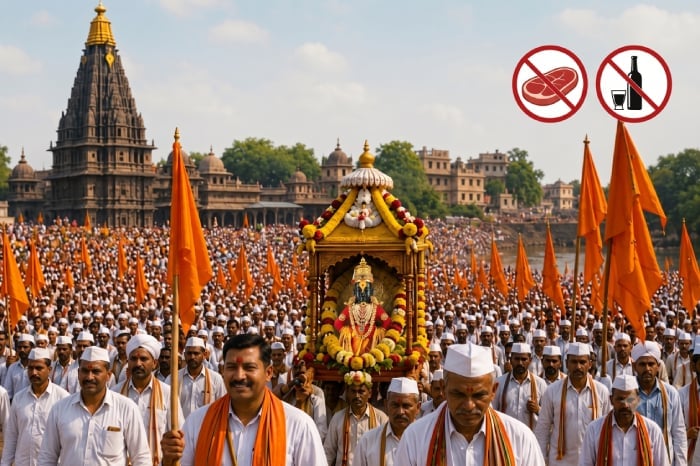
For many devotees, a Hindu Deity is not merely an artistic motif or literary character. A sacred form may embody family memory, philosophical teaching, temple tradition, daily worship and a community’s civilisational inheritance. Public ridicule can therefore be experienced as an attack on dignity and belonging. That emotional reality deserves respectful recognition, although emotional injury alone cannot replace the legal requirements of intention, context, evidence and statutory applicability.
The constitutional framework: equality, expression and religious freedom
The constitutional foundation of the Samiti’s demand lies principally in equality before the law. Article 14 guarantees equality before the law and equal protection of the laws, while Article 15 prohibits the State from discriminating against citizens on specified grounds that include religion. These guarantees do not require identical outcomes in factually different cases. They require authorities to use neutral criteria, examine relevant differences and avoid allowing religious identity or political convenience to determine enforcement.
The issue also requires a careful reading of Articles 19 and 25 of the Constitution of India. Article 19(1)(a) protects freedom of speech and expression, subject to the constitutionally permitted restrictions in Article 19(2). Article 25 protects freedom of conscience and the right freely to profess, practise and propagate religion, subject to public order, morality, health and the other provisions of Part III. Neither freedom is absolute, and neither should be interpreted in a way that makes the other meaningless.
Constitutional neutrality is not indifference to religious hostility. It requires the State to protect lawful expression while applying valid criminal prohibitions without favour. In a 21 October 2022 hate-speech order concerning provisions of the former Indian Penal Code, the Supreme Court of India directed authorities to act irrespective of the religion professed by the person responsible. That principle of religion-neutral enforcement directly illuminates the concern raised by the Karnataka memorandum, although every complaint must still satisfy the elements of an actual offence.
The criminal-law threshold is higher than mere offence
Since 1 July 2024, the principal central penal provision governing deliberate insults to the religious beliefs of a class has been Section 299 of the Bharatiya Nyaya Sanhita, 2023. The official text of Section 299 applies when a person, through words, signs, visible representations, electronic means or otherwise, acts with the deliberate and malicious intention of outraging the religious feelings of a class of Indian citizens by insulting or attempting to insult its religion or religious beliefs.
The words deliberate and malicious perform essential legal work. A complainant’s sincere sense of hurt is relevant evidence of impact, but it does not automatically prove the accused person’s required state of mind. Investigators must examine whether the expression was intentional, whether it was directed at a religion or its beliefs, whether its context supports an inference of malice and whether the material amounts to an insult of the kind contemplated by the provision. Careless, tasteless or erroneous speech may be socially objectionable without necessarily satisfying every element of Section 299.
Section 299 provides for imprisonment of up to three years, a fine or both. The First Schedule to the Bharatiya Nagarik Suraksha Sanhita classifies the offence as cognizable and non-bailable and triable by a Magistrate of the first class. These classifications establish the seriousness of the provision, but non-bailable does not mean that bail is legally impossible, and cognizable does not make arrest automatic. Investigation, arrest, bail and prosecution remain governed by statutory safeguards, judicial precedent and the facts of the individual case.
Related provisions address different forms of conduct. Section 298 concerns damage or defilement of a place of worship or sacred object with the specified intention or knowledge. Section 300 concerns disturbance of a lawful religious assembly. Section 301 deals with specified misconduct at places of worship, burial or funeral rites, while Section 302 concerns words, sounds, gestures or objects used with deliberate intent to wound an individual’s religious feelings. Authorities must select provisions from the evidence rather than attach the most severe available section merely because a controversy has attracted public attention.
Another technical safeguard appears in Section 217 of the Bharatiya Nagarik Suraksha Sanhita. A court cannot take cognizance of an offence under BNS Section 299 without the previous sanction of the Central Government or State Government. This sanction requirement concerns the court’s cognizance and helps filter prosecutions involving sensitive expression. It does not turn a memorandum into proof of criminality, nor should it be confused with the police duty to receive information, preserve evidence and determine whether an investigation is legally warranted.
From a memorandum to a lawful investigation
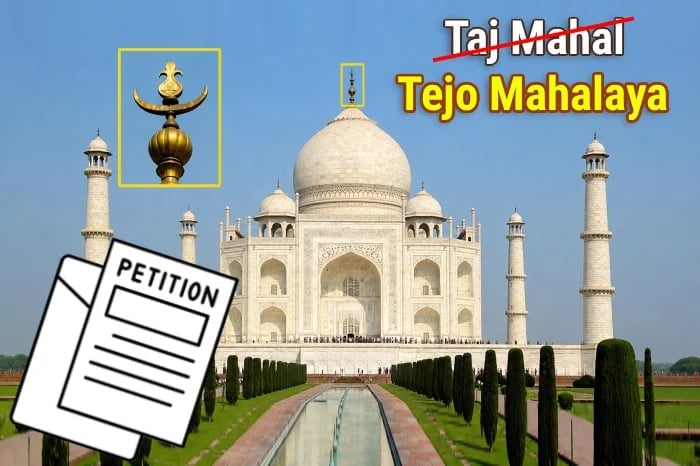
Addressing a representation to the DGP can invite statewide supervisory attention, especially when the complaint alleges inconsistent practices across police jurisdictions. Nevertheless, a high-level memorandum should ordinarily be supported by incident-specific complaints containing the date, location, persons involved, exact expression, relevant platform or venue, witnesses and original evidence. General claims of repeated denigration are difficult to investigate unless they are translated into verifiable factual allegations.
Section 173 of the Bharatiya Nagarik Suraksha Sanhita provides the principal route for giving information about a cognizable offence. Information may be provided to the officer in charge of a police station irrespective of where the alleged offence occurred. It may also be supplied electronically, subject to the statutory requirement that it be signed within three days. This framework reduces the risk that a complainant will be turned away solely because officers disagree about territorial jurisdiction at the intake stage.
For cognizable offences punishable with imprisonment of three years or more but less than seven years, Section 173(3) permits the station-house officer, with prior permission from an officer not below the rank of Deputy Superintendent of Police, either to conduct a preliminary inquiry to determine whether a prima facie case exists within fourteen days or to proceed with an investigation when a prima facie case exists. Because BNS Section 299 carries a maximum term of three years, this provision may become relevant when police assess a complaint under that section.
If a police station refuses to record information said to disclose a cognizable offence, Section 173(4) permits the aggrieved person to send the substance of the information in writing and by post to the concerned Superintendent of Police. If satisfied that a cognizable offence is disclosed, the Superintendent may investigate personally or direct a subordinate officer to investigate. If that route does not produce relief, the provision allows an application to the Magistrate, read with the investigation power in Section 175.
These procedural routes clarify why equal treatment cannot be measured only by counting arrests. A proper comparison should consider whether complaints were acknowledged, whether their factual allegations were equivalent, whether the same legal test was applied, whether preliminary inquiries followed comparable timelines and whether closure or registration decisions were supported by reasons. Cases that look similar in a headline may differ substantially in evidence, intention, reach or context.
Evidence must carry the complaint
A technically sound complaint should preserve the complete expression rather than an isolated fragment. Investigators need the full speech, artwork, performance, publication or digital post; the identity and public visibility of the account; the date and location; surrounding remarks; the size and composition of the audience; and any conduct showing planning, repetition or targeting. An edited clip may accurately reveal an insult, but it may also remove context that changes the legal assessment.
Digital evidence should be retained in its original form wherever possible. Useful material may include the original URL, platform identifier, upload time, screenshots, downloaded files, account details, witness statements and a record explaining who collected each item and when. Repeatedly reposting the alleged denigration is rarely necessary and can magnify the very harm being challenged. Evidence can instead be provided directly to authorities with a precise description of where the objectionable portion appears.
Where material is in Kannada, Sanskrit, Hindi or another language, the original wording should be preserved alongside an accurate translation. Names, quotations and religious terminology should not be altered for rhetorical effect. Translation disputes can become decisive because intention may turn on tone, idiom, double meaning or the distinction between criticism of a practice and abuse directed at believers or their sacred figures.
The investigation should also test evidence that may favour the accused. That includes the full intellectual or artistic context, clarification or correction, the possibility of mistaken attribution, manipulated media, parody, quotation from another source and the absence of deliberate or malicious intent. Impartiality protects complainants from neglect and accused persons from presumptive guilt. Both protections are necessary for a credible justice system.
Distinguishing debate from punishable denigration
Hindu traditions contain extensive histories of philosophical disagreement, scriptural interpretation, commentary, debate and reform. Academic criticism of a text, historical inquiry into a tradition, disagreement with a theological claim or advocacy for social reform cannot automatically be treated as a criminal insult. The legal question is not whether the expression made believers uncomfortable; it is whether the proven conduct and intention fall within a defined offence.
At the same time, attaching the labels of comedy, art, rationalism or scholarship does not create automatic immunity. A court or investigator may examine the substance of the communication, its context and the speaker’s intention rather than accept a self-description as conclusive. The most stable approach protects robust inquiry while refusing to normalise targeted, malicious contempt for a community’s sacred beliefs.
Proportionality is therefore essential. Depending on the facts, an appropriate response may involve counter-speech, a request for correction, a platform complaint, institutional dialogue, civil proceedings or a criminal investigation. Criminal law should address conduct that meets its elements, not operate as the first answer to every dispute over taste or interpretation. Conversely, authorities should not dismiss a legally supported complaint simply because the targeted community is expected to remain tolerant.
Dharmic unity requires equal dignity
The issue also carries significance for relations among Hindu, Buddhist, Jain and Sikh traditions. These traditions possess distinct scriptures, doctrines, institutions and sacred figures, even as they share centuries of philosophical exchange and civilisational interaction. Unity among them should not erase those differences. It should affirm that no community’s places of worship, teachers, symbols or revered figures deserve casual degradation or selective legal protection.
Advocacy for respect toward Hindu Deities is strongest when it rests on a universal rule: the same dignity, evidentiary care and lawful protection should apply to the Tirthankaras of Jainism, the Buddha and Buddhist sacred heritage, the Sikh Gurus and Guru Granth Sahib, and the beliefs and sacred figures of every other religious community. Equal justice is weakened whenever protection is demanded for one tradition through contempt for another.
A disciplined community response should therefore remain peaceful, evidence-based and constitutional. Threats, intimidation, vandalism, collective blame and disclosure of private information cannot be justified as defence of Dharma. Such actions can create independent offences, endanger innocent people and obscure the original grievance. Lawful documentation and reasoned representation preserve both moral credibility and the possibility of a reliable legal outcome.
A practical model for impartial enforcement
Karnataka Police could strengthen public confidence through a uniform protocol for religion-related complaints. Such a protocol could require a dated acknowledgment, incident-specific evidence inventory, preservation request for digital material, identification of the statutory elements under review, documented supervisory approval where a preliminary inquiry is used, a fixed review date and a written communication stating whether the matter was registered, transferred, referred for sanction or closed.
Consistency could also be measured through anonymised administrative data. Authorities could publish the number of complaints received, acknowledged, transferred, subjected to preliminary inquiry, registered and closed, together with broad processing times. The purpose would not be to create numerical quotas for religious communities. It would be to reveal unexplained disparities, procedural bottlenecks and districts where complainants routinely receive neither registration nor a reasoned decision.
Training is equally important. Police officers assessing expressive material need familiarity with constitutional speech protections, the intention requirements in BNS Sections 299 and 302, digital-evidence preservation, translation risks and the distinction between offensive speech and incitement or targeted hostility. Supervisory review can reduce both under-enforcement and indiscriminate criminalisation.
Reasoned closure is part of impartial justice. If the available evidence does not establish deliberate and malicious intention, the complainant should receive a clear explanation rather than silence. If the statutory threshold is met, authorities should proceed without regard to the influence, ideology or religious identity of the person accused. Transparency in either direction reduces rumour and demonstrates that the same rule governs every case.
The Hindu Rashtra Samanvaya Samiti’s memorandum should ultimately be assessed by this standard. Its allegations require objective verification, but its central demand—that religious-sentiment complaints be handled equally and impartially—is consistent with the constitutional expectation of neutral governance. A credible response would neither presume criminality nor trivialise the grievance. It would examine the evidence, apply the correct legal threshold, record reasons and communicate the result.
Impartial enforcement offers a benefit broader than resolution of one memorandum. It protects freedom of expression from arbitrary suppression, protects religious communities from deliberate and malicious insult, and protects the police from the perception that identity determines access to justice. When every community can expect the same careful process, religious dignity and democratic debate become mutually reinforcing rather than competing principles.
Inspired by this post on Hindu Jagruti Samiti.






Leave a Reply
You must be logged in to post a comment.