
A workplace wellness initiative in Dhanbad
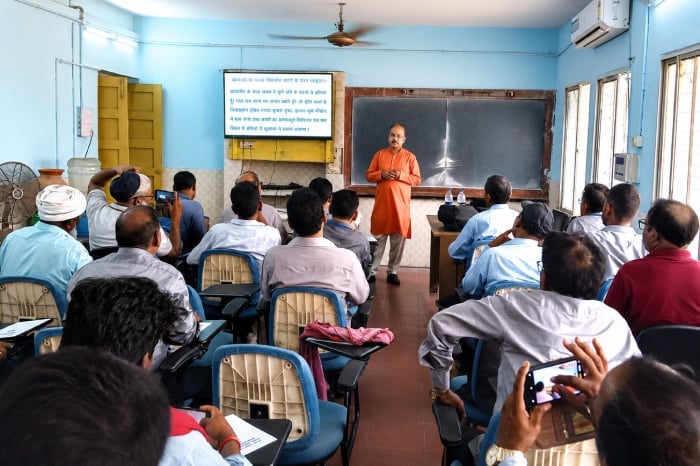
At a workplace safety workshop organised by Bharat Coking Coal Limited in Dhanbad, Hindu Janajagruti Samiti’s Shri. Shambhu Gavare delivered a lecture on stress management as part of a three-day employee wellness drive. His central message was that stress cannot be addressed through a single technique. Sustainable recovery requires coordinated physical, mental, and spiritual efforts, supported by a workplace that treats employee well-being as an essential component of safety.
The session placed stress management within a practical occupational context. In a safety-sensitive organisation, an employee’s physical condition, emotional state, attention, judgement, and sense of purpose can influence both personal health and workplace performance. Fatigue may slow reaction time, persistent worry may narrow attention, and emotional overload may make communication more difficult. A wellness programme therefore contributes to more than personal comfort: it can strengthen awareness, responsible decision-making, teamwork, and the everyday discipline on which workplace safety depends.
Understanding stress without stigma
Stress is a normal psychophysiological response to demands that appear to exceed available resources. It is not automatically a disease, nor does experiencing it indicate personal weakness. A manageable degree of short-term activation can help a person respond to an urgent task, prepare for a demanding assignment, or remain alert in an unfamiliar situation. The difficulty begins when demands are intense, recovery is inadequate, or uncertainty continues for so long that the body and mind remain in a prolonged state of vigilance.

The stress response involves interconnected systems. Perceived threat can activate the sympathetic nervous system, increasing heart rate, breathing rate, muscular tension, and alertness. The hypothalamic-pituitary-adrenal axis also participates through hormonal signalling associated with energy mobilisation and adaptation. These responses are useful during genuine short-term challenges. When activation becomes persistent, however, the accumulated physiological burden—often described as allostatic load—may be associated with disturbed sleep, irritability, headaches, digestive discomfort, impaired concentration, emotional exhaustion, and reduced capacity to recover.
Stress is shaped not only by an event but also by how that event is interpreted. Two employees may face the same deadline while experiencing it differently because their responsibilities, health, experience, social support, financial pressures, and perceived control are different. This observation has an important ethical implication: stress management should not blame individuals for struggling. It should help them expand their coping resources while encouraging institutions to examine preventable sources of overload.
Why stress management belongs within workplace safety
Workplace safety is commonly associated with equipment, procedures, protective measures, supervision, and hazard control. Human performance is another part of the same system. Sleep loss, acute distress, distraction, interpersonal conflict, and burnout can affect situational awareness, working memory, impulse control, and the ability to follow a complex sequence correctly. In demanding industrial environments, even a brief lapse of attention may carry consequences beyond the individual experiencing stress.

This does not mean that accidents should be attributed casually to an employee’s mental state. Effective safety management begins with the elimination or control of hazards, sound engineering, adequate staffing, maintained equipment, clear procedures, appropriate training, and accountable supervision. Personal stress-reduction practices complement these protections; they do not replace them. A holistic wellness programme is most credible when it combines individual skills with organisational responsibility.
The connection becomes relatable in ordinary moments. An employee may complete a shift safely yet remain mentally occupied by an unresolved disagreement, a family concern, or uncertainty about the next day. Another may arrive after insufficient sleep and attempt to compensate with determination alone. A supervisor may carry responsibility for productivity while also worrying about the welfare of a team. These experiences are human, but when they remain unacknowledged, they can gradually erode concentration, patience, and confidence.
The physical dimension of resilience
The physical component of stress management begins with recovery. Regular sleep, appropriate nutrition, hydration, movement, and medically suitable exercise help the body regulate energy and restore functioning after exertion. Consistency is generally more useful than occasional extremes. A realistic routine might include a regular sleep window, brief movement during permitted breaks, balanced meals, reduced stimulant use near bedtime, and gradual physical activity appropriate to the person’s health and occupational demands.

Sleep deserves particular attention because it supports attention, memory, emotional regulation, and physical restoration. Stress can interfere with sleep, while inadequate sleep can intensify the perception of stress, creating a self-reinforcing cycle. Practical sleep hygiene includes maintaining a stable schedule where shift patterns permit, reducing bright-screen exposure before rest, creating a dark and quiet sleeping environment, and avoiding the assumption that alcohol provides restorative sleep. Persistent insomnia, loud snoring with breathing interruptions, or severe daytime sleepiness warrants professional assessment.
Breathing practices can serve as a bridge between physical and mental regulation. Slow, comfortable breathing—especially when the exhalation is unforced and slightly longer than the inhalation—may help reduce immediate arousal in some people. The objective is not to inhale as deeply or rapidly as possible, which can cause dizziness, but to allow breathing to become steady and relaxed. Employees with respiratory, cardiac, panic-related, or other medical conditions should use techniques appropriate to professional guidance.
Muscle relaxation is another accessible method. Stress often appears physically as a clenched jaw, raised shoulders, rigid posture, or tight hands. Briefly noticing and releasing these areas can interrupt automatic tension. Such a pause may take less than a minute, yet it creates an opportunity to check posture, breathing, fatigue, and attention before beginning a demanding task.
The mental dimension: attention, appraisal, and emotional regulation

Mental effort does not mean suppressing every uncomfortable thought. Attempts to force thoughts away can sometimes make them more persistent. A more practical approach is to identify what is occurring, distinguish facts from assumptions, and select the next constructive action. An employee anticipating a difficult assignment, for example, may ask three questions: What is known? What remains uncertain? What can be checked or communicated before work begins?
This form of cognitive appraisal reduces the tendency to treat every uncertainty as an immediate catastrophe. It also protects against the opposite error of dismissing genuine risk. Balanced thinking is neither forced optimism nor pessimism; it is an evidence-based effort to evaluate probability, consequence, available control, and the need for assistance. In a safety context, such clarity supports timely reporting rather than silent rumination.
Attention can also be trained through simple routines. Before a task, the employee can pause, observe the environment, review the relevant procedure, identify the principal hazard, and confirm readiness. During the task, attention can be returned deliberately to the current step whenever the mind drifts. After completion, a short review can capture errors, near misses, or improvements without turning reflection into self-criticism.
Emotional regulation benefits from precise language. Saying that a person feels overwhelmed, frustrated, afraid, fatigued, or uncertain is more informative than saying that everything is wrong. Naming an emotion can make its triggers and appropriate responses easier to examine. Fear may call for a safety check, frustration may require clearer communication, fatigue may require rest or reassignment, and grief may require time, support, and professional care.
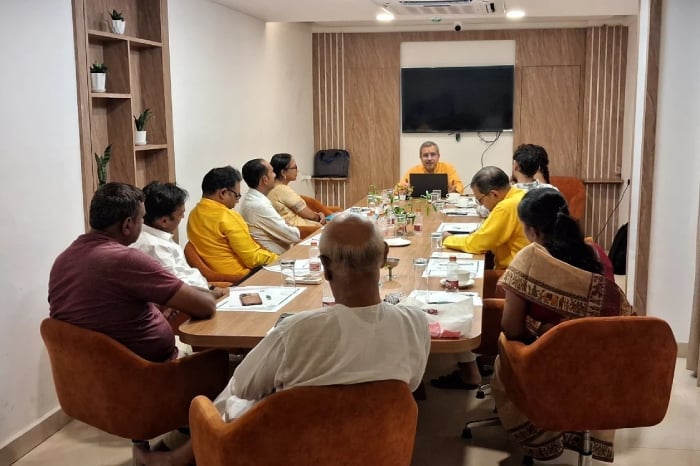
Social connection is equally significant. Trusted colleagues, supervisors, family members, counsellors, and healthcare professionals can provide practical help and alternative perspectives. A resilient employee is not one who remains silent under every burden. In many situations, resilience is demonstrated by recognising a limit early, communicating it responsibly, and seeking support before distress becomes a crisis.
The spiritual dimension of employee well-being
Shri. Shambhu Gavare’s emphasis on spiritual effort broadens stress management beyond symptom control. In an academic and inclusive understanding, spirituality may involve meaning, ethical responsibility, self-observation, gratitude, prayer, meditation, service, devotion, or a felt connection with something larger than immediate personal anxiety. It can help a person ask not only how discomfort can be removed, but also how difficulty can be met with steadiness, dignity, and compassion.
Dharmic traditions offer diverse approaches to this inner discipline. Hindu traditions include Yoga, meditation, selfless service, devotion, and reflection on dharma. Buddhist traditions place strong emphasis on mindful awareness, compassion, and understanding the changing nature of experience. Jain traditions highlight self-restraint, careful conduct, and Ahimsa, while Sikh traditions unite remembrance, honest work, courage, equality, and seva. These paths have distinct philosophies and practices, yet each can contribute insights into disciplined attention, ethical action, and freedom from compulsive reactivity.

This shared emphasis supports unity without erasing difference. A workplace wellness programme need not impose a religious identity or prescribe one spiritual method. It can respect individual conscience while recognising that many employees draw strength from inherited traditions, contemplative practice, community, or service. Others may understand meaning in secular ethical terms. The practical standard is voluntary participation, respect, and the absence of pressure or discrimination.
Spiritual practice should also be distinguished from avoidance. Prayer or meditation does not make an unsafe condition acceptable, remove the need for medical care, or eliminate the responsibility to address harassment, excessive workload, or inadequate resources. Authentic spiritual well-being strengthens clarity and responsible action; it should not be used to deny pain or demand passive endurance.
An integrated model rather than three isolated remedies
The physical, mental, and spiritual dimensions continually influence one another. Poor sleep can increase irritability; irritability can intensify conflict; conflict can disturb sleep further. Conversely, moderate physical activity may improve mood, clearer thinking may reduce unnecessary worry, and a stable sense of meaning may encourage healthier habits. The value of the holistic framework lies in recognising these feedback loops.

A short integrated practice can therefore be more useful than a complicated routine that is rarely followed. At an appropriate and safe moment, an employee may first stabilise posture and breathing, then identify the dominant thought or emotion, and finally recall the value that should guide the next action—such as safety, patience, duty, honesty, or compassion. The result is not instant freedom from stress. It is a deliberate shift from automatic reaction toward considered response.
Regular practice matters because stress skills are difficult to learn for the first time during a crisis. Brief rehearsal during calmer periods makes the sequence more familiar. Employee wellness drives can introduce such skills, but lasting benefit usually depends on reinforcement through follow-up sessions, supervisor support, accessible resources, and a culture in which recovery is treated as legitimate.
What organisations can do beyond conducting a lecture
A lecture can create awareness, provide language for discussing stress, and motivate participants to try constructive practices. Awareness alone, however, is not a complete occupational wellness system. Organisations can build on a session by identifying psychosocial hazards, improving role clarity, reviewing workload and shift design, training supervisors, supporting respectful communication, and establishing confidential pathways for counselling or medical referral.

Psychological safety is especially important. Employees should be able to report fatigue, confusion, near misses, interpersonal problems, or emotional difficulty without unnecessary humiliation or retaliation. This does not remove accountability for conduct. Instead, it improves the quality of information available to the organisation and allows corrective action to occur earlier.
Supervisors influence workplace stress through daily behaviour. Clear instructions, realistic priorities, consistent standards, attentive listening, and respectful correction reduce avoidable uncertainty. A supervisor does not need to become a therapist. The appropriate role is to notice significant changes, discuss work-related concerns, make authorised adjustments, protect confidentiality, and refer an employee to qualified support when necessary.
Wellness initiatives should be evaluated without invading privacy. Useful programme measures may include participation rates, anonymous feedback, knowledge gained, use of support services, perceived supervisor support, and whether employees know how to seek help. Broader indicators such as absenteeism, turnover, near-miss reporting, and safety trends can provide context, but they should not be interpreted as proof that a single session caused a change. Evaluation is strongest when it is repeated over time and considers other organisational developments.
Confidentiality is essential because employees may avoid assistance if they believe personal disclosures will affect status, promotion, or reputation. Wellness programmes should clearly explain what information is collected, who can access it, and when safety or legal obligations may require escalation. Aggregate reporting is generally more appropriate for programme improvement than identifying individual participants.
Recognising when self-management is not enough
Breathing exercises, meditation, movement, reflection, and social support can be valuable, but they are not substitutes for diagnosis or treatment. Professional assistance should be considered when distress is persistent, daily functioning is deteriorating, sleep disruption is severe, panic episodes recur, substance use is increasing, or an individual feels unable to remain safe. Urgent local help is necessary when there is an immediate risk of self-harm, harm to another person, loss of contact with reality, or a medical emergency.
This distinction protects both scientific accuracy and spiritual integrity. A person may receive medical or psychological care while continuing a meaningful spiritual practice. The approaches need not compete. Qualified care can address clinical symptoms, while ethical and contemplative traditions can support purpose, discipline, belonging, and hope.
A constructive lesson from the BCCL employee wellness drive
The reported session in Dhanbad demonstrates a constructive effort to bring stress management into a workplace safety conversation. Its most important principle is the recognition of the whole person. Employees do not leave their bodies, emotions, relationships, values, or inner concerns at the workplace entrance. Each of these dimensions can affect how pressure is perceived and how responsibly a difficult situation is handled.
The available account establishes the organiser, location, speaker, subject, and three-dimensional emphasis, but it does not provide participant numbers, assessment results, detailed exercises, or long-term outcome data. Claims about measurable impact should therefore await further evidence. Even with that limitation, the framework presented by Shri. Shambhu Gavare offers a useful basis for discussing employee wellness: physical recovery supports capacity, mental discipline supports clarity, and spiritual grounding supports meaning and ethical steadiness.
The enduring value of such a session depends on what follows it. When individual practice is reinforced by sound safety systems, humane supervision, confidential support, and respect for diverse Dharmic and personal paths, stress management becomes more than an isolated wellness activity. It becomes part of a mature organisational culture—one that protects performance without losing sight of human dignity.
Inspired by this post on Hindu Jagruti Samiti.
