-
Satara memorandum: Hindu organisations demand zero‑tolerance, tougher sentences to protect women and children

A delegation of Hindu organisations in Satara submitted a memorandum urging zero‑tolerance and tougher sentences for crimes against women and children. The appeal aligns with India’s strengthened legal framework under POCSO and the Bharatiya Nyaya Sanhita while highlighting gaps in implementation. The analysis underscores that certainty and speed of punishment, coupled with survivor‑centric care, drive…
-
Goa Police arrest of Hindu activist Gautam Khattar: nationwide outrage and constitutional scrutiny

Goa Police arrested Hindu activist Gautam Khattar for alleged hate speech, triggering nationwide condemnation and a renewed debate on free speech, hate speech, and due process. This analysis explains the constitutional framework under Articles 19(1)(a) and 19(2), the statutory thresholds in IPC Sections 153A, 295A, and 505(2), and key Supreme Court guardrails like the advocacy–incitement…
-
Lenskart Dress Code Controversy: Evidence-Based Roadmap for Inclusive, Rights-Aligned Workplaces

Allegations in April 2026 that Lenskart circulated an “anti-Hindu” dress code underscore a broader national need for inclusive, rights-aligned uniform policies in retail. This analysis avoids polarisation and instead offers an evidence-based roadmap grounded in India’s constitutional guarantees, ILO Convention 111, and the UN Guiding Principles on Business and Human Rights. It synthesizes court signals…
-
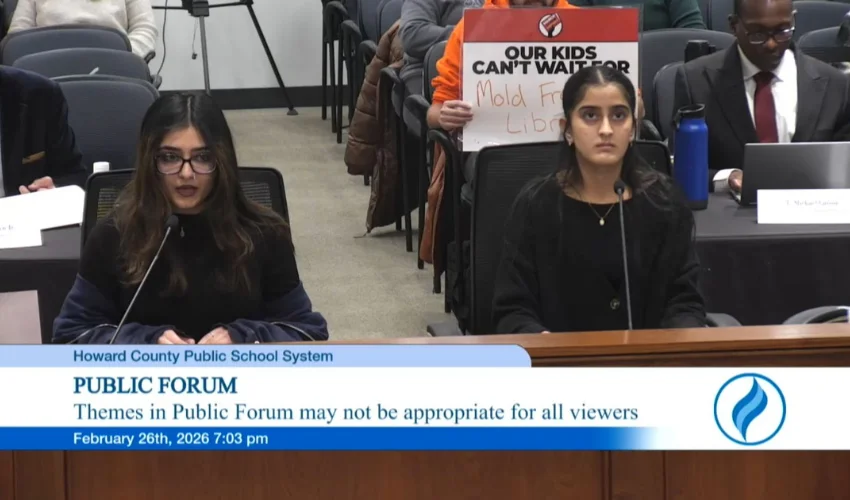
Maryland School Board Shift: Two Hindu Students Reclaim the Sacred Swastika through Policy

Two Hindu students catalyzed a policy review at the Howard County Public School System (Maryland) by clearly distinguishing the sacred Swastika from the Nazi Hakenkreuz. Their evidence‑based testimony advanced historical accuracy, reduced the risk of stigmatizing dharmic traditions, and offered practical guidance for K–12 educators. The Board responded by tasking its Policy Committee with updating…
-
Ayodhya–Pratapgarh–Prayagraj summits unite dharmic advocates to fortify legal protections

A coordinated set of legal summits in Ayodhya, Pratapgarh, and Prayagraj called advocates to unite around a rule-of-law strategy for protecting dharmic communities. The effort links Ayodhya’s cultural centrality with Prayagraj’s access to the Allahabad High Court and Pratapgarh’s district-level realities to form a scalable defense network. The framework centers on Articles 14, 19, 21,…
-
Hindu Sena’s Call for a Nationwide ‘Disturbed Areas Act’: Safeguarding Homes and Harmony

Hindu Sena’s March 2026 appeal for a nationwide ‘Disturbed Areas Act’ spotlights a difficult policy challenge: preventing coercive demographic change while safeguarding constitutional freedoms and property rights. This analysis separates the property-focused ‘disturbed areas’ model from security laws, evaluates Gujarat’s approach, and outlines how a national framework could work through evidence-based micro-notifications, time-bound permissions, and…
-
Harrow, London Holika Dahan Disruption: What Happened, Why It Matters, and a Path to Unity

A permitted Holika Dahan celebration in Harrow, London was reportedly disrupted by a group of youths, prompting a police response and the reported apprehension of a 14-year-old. Organizers and witnesses describe equipment damage and attempted intimidation, while Hindu advocacy group INSIGHT UK has called for a transparent investigation and equal protection for all faiths. This…
-
Maharashtra urged to pass anti-conversion safeguards: HJS leads 75-site drive for consent and faith

Hindu Janajagruti Samiti (HJS) and allied organisations have submitted memorandums at more than 75 locations in Maharashtra urging immediate anti-conversion safeguards. The analysis situates this demand within India’s constitutional framework—Articles 25–28, Article 21, and privacy—while highlighting Supreme Court guardrails from Rev. Stanislaus (1977) and Shafin Jahan/Hadiya (2018). It maps the national patchwork of state laws…
-
In Goa, Advocate Vishnu Shankar Jain Urges Powerful, Unified Legal Front for Dharmic Rights

At a three-day workshop in Goa, Advocate Vishnu Shankar Jain, a Supreme Court lawyer, urged the creation of a well-organised legal network to safeguard the constitutional rights of Hindu communities. The proposal highlights the need for coordinated research, filings, and advocacy to navigate complex issues around religious freedoms, institutions, and heritage. Framed within India’s plural…
-
Cary Temple Vandalism Sparks Urgent Call for Dharmic Unity and Visible Civic Action

The Sri Venkateswara Temple in Cary, North Carolina, was vandalized around 3 a.m., prompting an active police investigation and widespread community condemnation. The incident reflects broader concerns about Hinduphobia and the safety of Hindu Temples across North America. Community members are calling for responses that go beyond digital statements to lawful, visible civic engagement. Practical…
-
From Curiosity to Courage: Swami Vivekananda’s Living Legacy for Confident Hindu American Youth

Swami Vivekananda’s legacy offers a rigorous, modern roadmap for Hindu American youth: transform curiosity into disciplined learning, and learning into compassionate seva. His 1893 Chicago address reframed Hinduism as rational and pluralistic, a vision now activated through advocacy and education in groups such as CoHNA. This approach strengthens unity in diversity and aligns with the…
-
Complete Navaratri–Diwali Guide: Discover Dharma’s Transformative Light, Shakti, and Advocacy

This analysis explores how Navaratri and Diwali function together as a complete seasonal teaching on dharma, Shakti, and ethical action. Readers discover the symbolism of Garba, the centrality of the Divine Feminine, and the humility exemplified by Shri Ram through devi upasana. The narrative connects festival devotion with constructive advocacy, including the significance of Ram…
-
An Essential Call to Safeguard Mandirs: A Proven Path to American Unity and Safety

This analysis examines recent vandalism targeting Hindu temples in the United States and situates it within the broader American commitments to religious freedom, public safety, and pluralism. It highlights how mandirs function as community anchors that embody cultural diversity, service, and interfaith collaboration. The discussion emphasizes unity among dharmic traditions—Hinduism, Sikhism, Jainism, and Buddhism—while urging…
-
Discover the Impact of Hindu Advocacy in Las Vegas