

The phrase “supreme dharma” reaches its most concentrated expression in the famous teaching of the Srimad Bhagavatham: sa vai puṁsāṁ paro dharmo yato bhaktir adhokṣaje ahaituky apratihatā yayātmā suprasīdati. In a concise theological formula, this verse defines the highest religious principle as devotional service to the Supreme Lord, Krishna, that is both unmotivated and uninterrupted. Its claim is not merely devotional poetry; it is a carefully structured account of spiritual psychology, ethics, theology, and liberation. The result of such devotion is yayātmā suprasīdati, the deep satisfaction of the self.
This teaching matters because dharma is often reduced to ritual correctness, social duty, moral conduct, cultural identity, or philosophical speculation. Each of these has a place within Sanatana Dharma, and each can discipline human life in valuable ways. Yet the Bhagavata tradition argues that dharma reaches its highest maturity only when it awakens loving devotion to Krishna. In this framework, religion is not completed by external conformity alone. It becomes complete when the heart, intelligence, senses, and actions are lovingly oriented toward the Supreme Consciousness.
The word paro dharmaḥ, often translated as “the supreme dharma,” points to a standard above temporary, sectarian, material, or transactional religion. It is not a dismissal of ordinary duties. Rather, it is a hierarchy of purpose. Duties connected with family, society, learning, livelihood, and ritual are meaningful when they refine the person toward truth, compassion, humility, self-control, and God-realisation. When they become detached from spiritual awakening, they may still preserve social order, but they do not necessarily satisfy the soul.
Krishna bhakti is therefore not presented as a sentimental substitute for ethics or knowledge. It is presented as their fulfilment. The Bhagavad Gita repeatedly integrates devotion with disciplined action, contemplative knowledge, and surrender. Krishna does not teach Arjuna to abandon responsibility in a careless way; He teaches him to act with purified consciousness. The battlefield of Kurukshetra becomes a dramatic setting for a universal problem: how action can be freed from ego, fear, attachment, and despair.
The technical force of the Bhagavata definition rests especially on two terms: ahaitukī and apratihatā. Ahaitukī means without material motive, without bargaining, and without hidden demand. Devotion of this kind is not performed merely for wealth, status, relief from anxiety, victory over opponents, or entrance into heaven. It is love offered because Krishna is worthy of love. This distinction is important because religious practice can easily become a refined form of desire-management. The Bhagavata ideal asks whether devotion remains when the devotee receives no visible reward.
Apratihatā means uninterrupted, unobstructed, and incapable of being checked by external circumstance. This does not imply that a devotee never experiences fatigue, grief, doubt, or social pressure. It means that the inner orientation toward Krishna is not ultimately dependent on comfort. Devotional service can continue in prosperity and in loss, in public worship and in private remembrance, in youth and old age, in scholarship and simple chanting, in temple service and household responsibility. The practice is resilient because its centre is not the changing world but the eternal relationship between the jiva and the Divine.
The object of this devotion is described as Adhokṣaja, a name of the Supreme Lord indicating the One who is beyond the reach of blunt material perception. This does not mean irrationality. It means that the Divine cannot be fully grasped by the senses alone, as if Krishna were an object to be measured like a physical specimen. Sacred knowledge in the Vaishnava tradition involves scripture, disciplined reasoning, realised teachers, ethical purification, and direct spiritual practice. The senses become reliable in spiritual life when they are purified and engaged in seva.
Devotional service, or bhakti, is often misunderstood as mere emotion. In the Krishna consciousness tradition, bhakti is a disciplined mode of knowing, loving, and serving. It includes hearing sacred teachings, chanting the holy names, remembering Krishna, worshipping, serving, offering prayers, cultivating friendship with the Lord, and surrendering the self. These practices are not isolated rituals. They train attention, reshape desire, soften the ego, and gradually turn religious identity into lived consciousness.
One of the most accessible forms of Krishna bhakti is nama sankirtana, the congregational chanting of the holy names. The Hare Krishna maha-mantra — Hare Krishna Hare Krishna Krishna Krishna Hare Hare, Hare Rama Hare Rama Rama Rama Hare Hare — functions as both prayer and meditation. It invokes divine presence while also disciplining the mind through sound. In a distracted age shaped by speed, comparison, anxiety, and constant digital interruption, sacred sound offers a practical method for returning consciousness to a deeper centre.
The phrase “unmotivated devotion” can sound unrealistic to modern ears, because most human relationships are shaped by expectation. People often measure love by reciprocity, recognition, security, and emotional return. The Bhagavata ideal does not deny these human needs, but it points beyond them. It suggests that the soul’s deepest nourishment comes from a love that is not controlled by acquisition. Such devotion purifies the heart because it releases the devotee from the constant pressure to turn every relationship, achievement, and even prayer into a transaction.
This is where the teaching carries profound emotional relevance. Many people approach spirituality in moments of exhaustion, disappointment, or inner fragmentation. Ritual may offer structure, philosophy may offer clarity, and community may offer belonging. Yet the heart still seeks a relationship that does not collapse under imperfection. Krishna bhakti presents the Divine as the supreme shelter, not as an abstraction, but as Bhagavan: personal, loving, beautiful, and responsive to sincere devotion.
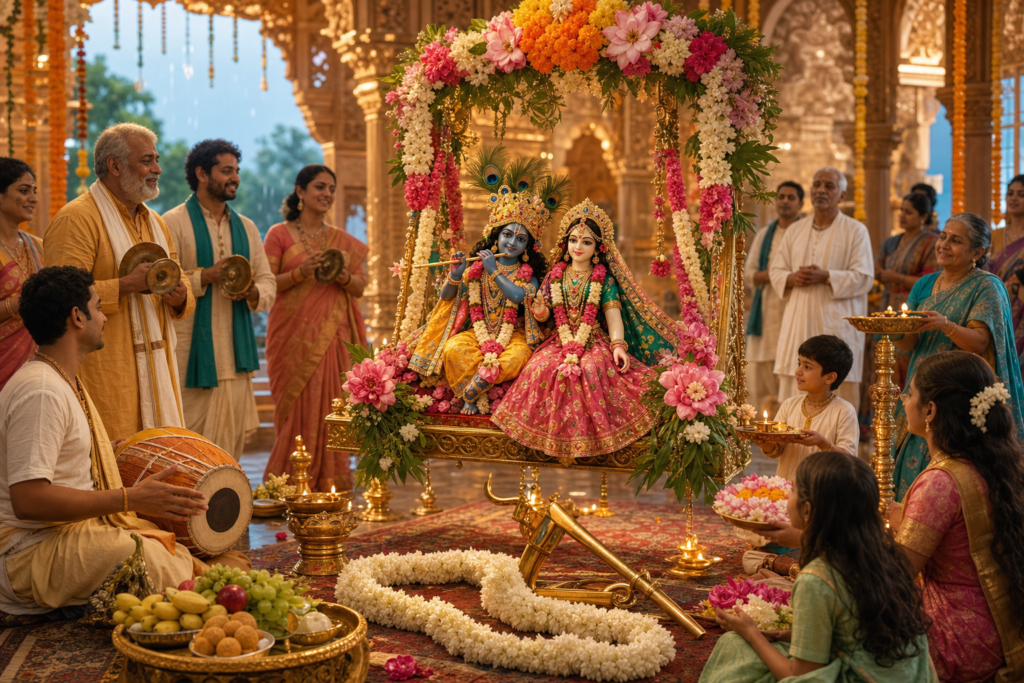
The Bhagavad Gita gives this theology a practical shape. In 9.26, Krishna says that He accepts a leaf, flower, fruit, or water when offered with devotion. The theological emphasis is not on the economic value of the offering but on the consciousness behind it. A simple offering made with sincerity is spiritually meaningful because bhakti transforms ordinary matter into an expression of love. This principle opens the path of devotion to people across class, education, gender, region, and circumstance.
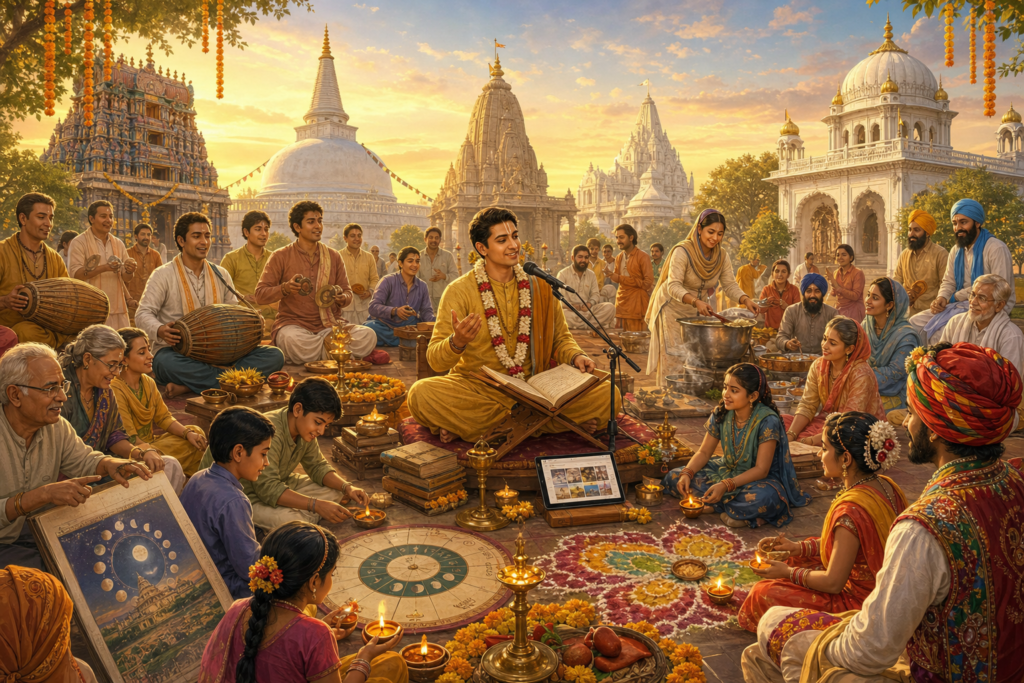
The inclusiveness of bhakti has special importance for the unity of Dharmic traditions. Hinduism, Buddhism, Jainism, and Sikhism differ in theology, metaphysics, ritual practice, and vocabulary, yet they share a civilisational concern with liberation from egoic bondage, disciplined conduct, compassion, truthfulness, and the transformation of consciousness. A mature understanding of Krishna devotion need not diminish other Dharmic paths. Instead, it can deepen mutual respect by demonstrating how a tradition can be rooted in its own revelation while still honouring sincere spiritual striving wherever it appears.
Within Hindu traditions themselves, bhakti has always taken diverse forms. Shaiva, Shakta, Vaishnava, Smarta, and many regional sampradayas have cultivated intense devotion through temple worship, poetry, music, pilgrimage, vows, meditation, and service. Krishna bhakti belongs to this broader Dharmic landscape while preserving its distinctive theological centre: loving surrender to Sri Krishna as the Supreme Personality of Godhead. This specificity should be understood as depth, not hostility. Authentic devotion grows in reverence, not contempt.
In the Vaishnava understanding, the jiva is not the Supreme, yet it is eternally related to the Supreme. This relationship is expressed through seva. The living being is fulfilled not by isolated autonomy but by loving service. This idea challenges a dominant modern assumption that freedom means complete self-assertion. Bhakti proposes a different anthropology: the self becomes most free when it is no longer enslaved by ego, craving, envy, and forgetfulness of Krishna.
The practice of devotional service also has an ethical dimension. A person who sees Krishna as the indwelling witness and ultimate beloved cannot easily justify cruelty, arrogance, exploitation, or spiritual pride. The Bhagavad Gita describes the dear devotee as non-envious, compassionate, steady, forgiving, self-controlled, and equal-minded. These qualities are not decorative virtues; they are signs that devotion is becoming embodied. Without humility and compassion, religious performance risks becoming a mask for ego.
Uninterrupted devotion does not require withdrawal from the world in every case. The Gita’s teaching to Arjuna makes clear that action can become yoga when offered to Krishna. Household life, professional responsibility, study, governance, art, agriculture, teaching, and social service can all become spiritually meaningful when performed without selfish attachment and with remembrance of the Divine. This broadens bhakti from temple-centered ritual alone into a whole-life discipline.
At the same time, the tradition does not romanticise distraction. To keep devotion uninterrupted, one needs intentional practices: regular hearing of scripture, chanting, association with sincere devotees, prasadam, ethical restraint, and periodic self-examination. These disciplines protect consciousness from fragmentation. The mind naturally runs toward habit, fear, resentment, and desire. Sadhana gently redirects it toward Krishna again and again, until remembrance becomes less forced and more natural.
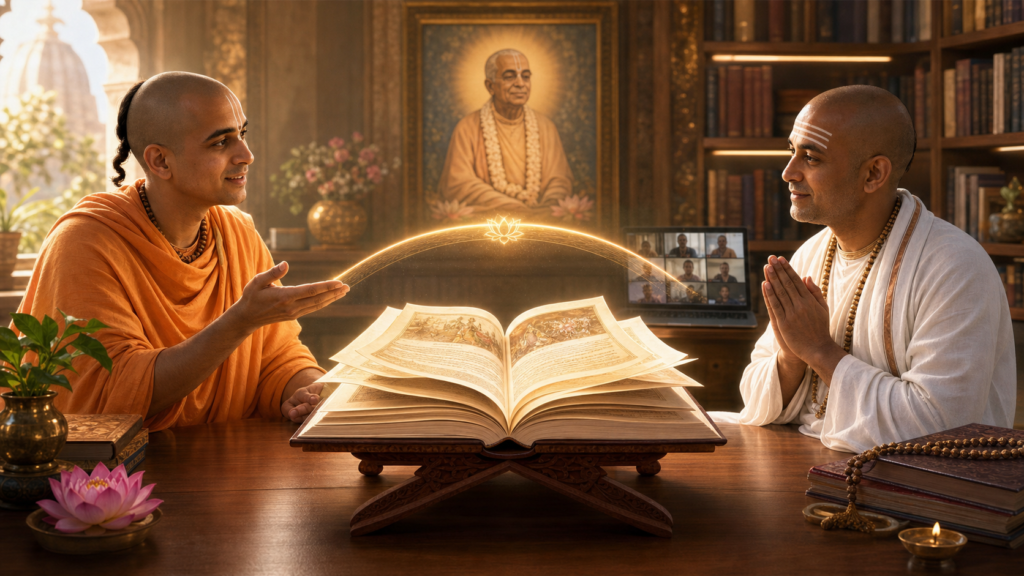
The role of the guru is central in this process. A true guru does not replace Krishna; the guru guides the disciple toward Krishna. The guru-shishya tradition preserves knowledge through lived example, disciplined instruction, correction, and grace. In devotional life, learning is not merely informational. It is transformational. The student must learn how to hear, how to serve, how to question with humility, and how to align conduct with sacred teaching.
Scripture also guards devotion from becoming vague emotionalism. The Srimad Bhagavatham, Bhagavad Gita, Brahma-samhita, and the teachings of Vaishnava acharyas give language, structure, and philosophical depth to Krishna consciousness. They clarify the nature of Bhagavan, the jiva, maya, karma, time, devotion, and liberation. This scriptural grounding is important because intense feeling alone can be unstable. Bhakti becomes mature when emotion, reason, discipline, and revelation cooperate.
The expression yayātmā suprasīdati is especially significant for contemporary life. It states that the self becomes fully satisfied through pure devotional service. Modern societies often seek satisfaction through consumption, productivity, entertainment, identity assertion, or psychological optimisation. These may provide temporary relief or functional improvement, but they cannot fully answer the soul’s longing for eternal meaning. The Bhagavata diagnosis is direct: the self is satisfied when it is restored to loving service of the Supreme.
This does not mean that psychological care, social responsibility, or material wellbeing are irrelevant. Dharma is not a rejection of embodied life. Rather, bhakti places these concerns within a higher order. Food becomes prasadam when offered to Krishna. Speech becomes kirtan when used to glorify the Divine. Work becomes seva when performed with purified intention. Study becomes wisdom when it leads to humility. Even suffering can become a place of spiritual awakening when it turns the heart toward surrender rather than bitterness.
A technical reading of the supreme dharma also requires distinguishing pure devotion from mixed devotion. Mixed devotion may include desire for prosperity, relief, recognition, liberation, or mystic power. The tradition does not condemn beginners for approaching Krishna with needs. The Gita acknowledges different kinds of pious seekers. Yet the Bhagavata points toward a more refined state, where devotion is no longer a means to another end. Krishna Himself becomes the end.
This is why the lives of devotees such as Prahlada, Dhruva after purification, the gopis of Vrindavan, Uddhava, and the great Vaishnava saints remain central to the tradition. Their stories are not merely mythological ornamentation. They are theological case studies in the transformation of motive. The highest devotee does not seek even liberation apart from service. The sweetness of relationship with Krishna surpasses impersonal release because love requires both the lover and the beloved.
Krishna bhakti also offers a corrective to religious competitiveness. When devotion is genuine, it reduces the urge to dominate others. The devotee’s first work is purification of the heart. This has practical implications for inter-Dharmic harmony. A person deeply rooted in Krishna consciousness can respect the tapas of a Jain monk, the compassion of a Buddhist practitioner, the seva of a Sikh, and the many Hindu paths of worship, while still faithfully practicing Vaishnava devotion. Unity does not require flattening difference; it requires honouring sincere pursuit of truth and dharma.
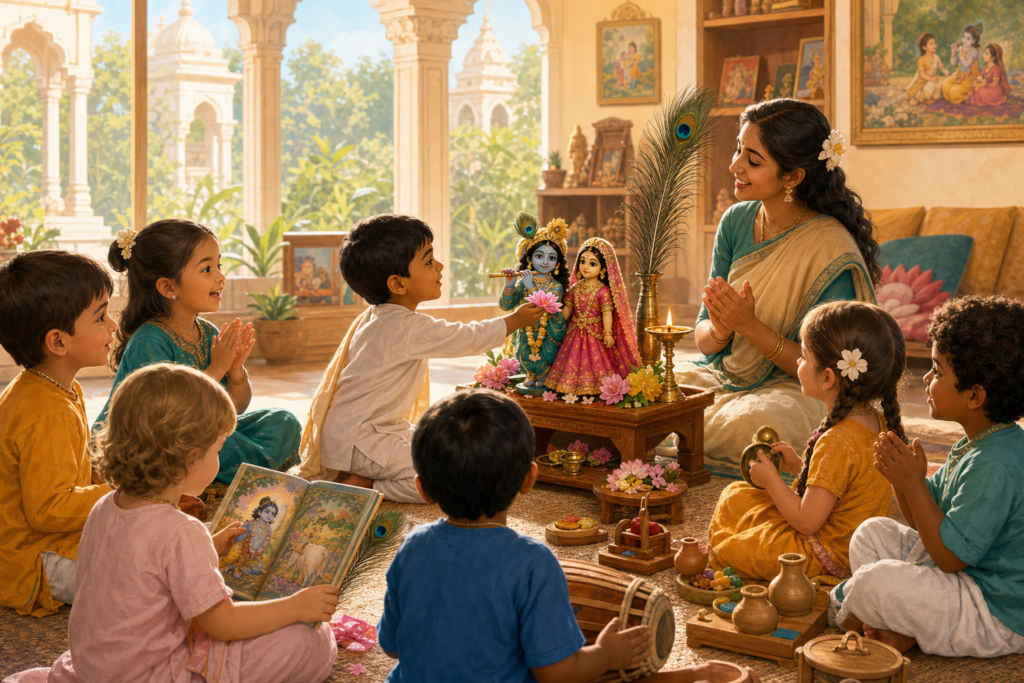
The phrase “uninterrupted devotional service” should therefore be understood as a disciplined continuity of orientation, not a mechanical performance every second. A mother caring for a child, a student studying honestly, a worker earning ethically, a devotee chanting in the morning, and a community serving food with reverence may all participate in this continuity when their actions are connected to Krishna. Bhakti sacralises life by recovering its relationship with the Divine.
For modern practitioners, the challenge is not usually lack of information. It is fragmentation of attention. Sacred texts are available, lectures are accessible, and devotional music can be heard anywhere, yet the mind remains scattered. The supreme dharma calls for integration. It asks that knowledge become remembrance, remembrance become service, service become character, and character become love. This is a demanding path, but it is also deeply practical because it begins with the next sincere act.
The relevance of this teaching extends beyond formal religious identity. In a world marked by loneliness, competition, anger, and spiritual fatigue, the idea of unmotivated and uninterrupted devotion offers a different model of human flourishing. It teaches that the highest life is not built on possession but offering, not egoic control but surrender, not restless consumption but sacred relationship. Such a vision is both ancient and urgently contemporary.
The supreme dharma of Krishna bhakti finally rests on a simple but profound claim: the soul is happiest when it loves and serves Krishna without selfish motive and without interruption. This is not a narrow call to external religiosity. It is an invitation to restore the deepest function of consciousness. When devotion becomes unmotivated, it becomes pure. When it becomes uninterrupted, it becomes steady. When it is directed toward Krishna, it becomes complete.
Thus, the teaching of ahaituky apratihatā bhakti remains one of the clearest summaries of Sanatana Dharma’s devotional heart. It unites philosophy, practice, ethics, and spiritual experience in a single principle. The highest dharma is not merely to believe, perform, argue, or inherit a tradition. It is to awaken loving service to the Supreme Lord in such a way that the self becomes peaceful, purified, and profoundly satisfied.
Inspired by this post on Dandavats.







Leave a Reply
You must be logged in to post a comment.